
4-3 | Basic Inspection Criteria
<p>A key factor when inspecting synthetic roundslings is being able to identify a potential issue and taking action on it before the sling is connected to any rigging hardware. A small cut, burn, tear or hole in a synthetic roundsling can compromise the strength and lifting capabilities of the sling when under load, and therefore the sling must be removed from service immediately. </p>
A key factor when inspecting synthetic roundslings is being able to identify a potential issue and taking action on it before the sling is connected to any rigging hardware. A small cut, burn, tear or hole in a synthetic roundsling can compromise the strength and lifting capabilities of the sling when under load, and therefore the sling must be removed from service immediately.
If there is any doubt as to the condition of the synthetic roundsling prior to use, it needs to be removed from service and replaced.
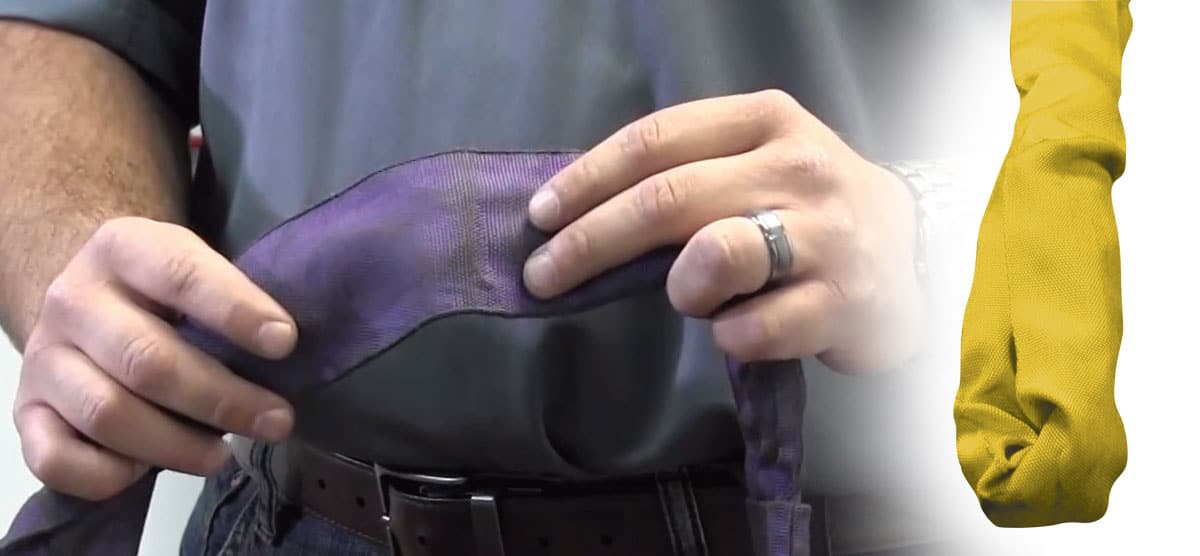
If during any point of the inspection the following is observed, the roundsling should be removed from service and be discarded:

Missing or illegible sling identification

Acid or caustic burns

Evidence of heat damage

Holes, tears, cuts, abrasive wear or snags that expose the core yarns

Broken or damaged core yarns

Weld splatter that exposes core yarns

Knots in the roundsling, except for core yarn knots inside the cover installed by the manufacturer during the fabrication process

Fittings that are pitted, corroded, cracked, bent, twisted, gouged, or broken

Discoloration and brittle or stiff areas on any part of the slings, which may indicate chemical or other damage

For hooks, removal criteria as stated in ASME B30.10

For rigging hardware, removal criteria as stated in ASME B30.26