Utility Stringing Line Inspections: How Scope Uses AI to Analyze Rope Condition
Scope is an AI-powered software that identifies damage or defects, and predicts the break strength on utility stringing lines. Our article break down its key functions and benefits.
Transcript
How AI Is Revolutionizing Stringing Line Safety
– Every mile of new transmission line depends on one critical piece of gear, the rope that pulls it into place. If that rope fails, an entire project can come crashing down, literally. Traditionally, inspections have relied on the human eye, but Scope is changing that. Now that AI is here, it’s changing rope inspections forever.
Scope is an AI-powered inspection platform that captures a 360-degree view of a stringing line, predicting break strength and identifying potential hazards. And today we’re going to show you how it works.
Why Stringing Lines Are Critical for Power Line Construction
My name is Ben and this is “Lifting & Rigging Channel.” And today I’m joined by Justin Smoak from Scope. He is the lead for Scope’s utility business. And we’re going to talk a little bit about this machine behind us and what it does and why it’s important.
Right now, we’re doing an inspection on a utility line. Why are these inspections so important, Justin?
– I think to start that out, it’s good to talk about, like, what these lines are used for. So for stringing lines, when they’re installing electrical cable, so conduits for power lines, they use this as a lead line to pull it and then pull the wire through, because the wire’s too heavy to just pull that straight away.
Basically, these ropes are pulling a heavy load, and if you can imagine where transmission lines are, they go over freeways, they go over waterways. Sometimes there’s other power lines, it’s not just one. So it’s an energized corridor. So if one of these were to break while it’s pulling that conductor, you’ve got a really bad situation on your hands.
Why Manual Stringing Line Inspections Fall Short
– Having a good inspection on these ropes is really important. Why is it so difficult to do a manual inspection on these ropes?
– Well, so these ropes, I think this one here is about 6 to 8,000 feet long. Some of ’em are up to 20,000 feet long. Imagine looking at this rope. First of all, you couldn’t look at it at this speed.
– Yeah, it’s cruising past.
– It would have to run much slower if a person was doing the inspection. But can you do anything very accurately, watching a tiny rope going by for four hours at a time? It’s just a really tough thing for a human being to do.
What Is Scope and How Does It Inspect Ropes?
– All right, so let’s talk a little bit about then, what does this do? So can you tell me a little bit about the machine? What is Scope, what’s it doing right now? How’s it work?
– It’s supervised machine learning AI. It’s all based on visual inspection. There’s no magnets or any sort of, like, penetrative imaging that’s being done. It’s all just visual on the outside, because what we found is abrasion, which is seen from the outside, is the most common failure factor for ropes like this.
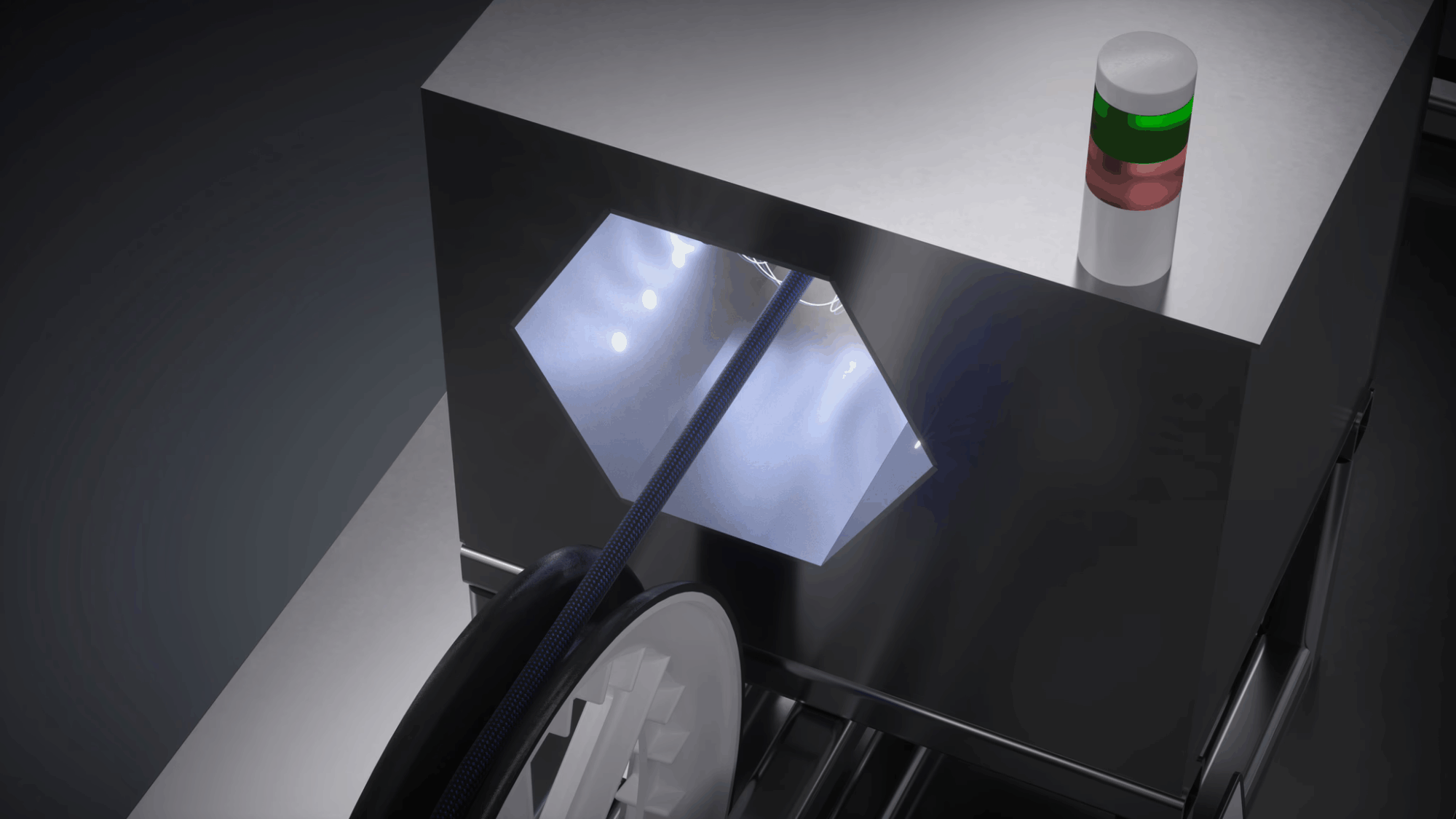
So we’ve got three cameras, one at 12, one at 4, one at 8. So 360 degree coverage around the rope. And then those pictures get put through a machine learning model, two machine learning models, one to predict residual break strength and one to detect any anomalies.
So a big cut strand, a splice, debris tape. We got the camera that runs those two models. The output that we have, it displays three different colors, bad rope, used rope, brand new rope. It’s augmenting a person doing an inspection. And so that informs that person, what rope do I need to look at and then crop out and replace to make sure every piece of rope is fit for purpose.
How Does AI Detect Rope Damage and Predict Break Strength?
– Scope can predict break strength within 5%, is that correct?
– Yeah.
– So how is that possible?
– What we’ve done is just built an incredible amount of data. We’re talking thousands of break tests, scan used rope, break used rope, feed all that into one of these machine learning models and the big data just runs and the model creates essentially a strength model.
What Rope Damage Can Scope Spot That Humans Miss?
– You got the three cameras in there, inspecting the rope. What are the hazards that it’s looking for? What are some of the hazards that Scope can spot that usually the human eye misses?
– Scope’s really good at the areas of abrasion that people are not good at. It’s really good at detecting like that borderline abrasion level. And then cut strands is one. And we see it quite frequently when you look at a report, when it captures a photo. ‘Cause anytime it detects an anomaly or damage, it’ll take a photo of it and then the operator can review it. But you’ll see it on two of the three cameras.
How Fast Can Scope Inspect a Stringing Line?
– So you just talked about how much more efficient this is compared to, you know, a manual inspection. So how fast is this running?
– If you’re doing it on your own, if you want to do a good job, you’re running no faster than half a mile an hour. Our cameras, you can run this as fast as four miles an hour. Anything over that, and the shutter speed kind of looks a little blurry, and blurry looks a little fuzzy, and fuzzy looks like abrasion. So that starts to impact the model. But up to four miles an hour is perfectly fine for our cameras.
We’ve got a new version coming out. Our version two hardware unit. It’s going to be able to run up to seven miles an hour.
– Oh, wow!
– So it’s really going to be moving.
How Accurate Is an AI Rope Inspection Compared to Humans?
– One of the claims that you make is that Scope has a 99% accuracy rate. How does that compare to human, one, and then how is that possible, 99%?
– So 99% is actually our confidence that it’s detecting something correctly. Compared to a human, what we found is that humans are about 60%, and that depends on what type of human, right?
– And that’s like a trained, reliable inspector.
– Right, not everyone is as diligent with their inspections as, say, Mazzella is, and using qualified people to look at it. Sometimes it’s just like the apprentice that’s coming through the shop, right? And so he doesn’t know rope from cable, and it’s just going by, and unless something’s egregiously wrong, it’s just whizzing right by him.
How Does Scope Reporting Help Prevent Job Downtime?
– So how does this help prevent downtime in the field?
– What Scope does is it ensures that every rope that goes out is free from anomaly defect, cut strands, anything that would affect its strength. And the operator has a good understanding of the quality of the rope that he’s using in the field.
What’s Included in a Scope Inspection Report?
– So let’s talk a little bit about the report. What’s the report look like once this goes all the way through and we’re done? What do you get?
– So the report documents the who, what, when, wheres about the inspection, right? It’s got the date, the inspector, what was inspected. We’ll document what rope it was, what the size was. So all the important details about the rope. And one of the most important details is length. Just knowing the length of the rope that’s going out in service is a super critical piece of information that people have.
Then we provide an assessment. So it’s a color grid, and by the time it goes out, we want to make sure there’s no red. We have red, light green and dark green. We want to make sure there’s no red.
Light green is used rope, so between 51 and 74%, and dark green is above that. So that’s 75% and up. And then if there’s any anomalies, anything that we’ve noticed, it’s documented as well. So if there’s splices, it’s going to say, “hey, there’s a splice in here,” so that as you’re using the rope, you’re just aware of what’s going on there. But ultimate confidence is that all the rope that’s going out is fit for use.
– So what can they do with this report once they have it?
– Ideally, you print out a copy of that report and you put it in the glove box on the rig. There’s safety inspectors, contractor managers, more and more often in the utility industry are saying, prove to me that what you’re bringing on here is safe.
Who Is Using Scope AI Inspections Right Now?
– So who’s using Scope right now?
– We’ve got three main customers. So we’ve got some utilities that have their own transmission fleets for installation. So they’re using ’em.
We have a lot of contractor fleets. So people that are managing their own fleets of equipment are out there using it.
The OEMs with their big rental branches. So those guys, they’ll inspect it before and after every rental, which is great for them, because it’s just proving, hey, we gave you it in this condition, it came back in far worse condition. So it’s protecting their investment but also ensuring that, like these ropes that get turned and used quite a bit in these rental fleets, that those are still in good shape.
What to Do When Your Rope Report Shows Bad Rope
– What are your next steps? So if you find out your rope is bad and you have to pull it.
– If anything’s red, that’s like a no-brainer, right? Mazzella can go to their customer and say, “Hey, look, the system says it’s bad, it should be replaced.” And there’s no questioning about, “Ah, you’re just trying to sell us rope,” right? Like, so it gives you guys a third party, “hey, this rope is unquestionably not fit for use.”
– Gives the customer the confidence that-
– That they’re not getting sold anything and that they’re getting good rope back.
The areas, you know, it shows that where it goes and you’re in the light green and you can look, that’s where you guys have the opportunity to have your experts make the decision about should we, shouldn’t we, thinking about the lengths, thinking about, you know, what needs to be replaced and what won’t and where it’s going from there. There’s a bit of interpretation there, but what we do is we basically say, “this is good, this is bad. Get rid of bad and put good on it.”
– It looks like we just finished up the inspection on this rope. So how long was this rope and how long have we been going?
– This rope, I believe, was 6,000 feet long, and we’ve been going for about, what, 15 minutes.
– And how long would that have taken a person to inspect?
– If you’re doing a thorough inspection, that probably would’ve took two hours.
What’s Next for AI Rope Inspection Technology?
– So, where do you see the future of this technology?
– The next step for this technology is we’re going to shrink this down. We’re taking it down to something that looks more like a mailbox with a backpack. It’ll be a lot more mobile.
And then we’re going to expand from, you know, the main polyester and HMPE stringing lines to start looking into steel wire, braided wire ropes, swaged wire rope, crane rope, any type of rope that benefits from visual inspection.
– Any other industries that this might be useful for besides utility?
– The crane industry, it’s useful for. Winch lines is another area that we’re looking at. I think the technology, the understanding, the automated visual inspection, and the machine learning models that we’ve built, at some point, we’d like to apply those to commercial marine. So, mooring and tug where you’ve got mooring lines and those need to be inspected, because finding the strength on those is very critical. There’s guidelines that say it’s got to be over 75%, and there’s no way to tell that without cropping a piece off and breaking it.
– All right, Justin, if you could give me in one sentence why a utility or contractor should consider using one of these machines or coming to a rigging shop like Mazzella to use one of these machines, what would it be?
– That’s an easy one. Our motto, make every pull a safe pull.
– Thanks Justin.
– Cheers.
How to Start Using AI Rope Inspections
– Scope has already inspected over 200 million feet of rope across North America. Mazzella has several units running across the US. If you’re interested in increasing your efficiency, accuracy, and overall safety when it comes to your stringing line inspections, contact Mazzella. Click the link in the description below.
Mazzella can also help you with all your cordage needs, as we have a massive inventory spread across the country.
If you found this video useful, informative, entertaining, or you just feel like being friendly, then hit that like button so we can get this information out to everyone who needs it. Don’t forget to subscribe, and remember, safe rigging is smart rigging. My name is Ben, stay safe out there.
As the US continues to increase electricity grid infrastructure through new builds and upgrades to existing electric power lines, the industry has experienced a significant increase in stringing line operations. The synthetic fiber rope used to pull in new conductor is a critical component for these stringing line operations.
Traditional rope inspections rely on human judgement and guess work, and the human eye can miss critical details that can lead to a catastrophic failure. This is where Scope comes in. Scope is an AI-powered inspection platform that captures a 360° view of the line, predicting break-strength and identifying potential hazards. This occurs in real-time, with software that is continuously learning and improving.
Since launching, major utility companies and contractors have used Scope to improve their inspection processes and create better documentation of their fleet’s stringing lines.
We understand that traditional rope inspections can slow down turnaround times, prolong equipment malfunctions, and open the door for inaccurate stories. With increasing demand for stringing line operations, you have no room for these issues to pop up at your job site.
To help, our article looks to break down everything you need to know about the Scope Inspection Platform, including:
What Is Scope?
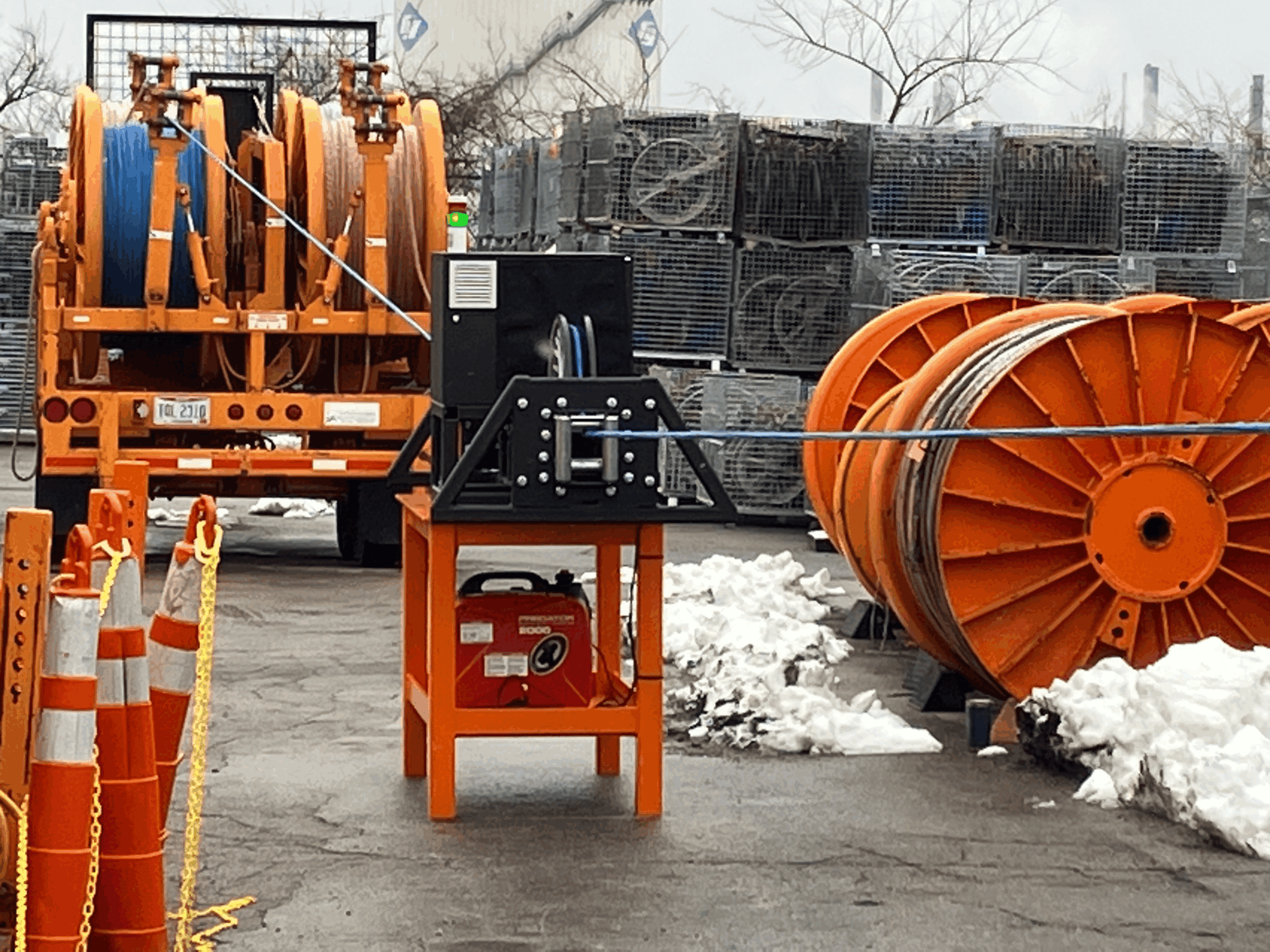
Scope is a software and hardware platform that identifies damage or defects, and predicts the break strength of stringing lines, much of which may be overlooked in a manual inspection process.
The average line inspection process is a labor-intensive and time-consuming project. While technicians in the field are knowledgeable—and usually have years of experience—manual processes open the door for human error and inaccuracies, which can lead to serious injuries and prolonged down times.
Many utility companies also don’t consider the damage occurring to their synthetic stringing lines over months of use and exposure to the elements, which only increases the chance of potential failure. Scope is trained to identify common debris, cuts to strands and splices, while correlating visual features of abrasion to a predicted break-strength for that line segment.
Not only can Scope’s technologies assist in line inspections, but it can also be used as a repository to store and document inspection data for the rope’s entire lifespan.
How Do Scope Inspections Work?
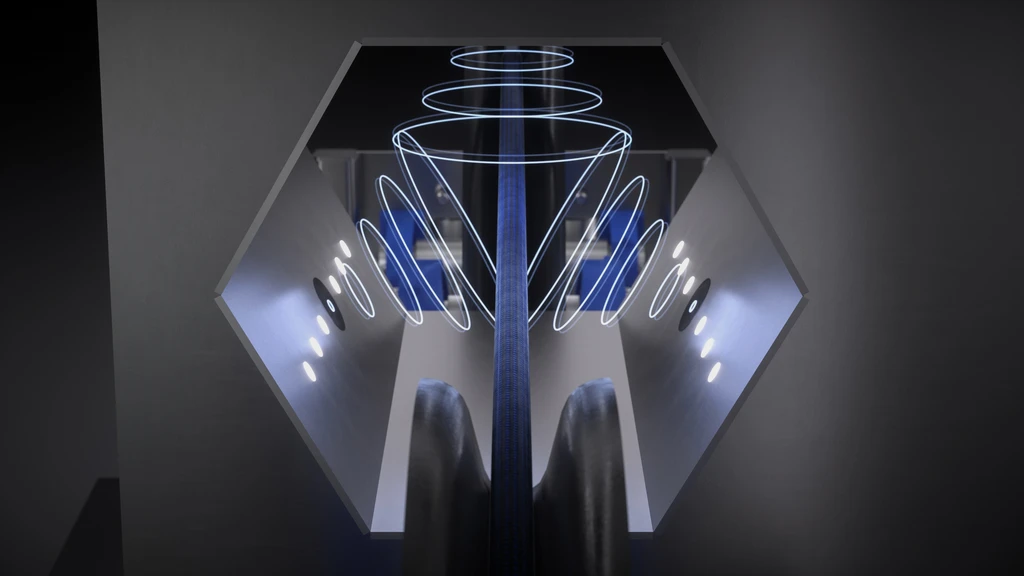
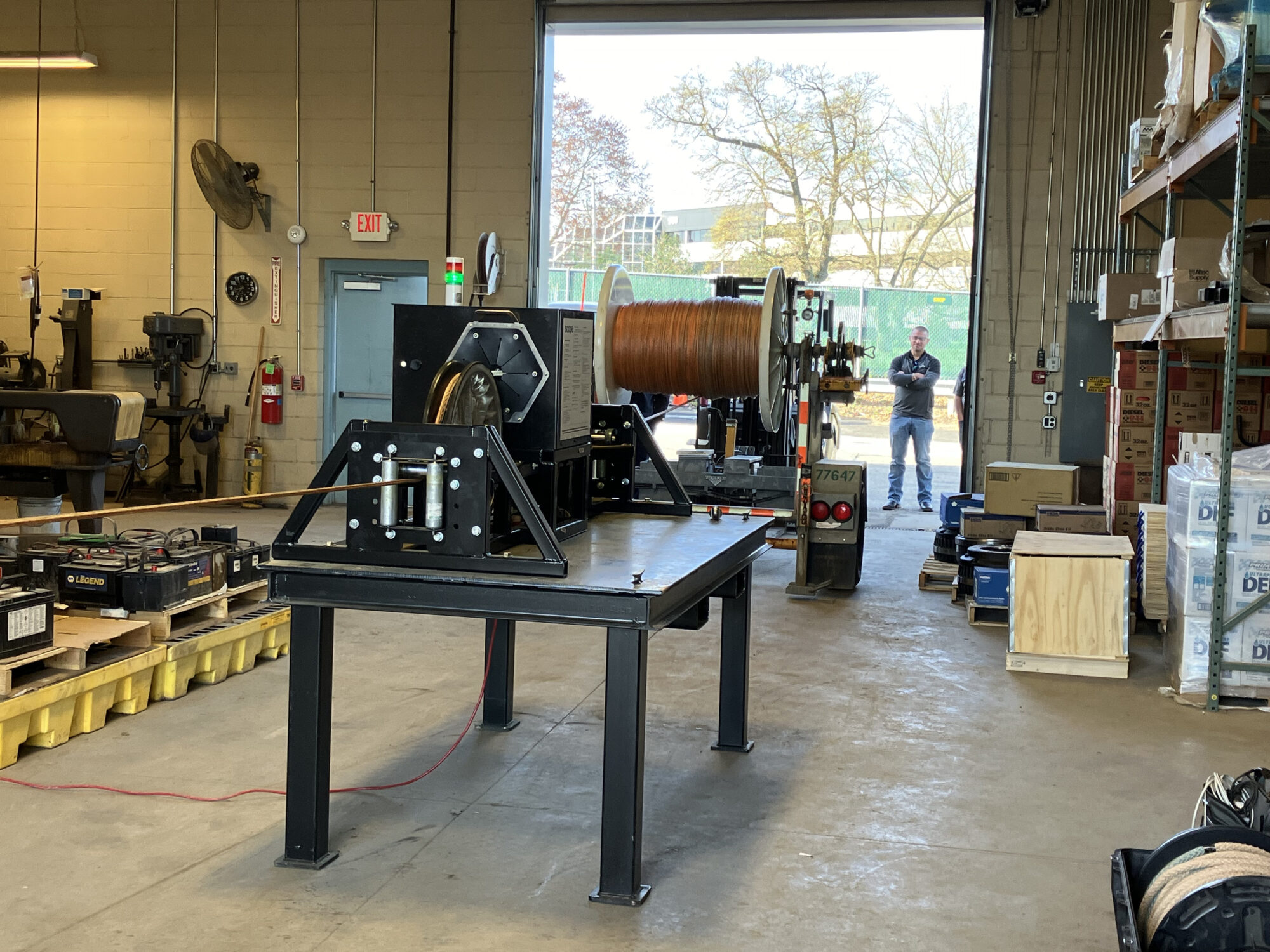
The Scope platform uses multiple cameras to capture a 360° image of the stringing line as it is pulled through the machine. The rope gets pulled at speeds up to 4 miles per hour, much faster than manual inspection, which occurs at around 2 miles per hour.
From there, Scope uses two neural networks to analyze the visual data, predicting the break strength of each segment of the rope, and detecting potential hazards, like cut strands, debris, and splices. These neural networks have been trained on thousands of break-strength tests in order to make accurate predictions and have been used to inspect over 100 million feet of stringing lines in North America.
Stringing Line Health Index
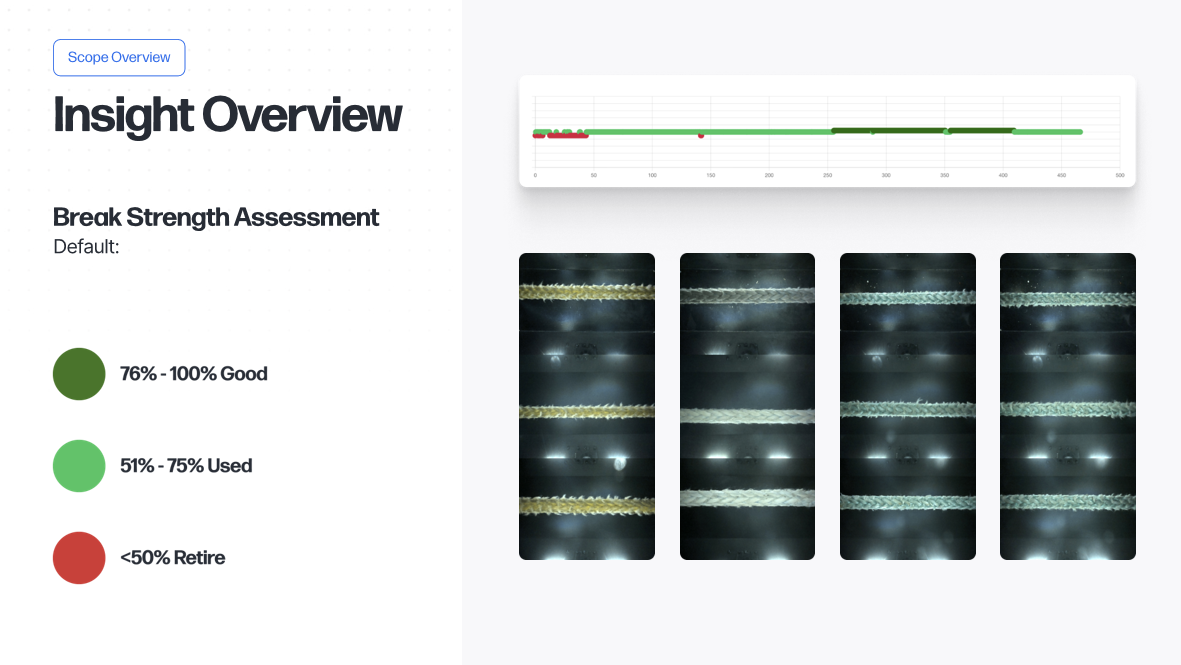
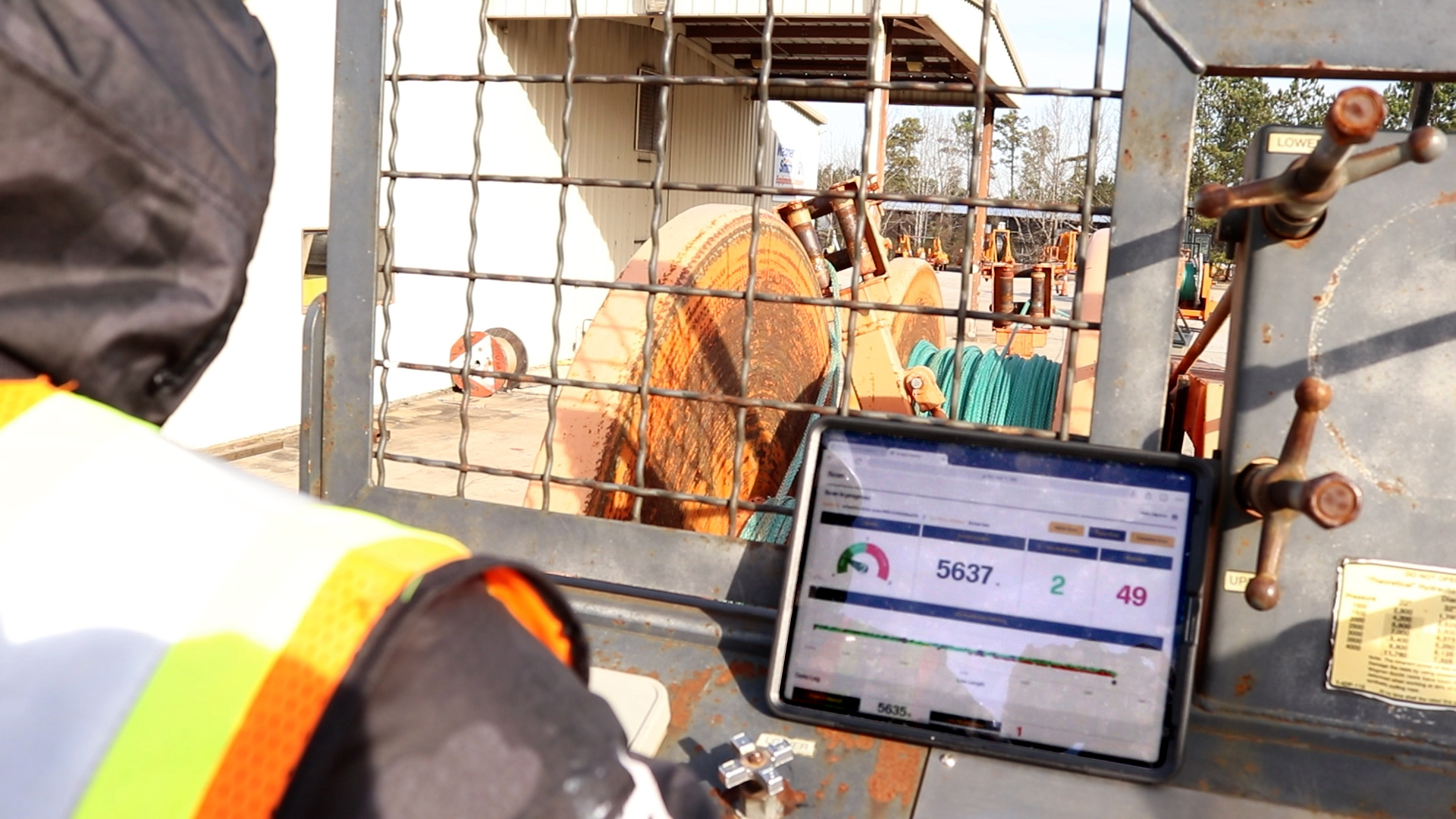
As the stringing line is spooled through the device, Scope generates a comprehensive inspection report, showing owners the line quality across the entire stringing line, with 360° images of each insight identified.
What makes the system unique is its ability to pinpoint exact areas where the line is at risk. The report is generated in seconds and uses visual icons to show:
- Debris
- Cut strands
- Splices
The index also uses a color-coding system to determine the line’s break strength assessment. The report also shows:
- The exact distance where the insight was found
- The identification of that insight
- What repair action was taken for that line segment
- The total length of the stringing line
- All user entered information such as Manufacturer, Product, Diameter, etc.
- Continuous Improvement
Machine Learning Software
One of the unique capabilities of the Scope Inspection Platform is the machine learning nature of the software. As the system is used, insights are produced which are then reviewed by Scope subject matter experts. These insights are then used to refine the models for higher levels of accuracy and more nuanced identification of anomalies.
However, operators will still need to manually enter in the rope’s MFG, diameter, name, and fleet number.
What are the Benefits of AI-Enhanced Line Inspections?
Faster Inspection Times
Scope can operate at speeds up to 4 mph. While this doesn’t seem fast on the surface, it’s twice as fast as a manual inspection, which maxes out at 2 mph.
Higher Accuracy Ratings
While human line inspections are inherently subjective, Scope systems can identify potential line hazards with very high accuracy. While a human inspector can only see one side of the rope, Scope’s 360° line coverage enhances accuracy and removes judgement calls from the inspection process.
Instant Detailed Reports
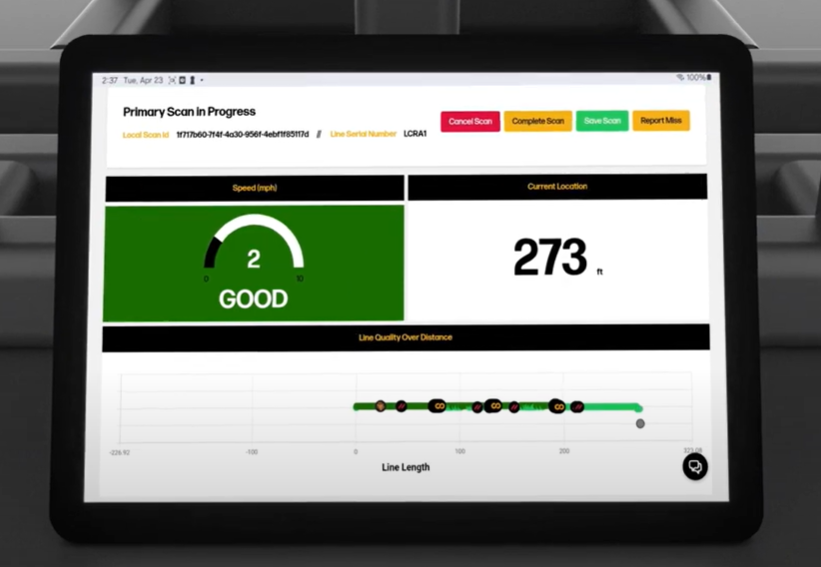
Once the rope is spooled through Scope, it will generate a detailed inspection report within seconds, showing users the predicted rope integrity and images of the questionable areas. These reports can be downloaded and integrated smoothly into your internal systems.
Improved Line Repair Processes
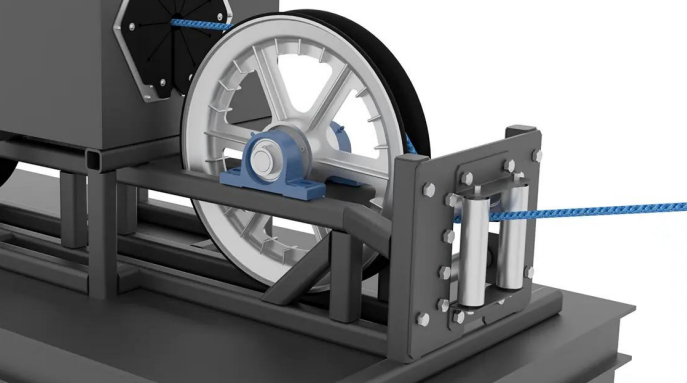
Scope systems allow you to be proactive with your line repairs. Since it can identify potential line hazards, you can adjust ahead of time to replace or repair your stringing lines and not get caught off guard in the field.
And while manual inspections have no metric for quality or evidence of proper line care, Scope allows you to access historical reports of your line and set strength standards for your entire fleet.
Does the Scope System Replace Manual Inspections?
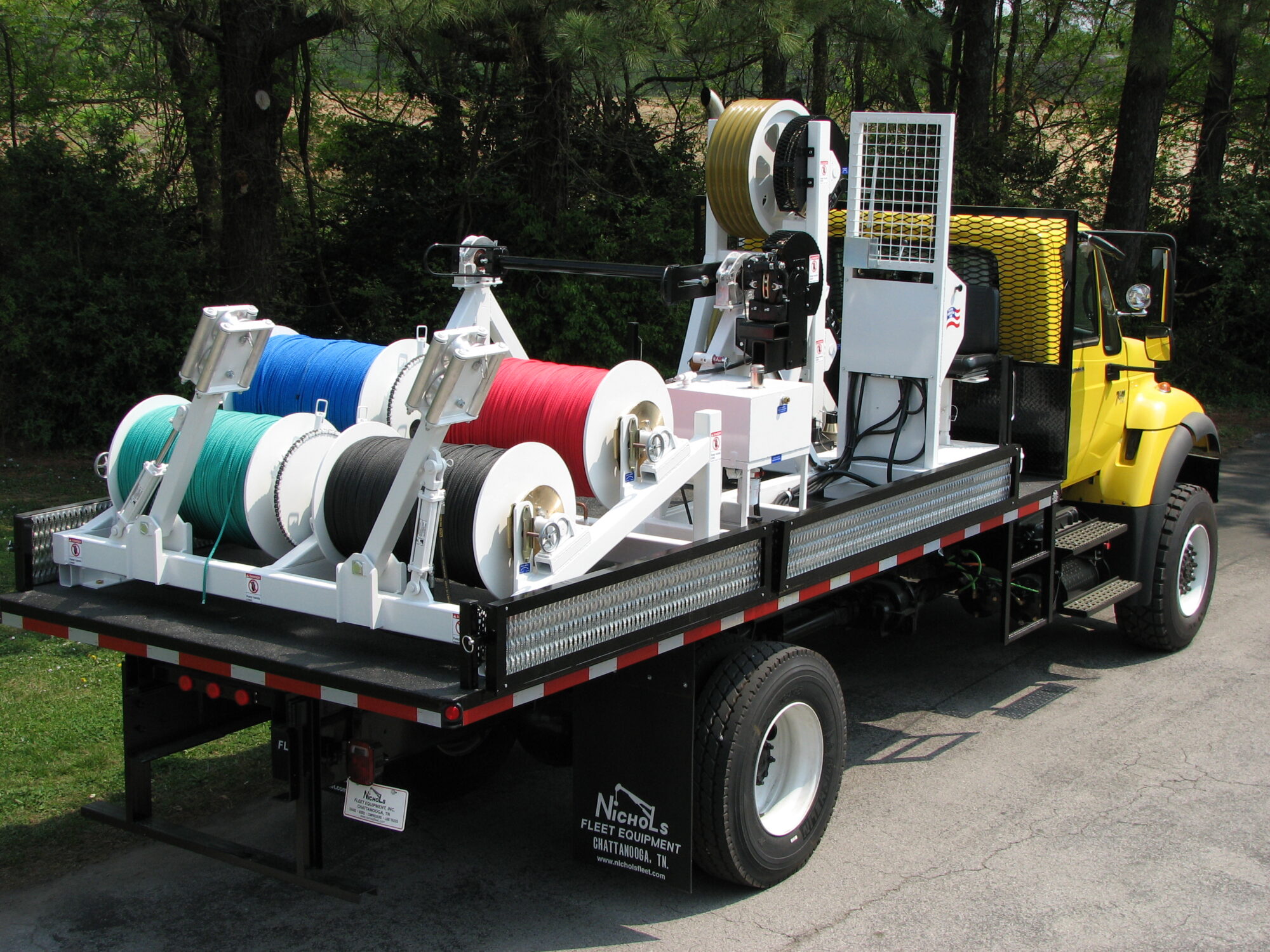
No, Scope systems are not a replacement for manual visual inspections. It is better to view Scope systems as a tool for trained technicians to use in their shops to speed up their processes—equipping them with real-time data.
While Scope systems can be used in the field, they are large machines and can be difficult to move around a job site. However, Scope is currently working on engineering a more compact model for in-field use.
Who Could Benefit from Scope Inspections?
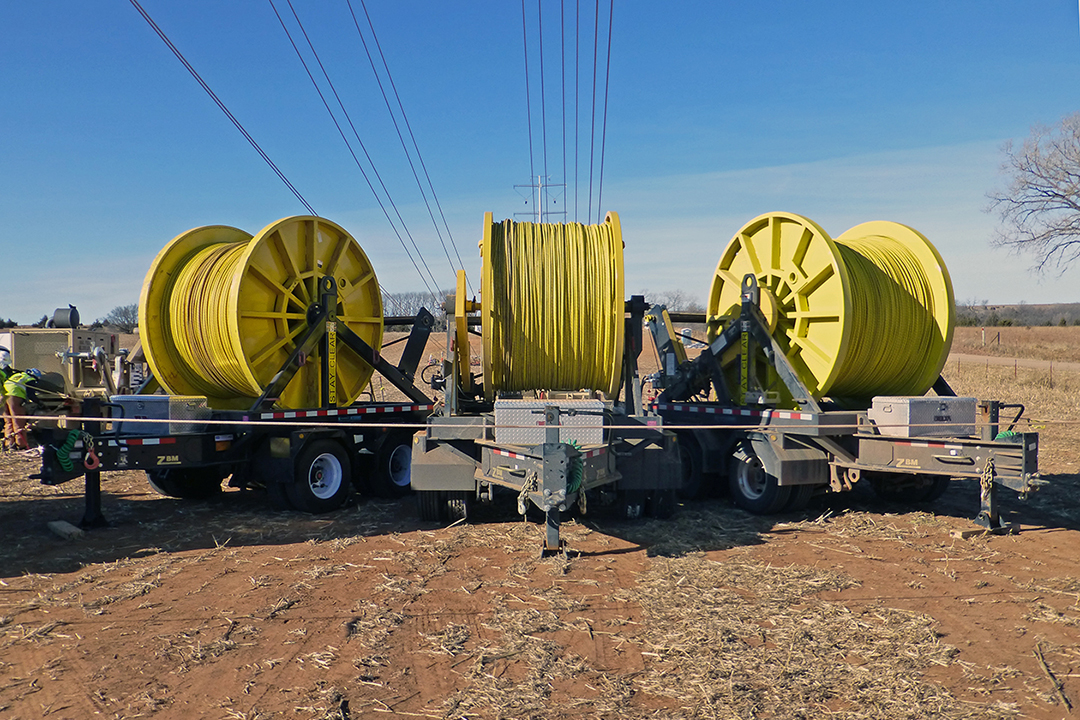
Scope is being used daily by some of the largest electric utility corporations and contractors in the United States and Canada, improving the quality and documentation of repairs along with providing efficiencies in inspection and repair time. Scope has also been adopted by several high-profile rigging companies who provide services to these utility companies and contractors.
Any operator, technician, or linemen in the field can benefit from using Scope to enhance their manual inspection processes. As Scope explains, the system acts as a second set of eyes for their visual inspections that also automates all of the documentation.
Another benefit of using Scope is its ability to receive updates every other week to ensure the most recent and accurate versions of the software and models are leveraged from previous inspections across North America.
Final Thoughts
Scope takes the guesswork out of manual inspection processes, providing traceable health documentation on critical assets that can make or break an operation. By inspecting with Scope, companies are proactively addressing potential line hazards before they become catastrophic incidents that could cost millions. With costs running well into six-figures per hour for unplanned downtime, Scope insights give operators the data they need to make sure the stringing lines are truly field-ready.
In early 2025, Mazzella announced the deployment of Scope units to several of our facilities, including locations in Alabama, Illinois, and Ohio. These Scope units will help us improve, streamline, and speed up our stringing line inspections services for our customers.
Scope is another example of how the lifting and rigging industry is embracing technological advancements, and we hope you better understand how an AI-driven inspection service works and if it’s a good fit for your organization.
Contact a Mazzella specialists to learn more Scope inspections.

Copyright 2025. Mazzella.