
Rigging Slang Terms: Common Names for Lifting Equipment
The Terms—and Slang—You Should Know to Navigate the Lifting and Rigging Industry
Transcript
Intro: Do you Know Rigging Slang Terms?
– Hi, my name’s Ben. That’s also Ben. And today, we’re going to break down some of the slang terms used in the world of rigging. The industry has a lot of names for products and processes, but these might not be the names that you use.
We’ve been working to compile a list of terms to help you navigate the world of lifting and rigging, but if we miss something, be sure to drop it in the comments. Let’s get into it.
What is Rigging? Industry Uses & Terminology Differences
Let’s start with the term rigging. Rigging is a complex practice that’s used across many industries like mining, construction, steel, automotive, shipping, manufacturing, entertainment, and more.
– Entertainment is a whole different list.
– Rigging is the act of using equipment or gear, such as slings and rigging hardware to move or secure materials. But did you know, depending on where you are in the world, what you are moving, or the specific rigging job you are doing, you might not even call it rigging?
– Sometimes people call it slinging and dogging, especially the Aussies and in the UK.
– And there are a whole bunch of other terms that get thrown around just like that.
Lifting Slings & Assemblies: Common Rigging Slang Terms
Here at Mazzella we hear all types of different names for different rigging gear. Mazzella started as a company that made wire rope slings, but if you are in the field, you might call it something else.
– That’s a choker.
– And we also make a lot of multi-leg sling assemblies. We can make them out of chain, wire rope or synthetic materials.
– That’s a spreader or a bridle, and it depends on how many legs it has. Like if it has four, it’s called a quad.
– Right. Multi-leg sling assemblies or spreaders, have sling legs that are connected to a master link.
– Well, that depends on what it looks like. Like some call it an oblong, ring, pear link, D-ring, bull ring. You got to look at the shape.
– Right. And as I mentioned before, slings can be made out of different materials. For example, this is a synthetic flat web sling.
– Straps, synthetics, nylons, flat webs, softies.
– And not only do slings come in many different materials, but they can also come in different shapes and configurations. Sometimes slings have eyes at the ends and sometimes they’re in a continuous loop configuration called an endless sling.
– Depends on what they’re made of. Sometimes they’re called belts. If they’re made of wire rope, they’re called grommets.
– And if a wire rope sling is not endless, you can get them with different eye types depending on their application.
Sometimes a standard eye wire rope sling is right for your application. While other times, you may want thimble eye wire rope slings.
– Soft eyes without a thimble, hard eyes with a thimble.
– And sometimes the eyes are made in different ways. Hand spliced, Flemish spliced, or just folded back on itself and called a turnback eye.
– The Flemish splice is sometimes called a mechanical splice, and turnbacks are sometimes called loop backs or fold backs.
– If it is a commonly purchased sling or assembly, some industries may have their own nicknames for them.
– A single-leg wire rope sling with standard or thimble eyes that is used to attach to a tong on a drilling rig can be called a snub line.
A single-leg wire rope sling with thimble eyes, where one end has a master link and the other end has a hook or a shackle can be called a stinger.
– And no matter what type of sling you are using, what it is made out of, if you are lifting anything with an edge, you should be using cut protection. Sling protection such as edge protection, abrasion protection, or cut protection is an important part of every lift.
– Softeners.
Rigging Hardware and Equipment: Slang Terms and Definitions
– And when you are rigging using slings, you often are using different pieces of rigging hardware too. One of the most common pieces of rigging hardware is a shackle.
– Some people call that a clevis, or a D-ring, or Crosby.
– There are different types of shackles including round pin, screw pin and bolt type shackles.
– Sometimes call bolt types four parts: body, bolt, nut, pin.
– And in rigging, there are lots of different hooks like this one called a sorting hook.
– That’s a shakeout hook / layout hook ’cause you use it when you’re shaking out steel.
– Hoist hooks are required to, and most sling hooks should have a self-closing safety latch.
– Safety latch equals catch, flappers or mouse.
– And no matter what type of rigging you use, it is always important to look at the WLL or working load limit. This tells you the maximum amount of weight that that piece of equipment is allowed to lift.
– A lot of people use the old version, SWL or safe working load.
– And some loads or devices will include built-in lift points that swivel. These are called hoist rings.
– Or lift rings or load rings.
– If you are lifting something flat like a plate of steel, you may want to use a plate clamp.
– Plate clamp or plate dog.
Crane and Hoist Slang Terminology
– Slings and hardware are important parts of rigging, but you can’t forget about the cranes and hoists. Whether that be a manual hoist or a powered hoist, there are several kinds. This is a lever hoist.
– Most call that a come-along.
– And up here is a hand chain hoist.
– Chain block or chain fall.
– There are electric hoists and even pneumatic or air hoists.
– An air hoist cable is sometimes called a tugger wire.
Electric hoists are sometimes just referred to as motors.
– If a hoist or crane is powered, you need controls to operate it. These controls can be wireless using a remote or a radio transmitter and receiver, or they can have a push button pendant that is attached to the hoist itself.
– Pendant, banana, pickle.
Wire Rope Accessories & Hardware Terminology
– Another important part of the rigging process is wire rope. Wire rope can be used to make slings and create barriers. Specialty wire rope is used on hoists and winches, to hold up bridges, and more.
Your application will often determine the different wire rope end termination that you use. Wire rope clips are a common wire rope end termination.
– Cable clamps.
– Often you will see clips like this: U-bolt style wire rope clips.
– A lot of times those are just called Crosbys.
– Or this fist grip wire rope clip.
– Sometimes known as monkey fists or double saddle clips.
– Wire rope clips are often used in cable-tensioning systems. One of the tools you can use when working to tension your cables is a wire rope grip.
– Also known as a pork chop, rope dog, cable grip, Haven grip, or wire rope puller.
– When utilized on cranes, wire rope clips are often used in conjunction with a wedge socket.
– Also known as a Becket or turnback Becket.
– And a wedge socket is often used to install an overhaul ball on a mobile crane–
– Headache ball.
Rigging Technique Terminology
– There are a ton of slang terms out there for different pieces of equipment as well as rigging techniques. For example, what the heck is bull rigging?
– A bull rigger is someone who uses hand rigging or drifting or Tarzaning to move something using chain falls, come alongs, winches, skates, or whatever, when a crane can’t be used.
How To Get Rigging Equipment and Training
– So again, depending on the industry that you work in, the part of the country or the world you live in, or even the job that you do, the terminology might change.
Hopefully, this guide will help you better communicate when purchasing equipment, understand rules and regulations, have a clear understanding when out in the field, or improve your effectiveness in the role you play in the lifting and rigging industry.
If you need any of the rigging products we mentioned today or anything else, no matter what you call it, here at Mazzella, we have it, and we have the experts who could help you make the right purchase so you can get your job done safely and efficiently. Feel free to contact us. Links below.
If you found this video useful, informative, entertaining, or you just feel like being friendly, then hit that like button so we can get this information out to everyone who needs it. Subscribe and hit the bell so you never miss a video. If you have a question, drop it in the comments so we can get you an answer.
– [Pair] Remember, safe rigging is smart rigging. My name is Ben. Stay safe out there.
– Cut. Cut.
– Cut.
Linguists believe there are roughly one million words in the English language, and hundreds—maybe thousands—are used to name and describe practices and tools in the lifting and rigging industry.
This industry has been around for generations, and the terms riggers use have evolved. At five job sites, five riggers could use five different words or phrases to describe a single tool.
With over 70 years of experience in this industry, Mazzella has seen the evolution of rigging slang, and we hear new terms for rigging gear thrown around constantly. To help, we’ve compiled a list of terms to help you navigate the world of lifting and rigging.
Rigging
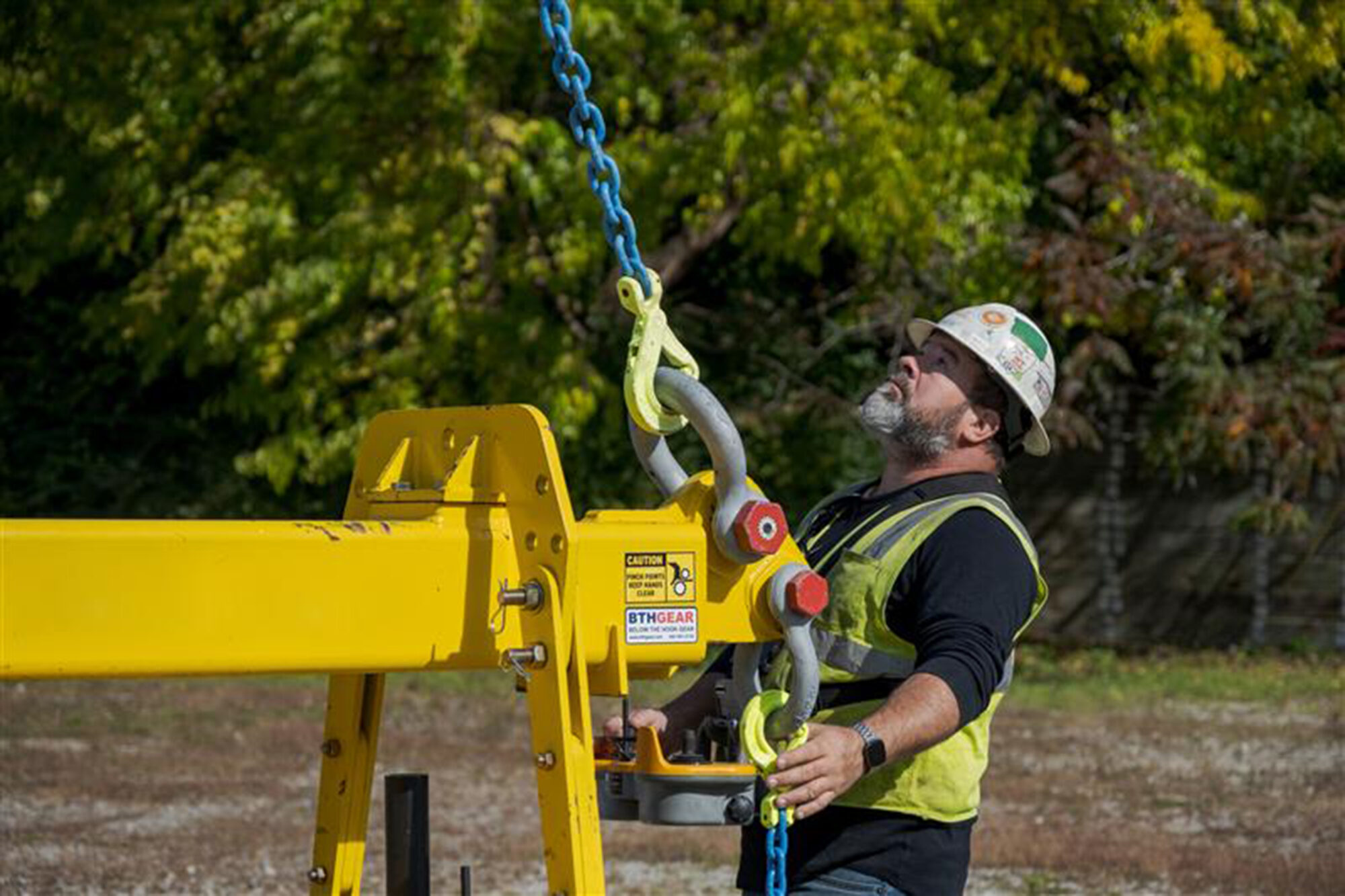
Rigging: The act of using equipment or gear, such as slings and rigging hardware, to move or secure materials.
Slang: Rigging can sometimes be referred to as dogging or slinging, especially in the United Kingdom or Australia.
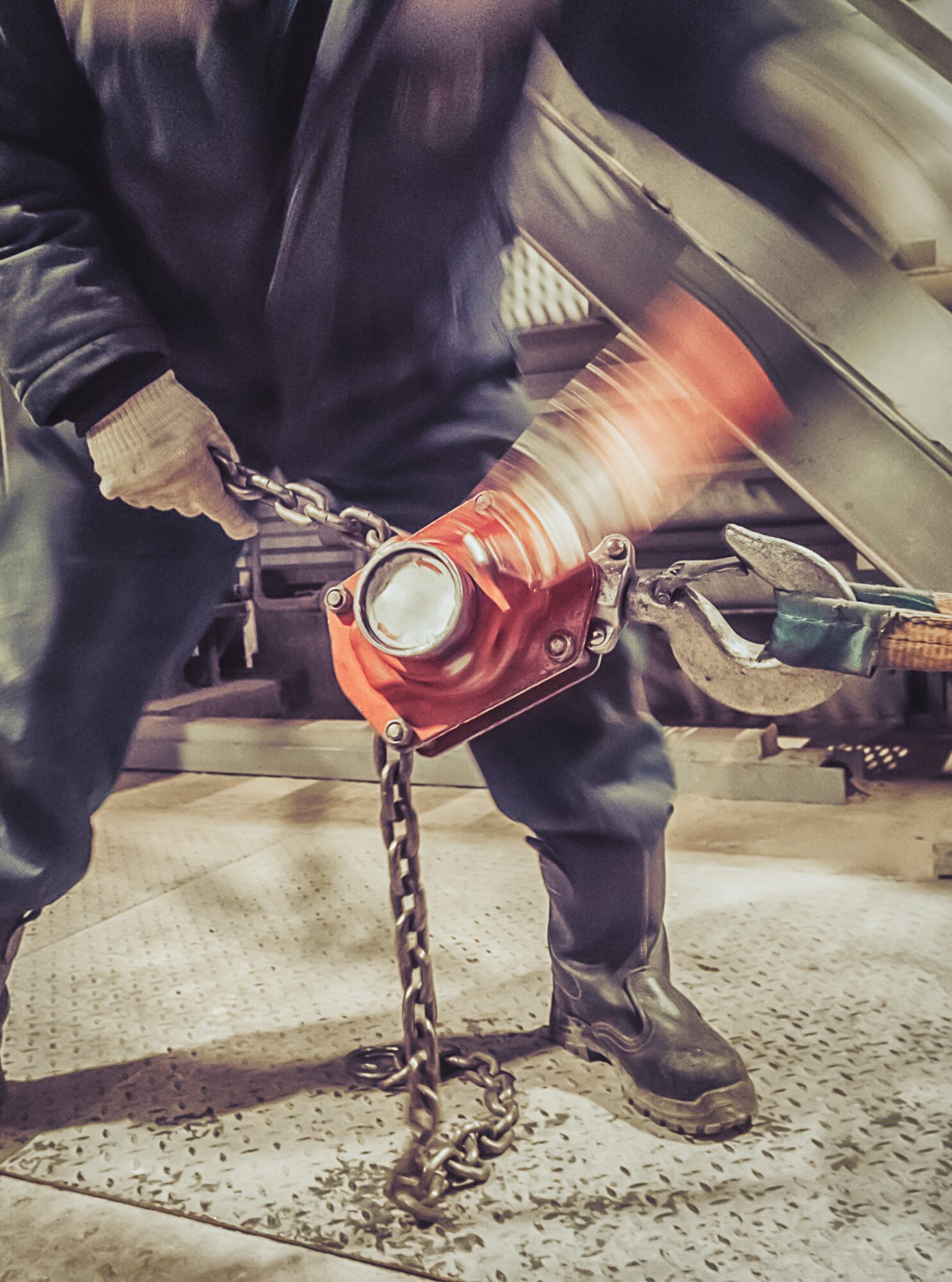
Bull Rigging: A method or system of rigging commonly used where a crane (mobile/overhead) cannot gain access. It is often used in concert with other rigging activities such as transferring a load from a structure to a crane hook or vice-versa.
Slang: Hand Rigging, Drifting, Tarzaning
Working Load Limit (WLL): The maximum allowable working load established by the rigging hardware manufacturer.
Slang: Many people will use the old term Safe Working Load (SWL)
Lifting Slings
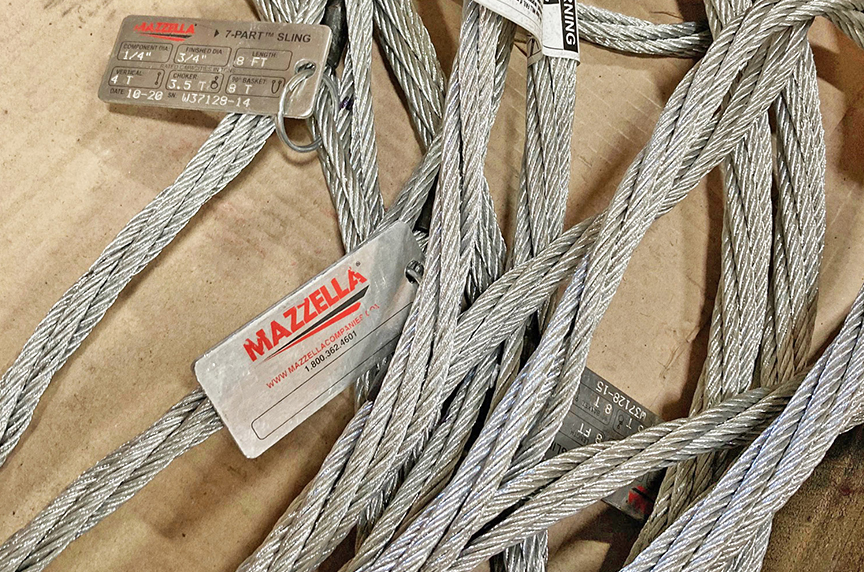
Wire Rope Sling: A sling made from braided wire rope or cable-laid wire rope with eyes fabricated by swaging one or more metal sleeves over each rope junction or by tucking the ends of the strands back into the main body of the rope in a prescribed manner.
Slang: Wire rope slings are commonly called chockers in the field.
Multi Leg Sling Assembly: A sling composed of multiple legs with the top ends gathered in a fitting that attaches to a hook, shackles, or other load-handling device.
Slang: They can be called bridles, spreaders, double (two legs), triple (three legs), quad (four), depending on the number of legs it has.
Synthetic Flat Web Sling: Synthetic webbing fabricated into a configuration with or without fittings for raising, lowering, or suspending application in general industrial and specialized operations.
Slang: straps, synthetics, nylons, flat webs, softies
Endless Sling: A sling made endless from one continuous length (of alloy chain, wire rope, or synthetic fiber) with both ends joined together.
Slang: Can change depending on material: Grommet (wire rope), Short Splice (synthetic rope). They can also be called Infinite Loops or Belts.
Standard Eye Wire Rope Sling: A single-part or multi-part wire rope sling where the eyes are made from the wire rope and does not contain a thimble in the eye.
Slang: Soft eyes
Thimble Eye Wire Rope Sling: A single-part or multi-part wire rope sling where the eyes contain a steel thimble added to reinforce and help keep the integrity and construction of the, providing a barrier between the wire strands and the rigging.
Slang: Hard eyes
Flemish Eye Splice: A mechanical splice formed by unlaying the wire rope body into two parts and reforming it to create a loop or eye. The splice is completed by pressing (swaging) a metal sleeve over the rope juncture.
Slang: Mechanical splice
Turnback Swaged Eye Splice: A mechanical splice in which the rope is looped back on itself and secured with one or more metal sleeves.
Slang: Return loop and fold back are common.
Industry Specific Slings
Snub Line: A single leg wire rope sling with standard or thimble eyes between 5/8” and 1” diameter and usually 4’ in length attached to the tong on a drilling rig and used to assist in the snubbing process.
Stinger: A single leg wire rope sling assembly with thimble eyes containing a master link on one end of the sling, while the other end often contains either a hook or a shackle.
Protection
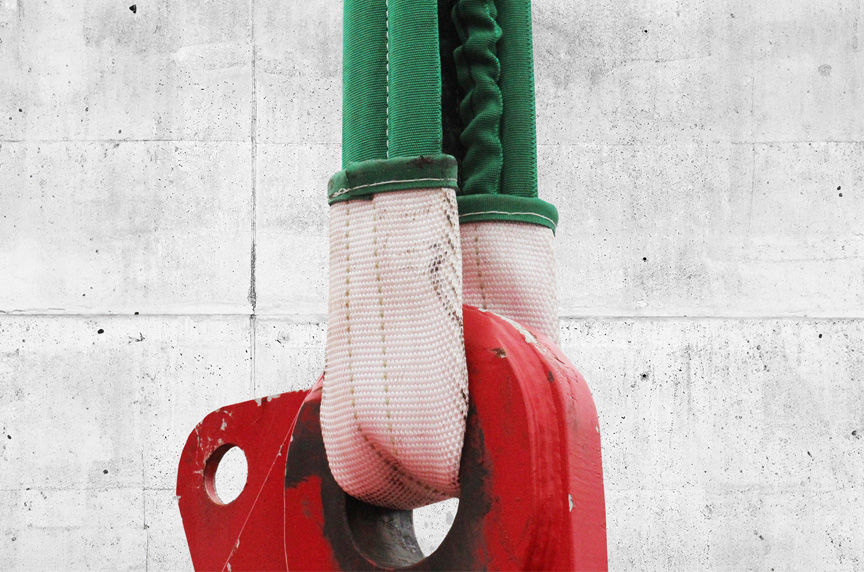
Sling Protection: Specialized materials or devices added to a sling or a load to protect the sling from damage or protect the load from damage caused by the sling.
Slang: Softeners
Rigging Equipment and Hardware
Shackle: A U-shaped, load-bearing connector designed to be used with a removable pin.
Slang: Clevis, D-Ring, Crosby
Bolt Type Shackle: A shackle that features the combination of a bolt and nut located alongside a cotter pin. These types of shackles remain secure when the shackle us subjected to rotation or torque
Slang: Four Parts
Master Link: A basic type of rigging hardware, consisting of a single metal hoop.
Slang: Can also be called a ring, oblong, pear link, d-ring, or bull ring depending on the shape.
Sorting Hooks: A hook used to sort or lay out products like flat plates, pipes, or other tube-shaped objects. They’re used in multi-leg sling assemblies for applications where the object or item will engage to the full depth of the throat of the hook
Slang: Shake Out Shacks, Lay Out Hooks
Self-Closing Latch: A spring-loaded latch, gate, or bail closing a hook throat opening that is manually opened for loading and closes upon release. It may be locked in position.
Slang: Catch, Flapper, Mouse
Hoist Ring: A piece of rigging equipment hardware that screws into an engineered lifting point on a load connecting the rigging with the capability of pivoting and / or swiveling to accommodate lifting at angles without incurring damage to the device.
Slang: Lift Ring, Load Ring
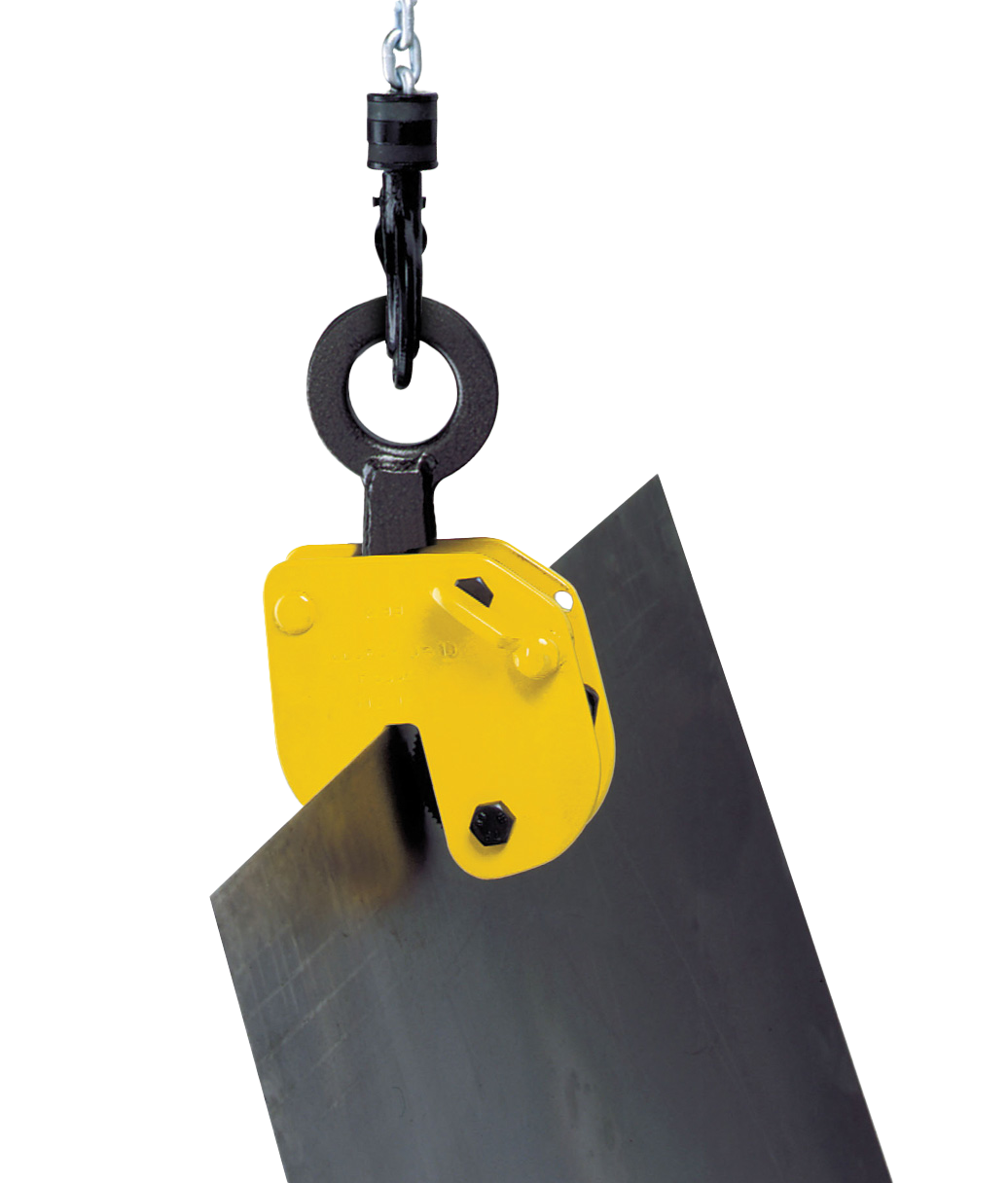
Plate Clamp: A lifting device used to secure, grip, and lift flat metal plate.
Slang: Plate Dog
Wire Rope Clips: A fitting for clamping two parts of wire rope of the same diameter to each other by compressing the wire ropes between a saddle and a U-bolt or between two saddles.
Slang: Cable Clamps
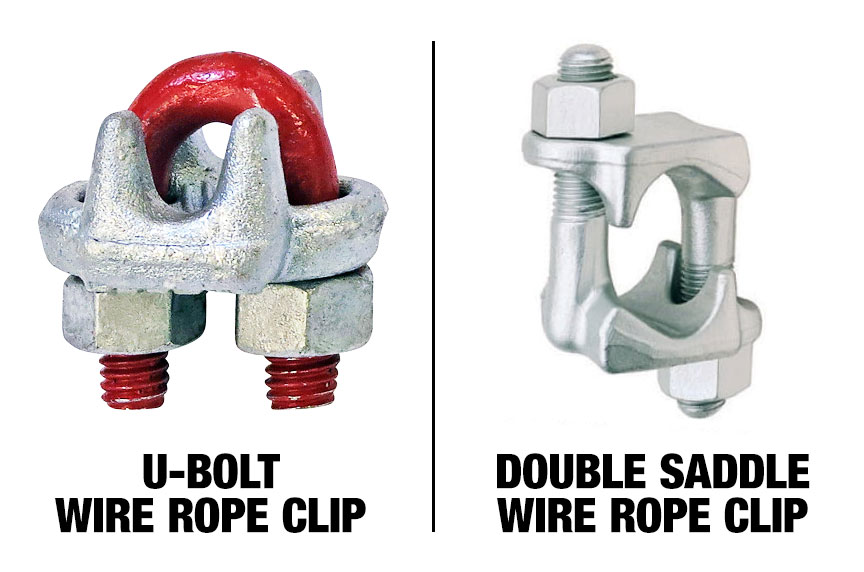
U-Bolt Wire Rope Clip: Wire rope clip using one saddle and a U-bolt
Slang: Crosby
Double Saddle Wire Rope Clip: Wire rope clip using two saddles
Slang: Fist Grips, Monkey Fist
Wire Rope Grip: A type of cable grip designed for pulling wires and cables using a light, compact grip.
Slang: Pork Chop, Rope Dog, Cable Grip, Haven Grip, Wire Rope Puller
Wedge Socket: An end fitting that terminates a wire rope by compressing the wire rope between a wedge and socket body.
Slang: Becket, Turnback Becket
Overhaul Ball: Attachments used to add weight to a crane rope so that the crane lines are kept taut. This prevents spooling and twisting issues that would ultimately create permanent damage to the crane.
Slang: Headache Ball
Cranes and Hoists
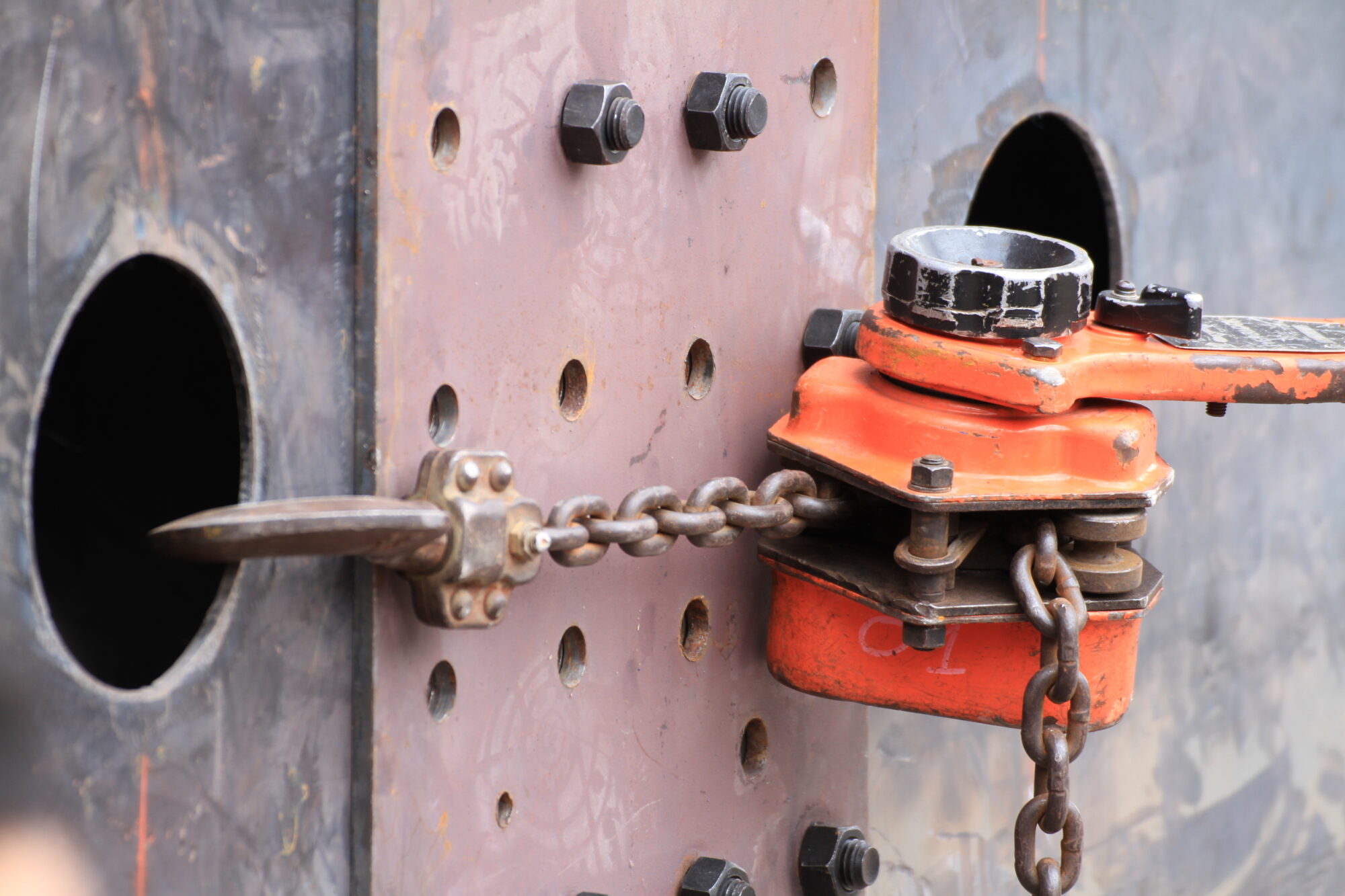
Lever Hoist: A manual lever-operated device used to lift, lower, or pull a load and to apply or release tension.
Slang: Come Along
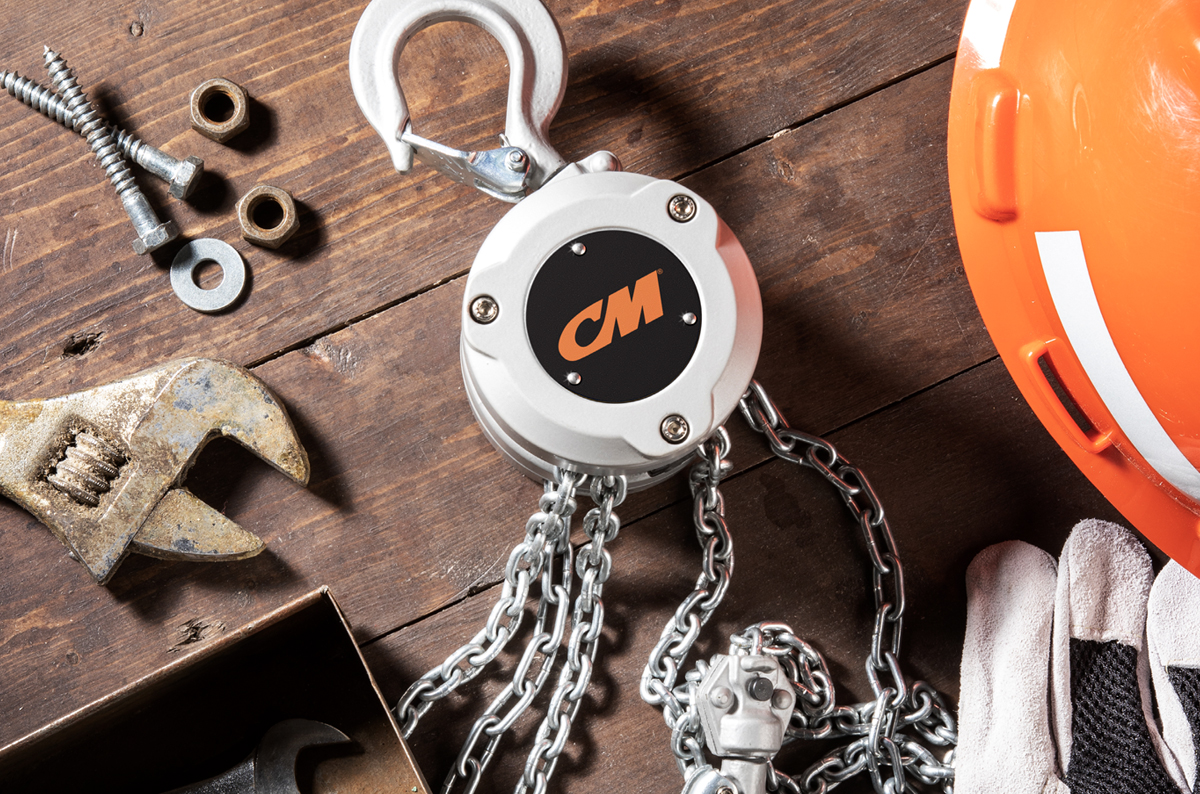
Hand Chain Hoist: A machinery unit that is used for lifting or lowering a freely suspended (unguided) load using a chain grasped by a person to apply force required for lifting and lowering motion.
Sland: Chain Block, Chain Fall
Electric Hoist: Can be designed to use chain or wire rope, and use an electric motor to turn gears located inside the hoist that lift or lower the load.
Slang: Motors
Strain Cable / Pull Cord Control On a Pneumatic Air Hoist:
Pull Cord Control; Pull top handle (marked with arrow pointing up) down to raise load. Pull bottom handle (marked with arrow pointing down) to lower load. Release handle being used to stop either lifting or lowering.
Strain cable; On pendant throttle control, the valve handle is supported by a strain cable that is suitable for pulling trolley-suspended hoists when empty or light loaded. Push on load or load chain to traverse heavily loaded hoists.
Slang: Tugger Wire
Pendant Station: Controls suspended from the equipment for operating the unit from the floor.
Slang: Banana, Pickle
Final Thoughts
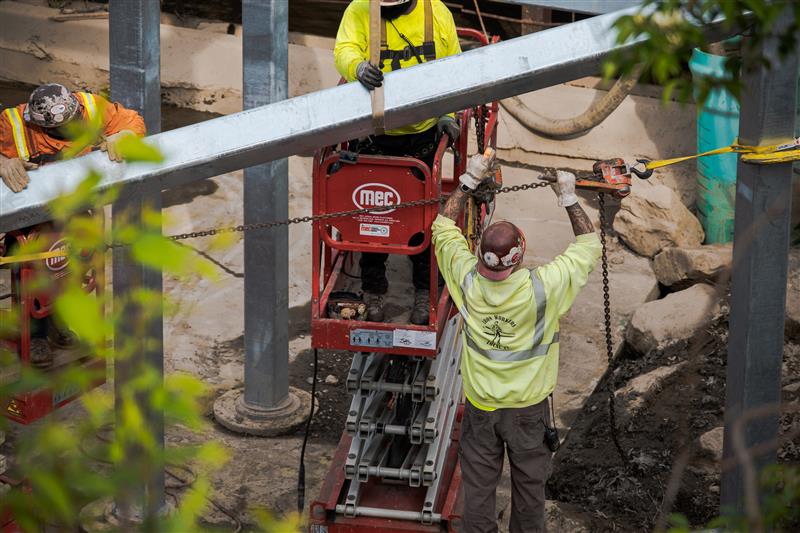
Depending on the industry you work in, your job title, the age demographic you belong to, or the part of the country / world you live in, the terminology for important rigging tools and processes can change.
You may be new to the industry and want to better understand rules and regulations. You may oversee ordering equipment and want to better communicate with vendors. You may be moving to a different part of the country for work. You could also be getting a promotion and want to better communicate out in the field. Whatever it is, we hope this article helped you better understand the language of lifting and rigging.
Whatever you need, Mazzella’s team of industry experts, vast distribution networks, and strong partnerships with top brands can help you get your projects done safely and efficiently.
Shop on our e-commerce site, and reach out to an associate if you have questions.

Copyright 2025. Mazzella.