
Warehouse Safety: How to Identify Hazards and Prevent Injuries
This article discusses the steps you can take to create a safer warehouse, with facts pulled straight from Mazzella’s warehouse experts.
Estimated reading time: 15 minutes
Transcript
How to Create a Safer and More Efficient Warehouse
– Is your warehouse operating as safely as it could be? What could increase safety and prevent common injuries within your warehouse? Warehouse injuries and fatalities have been on the rise, and the industry has seen an alarming number of injuries. With the e-commerce boom, warehouse injuries are rising above the industry average. In this video, we’ll explore practical solutions that can help you create a safer, more efficient warehouse.
My name is Ben and this is “The Lifting & Rigging Channel.” Today, Marc Smith, Warehouse Solutions Specialist at Mazzella is breaking down some of the practical solutions to increase safety within your warehouse.
What Are the Biggest Warehouse Safety Risks?
So Marc, what are some of the risks that you see in warehouses today?
– Some of the biggest risks we find are those that people walk behind and walk right next to every day, and just don’t notice them. One being damage to storage systems from forklifts, forklift impacts. Another being cluttered aisles that cause blind spots and trip hazards.
1. Identifying Hazards
How to Identify Warehouse Hazards Before Accidents Happen
– If you’re a warehouse manager, how can you identify some of the areas where safety improvements are needed?
– We always recommend getting out of the office and actually walking the floor, talking to the people on the front lines. Normally, your workers on the floor will know the sketchy areas before accidents even happen.
Also, look for near-miss indicators. Scratches, bumps, dents on racking, rack guarding, on the walls.
How Does Poor Housekeeping Cause Warehouse Injuries?
– What about just some basic housekeeping, where you’re storing your flammables, keeping your tools organized, having a system in place that you can find what you’re looking for when you need it?
– General housekeeping is a huge proponent to injuries and accidents. Everything should have a home. Everything should be clearly labeled and marked, and then monitored. You gotta make sure that they return back to their home.
2. Ergonomics
How to Prevent Ergonomic Injuries in the Warehouse
– What are some of the most common accidents that you see in warehouses?
– We see a lot of ergonomic strains, reaching and bending, and pulling and grabbing items that really are not well-positioned while stored. We want to avoid the grind in a shift, the physical exertion. So whether that be bringing the product up to what we call a golden zone. That’s between your knees and your shoulders. That’s an area of focus during every one of our site assessments is how do we bring the product to the worker instead of the worker down to the product.
– How do you bring the product to the worker?
– Through lift tables, pallet positioners, overhead cranes, carts, whether they be mechanical or electrical, letting the building work for the employee and not the employee working for the building.
– Before the camera started rolling, you were telling me about a customer that you just went to who has slide out racking.
– They’re storing some large, heavy grind wheels on static rack, and these grind wheels weigh anywhere between 40 and 500 pounds each. We’re trying to find a way to bring those products to the operator safely to where an overhead crane can come down and assist.
3. Visibility
Why Is Visibility Critical for Warehouse Safety?
– Why is visibility so important?
– You can’t be safe around something you can’t see. Also, near misses between pedestrians and equipment or pedestrians and lift trucks. So we talk about properly illuminating certain areas. End of aisles, want to make sure they’re well illuminated. Inside the aisles, you want to make sure labels are clearly marked and well illuminated, of course.
So we oftentimes see a need to upgrade existing warehouse lighting to an LED type product versus a fluorescent, just in an effort to see what’s in front of you and around the corner.
4. Rack Safety
How Often Should Pallet Racks Be Inspected?
– So let’s talk about rack safety. How can warehouse managers ensure the racking is safe and protected from damage or collapse?
– We first and foremost recommend at minimum an annual safety inspection by a third party to come in and make sure that the racking is positioned and secured, and it’s being used properly.
– Why third parties?
– Back to what we mentioned earlier, lots of times people walk by rack damage and don’t realize that it’s an issue. So by having a fresh set of eyes that knows OSHA’s requirements, they can work with the customer in helping determine, yeah, that’s something that we should monitor, or yes, that’s something that should be replaced immediately.
– So what are the risks of not inspecting pallet racks regularly?
– You’re subject to collapses and injuries, and they could lead to fatalities, of course. You want to make sure that you’re catching the small things on the front end before they become big things in the end.
You, as an employer, need to make sure the site is safe for your employees to operate. So that’s ultimately what we try to work with our customers on accomplishing.
How to Protect Warehouse Racking from Forklift Damage
– So you mentioned how important inspections are to protect racks. Is there anything else that you can be doing to increase the safety of your racks?
– Once you identify concerns that need monitored or replaced, then we also recommend the use of guarding, physical steel guards that would mount and position themselves in front of the racking.
– Like these guards right here on the floor?
– Yep, absolutely. Those are what we call upright post protectors, and those are floor-mounted and floor-anchored. Guarding is always a very low-cost option to start.
There’s what we call love taps, every day, every shift, every hour. So you just want to try to minimize those and deflect those away from the racking.
There’s a lot of different types of guards. Some mount on the floor, like what you see around us, others actually mount to the uprights. And there’s also varying heights. It really depends on the type of equipment that’s interfacing with the rack as to which type of guards and what size guards we would recommend.
5. Forklift and Pedestrian Traffic
How to Prevent Forklift and Pedestrian Accidents
– Struck by accidents are a leading cause of death and also one of the most common causes of injury. So let’s talk about some pedestrian and forklift traffic safety. What are some of the biggest risks when it comes to forklifts, traffic, and the warehouse?
– Near misses are the biggest thing. Busy warehouses have a lot of lift trucks that have a job to do, and there’s a lot of people that need to get to certain areas of the building to help support that work as well. So we like to recommend the use of zones, safety zones, zones for pedestrians, zones for forklift traffic.
– So what is a safety zone? Like how do you implement that?
– Normally, we recommend a physical guard that separates the pedestrian traffic from the forklift traffic. It’s important that forklift drivers know where they can and can’t operate, and consequently, it’s important that the pedestrians know where they can walk safely.
How to Get a Professional Warehouse Safety Audit
– So if someone’s serious about increasing safety in their warehouse, what are some next steps that they can take?
– We always recommend a professional safety audit. That would include a site visit, and we would discuss concerns that exist now versus what could exist in the future.
We don’t want to just sell you products and services. We really want to form a partnership, a safety partnership. We can come on-site, we can understand your application. We can talk to your management team and your workers, your team rather, people on the front lines, and get a better understanding about what your needs are, not only today, and also moving forward, and then help you put together a plan and help prioritize.
We realize companies can’t just throw $200,000 at safety issues. OSHA really does recommend that you have a plan, but it starts with having knowledge of known issues.
– Hopefully, this video gave you some ideas on safety improvements that could help protect the workers in your warehouse. If you’re interested in implementing any of these changes, Mazzella’s Warehouse Solutions Specialists are here to help. Contact us through the link below.
If you found this video useful, informative, entertaining, or you just feel like being friendly, then hit that like button so we can get this information out to everyone who needs it. Remember, safe rigging is smart rigging. My name is Ben. Stay safe out there!
High forklift traffic, poorly trained seasonal workers, outdated racking systems, and a lack of safety inspections is a disaster waiting to happen for your warehouse and the workers in it.
Fueled by the modern e-commerce boom, warehouses are becoming more dangerous than ever. Many warehouses are now the size of small towns, with hundreds of workers and dozens of forklifts swarming around at all hours. Injury and fatality rates are skyrocketing, and safety professionals need to adapt.
Most hazards in warehouses, however, are often the ones people walk past every day that build over time.
A safe warehouse isn’t achieved with a single solution. Instead, it’s achieved using multiple best safety practices. When done together, these pillars build a string foundation to reduce injuries, protect productivity, and create a workplace where people can do their jobs without unnecessary risk.
With the help of Mazzella’s internal warehouse solutions experts, this article breaks down the pillars of creating a safe warehouse. We will also look at how to assess your current operation, how to make improvements, and why a third-party warehouse integrator is the best choice.
Table of Contents
- What are the Most Common Hazards In a Warehouse?
- How Do You Create a Safer Warehouse?
- What Is the First Step to Improving Your Warehouse?
- Why Should You Partner with a Third-Party Warehouse Integrator?
- Why Should You Choose Mazzella to Improve Your Warehouse?
What are the Most Common Hazards In a Warehouse?
The most common hazards in warehouses tend to be:
- Damage to storage systems caused by forklift impacts
- Cluttered aisles that create blind spots and trip hazards
- Ergonomic strain from repetitive bending, reaching, pulling, and lifting
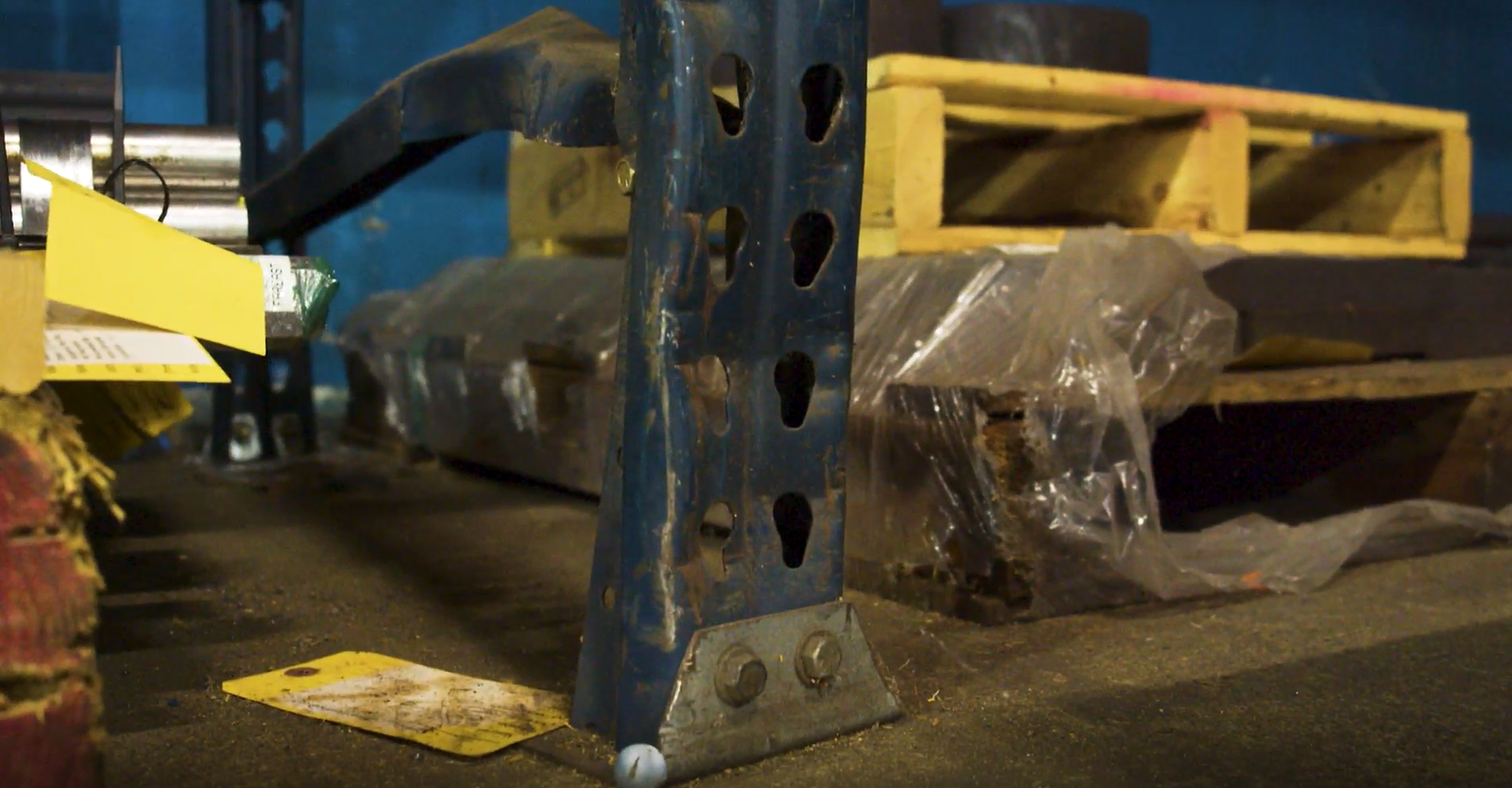
Our warehouse experts also find improperly sized storage systems, which tend to happen when a business purchases a warehouse and decides to keep the existing rack system rather than replacing them. They also find:
- Missing wire deck over walkways
- Poor lighting in high-traffic areas
- Unsecured storage racks without anchors
How Do You Create a Safer Warehouse?
There is no magic solution for creating safer warehouses. Instead, it takes multiple best safety practices…
Pillar 1: Regular Pallet Rack Inspections
Racking is the most critical system in a warehouse. It carries significant loads and is frequently exposed to equipment contact. Yet rack damage is often ignored, especially when it is minor or has been present for a long time.
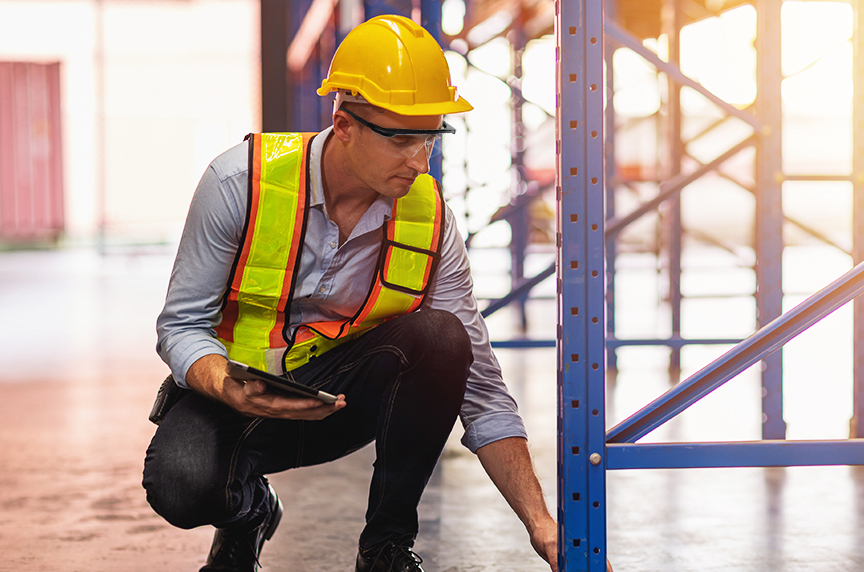
Every bend and dent can compromise the rack’s load capacity. That’s why it’s recommended that you have a having a third-party inspect your racks. Third-party rack inspections give you an unbiased and accurate assessment of your warehouse pallet racking system’s condition.
While your safety coordinators are probably fair and trustworthy, having an experienced and trained inspector from outside your organization conduct the inspection removes the chance of implicit biases, where subconscious feelings and attitudes develop due to prior influences and experiences, which affect people’s decision-making processes without them even knowing it.
You should inspect your pallet racks at least once a year. However, if you’re involved in major distribution operations that require hundreds of workers, a fleet of forklifts, and hundreds of bays, quarterly inspections may be a better choice. Conversely, a mom-and-pop operation with one forklift pulling a handful of pallets a day will be fine with an annual inspection.
Pillar 2: Physical Guarding of Rack Systems
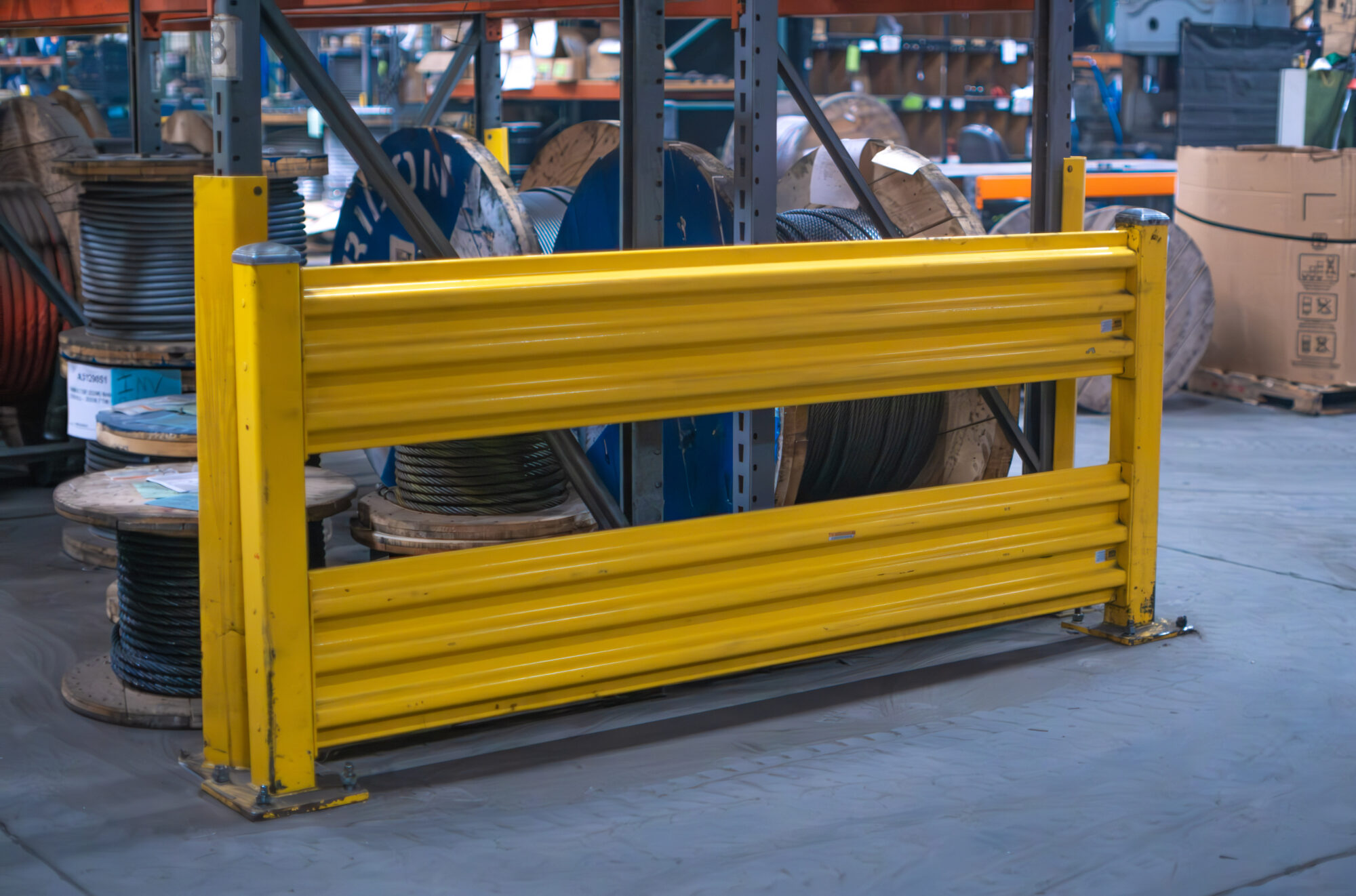
Warehouse rack guards, sometimes called frame protectors or end of aisle protectors, are protective steel structures installed on or around pallet racks to prevent or reduce damage from forklifts and other material handling vehicles. Guards come in a variety of sizes and models, too, including:
- Standard Upright and Column Protectors
- End-of-Aisle Guards
- Side and Frame Protectors
- Pallet Rack Back-of-Rack (Fall Prevention) Guards
Rack guards are an affordable, effective way to extend the life of racking systems, especially in facilities with high forklift traffic.
Pillar 3: Walk the Floor and Talk to Workers
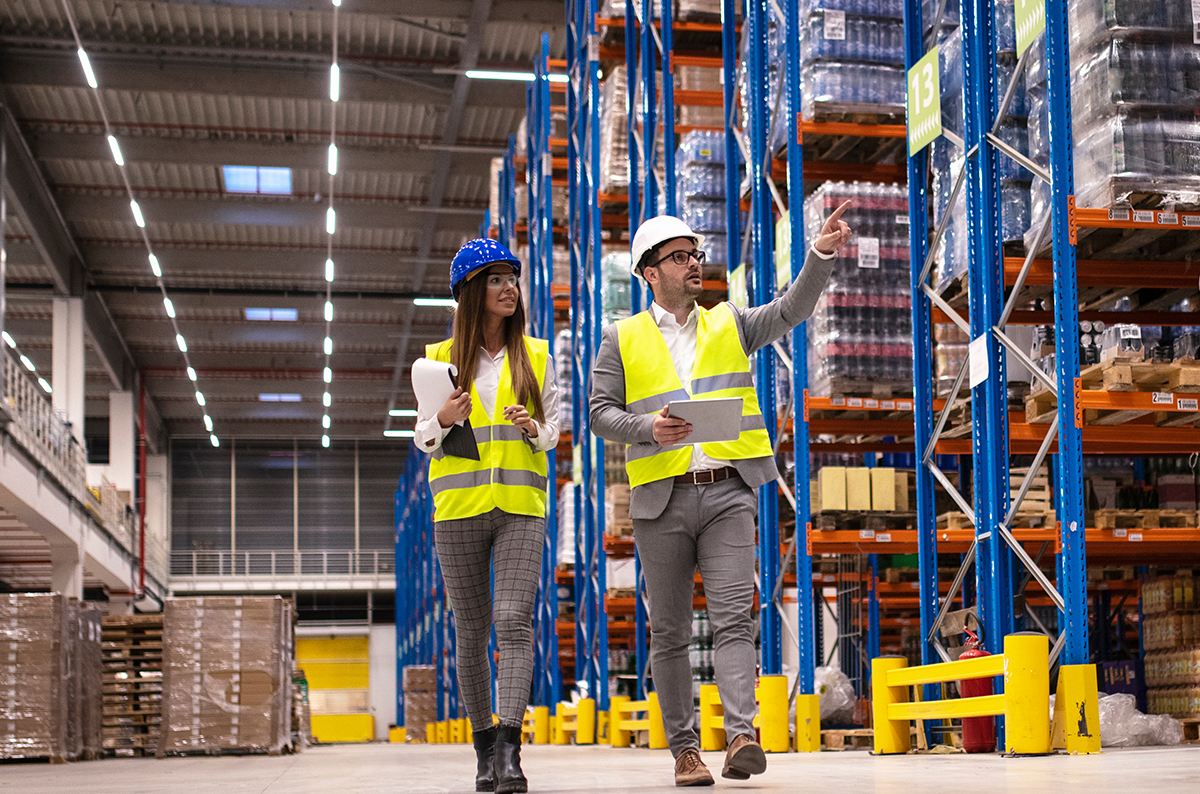
Get out of your office, walk the floor, and talk to your employees. The people doing the work often know where the sketchy areas are before an accident happens.
Your workers understand where visibility is poor, where traffic patterns feel unsafe, where items are stored in a way that creates strain, and where near misses happen.
It’s one of the fastest and easiest ways to identify safety gaps.
Pillar 4: Improve Housekeeping Practices
A safer warehouse is built on consistency. Everything has a home, everything is clearly labeled, and the system is monitored so that items return to where they belong.
While housekeeping is often seen as just a cleanliness, organizational issue, it ties directly to safety. Clutter creates trip hazards, blocks sightlines, and forces people into unsafe movement paths.
Pillar 5: Improve Lighting Systems and Visibility
You cannot be safe around something you cannot see.
Upgrading warehouse lighting, often to LED type systems, can help prevent potential near-miss risks, slips, trips and falls while also providing better visibility of reports, pick tickets, product identifiers and better situational awareness.
Visibility matters most in:
- End-of-aisle intersections
- Inside aisles where lighting is uneven
- Areas with frequent lift truck turns
- Locations where labels must be read quickly and accurately
- Corners where pedestrians enter equipment zones
Pillar 6: Pedestrian and Forklift Traffic Separation
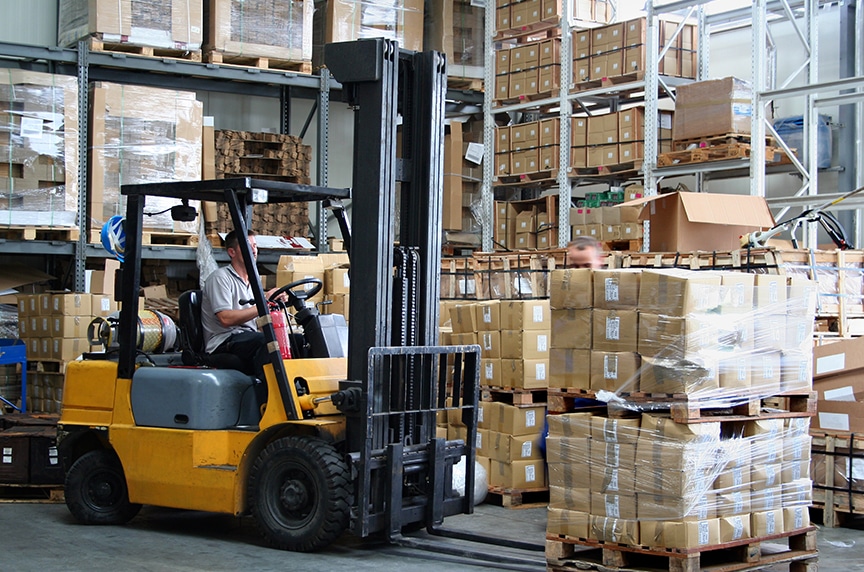
Near misses between pedestrians and lift trucks are one of the most common safety challenges in warehouses. Busy facilities have multiple trucks with real productivity targets, and they also have people moving across the building. That mix can lead to serious incidents happening.
Traffic safety improves dramatically when you implement zones for pedestrians and lift truck traffic
Many warehouses use floor tape, paint, or overhead lights. Those are helpful, but a physical guardrail creates an actual barrier that tells people where they can walk safely and where equipment can operate.
Pillar 7: Improved Ergonomics and Material Handling
Many common warehouse injuries are from strains; the repeated bending, reaching, pulling, and handling of loads stored in awkward positions.
One of the clearest ergonomic principles is bringing the product to the worker instead of forcing the worker down to the product.
The goal is to reduce the ‘grind’ during a shift. That means reducing physical exertion and minimizing awkward postures through better storage design and better material handling aids. A helpful concept is the “golden zone,” the working height between knees and shoulders.
Tools and equipment that reduce strain include:
- Lift tables
- Pallet positioners that raise and lower loads
- Carts that reduce carrying and pulling force, mechanical or electric
- Overhead cranes and lifting systems that shift load from people to equipment
A practical way to identify ergonomic priorities include:
- Watching where people repeatedly bend to floor level or reach above shoulder height
- Looking for manual handling of heavy, awkward items
- Noting tasks where two-person lifts are common
- Assessing whether storage methods are forcing workers in awkward, uncomfortable positions
What Is the First Step to Improving Your Warehouse?
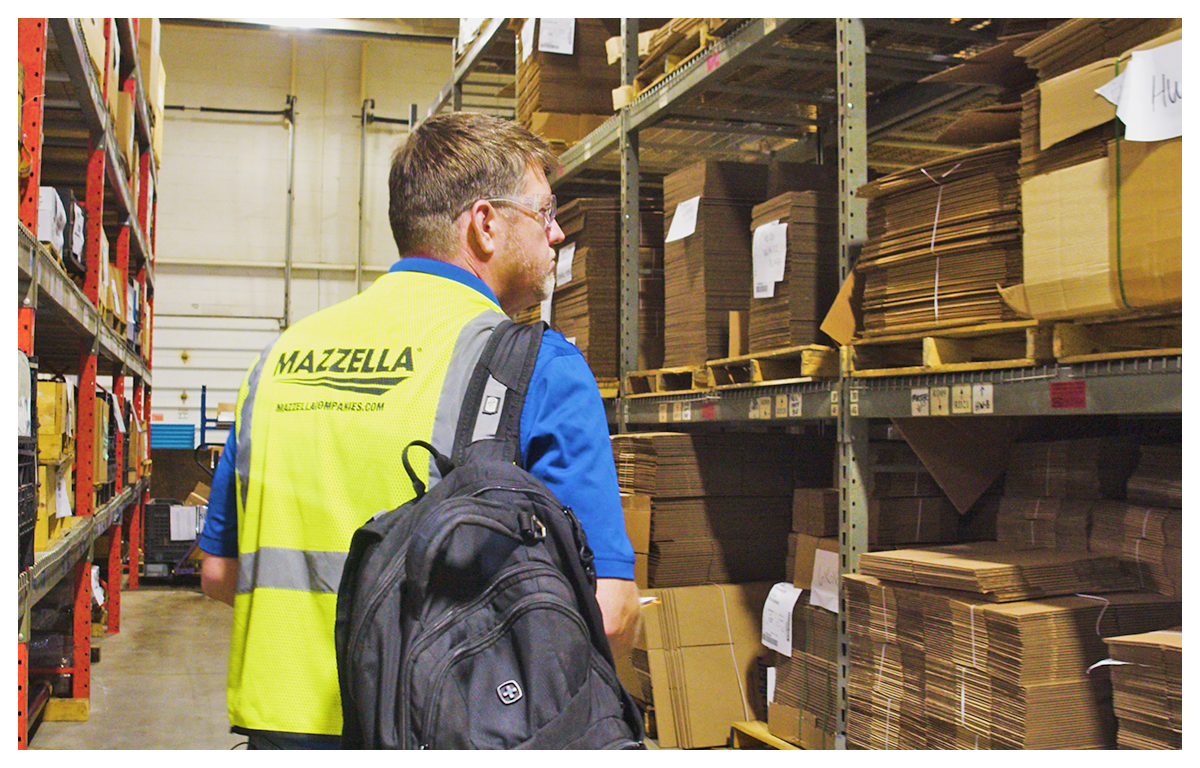
If you’re serious about improving safety at your warehouse, it’s best to start with a professional safety audit. This audit includes an on-site visit from a third-party integrator, where they tour the facility and address current and future concerns.
This should be a collaborative process between your company and the third-party inspector/provider. Most companies (including yours, most likely) don’t have hundreds of thousands of dollars in disposable income to throw at safety upgrades, and a warehouse solutions integrator should be able to help you space out, budget, and prioritize appropriately.
Why Should You Partner with a Third-Party Warehouse Integrator?
If you need new pallet racks, LED light systems, or rack guards, why wouldn’t you just work directly through a manufacturer? What makes a third-party integrator more reliable for your business?
Third-party integrators are not in the business of peddling a specific product. A rack manufacturer will always tell you that racks are the best option, even when a mezzanine is better. Integrators are in the business of finding the best product for that specific need, regardless of the manufacturer.
Sometimes, you may not need a new rack system. Integrators can also use their expertise to recommend pallet repositioning and aisle respacing to improve forklift paths and traffic. They can even recommend new types of decking based on a warehouse’s size and intended capacity. Warehouse integrators can also help you manage vendors, installers, and schedules.
Why Should You Choose Mazzella to Improve Your Warehouse?
At Mazzella, we want to partner with any company who’s passionate about improving safety at every level of their operations, especially in their warehouses.
That’s why we employ a full-time, in-house team that has decades of combined experience in the warehouse sector. On top of our industry-leading pallet rack inspection program, we can also help you with layout and design request. We also partner with the top manufacturers of:
- Pallet racks
- LED light systems
- Rack guards
- Conveyor systems
- Mezzanines
- Barriers
- And more!
We can also help your organization improve safety in areas outside of warehousing, too. Whether you’re comparing quotes or trying to budget, contact our team today to learn more.
Copyright 2026. Mazzella.