
How to Purchase a Custom Below-the-Hook Lifting Device
Buying a custom lifting device can be a big decision, especially if you have never gone through the process before. Our article breaks it down.
Estimated reading time: 19 minutes
We covered this topic on our YouTube channel. Watch below!
Transcript
Why Buying a Custom Lifting Device Can Be Confusing
— Purchasing a lifting device can be a big decision. Not only can they be a big investment, but if you have never purchased one before, a completely custom purchase can leave you with questions about the process. How long will it take? How should I gather the quotes? How do I analyze each company?
We’re going to walk you through each step of the process so you know exactly what to expect.
The Custom Lifting Device Buying Process Explained
— My name’s Dan Sherwood. I’ve been working with below-the-hook lifting devices for 15 years and I’d love to walk you through the process of what it takes from start to finish on getting one.
When you’ve made the decision that it’s time to get a new lifting device, you’re gonna go through a series of steps to get that device ultimately delivered to your door.
The first step’s gonna be the consultation phase where somebody’s gonna come out, look at your application, figure out what you guys are trying to do, and give you the best solution for that.
After that, it’s gonna go through a design phase to the point of being able to get it to the next step, which would be estimating.
And once it’s estimated and the pricing’s sent to you and you would issue a purchase order, that would then get the ball rolling on engineering.
Engineering would then produce the approval drawings, which is a set of drawings with all the critical dimensions.
After that, it goes into the fabrication, The fab’s getting done, machining all that is getting done.
After that, you’re gonna be notified the lifter should be shipping to you. You’ll get the lifter and you get to put it into use for the first use.
Consultation Phase
The consultation will take place after you’ve reached out to either your local account manager, filled out a contact form on our website, or called into our shop, we’ll set up a time that an account manager and a specialist can come out and review your application with you.
When we come in for a consultation, the biggest thing for us is understanding what you’re trying to lift and where you’re trying to lift it. Those two things are gonna really determine what type of device we wanna recommend for this application.
We always try to work with your available schedule as well as our account manager and/or specialists’ schedule to get in to make that visit. If we can’t get in right away, we might offer to set up a teams call, go over the application with you, start to get the ball rolling, at least getting all the information we need to get it into the design phase.
What Information Do You Need Before Consultation?
We ask that when we come on site, the customer has a full understanding of their application, really what they’re trying to do, where they’re trying to place the item, pick it from, any obstacles we might be looking at.
If they have drawings of the parts or sample parts we can have at some point during the process. All that type of stuff is gonna be great information for us. Knowing what crane they’re gonna be using it on or cranes they’re gonna be using it on. We need to understand what the capacity of the crane is versus what the weight of the load is you’re trying to pick.
There are certain situations where the weight of that load gets really close to the overall crane capacity and we have to be cognizant of that when designing our lifter ’cause there is gonna be a weight of our lifter that has to go into that total rigging calculation weight.
How Operators and Load Testing Affect the Lifter Design
The one thing to keep in mind as we’re going through the consultation phase, if you have an idea of what you think could work for you, please bring that to the table.
We’d like to talk to the operators, see what they’re doing, how they’re doing it, what they think might work. We might have an idea that the operators may not like, and vice versa, the idea you guys have, we might be able to come up with a more efficient and safer way to do something.
During the consultation phase, the main person you’re gonna wanna work through is your local account manager. If you don’t have a local account manager, the below-the-hook specialist that comes on site to do the consultation with you would be your next main point of contact.
It’s very beneficial if we’re able to get out into the plant, see the application, where we’re gonna be using this lifting device at so we can make our assessments of exactly what type of lifter there may be, see if we see any potential issues with with the lift that’s gonna be going on, as well as just the general application.
All that information is very helpful to us upfront. The more information we can have upfront, the better we’re gonna be able to put something together.
So one thing to note during the consultation phase would be to let us know if your company requires any type of load testing. Now, per the ASME B30.20 standard, load testing is a recommendation. It’s a should not a shall.
So while we try to load test every device we can, there are devices that are sometimes too large for us to test in-house. We do have outside sources to be able to help us load test. Keep that in mind when looking for your device. If your company or your industry requires a load test, please let us know upfront ’cause we may have to build in a cost for that if it’s too large for us to do within our own shop.
Initial Design and Estimating
After the consultation’s done, it’s gonna go back to work on a kind of initial design. It’s going to be the specialists taking the information back to the design engineers, presenting what they’re, they think is going to work, make sure there’s no issues with what they’ve come up with in the field.
It’s very critical that we get as accurate of measurements as we can during the initial design phase. That way it’ll prevent when the approval drawings come out and something’s caught at that point, having to take it from the approval phase back to the initial design phase and potentially a re-quote phase.
If a customer can have drawings or photos, or really as much information as they can on the parts we’re lifting and what we’re lifting in. That’s really gonna help us speed up the process.
It’s important to note that during the initial design phase, no actual engineering drawings are gonna be sent back and forth between the customer and the company. The next set of communications you will see from us is the quote for the lifting device.
As the process moves forward, the account manager is going to be your main point of contact. They’re the person that you would wanna reach out to if you had any questions as far as how the quote’s coming along, if you have any questions after you receive the quote. We always encourage you to work through your local account managers.
You can expect a quote in three to 10 business days after consultation. This is based around the current workflow in the below-the-hook shop as well as the complexity of what the project is.
How to Compare Custom Below-the-Hook Lifter Quotes
One thing to keep in mind, if you are comparing below the hook quotes from company A to company B, you wanna understand exactly what the devices they’re proposing.
Different companies can be quoting different solutions to your application. So you really wanna understand which solution you think would best fit your application as well as your company.
Whether it’s more expensive or cost effective, always looking at what that device is and how it’s gonna work, could improve efficiencies, anything like that.
So buying below the hook on dollar value when it’s a custom device is not always the best thing to do. You always wanna look at what exactly is being quoted and how that’s going to be used.
The biggest thing is to make sure when you’re getting quoted from a on a below the hook lifter is you always want to ask the company if they design to the ASME B30.20 and BTH-1 standards.
As long as the company knows those standards, designs to those standards, you should be safe in proceeding forward with a device from that company.
During the quoting phase, you’re gonna want to continue to keep in contact with your account manager. They’re gonna be your main source for any information, any questions that may come up during this process. Always make the account manager your first point of contact. The account manager or specialist still may reach out with additional questions or or clarification on the application.
What Happens After You Issue a Purchase Order?
So after you’ve reviewed the the quote and determined that you’re ready to move forward with it and issued us a purchase order, there will be a short time where our legal team has to review terms, and if there’s any progress payment terms that need to be discussed during that point in time, that would happen.
After we have all the purchase order information squared away, it’s gonna move over to our engineering team to start the official design.
During this phase, the engineers are gonna take all that information we gather during the consultation, during the quote process, and start putting together what’s known as your approval drawings. These are gonna be fully engineered drawings that is gonna show you the device that we are going to be delivering to you.
You’ll be able to review those drawings, make sure what was discussed during the consultation matches, what is on the drawings, check all the measurements, make sure hole sizes are right, engagement, any clearances that need to be checked, that now is the time to check all that type of stuff as you want to catch that at the approval phase and not when the device is showing up on your floor.
How Mazzella Helps Walk You Through the Process
I know it can be scary when you’re reaching out to get a custom device made. We’re here to alleviate any fears that a custom device necessarily means expensive money with it. It can, but it can also be a lot more cost effective than you might be thinking when you hear the word custom. You also want to keep in mind when you’re ordering that device to leave yourself enough lead time up to that pick.
Mazzella’s gonna stand there with you through the entire process of buying a below-the-hook device, from consultation all the way to delivery. We’re gonna make sure that the application is perfect for the lifter we’re putting in there for you.
We’re gonna talk you through exactly what we’re presenting, how it’s gonna work, how it’s gonna function, how you can use it, where we see efficiencies coming in your process.
We’re here to help you guys get safer and more efficient in your lifting.
— So that’s the first stage of the process. Hopefully you understand a bit more about the process of getting a quote for a below-the-hook lifting device.
In the next video, we’ll walk you through everything you need to know about purchasing a lifter after you sign the purchase order and the engineering begins.
If you are considering making that investment, we have numerous articles, videos, and downloads to help you become a more informed buyer, including our lifting device considerations checklist and design sheet bundle.
Check out the links below to research anything you may need to know before purchasing a below-the-hook lifting device.
If you found this video useful, informative, entertaining, or you just feel like being friendly, hit that like button so we can get this information out to everyone who needs it.
Don’t forget to subscribe so you never miss a video.
Remember, safe rigging is smart rigging. My name is Ben. Stay safe out there.
Purchasing a below-the-hook lifting device isn’t a simple catalog order.
A custom lifting device must match your load, crane, process, and environment. If any of those details are missed early, the result can be redesigns, approval delays, longer lead times, or a device that doesn’t perform the way your operators need it to.
That is why the most successful projects start with a thorough discovery process, followed by close collaboration between the customer and the engineering team.
In this article, we will walk through the typical lifting device design and purchase process, explain the standards that shape the design, and highlight the most common mistakes that can slow an order down.
What Information Is Needed to Start the Below-the-Hook Design Process?
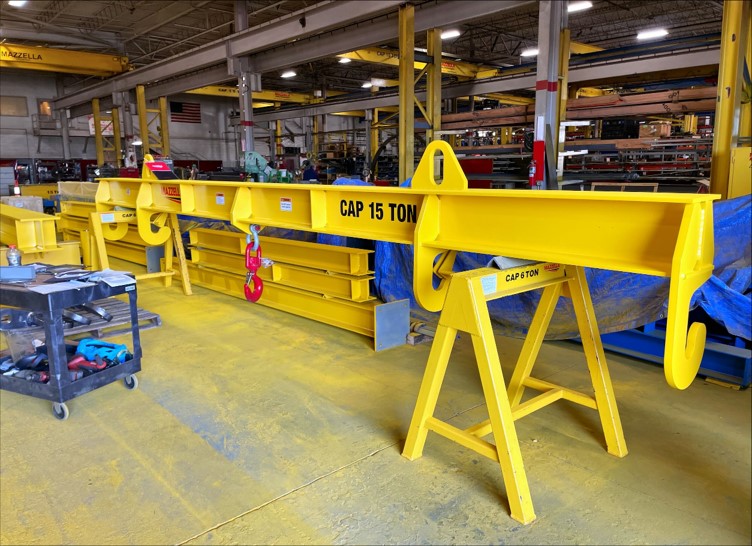
The first step in purchasing a bth lifting device is defining the application as clearly as possible.
From an engineering standpoint, the lifting device is only as good as the information used to design it. An engineer needs to understand how the load is picked, how it is moved, what could interfere with the lift, environmental concerns, and what success looks like in your process.
Be prepared to provide:
- Load weight
- Load size and geometry
- Pick points or engagement points
- Material type of the load
- Surface condition of the load
- Any non-marring requirements
- How the load is currently handled
- Any obstructions that may interfere with the pick
- Whether the load is simply lifted and placed, or also rotated, flipped, or manipulated
- Available crane capacity
- Any rigging or hook limitations
- Crane hook size
- Environmental conditions
- Photos, sketches, drawings, or even a rough concept
One of the biggest considerations is the relationship between the load’s weight and the crane’s capacity. For example, if a customer has a five-ton crane and needs to lift a five-ton part, there is no remaining capacity for the lifting device itself. That has to be accounted for before a concept can move forward.
Which Standards Govern Below-the-Hook Lifting Devices?
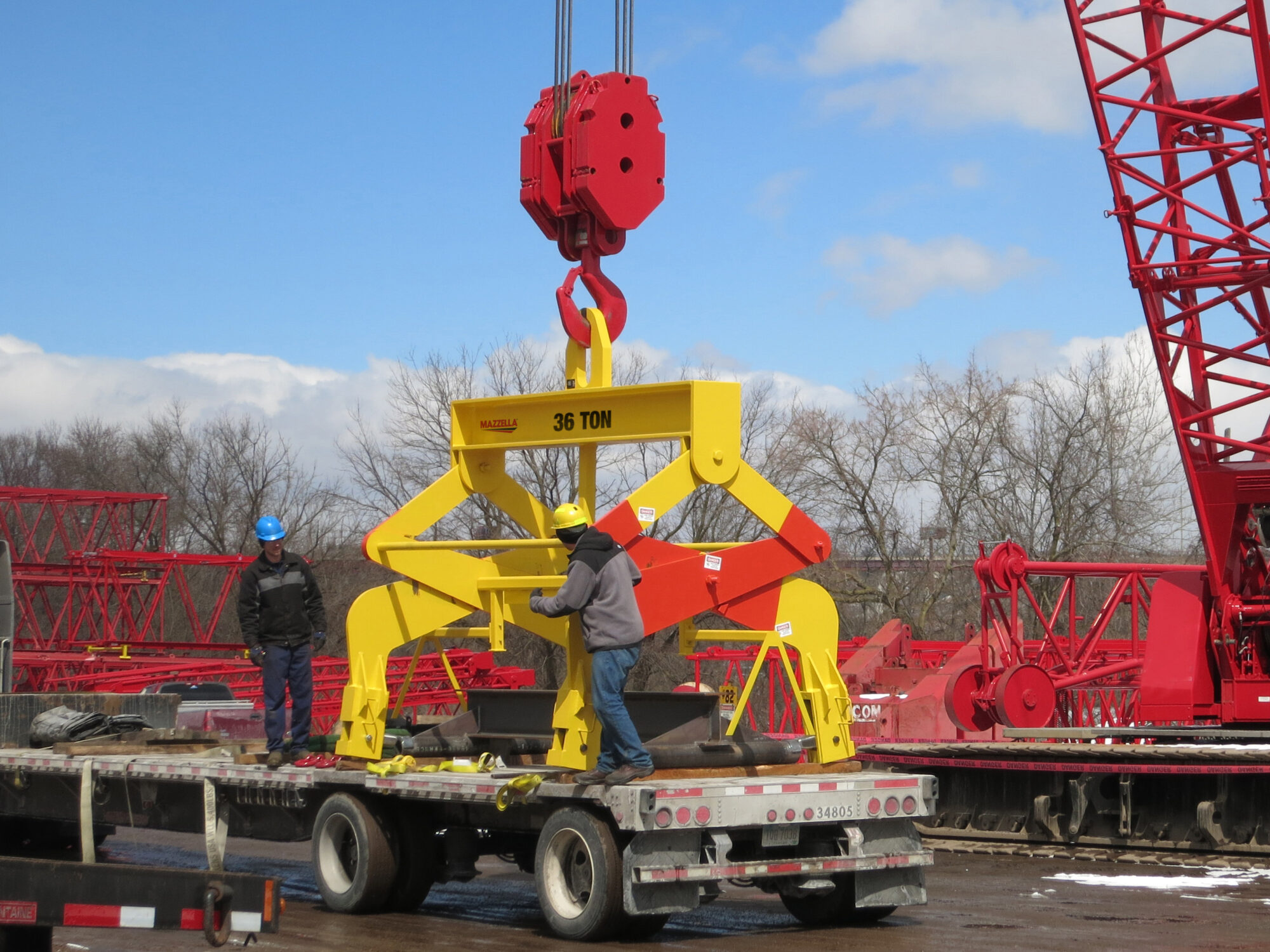
Two of the most common standards influencing lifting device design are:
- ASME B30.20
- ASME BTH-1
These standards help define how a below-the-hook lifting device should be designed, manufactured, and evaluated for safe use.
One of the biggest design drivers is how the device is classified based on:
- Design category
- Service class
These classifications influence the required design factor and help determine how robust the lifter needs to be for the intended application. This also determines the service life of the device.
A device used occasionally in a predictable application may fall into a different classification than a lifter used repeatedly in a demanding production environment. The more frequent and demanding the use, the more stringent the design requirements typically become.
How Do Environmental Conditions Affect Below-the-Hook Device Design?
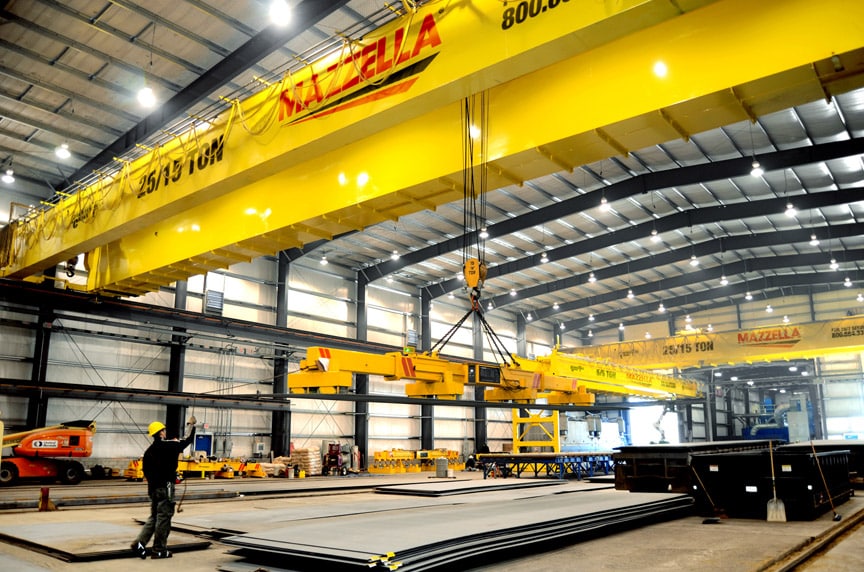
Environmental conditions can significantly change how a below-the-hook lifting device is engineered.
If the lifter operates in extreme heat, wet conditions, corrosive environments, or around chemicals, the design team may need to consider specialty materials.
Examples include:
- High-temperature applications, which may require exotic alloys such as Inconel
- Moisture or chemical exposure, which may push the design toward stainless steel or other corrosion-resistant materials
This matters because specialty materials usually cost more and extend the fabrication process.
<!–[if lte IE 8]><![endif]–>
What Does the Collaboration Process Look Like Between the You and the Engineer?
The best BTH projects are collaborative.
You know your application. Engineers know lifting device design. The final solution works best when those two areas of expertise come together early and stay aligned throughout the project.
The process usually looks something like this:
1. Initial discovery
You share application details, constraints, load test requirements, goals, and any existing problems with the current process.
Even a simple sketch on paper can help speed up this process. If you already have a rough idea of what should work, share it. Engineers can refine the concept, but that initial insight can help them understand the application faster.
2. Solution discussion
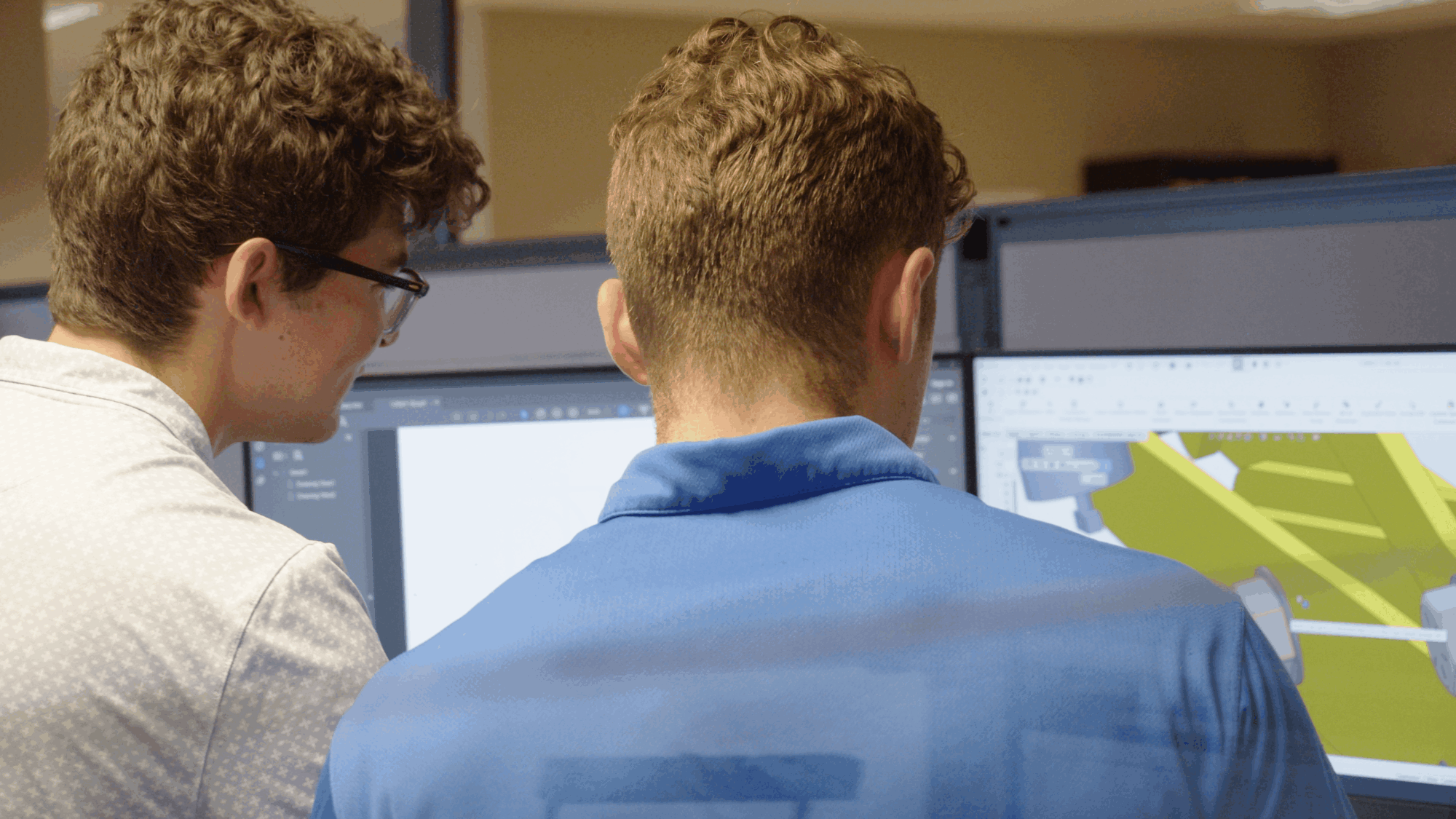
The engineering team reviews the application and begins shaping a concept around how the device will engage, lift, and move the load.
3. User feedback
The team will present the solution and add more context, often including shop floor input from operators and supervisors.
4. Preliminary proposal
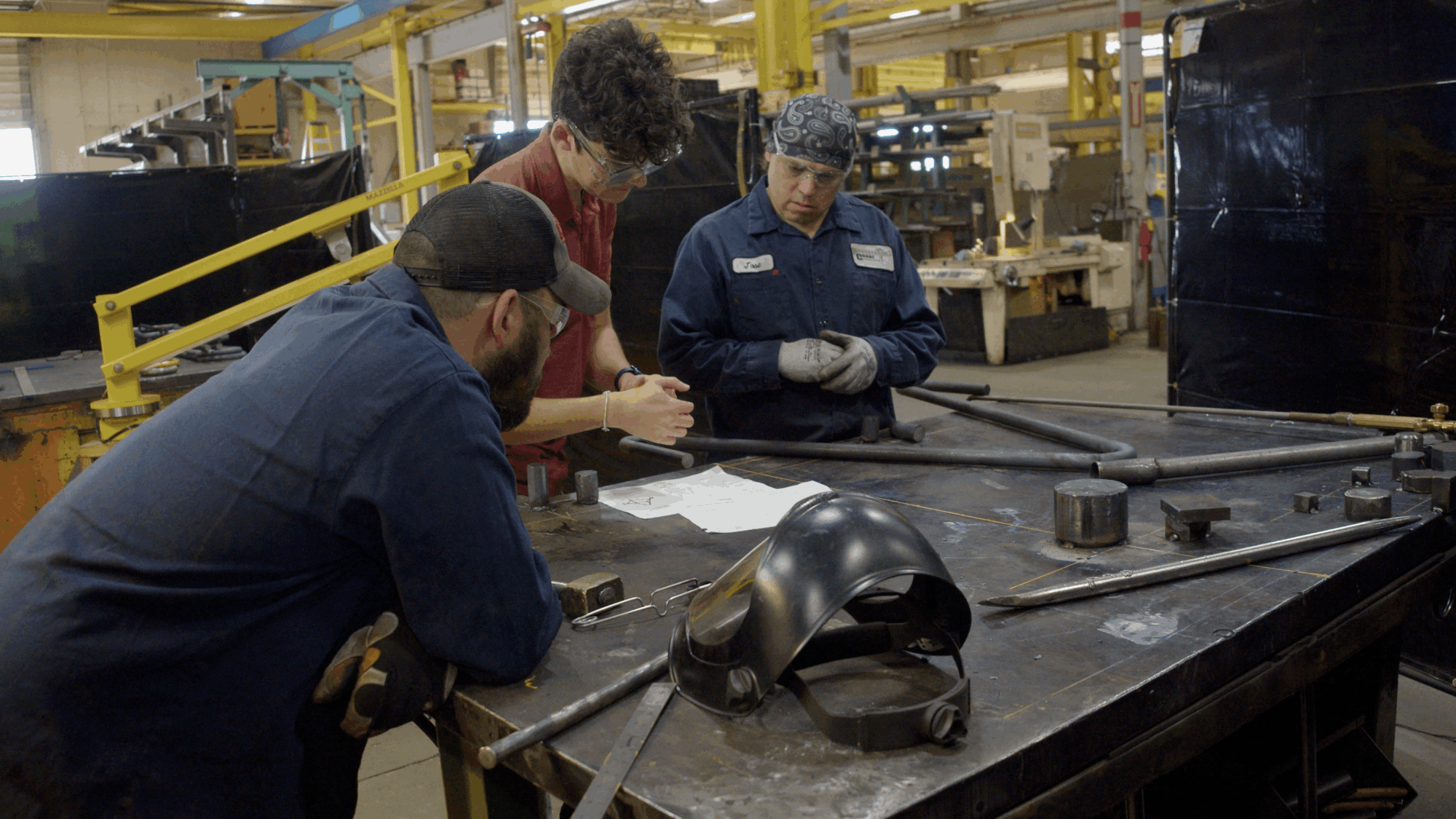
The lifting device manufacturer supplies a proposal based on the agreed-upon solution for the customer to review and issue a purchase order for.
5. Approval drawing review
You review the drawing to check capacities, fit, and functional details before fabrication begins.
Why Do Design Factor and Service Class Matter?
If you are buying a customized lifting device, design factor and service class are two terms you should understand.
Design category
The design factor refers to the margin built into the lifter’s design relative to the applied load. It is one of the core safety considerations in below-the-hook device engineering.
Service class
Service class relates to how frequently the device will be used over its life. In general, the higher the service class, the greater the expected usage and life cycle demand on the device.
What Happens During the Approval Drawing Phase?
The approval drawing phase is one of the most important parts of the entire process.
Once the supplier has developed the design, they will typically issue approval drawings showing the proposed device, dimensions, load capacity, engagement features, and other critical details. This is the customer’s opportunity to confirm that the device matches the real-world application before fabrication starts.
A thorough review should include:
- Confirming critical dimensions
- Verifying load size and geometry
- Checking hook-up and engagement points
- Making sure clearances are correct
- Reviewing how the device will interact with the load
- Ensuring the operator team has reviewed the concept
- Confirming the device will work in the intended operating area
How Do Powered or Specialized Components Affect Lead Time?
A basic mechanical lifting device usually moves through design and fabrication faster than a device with powered or specialized features.
For example, a motorized lifter may require electrical power from the crane. If the crane does not already have the necessary cable reel or drop, that work may need to be quoted and completed before the lifter can be used. Similarly, controls may need to be integrated with the customer’s crane remote or control panel.
In many cases, a standard mechanical lifter might fall into a shorter lead time window, while a powered or motorized lifter can add several weeks depending on scope and component availability.
The earlier those requirements are identified, the easier it is to plan accurately.
What Inspection and Testing Happens Before Shipment?
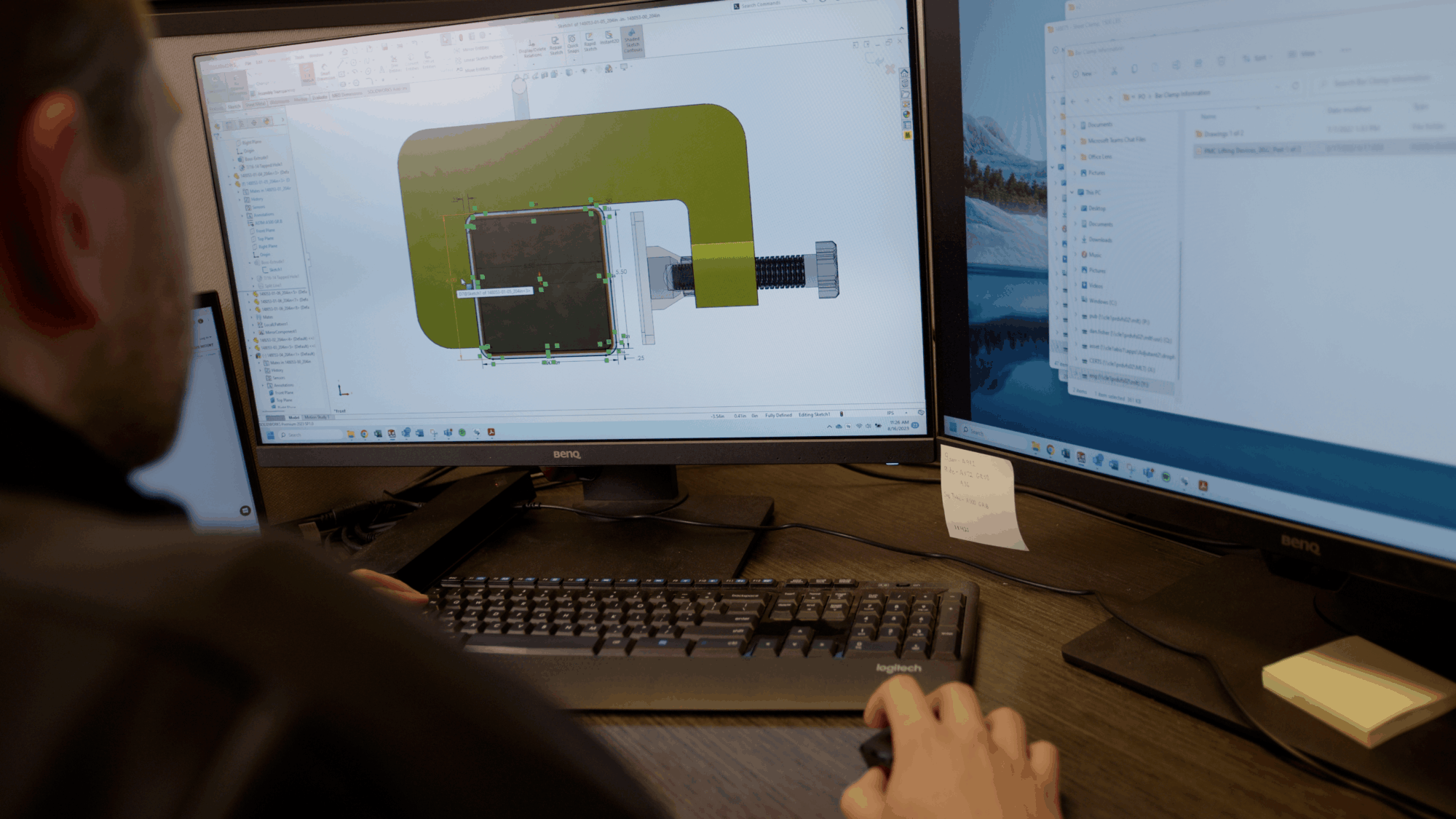
Before a below-the-hook lifting device is shipped, it should go through a quality and conformance review.
A typical process may include:
- Weld inspection, often by a Certified Welding Inspector
- Quality control inspection
- Dimensional verification against the approved drawings
- Functional testing of moving or powered features
- Documentation review
Load testing depends on the device and the manufacturer’s process. In some cases, if the device can be accommodated in the supplier’s test setup, it may be load tested. In other cases, the manufacturer may provide a certificate of conformance and documentation showing that the device was designed to meet the applicable standards.
Load testing is recommended but not required. So not all devices will be load tested, and not all companies will perform load tests. If your device requires a load test, this should be brought up during the discovery phase of the project.
Ask what testing is included, what documentation will ship with the device, and whether any field verification or commissioning is recommended after delivery.
What Mistakes Cause the Biggest Ordering Delays?
Most delays in the BTH purchasing process are not caused by fabrication alone. They often begin much earlier.
The most common issues include:
1. Incomplete review of approval drawings
Signing off too quickly is one of the biggest causes of avoidable delays. The supplier may be the lifting expert, but your team knows the application. If the drawing is not carefully reviewed, problems may only show up after fabrication begins or after delivery.
2. Scope changes after the project is underway
If the original request changes significantly, such as expanding the device to handle more sizes, more weights, or additional functions, engineering may need to revisit the concept. That can affect lead time, price, and manufacturability.
3. Delaying approval signoff
One of the major mistakes people make is waiting too long to sign off on the approval drawings. Most lifting device manufacturers have incredibly long backlogs. The longer you wait to sign off on the approval drawings, you run the risk of slipping down the priority list.
Devices are not placed into production until an approval drawings is signed off on. Quoted lead times start on the day the approval drawing is signed and returned to the manufacturer.
If you have a tight deadline, make it a priority to review and approve those drawings.
4. Waiting too long to act on the quote
Material markets can be volatile. If a quote expires before an order is placed, pricing may need to be updated based on current steel or component costs. That does not just affect budget. It can also affect timeline and purchasing approvals.
What Documentation Should Come With New Lifters?
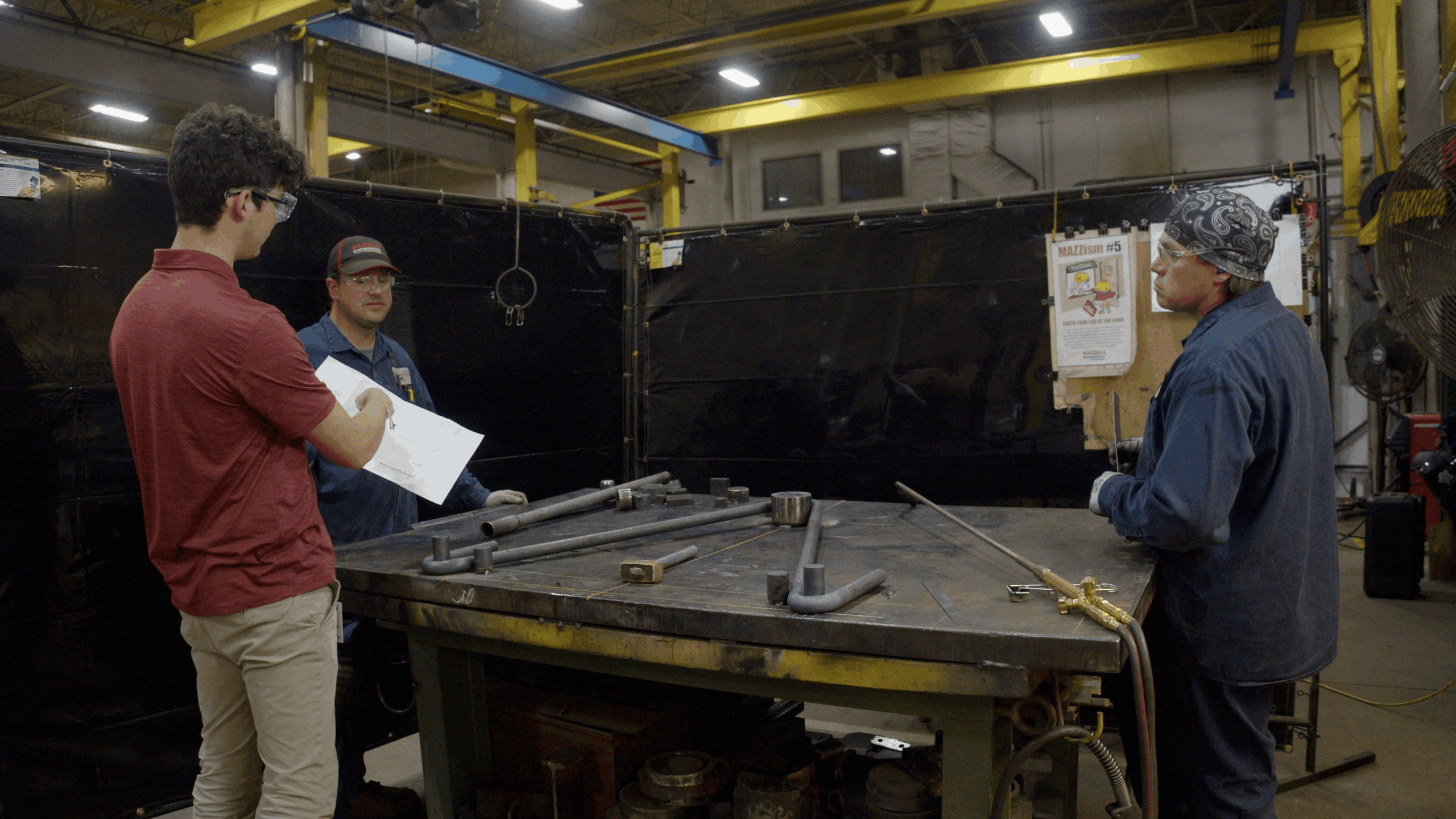
When the device is delivered, the manufacturer should provide a documentation package that supports safe use, recordkeeping, and internal review.
This often includes:
- User manual
- Approved drawing
- Sales order confirmation
- Any applicable test certifications
- Certificate of conformance, when applicable
- Inspection and PM guidance
If the device includes powered features or special controls, ask whether startup guidance, operator instructions, or maintenance information is also included.
You should also ask what training resources are available for operators and maintenance personnel, especially if the device introduces a new lifting method or includes powered movement.
Final Thoughts on Purchasing a Custom Lifting Device
To some buyers, the process of purchasing a custom below-the-hook lifting device can feel longer and more detailed than expected.
That is because a properly engineered lifter is not a commodity. It is a purpose-built piece of equipment that has to perform safely and consistently in your exact application.
A detailed process helps answer critical questions before fabrication starts:
- Will the device fit the load?
- Will it work with the crane?
- Will it hold up in the environment?
- Will operators be able to use it safely?
- Will it meet the expected duty cycle over time?
If the supplier is asking a lot of questions, that is usually a sign that they are trying to engineer the device correctly the first time.
If you are planning to purchase a below-the-hook lifting device, the best thing you can do is start with complete application information and involve the right people early. Contact a Mazzella representative if you need help choosing a lifting device.
Copyright 2026. Mazzella.