
5 Common Pallet Rack Problems Found During Inspections
Have you ever wondered what warehouse rack inspectors are looking for? To help you stay informed, we asked our Warehouse Specialists the five most common problems they find during their inspections.
Transcript
Why Do You Need To Inspect Your Pallet Racking?
– According to OSHA, one of the top 10 causes of warehouse accidents is collapsing racks, costing an estimated $36 billion annually. Inspecting your racks is one of the best ways to prevent these types of accidents, but do you know what you’re looking for? Today, I’m tagging along with one of Mazzella’s rack safety inspectors to find out what failed racking criteria looks like.
What Are the Top 5 Problems Found With Pallet Racking?
Mark, thanks for letting me join your inspection today.
– You’re very welcome.
– Can you tell me what are the top five things that you normally find during your rack inspections?
– Certainly, start with structural integrity, columns, beams, bent, broken, damaged, et cetera. Two would be lack of anchoring, the systems to the floor. Three would be missing safety components and fasteners. Four would be product application type items. So is it the right storage for the right product? And then lastly would be, is the product being stored properly on those systems?
– So those are going to be kind of the five things that we’re looking for today.
– That’s right.
How Often Should Pallet Racks Be Inspected?
– So how often should you have your racks inspected? Is it daily, monthly, weekly? How long should you be checking?
– That’s a great question, and there’s really no right or wrong answer. It really comes down to several factors and first is throughput or usage. Is it storage that people interface with once a month or is it storage that people are interfacing with lift trucks every day, multiple shifts a day?
So it really comes down to the application. Traditionally, we recommend it minimum once a year. And for higher throughput applications, we recommend a quarterly inspection.
Who Should Perform a Pallet Rack Safety Inspection?
– So who should be doing these inspections? Can you do them in house? Should you have a third party come and do them for you?
– Due to the increased in fatalities and injuries in warehouse environments, OSHA’s really leaning on employers to outsource this type of inspection to eliminate the bias and to make sure that you have an industry professional doing the inspection and making sure that nothing is missed.
– You’re a third-party inspector.
– That’s right.
– What makes you competent and qualified to inspect somebody’s racks?
– An industry professional according to OSHA is someone that has the experience and the training with the governing body of storage rack systems, which is Rack Manufacturers Institute. And I check both those boxes.
– So do all your fellow inspectors, I assume?
– That’s correct.
– All right. Well, I’m going to hop behind the camera and then we can go on the inspection, see what we can find.
– Sounds great.
How To Inspect Your Warehouse Racking
– So what are we looking for, Mark?
– So in this section, what we start with is structural integrity. Do we see any visual damage to the column, to the horizontal bracing, or diagonal bracing? Everything looks pretty true.
We then move on to fasteners, safety clips, and anchoring. Columns are anchored properly. Here are the safety clips. Everything looks good.
I then move on to product application. Is the product being properly stored? So everything looks good here. What we don’t know is the capacity. We see the rated capacity of the beam, but we don’t know the capacity of the product. They have this plywood here as just extra support. So that’s a question that we’ll have to bring to their attention, just making sure the capacities match up.
This is an example of a missing clip or a damaged clip, so we’re going to catalog not only the problem but also the location of the issue. These are items that would be included in with the report. And this beam also appears to maybe possibly have been welded after the fact. So that’s what we would call a modification.
What Does Code Red Pallet Rack Damage Look Like?
As you can see, a lift truck must have smacked into that a few different times. So we’re going to go ahead and document that. Also take some measurements so we can report that to upper management. That’s definitely a situation that this material should be offloaded immediately and they should lock this area out until a replacement or repair kit’s been installed.
This is a major safety concern. As you can see, the product on this racking looks very heavy, very dense. This is a situation that we would deem a code red. There’s a lot of material on there and the condition of that upright is severely compromised, so we wouldn’t want anyone getting hurt.
How To Prevent Structural Damage to Racking Beam Uprights
Here’s a severely damaged upright again. This is probably from a forklift. As you can see, the horizontal and the diagonal cross brace has been beat up quite a bit. It’s severely compromised.
This is another example of a damaged upright, probably from a forklift. What we would recommend is them investing in some post protectors that would mount and secure to the ground right in front there. So it’d be very similar to this here. This is an example of an upright post protector. Oftentimes, people will put those in front of each of the upright legs.
What Does Improper Use of Pallet Rack Storage Look Like?
This here’s another product application or rack loading concern that I’m going to bring to their attention and catalog as well. As you can see, the material’s not spanning the front horizontal beam or the rear horizontal beam for that matter. And in addition to that, you can see the wire decking is starting to be compromised by sagging in.
They should probably offload that material onto a different crate or a larger pallet so that it can span the front and rear cross beams.
Look for Missing or Damaged Rack Safety Clips
Here’s a couple opportunities where there’s missing safety clips. This is what you want. Obviously, this one’s missing.
Why You Need To Span Both Horizontal Beams of Your Pallet Racking
Here’s an example of a damaged solid deck. Instead of a wire deck, they’re having solid decks here. And if you look underneath, you can see how compromised that decking is.
Here’s a good example of product application or rack loading concerns. This cart is not spanning the front or rear cross beam and all that weight is being point loaded right here on the metal deck. If you can see, there’s a little bit of sagging that’s starting to occur. So that would be a yellow cautionary item for them to keep a close eye on.
The Importance of Pallet Rack Post Protectors
Here’s a good example of these post protectors that they’re used to guard the front leg of the upright. As you can see, this post protector’s been hit a little bit. However, the upright is in good shape still, so it’s done its job. This is why we recommend using post protectors on any rack openings where forklifts are interfacing with.
Here’s an example of a damaged horizontal upright brace. Looks like maybe a lift truck might have smacked into that. They have an area designated here on the floor. It’s possible that maybe this isn’t the right spot to be storing product right there. So we’re going to go ahead and document that. The bracing’s been compromised, but the upright itself seems to be in decent shape. So we’ll use that, that’ll be a yellow precautionary item.
How To Identify Training Needs for Forklift Operators
A little bit of beam damage there, that would be a precautionary item. They should keep an eye on that.
It looks like several of these beams all have the same indent. This to me is forklift training. So whomever’s putting these totes away are struggling with getting them in the position properly.
It also could be the clear aisle that they have here is a little tight, so they’re not giving their operators a lot of room to work. So that’s why when you see these situations, you have a lot of rack damage, a lot of product damage, and potentially equipment damage.
There’s really not a tremendous amount of damage. There’s a handful of precautionary items. I would say my largest concern here today is their product application and rack loading concerns. So there’s a lot of product as you can see, that are not spanning the front and rear beams, which is required to uphold capacities. So those are items that I’ll review with their company’s management team.
How To Spot Missing Anchorage on Your Storage Racking
So here, we have an example of some storage rack that’s not anchored to the ground properly. Every upright, front, and rear leg will have on standard two anchor holes or anchor points. And as you can see, neither of those are being utilized.
That’s a recommendation that we’ll make. That would be a yellow cautionary item that we’ll review with the company’s management team.
So in this area in particular, there’s a lot of missing safety fasteners. So I’m not going to document every individual location, but I’m going to give them an area of concern that we can review with them.
– Is that a red or a yellow type situation?
– This would be a yellow. It’s structurally not sound, but for good safe practices, they should have safety fasteners and clips in there.
What Happens After a Warehouse Safety Pallet Rack Inspection?
– All right, Mark, so obviously we found a few problems today. So what happens next? What should the customer do?
– What I do is we’ve made a lot of notations and we’ve taken a lot of pictures today of the items of concern. We gauge those or rate them, I guess, based on a color code system. Yellow is, these are concerns you should be made aware of. Red is like a code red, and those are items that we’re going to bring to someone’s attention before we leave site.
So we’ll review that with the customer, explain to them our findings, our inspection findings and what our concerns are and give them a list of recommendations. Either repair, replace, or tag out lockout.
– And are you able to give them a quote from like today or they, do they need to wait for the report?
– Any type of quoting would be done after the fact because there’s so many different types of rack, different size, different gauge metal being used. There’s a lot of specifications that go into replacing and repairing storage systems. So I’d have to take this information back to our project management team and we would prepare a quote for them.
But in the meanwhile, if it was of high concern, we would recommend that they lock out that area until we come back and address it.
What Is the Best Way To Prevent Pallet Rack Damage?
– Now, is there anything that they could be doing to maybe prevent some of these accidents or prevent some of this damage? Any safety features that they could be implementing?
– Training is a big, big key component. Ninety percent of the rack damage that we find is due to forklift traffic. So training, an evaluation of their training protocol would certainly be something we would look at and discuss with them.
In addition to that, daily inspections. Hold the employer accountable for understanding that these are areas that we’ve designated as of concern. You need to look at those periodically to make sure they don’t get any worse.
How Can You Learn More About Pallet Safety Inspections?
– Mark, thank you for letting me tag along on the inspection, showing us what type of damage, what types of things we should be looking for on the inspection. And feel free to use this video as your guide to help you inspect your racks and know what you should be looking for. You can use this as a checklist to make sure that your racks are in safe working order. But it is probably a good idea to have a dedicated third party come in without bias to check your pallet racks are safe.
Whatever your material handling needs, Mazzella is here to help. From lifting and rigging, to overhead cranes, to inspections, service, and training, we are your one-stop lifting shop.
If you found this video useful, informative, entertaining, or you just feel like being friendly, then hit that Like button so we can get this information out to everyone who needs it. Subscribe and hit the bell so you never miss a video. If you have a question, drop it in the comments so we can get you an answer. Remember, safe rigging is smart rigging. My name is Ben. Stay safe out there.
If you’re in the warehouse and distribution sector, you may be thinking about scheduling a rack inspection.
But you may also think an inspection is unnecessary. The racks you inherited seem to be doing great, and there are no glaring deformities.
The truth is, not all warehouse racks are created equal, and the problems that can lead to catastrophic failures can be hidden in plain sight. With warehouse pallet rack inspections, it’s important to be proactive instead of reactive.
At Mazzella, our Warehouse Specialists have decades of experience inspecting warehouses and their pallet racks—ranging from mom-and-pop operations to those owned by the largest corporations in the country.
To help you stay informed about the inspection process, we asked our team members about the five most common problems they see during a warehouse rack inspection.
By the end of this article, you will have answers to the following questions:
How Often Should You Inspect Warehouse Racks?

As discussed in our previous article, the biggest factors determining the cadence of your rack inspections are your facility’s size and daily use.
If you’re a mom-and-pop shop with a few dozen pallets and two forklifts, an annual inspection is your best option. Conversely, a major distribution facility with hundreds of bays, workers, and forklifts would benefit from a quarterly or monthly inspection.
Regardless of your operation’s size, you should never go a full calendar year without a rack inspection. You will also want to answer these questions:
- How many seasonal / temporary employees do you hire, who may not be properly trained?
- Do you have any deformed structural members?
- Are your forklifts running well, and do you use any forklift attachments?
- Has there been a major accident in recent weeks or months?
- When was the last time you got your racks inspected?
What are the Different Types of Warehouse Racks?
Warehouse racks can be split into two factions: structural and roll formed racks.
Structural racks are made from welded steel c-channels, and they have a reputation for being robust and strong. They are great for:
- Storing heavy pallets
- Preventing forklift damage
- Withstanding harsh work environments
If you are company with a fast-paced, repetitive, and hectic warehouse environment, structural racks are a great option. They are especially common in food and beverage distribution facilities
A roll formed rack is made by cold-rolling steel into thin, standardized components through a roll forming machine. Their thinner, lighter material makes them great for storing lighter pallets and constantly changing inventory. You can find roll formed racks in retail and third-party logistics centers.
Because of their ease of assembly, roll formed racks are exceptionally adjustable and flexible, allowing you to make customizations for storing seasonal / temporary products. While they are more affordable and easier to install than a structural rack system, their light material makes them more susceptible to forklift damage.
What are the Five Most Common Problems Found in a Warehouse Rack Inspection?
1. Damage to Uprights and Beams
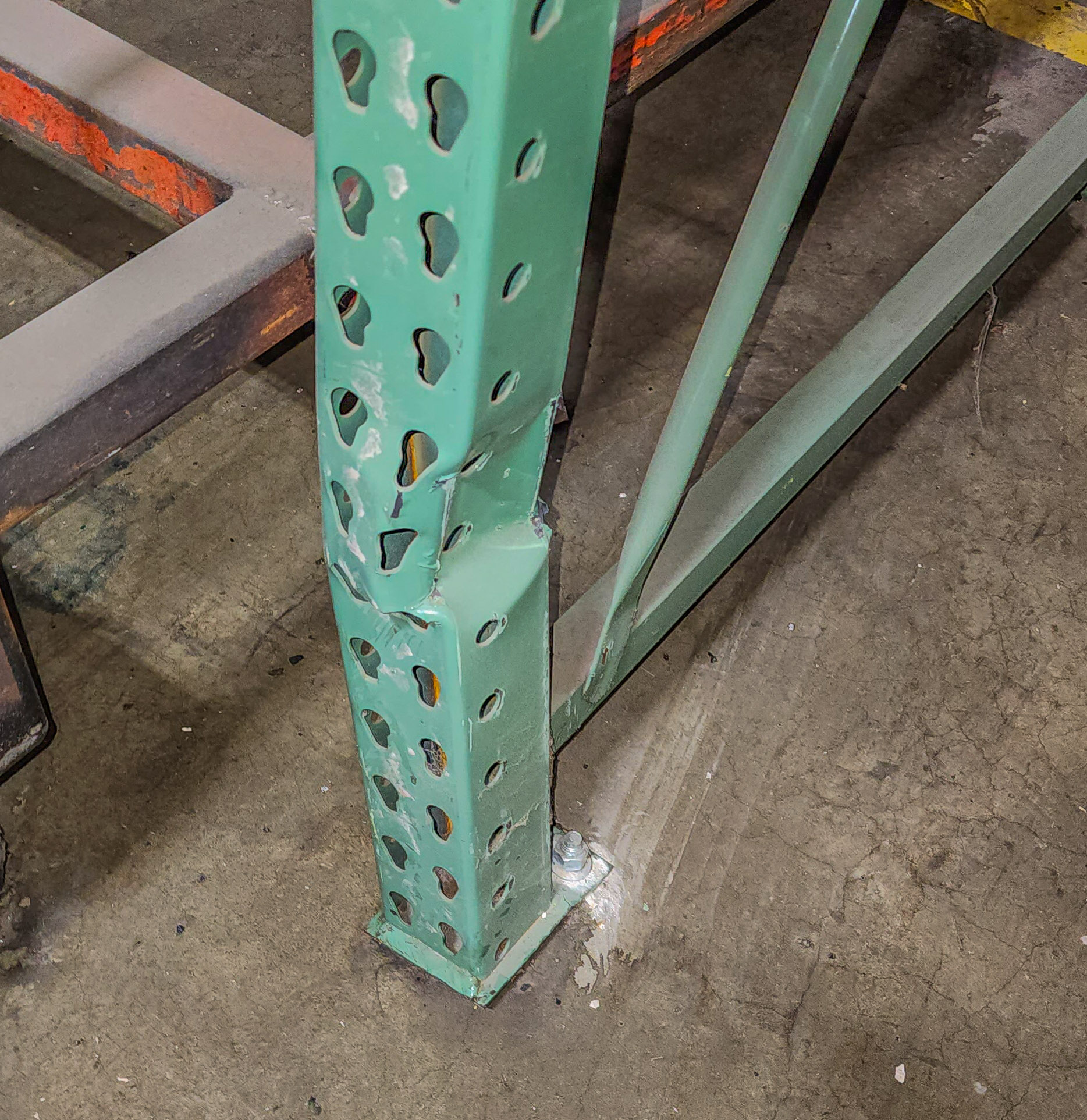
Damage to uprights and beams is the most common problem our warehouse experts encounter. The biggest culprit for beam damage is forklifts, which to our estimates, is responsible for about 90-95% of rack damage. (Corrosion is a distant second.)
Damaged uprights or beams directly affects the structural integrity of your rack, compromising their load-carrying capacity. Other signs of structural integrity issues include:
- Broken welds
- Sheared anchors
- Damage to locking pieces
2. Missing Safety Clips on Beams
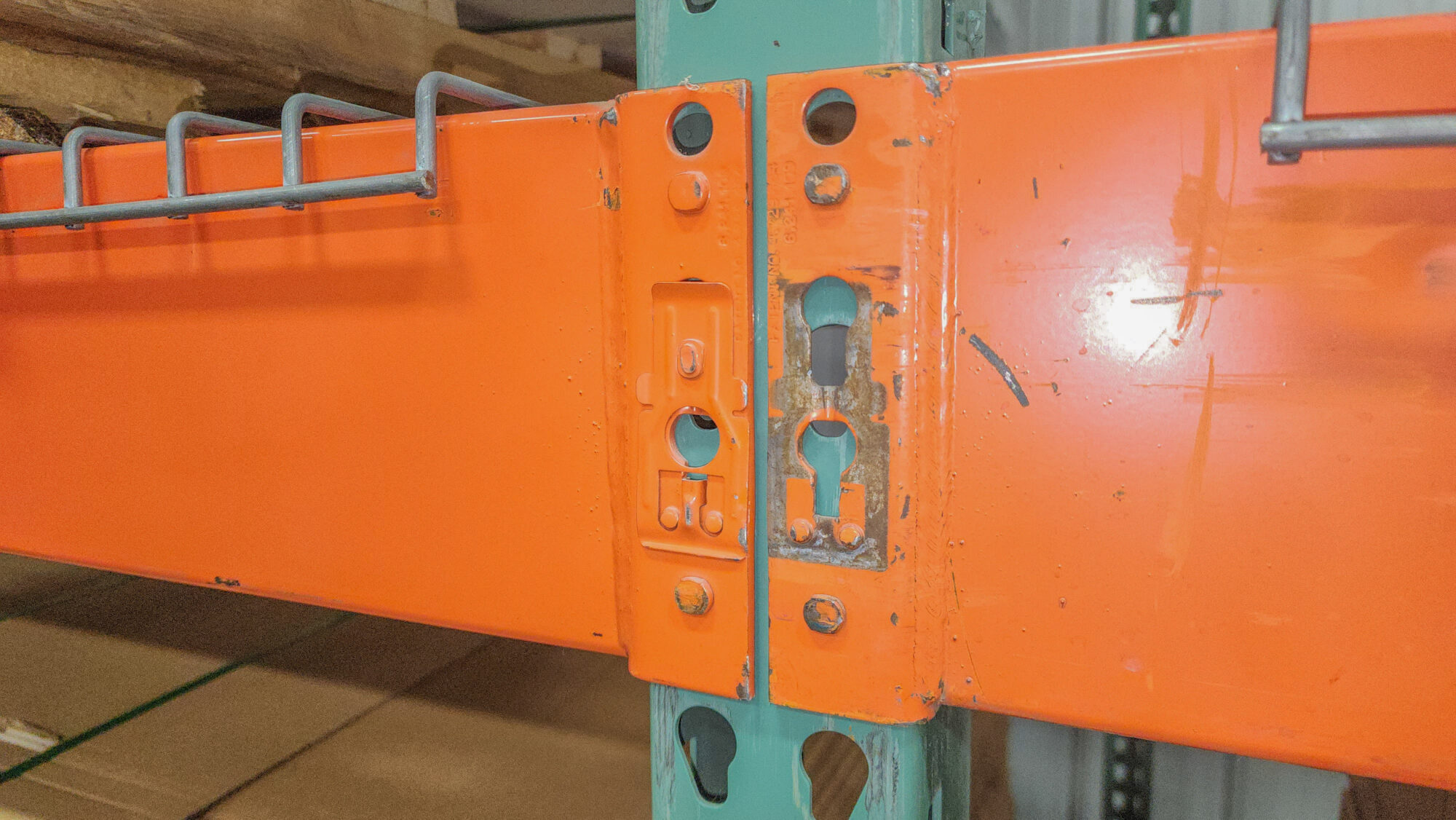
Sent from the manufacturer, safety clips attach to the rack’s pallet to reduce disconnection. The safety clip has a peg on it that pops into place, and it’s there so if a forklift carries a load too high, and those beams are bumped from the bottom, they stay in place.
Without a safety clip, the forklift could dislodge the beam above, and that level could come down.
The issues start when, years later, people decide to change the beam’s elevations levels. They get up there, take a flat screwdriver, and pry the safety pin out because it’s in the way. From here, it breaks off or is bent outwards, they readjust the rack, and a safety clip never goes back on.
3. Missing Wire Deck Over Walkways
Wire decks basically act as a heavy-duty safety net underneath your product. If you were to get under the rack and look up, you should not see just the bottom of a palette with no support underneath it.
If the operator didn’t set a pallet on properly, and a rack system is hit by a forklift with no wire deck underneath, that palette becomes dislodged and collapses, putting employees walking underneath at serious risk injury or death.
Thankfully, wire decks are very affordable, ranging from $40-$100 a bay. They also range in capacity, so assess your current pallet weight before purchasing one.
4. Missing or Damaged Anchors
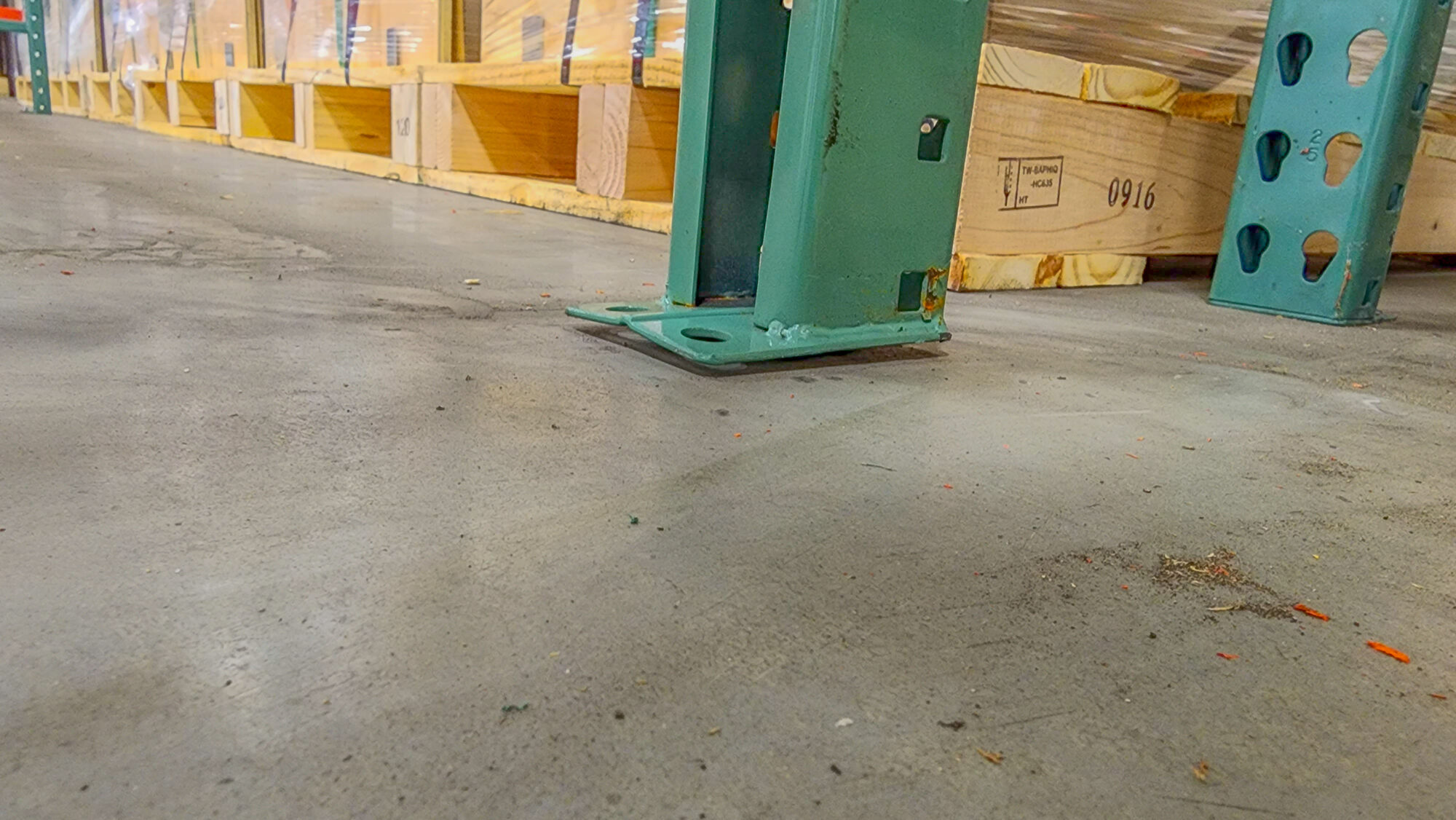
Missing or damaged anchors are a common cause of catastrophic failure, where the rack’s structure completely collapses. Some companies want to adjust the height of a rack or move it somewhere else. They will move it without anchoring it to the floor, so they can change it if they don’t like the location.
If a forklift operator bumps into a rack with a missing anchor, it could create a domino effect with nearby racks. Additionally, in older facilities, anchors can be damaged from years of wear and tear. A competent warehouse rack inspector should be able to tell you which anchors need to be replaced.
5. Improperly Sized Rack Members or System Configurations
When organizations purchase a warehouse with existing racks, they’re ecstatic.
“Instead of spending thousands of dollars on new racks, we will just use these instead.” And while it’s an understandable mindset, it’s important that your organization drops the idea that racks are a one-size-fits-all solution.
You may be a lead molding company using racks originally intended for storing Styrofoam cups and utensils with a 2,000 lbs. capacity, when you need a minimum 6,000 lbs. capacity.
Our warehouse specialists commonly see inherited racks without proper capacity or rating postings, too.
Who Should Perform Your Warehouse Rack Inspection?
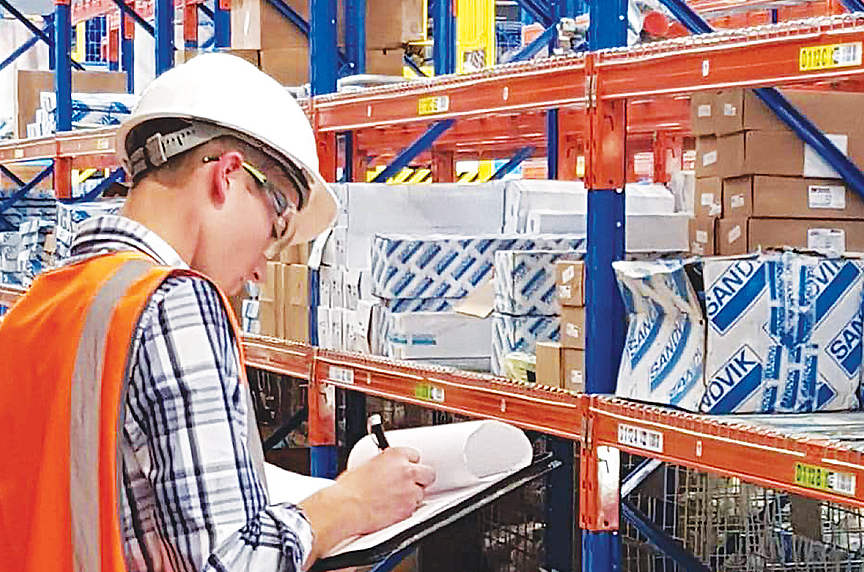
Opting for a third-party rack inspection is a great way to check the integrity of your racks.
It offers you an unbiased and accurate assessment of your warehouse pallet racking system’s condition—removing the potential of implicit biases from your internal safety coordinators.
While current industry standards say any “experienced” professional can perform a rack inspection, there is no set criteria for what makes someone an expert. Technically, someone with less than six months of industry experience could perform an inspection.
Having a qualified third-party inspector come into your facility not only saves you from paying hefty OSHA fines, but it also gives you access to unbiased industry experts with decades of experience.
Who Do I Contact if I Need a Rack Inspection?
It’s inevitable your racks will be damaged, and that’s okay. Warehouses are tough, hectic environments, and it can be difficult to keep up with inspections when the holiday season approaches, there are labor shortages to address, and the warehouses themselves are the size of small towns.
At Mazzella, we understand that our customers are not rack professionals, and we want you to stay focused on keeping your daily operations afloat. Contact one of our Warehouse Solutions Specialists if you want to discuss further. If you want to learn more about Mazzella’s rack inspections process, read our Rack Inspections Brochure.
Copyright 2024. Mazzella.