
How to Maximize Your Warehouse Space
Before spending millions of dollars on a warehouse expansion, learn about ways to rethink your layout approach, including vertical integration.
Estimated reading time: 8 minutes
Key Takeaways
- Warehouse space constraints lead to slow productivity, lower morale, and safety hazards.
- Often, companies waste space through short racks, oversized aisles, and permanent staging areas.
- Using vertical space effectively, like installing taller racking and mezzanines, can vastly increase storage capacity.
- A warehouse site assessment helps identify underutilized areas and optimize layouts without expansion costs.
- Working with a warehouse integrator allows for tailored solutions beyond just racks, enhancing overall efficiency.
Running out of warehouse space is one of the most common challenges facing warehouse professionals today, coming from a mix of growing demand and fulfillment requirements.
This growing demand can make even the largest facility feel cramped, leading to cluttered aisles, poor visibility, and racks stored well over their rated capacity, all of which impacts employee safety.
Expanding your existing facility, or moving to a new location, can cost you millions of dollars, and is not a realistic option for most companies. But the truth is that most warehouses are not using their available space as effectively as they could be.
From unused vertical space overhead to oversized aisles and “temporary” staging areas that have become permanent fixtures, there are practical warehouse storage solutions that can dramatically increase your capacity without a major capital investment.
In this article, with the help of Mazzella’s Warehouse Solutions team, we will discuss how to rethink your warehouse layout, how to reclaim wasted space, and find ways to boost overall warehouse efficiency.
Table of Contents
- How Do Space Constraints Affect Warehouse Operations?
- What are Common Examples of Wasted Warehouse Space?
- How To Use Vertical Space in Your Warehouse
- Why Shouldn’t You Expand Your Warehouse?
- How Can You Keep Warehouses Clean and Safe?
- What Is a Warehouse Site Assessment?
- Why Work with a Warehouse Integrator Instead of Single-Product Manufacturer?
- Final Thoughts On Maximizing Your Warehouse Space
How Do Space Constraints Affect Warehouse Operations?
Sometimes, your facility layout works against you. Cramped, poorly organized warehouses create operational problems that affect every part of the business.
Some of the most common issues include:
- Slower productivity from congested workflows and longer travel times
- Lower employee morale as workers navigate cluttered, cramped conditions
- Reduced product turns due to inefficient pick paths and staging areas
- Safety hazards including trip risks from items stored on the floor and blocked aisles
What are Common Examples of Wasted Warehouse Space?
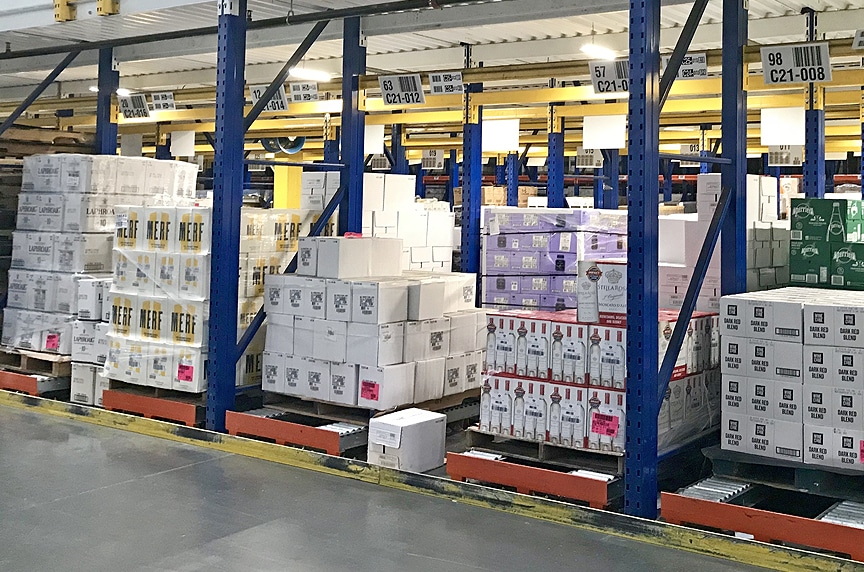
Before investing in new solutions, it helps to understand where space is most commonly wasted. According to our warehouse experts, the most common examples include:
Short Racks in Tall Buildings
Oftentimes our experts see a lot of short racks in tall buildings. If your clear height is 28’ but your racks only reach 14′, you are leaving a massive amount of usable storage volume on the table.
Oversized Aisles for Undersized Equipment
Another common issue is aisle width that does not match the equipment being used. Some companies will have 12’- 20’ aisles, but their forklifts were handling only 2,000-pound pallets with 20,000-pound-capacity trucks.
By right-sizing the lift equipment and narrowing the aisles, companies can create an entire additional row of racking and add more storage space within a single month.
“Temporary” Staging Areas That Become Permanent
Floor-level staging spots that were meant to be temporary have a tendency to become permanent fixtures. Month after month, things become congested, cluttered, trip hazards exist, and then you start to present some safety concerns.
Poor Rack Configuration
Storage racks that have not been reconfigured since the facility opened may no longer match current inventory.
You may be a lead molding company using racks originally intended for storing Styrofoam cups and utensils with a 2,000 lbs. capacity, when you need a minimum 6,000 lbs. capacity.
Our warehouse specialists commonly see inherited racks without proper capacity or rating postings, too.
How To Use Vertical Space in Your Warehouse
When designing warehouses, people tend to overlook vertical growth. It is the most underused asset in a warehouse. Here are some ways you can use vertical space in your warehouse:
Install Taller Racking
The simplest approach is replacing short racking with taller systems that better match your building’s clear height. This is a relatively low-cost way to add significant storage capacity with minimal disruption.
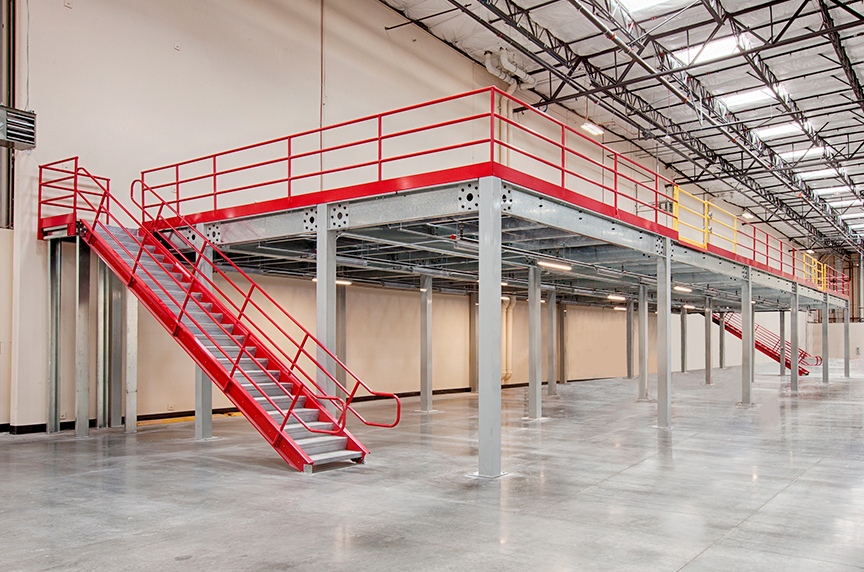
Add Mezzanines or Multi-Level Platforms
Mezzanines are one of the most versatile warehouse storage solutions available.
They allow you to have a free span over first-floor workers and bridge the work area with space either for more storage or offices. Depending on the mezzanine’s size, you can almost double the square footage of an existing warehouse.
Mezzanines are also relatively easy to integrate into production workflows and can even be installed as multi-level systems that resemble catwalk systems.
Convert Dead Space Above Offices and Storage Rooms
Many warehouses have offices, break rooms, or enclosed storage areas built at ground level with open air above them. That overhead space can often be converted into usable storage or additional office levels using modular mezzanines.
Think in Cubic Footage, Not Just Square Footage
A big part in warehouse space maximization is moving beyond square footage. Most warehouse managers evaluate their space in two dimensions, focusing on the floor plan.
It’s not just a square footage analysis. Try to look at cubic footage and find ways to build vertically.

Why Shouldn’t You Expand Your Warehouse?
For some, the instinct when running out of space is to look for a bigger building or plan an expansion. However, reconfiguring the existing space in your facility can only take a few days or weeks.
Instead of shutting or slowing down operations for months to expand a warehouse, an integrator can install mezzanines while working around your schedule to avoid downtimes.
Furthermore, the return on your investment is faster because the investment is smaller and the benefits can be felt immediately.
How Can You Keep Warehouses Clean and Safe?
Maximizing warehouse space is not a one-time project. Without the right systems in place, clutter and inefficiency will creep back over time. Our experts recommend a combination of physical systems and more operational oversight…
- Storage shelving systems (mechanical or automated) to give every item a dedicated home
- Proper labeling so workers can locate and return items efficiently
- Implement housekeeping principles focused on organization, standardization, and continuous improvement
- Consistent monitoring to catch and correct disorganization
- Invest in proper training for workers, including forklift operation
These systems are especially important for warehouses that have recently undergone a reconfiguration. The gains you achieve through better layout and racking are only sustainable if your team has the tools and habits to maintain them. Many companies will benefit from having a warehouse site assessment completed.
What Is a Warehouse Site Assessment?
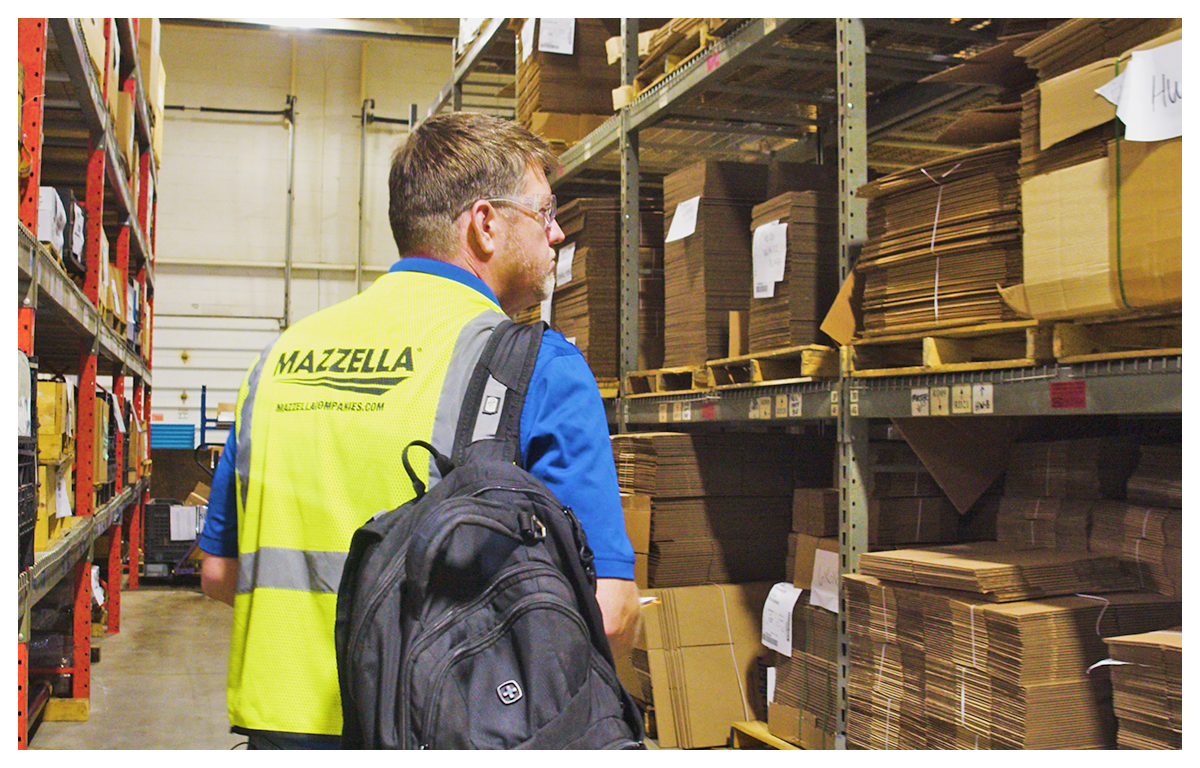
If you are wondering how to get started with warehouse space maximization, the answer is a professional site assessment.
This is where an accredited third party talks to both management and the people on the floor to understand where their concerns are and to get a better understanding of their environment.
A thorough site assessment should include:
- A full facility walkthrough evaluating cubic footage utilization
- Conversations with both management and floor workers
- Analysis of current equipment, aisle widths, and inventory flow
- Identification of quick wins and longer-term improvement opportunities
- Multiple solution options based on cost, timeline, and operational impact
Why Work with a Warehouse Integrator Instead of Single-Product Manufacturer?
As we’ve discussed in previous articles, if you go to a rack manufacturer, they will solve your problem with racks, even if racks are not necessarily the best solution.
An integrator evaluates your entire operation and presents multiple options, whether that means racking, mezzanines, new lift equipment, modular offices, or a combination. Most integrators have the added benefit of having multiple manufacturer partnerships, and they can help you compare costs and get you the best value.
Final Thoughts On Maximizing Your Warehouse Space
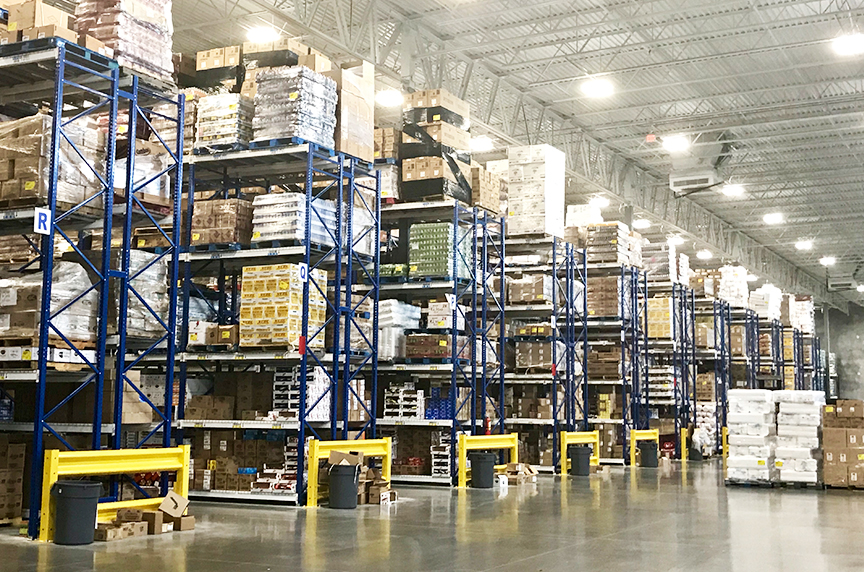
Whether you are dealing with congested aisles, underused vertical space, or a facility that feels like it is bursting at the seams, there are practical, cost-effective warehouse storage solutions that can transform your operations. The key is working with a partner who can see what you might be overlooking and present options you may not have considered.
Mazzella’s Warehouse Solutions Specialists are ready to help you evaluate your current space, identify hidden capacity, and develop a plan to maximize every cubic foot of your facility.
Contact Mazzella’s Warehouse Solutions team today to schedule your site assessment.

Copyright 2026. Mazzella.