
How to Tell Good Chain from Bad Chain: Quality and Inspection Red Flags
If you’re tasked with buying chains, this article will teach you how to determine if one is high quality or not.
Estimated reading time: 19 minutes
We covered this topic on our YouTube channel. Watch below!
Transcript
Are All Chains Created Equal?
– Have you ever looked at two chains that looked similar, but one was half the price? Chain looks like chain, right? So how do you know it’s not cheap or dangerous?
– Can I help you out with…? This is not supposed to be used for lifting. I would like to help you out. Can I?
This chain is screaming “Hey, trash me, trash me.”
– All right, so my first question is, are all chain created equal?
– To a certain extent, yes, because if you look at the production processes, they all follow most likely the same production steps. There are different clues that you can pick up when you look at the chain in terms of identifying bad chain.
How to Visually Inspect New Chain for Defects
– We’ve got some chain from Pewag.
– Yay. Yay.
– The grade 120. Top of the line, right?
I also went to the local hardware stores in the area around here. I don’t want to name any names.
What are you looking for when you’re assessing chain?
– Well, the first is aesthetic. You look at the coating of it, and then you can pick up the chain, look at the markings. If there are markings, look at the welding, and you see this one, for instance, if you scratch on the welding, you may always scratch your finger and injure yourself. So it’s already a bad welding, an indication that this chain is not done properly.
And also the shape of the chain. So there are different clues. You can dive deep into the mechanical properties of the chain if they’re affected because of any signs that you will see on the chain links.
Weld Defects and Asymmetrical Chain Links
– So when you’re looking at, let’s say, new chain, what are some red flags that you should be looking for?
– The weld.
– The weld.
– The shape of the link. So you see one side of the chain is straight, the other has kind of a belly, so it’s not symmetrical. The chain link is not symmetrical, and that may have an impact if this chain were to be mechanically engaged, which I suppose no one would dare to think of using this chain for anything but fencing and decoration purposes.
How to Tell If a Hoist Chain Is Safe to Use
– I’ve got this hoist here. Is the chain on this hoist any good?
Good vs. Bad Chain Finishing
– The first thing that I would look is first the finishing and, you know, look at my hands. So just by touching it, I am oil and grease. It’s like putting my hands in a salad.
– It’s slimy.
– Yeah. If you have an oily chain, it’s an indication of a bad finish in general.
Chain Symmetry Defects
And then what I look at is the welding, the shape of the chain link, and as you can see, this one has a little dent on the side.
– Yeah.
Chain Markings and Hardening
– And the hardened chain usually carry two marking, the DT or DAT, and they tell you depth of the hardening, so how long this chain will last on this assembly. And the letter T would be indicates the chain is a chain for hoist chains that has not been hardened, but has been conceived and calibrated to run on those sprocket wheel.
I don’t see any T, DAT, or DT on this marking. I just see a simple G80 and no other markings, so not a good indication.
How Manufacturing and Materials Affect Chain Quality
– If you were to take a guess, where does this chain come from?
– A cheap producer. It is questionable also the raw material used for that. So it is a G80, but, hey, what about the raw material? What about the level of hardening? What about the surface hardening? Which matters here because the chain goes on those sprocket wheels.
– So this chain might be fine for, you know, if you’re going to put it in your garage and use it once or twice a year. But if you’re going to be on a site where you’re going to be rigging things all the time, you want something a little better than this.
Where does poor chain usually come from?
– Hmm, an area where you have producer that do not have a reliable supply of power, for instance. That is crucial when making the chain. You want to have a power grid that is constantly supplying you with the same amount of power with no interruptions.
And also, you have to have availability of the raw materials. The steel that you’re sourcing truly influences the product. If you don’t have access to the proper alloy to make this particular chain, but you have access to carbon steel, and you are making the product anyway, well, that are all clues that give you an idea.
How Poorly Maintained Chain Machines Create Bad Chain
Every time you step into a chain factory, there is a distinctive smell. It is unique of that chain factory. If you care about those chain machines, the product will be a good product. And it’s all depend on how accurate the chain producer is looking after this jewel which are the chain making machines.
If those machines are not cared for, are not serviced, are not supplied with the power that is needed, and do not have access to the raw material, then you would have a bad chain.
Evidence of Poorly Maintained Chain Making Machines
But here are a marking. Can you feel with your finger if you scratch on it? So there is something odd with the way the chain machine was bending that chain link, and because of the bending phase, probably something has happened on the side of the chain link, and that may compromise the integrity of the chain link.
You can buy bad chains from anywhere. You have to be discerning.
– You have to be diligent, yeah.
– Diligent in doing your research. Who is the producer? Where is the raw material coming from? Is it a reputable company? Only one chain link is enough to make that chain fail.
Decide When to Retire a Worn Chain Sling
– I asked some of our rigging inspectors if they could pull some slings aside for me that they’ve pulled from service. How can you tell that this chain has exceeded its life and should no longer be used in service anymore?
Measuring Wear
– You know, as an investigator, chain investigator, you can measure if there is anywhere in between the chain link. If you have a deviation of more than 10% on the diameter that it’s supposed to be, that is a confirmation that this chain has been wearing off in between the two chain links.
Checking for Elongation
The length of the chain link, obviously, if there is any sign of elongation, you will see it in the inside length. And technically, you can measure also in chain link like this if you were to raise it all the way up. If you see a difference in the length of the chains, one is longer than the other, then, like in this case, you see this chain leg seems to be lower than the other, but we start at the same point. So that may be indicating that one of the two legs has been exposed to overloading, has been stretching a little bit.
Inspecting Contact Points Between Chain Links
– Should you look in between the links? And what are you looking for in between the links?
– The wear of this area, of the contact point. If there is any wear of the contact point, you can measure with the caliper, but the wear between the two contact points, it’s also an indicator of the chain being used over and over again.
Signs of Chain Damage from Heat, Corrosion, and Acid
– I have a couple other chains that I want you to look at, and just let me know if… just let me know if there’s anything wrong with these chains.
– Okay.
Extreme Hear Damage to Chain
– This chain, anything, see any issues with this?
– Oy vey! Was somebody trying to do something artistically here? Because that’s the only value that I see here. Definitely, this chain was used to be dipped in something very hot. But this is definitely a wrong use for the chain.
– Yeah. And all these chains, just so you know, these are chains that our rigging inspectors pulled from service.
Chains Destroyed by an Acidic Environment
– Tell me about… see any issues with this one here?
– Oh my goodness. So this chain, I tell you what happened to this chain. This chain was dipped into an acid environment, and the acid has been eating up the material. The acid at which it was exposed, it has eaten up the steel. So also in this case, you would have used a totally different chain. Stainless steel would’ve been better.
– Any issues with this chain?
– Oy vey. That’s a similar situation because you see the beginning of it… No, it’s even worse.
I wonder how just this part has been corroded. Ah, I know that. So it was hanging up this way, the load was attached here, and the load has eaten up the master link, the connector link, and one, two, three, four links. The liquid was stopping somewhere here. So you had the load in an acid environment and not being intended to be doing this job.
Overloaded Chain
– Any issues with this chain?
– Okay, finally we see the proof of an overload. This chain is screaming “Hey, trash me, trash me.”
How to Buy Chain Safely and Check Certifications
– So if someone’s not a chain expert, how can they shop confidently?
– In order to shop confidently, don’t go online, go to a rigging shop.
– And should you be asking or requesting certifications or anything like that?
– Sure. To know that everything was done in the proper manner, you want to have the certificate, the test certificate, and mill certificate.
Use Safer Buying Habits Because Not All Chain Is Equal
– If there was one thing you wish every buyer knew before purchasing chain, what would that be?
– Hmm, how much work is inside of a piece of metal like chain, how much history, and how much sweat, and how much engineering. Chains may look cheap and simple, but there is a lot of work behind that.
– Not all chain is created equal, and now you know what you should look out for. The risks of using poor quality chain are real, from load failures to serious injuries.
If you’re unsure about the quality of chain you should be purchasing, contact Mazzella, and we’ll help you source a chain that you can trust. Mazzella is here to help with all your chain needs, be that custom sling assemblies, transport, or any other application you might have. Feel free to contact us through the link below.
If you found this video useful, informative, entertaining, or you just feel like being friendly, then hit that like button, so we can get this information out to everyone who needs it. Subscribe and hit the bell, so you never miss a video. If you have a question, drop it in the comments so we can get you an answer. Remember, safe rigging is smart rigging. My name is Ben. Stay safe out there.
Key Takeaways
- Chains may appear similar, but quality varies due to factors like materials and manufacturing processes.
- Look for red flags such as greasy finishes, poor welding, and asymmetrical link shapes to spot bad chains.
- Visit local rigging shops for reliable chains and always ask for test and mill certificates.
- Inspect existing chains regularly, focusing on diameter loss, elongation, and signs of corrosion.
- Follow ASME and OSHA standards for rigging inspections to ensure safety and quality in chain use.
Chains may seem like a simple, straightforward tool, but the detail, craftsmanship, and advanced machinery needed to produce them is remarkable.
While many chains look alike, and chain producers follow almost uniform production steps, one could be half the price of the other. It’s tempting to choose the cheaper option, especially if you’re working with a tight budget. But what comes with the cheaper price tag?
One bad link is enough to make that chain fail. And some chains are not meant for overhead lifting applications in the first place.
You can buy bad chains from anywhere, especially online from uncredited distributors. Even if you’re not a chain expert, there are several tips you can follow to help you purchase the right chain for your business.
In this article, we will highlight the red flags that show up in low quality chains. We will also cover where to buy the best chain, and how to make sure the chain you have is safe to use.
Table of Contents
- Why Does Chain Quality Vary So Much?
- Red Flags that Point to Bad Quality Chains
- Where Is the Best Place to Buy Good Quality Chain?
- How Can You Tell If a Chain Is Still Safe to Use?
- Final Thoughts on Finding High Quality Chains for Your Workers
Why Does Chain Quality Vary So Much?
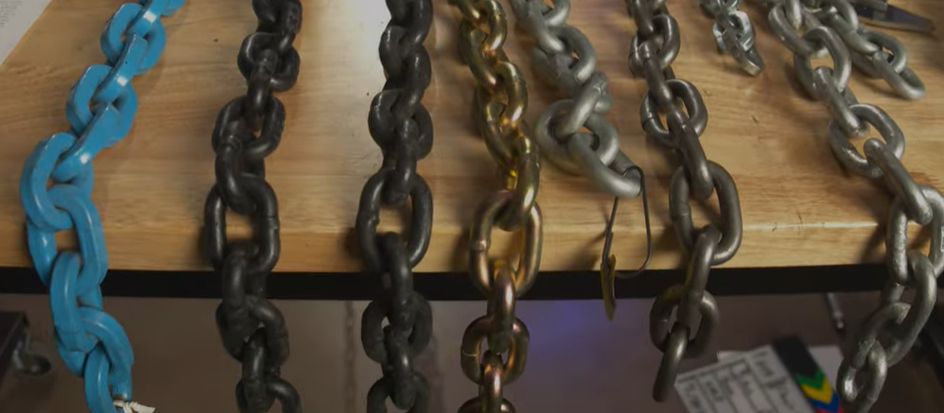
Like clothes and home appliances, many companies make the same product, but the quality of products varies greatly. Chains are no different.
Quality can vary based on multiple factors, including:
- Weld quality and forming accuracy
- Finishing and coating quality
- Steel and alloy quality plus heat treat and hardening
High quality chain manufacturing requires facilities to have a strong, reliable power grid that constantly supplies the same amount of energy with no interruptions.
These facilities also need easy access to high quality raw materials like steel. When these facilities don’t have access to the proper alloy, they will often settle for cheaper, lower quality material that impacts the chain’s overall performance in the field.
Poorly Maintained Machines
Outside of material access and power sources, one of the biggest culprits of bad quality chains is poorly maintained machines. Chain producers that care about their chain quality will invest both time and resources to care and service their machines. If not, chain quality will suffer.
While it may not seem obvious at first glance, there are several red flags you should keep an eye out for…
Red Flags that Point to Bad Quality Chains
1. Greasy or Slimy Finish
If you touch a chain, and your hands end up oily or greasy right away, this can indicate that the chain manufacturer used a cheaper way to protect the chain from rusting during shipping. Greasy chains will often corrode faster, leading to a shorter lifespan if used in the elements.
Higher quality chains, however, will often be galvanized, a process that gives chains and wire rope a protective zinc coating to prevent rust and corrosion.
2. Poor Welding and Visual Weld Defects
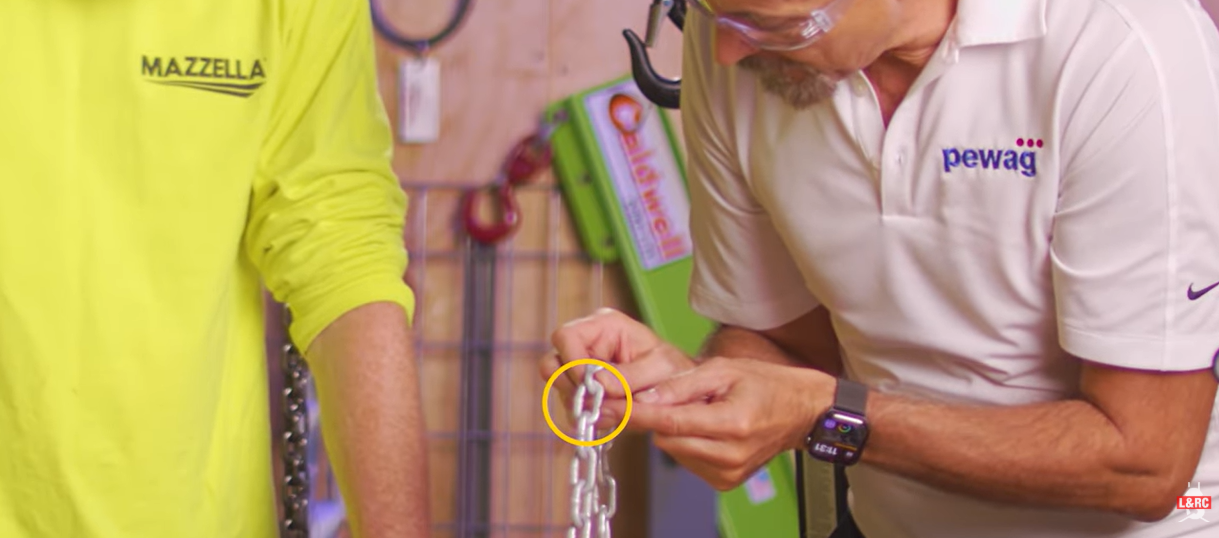
Low quality welding is a sign of low effort manufacturing, which equals low quality chains. Badly welded chains often display visible defects like spatter or cracks, making them unsafe for lifting due to reduced strength and brittle, heat-affected metal. An easy way to visually inspect is running a fingernail over the weld area. If the area is rough enough that it could scratch or cut you, it’s a sign of poor welding.
Compare multiple links, and always keep an eye out for visible weld irregularities that stand out from the rest of the chain.
3. Asymmetrical Link Shape
High quality chains should also look consistent link to link. If one side of the link looks straight while the other side has a “belly,” this is a sign that the machine they use to weld the links is flawed, which should raise concerns about the chain’s overall quality.
The asymmetrical links can create stress points, reducing the overall strength of the chain.
4. Dents, Dings, or Odd Forming Marks
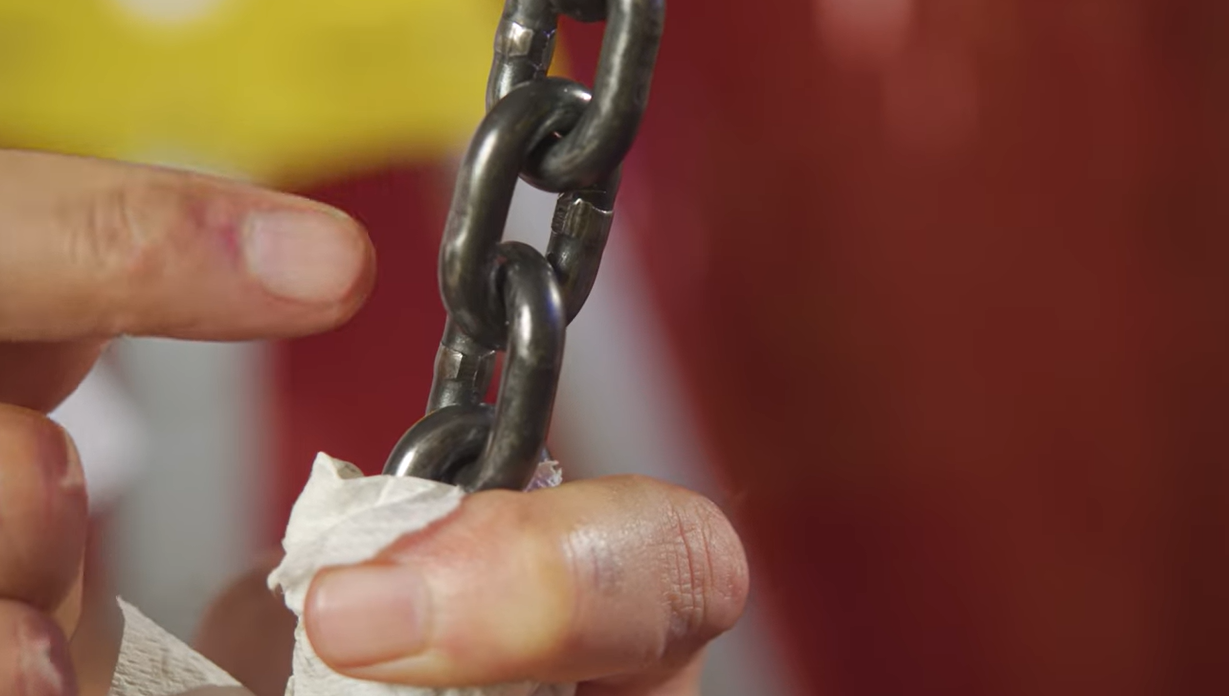
Small dents or other odd forming marks can be a sign of compromised integrity, a flawed manufacturing process, and poor shipping practices. When inspecting chains, rotate the links and check the sidewalls and edges.
5. Missing Markings on a Chain
Chain markings help riggers in the field identify what the chain is meant to be used for.
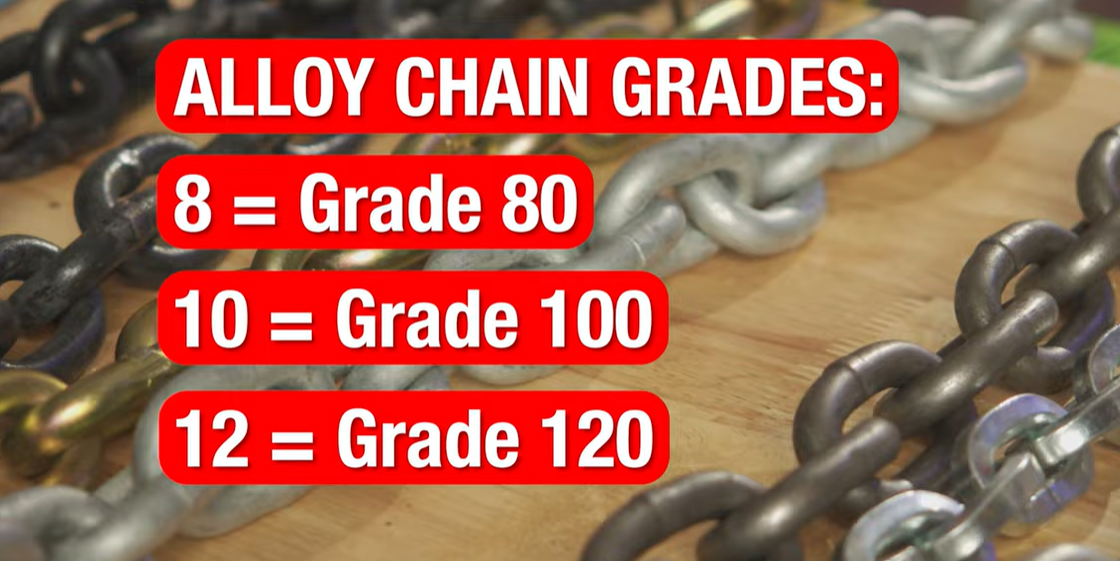
For example, a chain with a G80 symbol on one of the links indicates that it’s a Grade 80 alloy steel chain and is safe to use for overhead lifting applications. Meanwhile, a link with G70 indicates that it’s a Grade 70 carbon chain meant for towing and load securement applications. These chains aren’t built for overhead lifting applications, and if these markings weren’t there, this opens the door for riggers to end up with the wrong gear for their job.
Any reliable chain manufacturer should have clear markings on all their chains. If not, stay clear. Look for more than just a grade stamp when the application demands it.
6. Hoist chain marking mismatch
The chains you buy for hoists are different because the chain will run over sprockets and see repeated cycling. If you are dealing with hoist chain, confirm the chain has the markings and identification expected for that service, such as DT, DAT, or T where applicable.
If the markings do not match the intended use, treat it as a possible chain and application mismatch and verify with the supplier or manufacturer before putting it in service.
Where Is the Best Place to Buy Good Quality Chain?
While it’s tempting to buy a chain online, a visit to your local rigging shop is often the best way to find the chain you’re looking for.
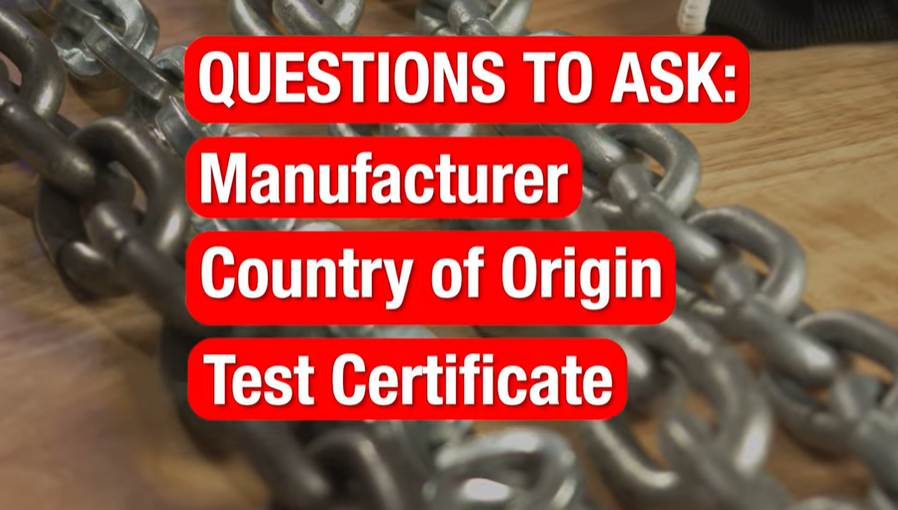
Rigging shops are found in just about every corner of the country, and the workers should be able to answer the questions you have and pair you with the right chain. When you’re at a rigging shop, always ask for the chain’s test certificate and mill certificate. Certified lifting chain is always accompanied by a test certificate confirming compliance with Grade 80, 100, or 120 specifications. You should also ask for the chain’s country of origin.
Asking these questions protects you from counterfeit or substandard products and ensures the chain you buy meets the performance, traceability, and safety requirements your job depends on.
How Can You Tell If a Chain Is Still Safe to Use?
So now that you know what to look for when buying new chains, what about the existing chain at your facility? Are they high quality? How can you tell if they’re still safe to use? Here are some important reminders based on remove-from-service criteria laid out in ASME B30.9 Slings standards.
Diameter loss greater than 10 percent
Diameter loss that’s greater than 10 percent indicates significant wear and is a clear remove-from-service indicator. Measure the link material diameter and compare it to the nominal or expected diameter.
If you find major loss, remove the chain from service and follow the applicable removal criteria for that chain and application.
Elongation and uneven leg length (overload evidence)
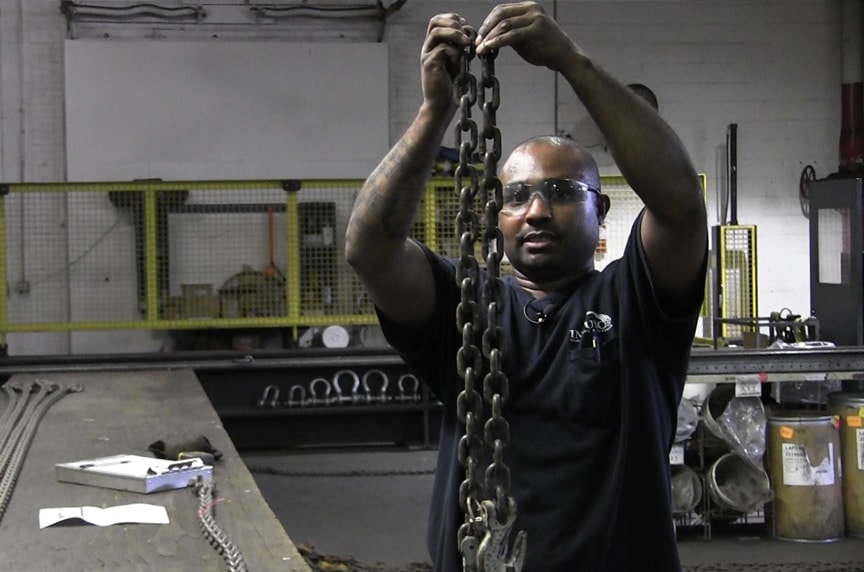
Check for elongation by measuring the inside link length and looking for stretched link geometry. On multi-leg assemblies, compare legs from the same reference point.
If one leg hangs lower than the others or measurements show elongation, it can indicate overloading and permanent stretch, which is a remove-from-service condition.
Heat, Corrosion, and Acid Damage
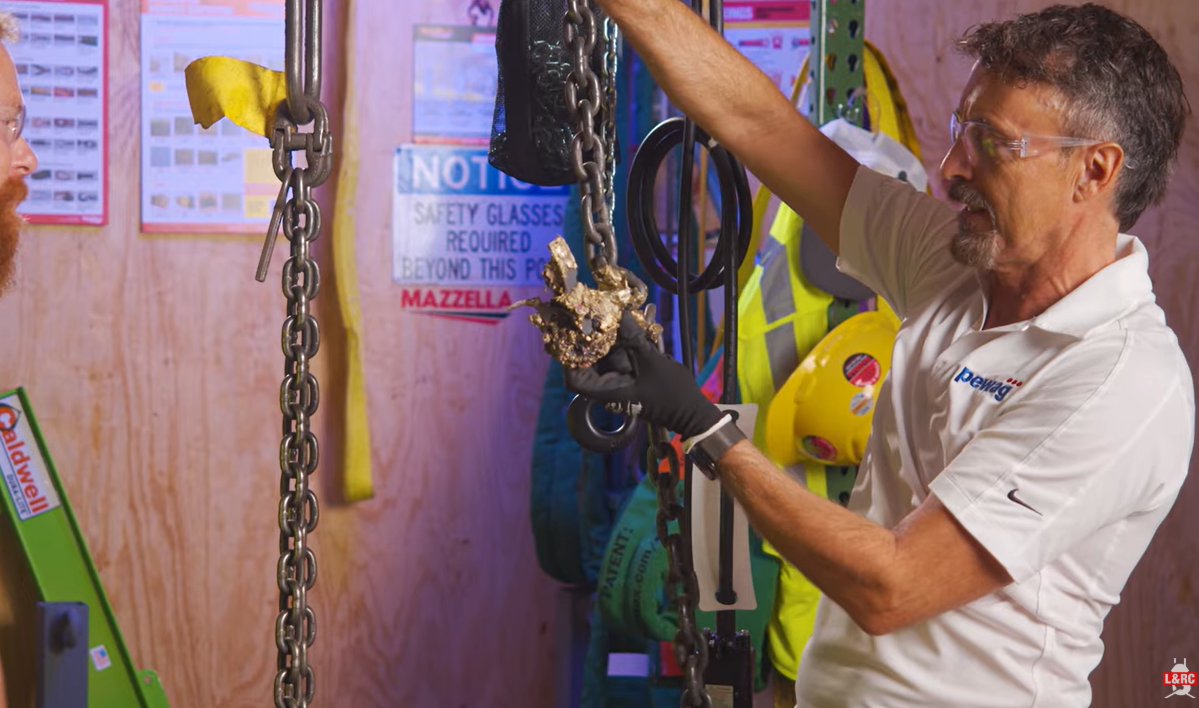
Heat exposure can permanently change chain properties. If you see distortion, discoloration consistent with overheating, or evidence the chain was exposed to extreme temperatures, treat it as a serious concern and remove it from service.
Chemical exposure will make the steel appear to be eaten away, pitted, or etched. If chemical exposure is possible in your application, look for a chain that has extra chemical resistance.
Corrosion often occurs from poor storage practices, or when the chain is used in the wrong application or environment.
Your local rigging shop should be able to guide you towards the correct chain for your application.
Why Proper Rigging Inspection and Training Procedures are Important
It’s an OSHA requirement to have your rigging gear inspected, and it’s highly encouraged to have it done by a third-party provider to offer you a non-biased perspective. ASME B30.9 Slings lays out three types of inspections:
- Initial Inspection: Performed prior to use, accompanied with a written record of it
- Frequent Inspection: A visual inspection before each shift that checks for damage
- Periodic Inspection: A more thorough inspection where each link and fitting shall be examined individually. Documentation of the periodic inspection as well as the sling condition is required.
You should also provide regular training to workers so they can learn proper chain use and other safe rigging practices.
Final Thoughts on Finding High Quality Chains for Your Workers
A safe chain is the product of countless hours of engineering, precise manufacturing, and using the best materials available. However, the risks of using poor quality or damaged chains are real, from load failures to serious injuries.
Not being a chain expert is also not an excuse to buy bad chains. With workplace safety on the line, you can’t afford to do guesswork.
In short, keep it practical. Look for red flags that point to bad quality chains like welding deformations, asymmetrical link shapes, and missing marks and tags. If you need high quality chain, stop by your local rigging shop, and get in the habit of asking them for proper certificates.
And for the chains at your facility, inspect them according to ASME and OSHA standards. When in doubt, pull the chain from service and follow your company requirements and the manufacturer’s inspection guidance.
At Mazzella, we partner with the most reliable chain manufacturers in the country. Our rigging shops across the country also carry other important rigging equipment. Contact one of our experts to learn more.
Copyright 2026. Mazzella.