
Top Five Myths About Mobile Elevated Work Platforms
Safety requirements for Mobile Elevated Work Platforms are often misunderstood by workers. We debunk five common myths in this article.
Estimated reading time: 8 minutes
Key Takeaways
- Mobile elevated work platforms (MEWPs) are common on job sites but are often misunderstood, leading to safety risks.
- OSHA recognizes the need for tie-offs in boom lifts; ejection is a significant hazard, not just falling over the rail.
- Myths about shock-absorbing lanyards, scissor lifts, and tying off to guardrails can increase danger; proper training is essential.
- Employers should provide formal MEWP training, ensuring all operators are aware of specific safety requirements.
Listen to our podcast where we discuss mobile elevated work platform best practices with industry experts!
Mobile elevated work platforms (MEWPs) are everywhere on job sites. They help workers reach heights quickly, move around obstacles, and complete tasks that would otherwise require scaffolding, ladders, or elaborate rigging. They are also one of the most misunderstood pieces of equipment in the fall protection world.
Falls remain the leading cause of death in construction, and a large share of those fatalities involve elevated platforms. Many workers still have misconceptions about the safety requirements for mobile elevated platforms, but what are they?
With OSHA’s National Safety Stand-Down Week just around the corner, this article will look at the top five myths about mobile elevated work platforms, why each one is wrong, and what OSHA and industry best practices actually say you should do instead.
The Biggest Myths About Mobile Elevated Work Platforms
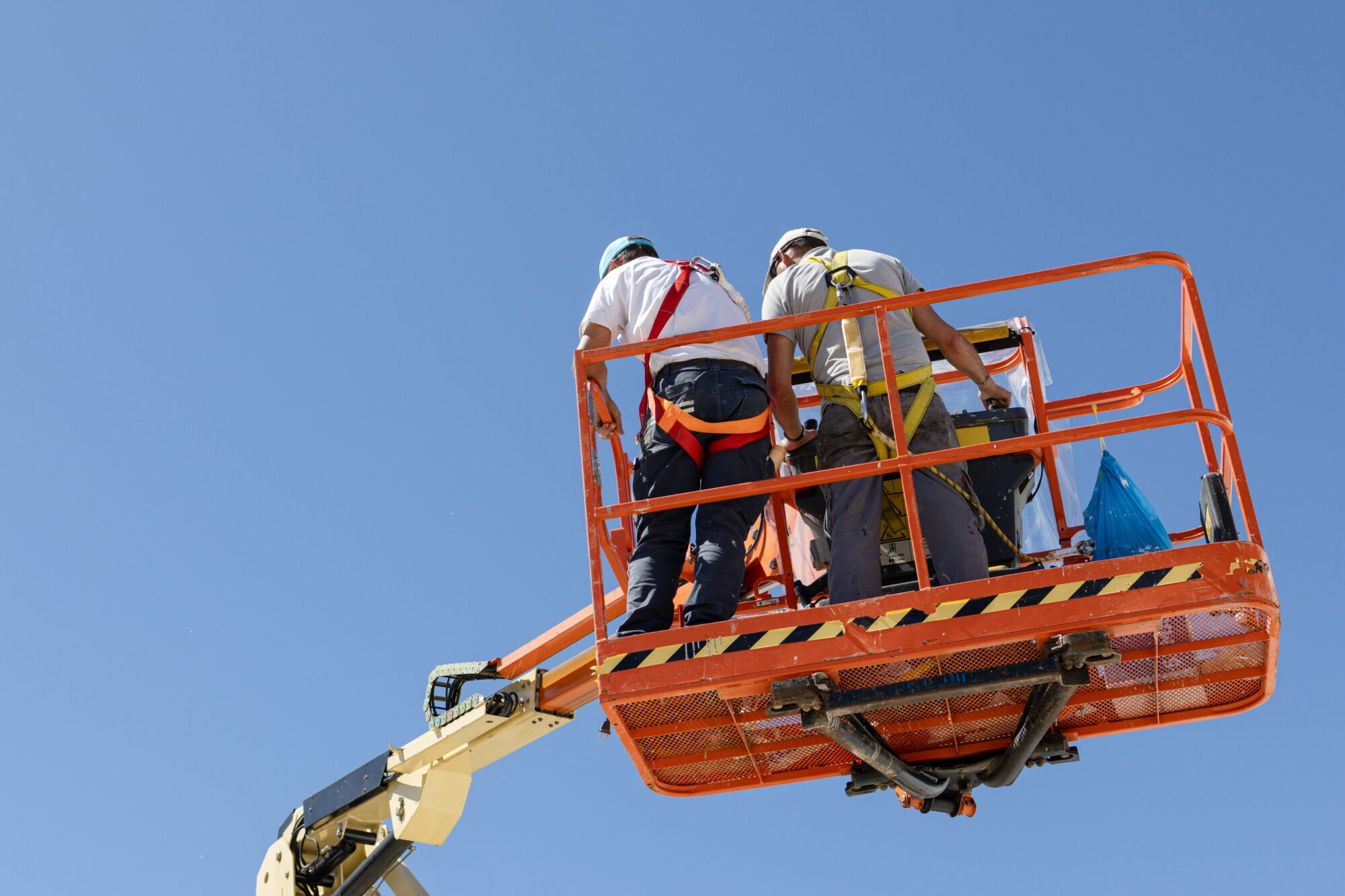
Myth 1: “You Don’t Need a Harness in a Boom Lift if You Keep the Gate Closed”
This is probably the most common myth: If the gate is closed and the rails are up, what could possibly go wrong? The answer is ejection.
Why the Myth Is Wrong
When workers picture a fall from a boom lift, they often picture someone climbing up and tumbling over the rail. In reality, the much bigger hazard is the lift itself becoming a catapult.
A struck-by event from a forklift, a passing truck, or even a delivery vehicle can launch a worker out of the platform. So can driving into a pothole, rolling over a curb, or hitting uneven ground while the boom is elevated. The fall is often across a significant horizontal distance and not straight down.
What OSHA and Best Practice Say
OSHA 29 CFR 1926.453(b)(2)(v) says: “A body belt shall be worn and a lanyard attached to the boom or basket when working from an aerial lift.” OSHA now recognizes full body harnesses as the standard instead of body belts, but the requirement to be tied off inside a boom lift has not changed.
Myth 2: “A Shock-Absorbing Lanyard Is Safer Because It Absorbs Energy”
Shock-absorbing lanyards are a staple of general fall protection, and for good reason. They reduce arresting forces on the body during a fall and have saved countless lives at height. But inside a MEWP, they can actually create more risk than they eliminate.
Why the Myth Is Wrong
The issue is fall distance. A standard 6’ shock-absorbing lanyard can add several more feet of tear-out before it stops a fall. When you add the worker’s height and the distance from the anchor point, total fall distance can approach 18’.
The average platform height at rest on a boom or scissor lift is less than four feet off the ground. That means a worker using a shock lanyard in a lift may still strike the ground, the equipment, or a lower surface before the lanyard fully deploys.
What OSHA and Best Practice Say
OSHA 1926.502(d)(16) requires fall arrest systems to limit free fall to 6’ or less and to prevent contact with any lower level. Inside a MEWP, that calculation rarely works out in favor of a shock-absorbing lanyard.
A properly rated SRL, ideally a Class 2 device designed for foot-level anchorage, locks quickly, reduces fall distance, and significantly reduces the chance of the worker being ejected from the basket during a struck-by event.
Use fall restraint during travel and a short, foot-level-rated SRL when active fall arrest protection is needed.
Myth 3: “Scissor Lifts Never Need Fall Protection”
Technically, OSHA classifies scissor lifts as mobile scaffolds rather than aerial lifts, and scissor lift manufacturers often state that a closed guardrail system is enough. But sometimes it is enough is not the same as never needed.
Why the Myth Is Wrong
Fall protection requirements for scissor lifts depend on the task, the exposure, the manufacturer’s instructions, the general contractor’s site rules, and the employer’s own safety program.
General contractors, large industrial sites, and many insurance programs now require tie-off in scissor lifts, regardless of the lift manufacturer’s guidance. Employers can always require more protection than OSHA’s minimum. They cannot require less.
Scissor lifts also carry ejection risk. Operators who lean over the rails, stand on mid-rails, or place materials on the guardrail to reach higher can absolutely end up over the edge. Tip-overs, collisions, and ground shifts can throw an unrestrained worker out of the basket entirely.
What OSHA and Best Practice Say
OSHA’s scissor lift hazard alert recommends that employers evaluate fall, stabilization, and positioning hazards for every scissor lift task and select controls accordingly. ANSI A92.20 requires risk assessment for every MEWP operation.
If you are working at height, you should be are tied off, regardless of the platform. Many companies have different requirements for a boom lift or scissor lift, bit this can be convoluted in practice. When in doubt, tie off.
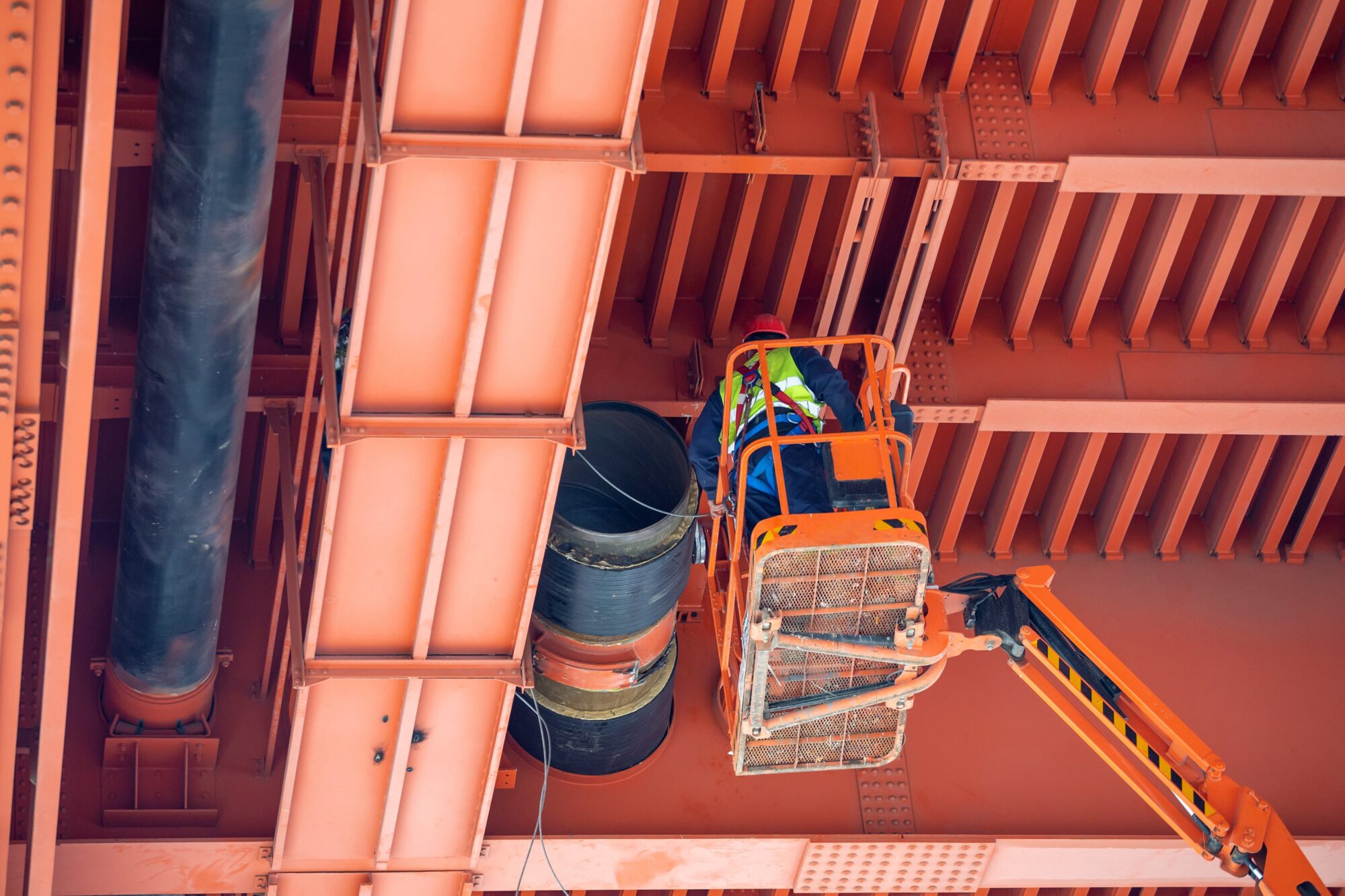
Myth 4: “Tying Off to the Rail Is Fine”
Once a worker accepts that they need to tie off, the next temptation is to just clip onto the nearest sturdy-looking piece of steel. Usually that is the top rail of the platform.
Why the Myth Is Wrong
Guardrails are designed to stop a person from falling over them. They are not designed, engineered, or tested as fall protection anchor points.
OSHA requires anchorages used for personal fall arrest to support at least 5,000 lbs. per employee attached. A guardrail on a lift rarely meets this criteria, and no lift manufacturer certifies the top rail as a fall arrest anchor.
The same logic applies to “choking off” a lanyard or SRL by wrapping the webbing around a rail and clipping the snap hook back onto itself. Unless the device is specifically designed and rated for that configuration, choking it around a non-engineered component can damage the webbing, misload the snap hook, and defeat the energy-management characteristics of the system.
What OSHA and Best Practice Say
Tie off only to the manufacturer-designated engineered anchor point. On most boom and scissor lifts, that anchor is located at floor level toward the rear of the basket and clearly marked by the manufacturer. Stop and consult the operator’s manual before you work.
Myth 5: “Experience Replaces Formal MEWP Training”
Twenty years of driving scissor lifts is impressive, but it’s not a substitute for formal training.
Why the Myth Is Wrong
MEWPs have evolved significantly over the last decade. ANSI A92.22 and A92.24, adopted in 2020, introduced new operator training, supervisor training, and familiarization requirements, along with updated risk assessment and rescue plan expectations.
Experience gained before these updates does not cover the new requirements.
Also, being trained on one specific MEWP does not mean you are trained on all of them. A boom lift operator is not automatically qualified on a scissor lift, a mast lift, or a different make and model within the same category.
Lift training and fall protection training are not the same thing. Being certified to operate a lift does not mean a worker is trained to work at height, and vice versa.
What OSHA and Best Practice Say
OSHA requires employers to provide training for employees exposed to fall hazards, including the correct use of personal fall protection systems. It also requires that only trained and authorized persons operate aerial lifts.
ANSI A92.24 requires formal operator training, documented familiarization on each specific MEWP, and supervisor training for anyone overseeing MEWP operations.
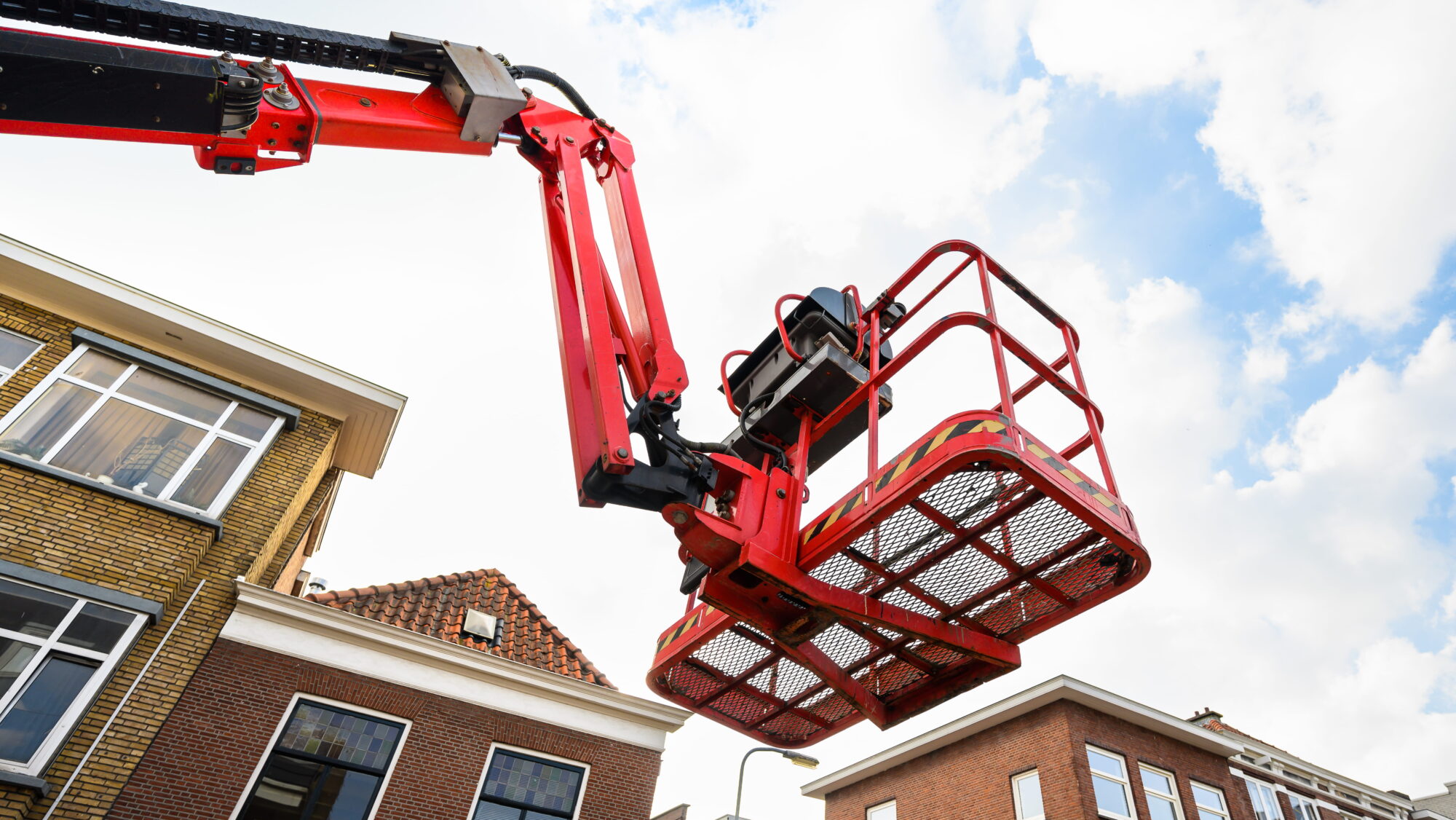
How Can You Make Your Mobile Elevated Work Platforms Safer?
If MEWPs are part of your operation, here’s a short checklist to share with your team about best practices:
- Always tie off in a boom lift. Ejection is the real hazard, not climbing over the rail.
- Match the device to the environment. Inside a MEWP, a Class 2 SRL rated for foot-level anchorage almost always outperforms a shock-absorbing lanyard.
- Evaluate every scissor lift task. Manufacturer guidance, GC rules, and company policy may all require tie-off. When in doubt, tie off.
- Tie off only to the engineered anchor point. Not the rail, not a mid-rail, and not back onto the lanyard webbing unless the device is specifically designed for it.
- Invest in formal training and familiarization. Operator training, machine-specific familiarization, and fall protection training are three different requirements. You need all three.
- Inspect before every use. Check the lift, the harness, the lanyard or SRL, and the anchor point for wear, corrosion, damage, or deformation. A faulty piece of equipment offers a false sense of security, which is worse than no equipment at all.
- Complete a job safety analysis. Ground conditions, overhead hazards, nearby traffic, and rescue plans should all be documented before the lift goes up
For more MEWP and fall protection education, or if you want to review your current program, contact a Mazzella Fall Protection specialist.

Copyright 2026. Mazzella.