Subscribe to have new articles and videos sent directly to your inbox!

3-3 | Basic Inspection Criteria

<p>Whether you’re doing rigging inspections in-house or working with a third-party rigging inspection service, it’s very important for the inspector to understand what abuse the chain is seeing and inspect it accordingly.</p>

person Mike Close
event August 17, 2026

Whether you’re doing rigging inspections in-house or working with a third-party rigging inspection service, it’s very important for the inspector to understand what abuse the chain is seeing and inspect it accordingly.

Prior to inspecting, clean chains with a non-acid / non-caustic solvent so that marks, nicks, wear, and other defects are visible. With regard to inspection criteria, chain damage typically falls into one of five categories and critical damage will be obvious to a properly trained inspector.
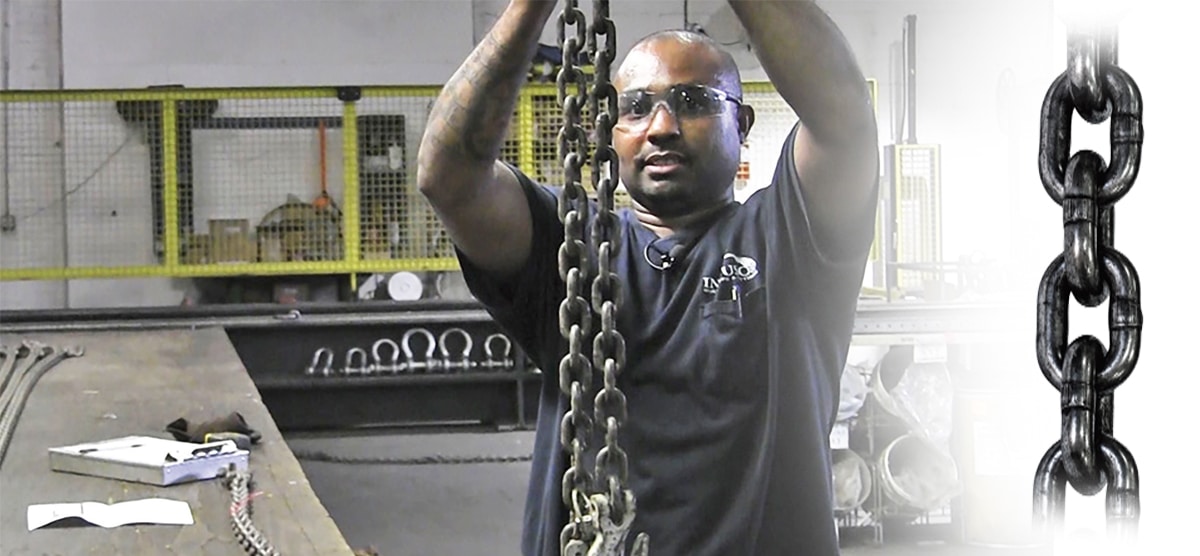

Worker in safety glasses inspecting heavy black chain overhead in an industrial facility with yellow safety barriers.

White number 1 centered on a bright red square background

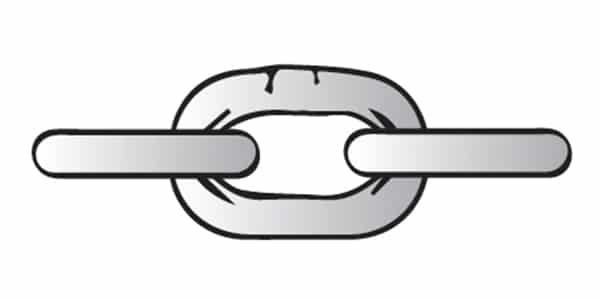
Wear

Diagram of two chain links connected, with hatching marks indicating wear or damage on the contact surfaces

White number 2 centered on a bright red square background

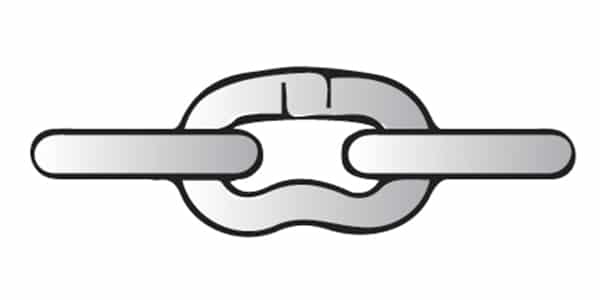
Localized Bending

Diagram of a twisted or bent chain link shown in gray, connected between two straight horizontal links.

White number 3 centered on a bright red square background

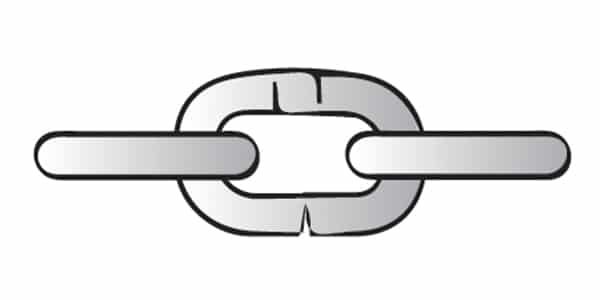
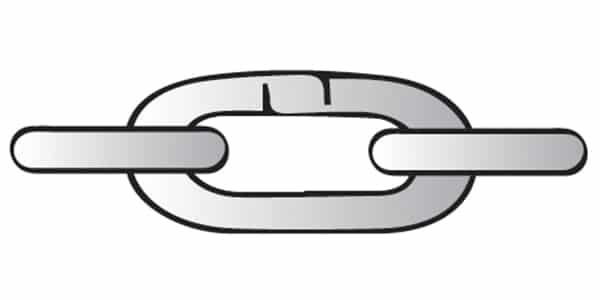
Shearing / Cracks

Diagram of a chain link with a visible crack line running vertically through the center of the link.

White number 4 centered on a bright red square background

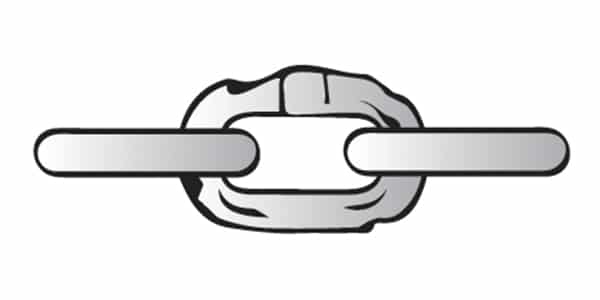
Nicks or Gouges

Diagram of a deformed chain link with visible cracks and stress marks, connected to two straight links.

White number 5 centered on a bright red square background

Stretching

Diagram of two interlocking chain links shown in gray with black outlines, depicting a standard chain connection.

An alloy steel chain sling shall be removed from service if any of the following conditions are present:

  • Missing or illegible sling identification
  • Cracks or breaks
  • Excessive wear, nicks, or gouges. Minimum thickness on chain links shall not be below the values listed in the table below:

Minimum Allowable Thickness at Any Point on a Link
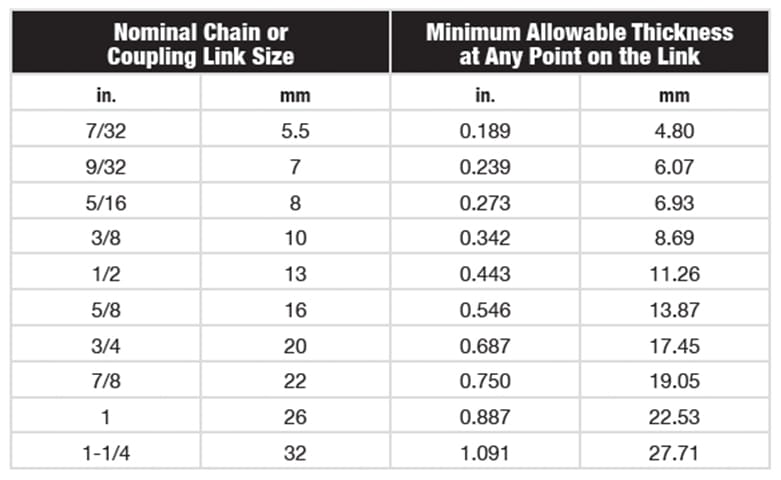
Table showing nominal chain sizes in inches and mm, with corresponding minimum allowable thickness measurements.
  • Stretched chain links or fittings
  • Bent, twisted, or deformed chain links or fittings
  • Evidence of heat damage
  • Excessive pitting or corrosion
  • Lack of ability of chain or fittings to hinge freely
  • Weld splatter
  • For hooks, removal criteria as stated in ASME B30.10
  • For rigging hardware, removal criteria as stated in ASME B30.26
  • Other conditions, including visible damage, that cause doubt as to the continued use of the sling
Lesson tags: alloy chain sling inspection criteria
Back to: Lifting Sling Inspection Course > 3 | Alloy Chain Sling Inspection
Disclaimer:

Any advice, graphics, images, and/or information contained herein are presented for general educational and information purposes and to increase overall safety awareness. It is not intended to be legal, medical, or other expert advice or services, and should not be used in place of consultation with appropriate industry professionals. The information herein should not be considered exhaustive and the user should seek the advice of appropriate professionals.

Subscribe to have new articles and videos sent directly to your inbox!