
Fall Protection Around Overhead Cranes: How to Plan a Safe System
Learn how to plan, install, and benefit from adding fall protection systems near overhead cranes.
Estimated reading time: 16 minutes
Key Takeaways
- Fall protection for overhead cranes is challenging due to cluttered environments and OSHA’s vague regulations.
- Proper planning and equipment can protect maintenance workers effectively during crane operations.
- Use ANSI Z359.2 and OSHA hazard hierarchies to develop and implement fall protection plans.
- Integrating fall protection during crane fabrication saves money and ensures compliance from day one.
- Evaluate existing fall protection measures regularly to enhance safety around cranes.
Transcript
Fall Protection Around Overhead Cranes
— Are you choosing between a fall hazard and a crane collision hazard? The law is clear. If your workers are at height, they need fall protection, crane or no crane.
But the how is a massive gray area. When you put a fall arrest system in a crane’s path, you may feel like you’re trading one life threatening risk for another. Today we’re gonna show you how to get both systems working in the same space safely.
My name is Ben. This is the Lifting and Rigging Channel. I’m joined today by Arnie Galpin from Rigid Lifeline Systems, and we’re talking about how you can integrate a fall protection system with an overhead crane system.
When Is Fall Protection Required?
First of all, how does someone know if they need a fall protection system with their overhead crane system?
— Great question, Ben. So fundamentally, it’s really simple. If you have any workers who are working over four feet in elevation, they need fall protection. That’s an OSHA federal law.
Crane and Fall Protection Conflicts
— So Arnie, what are some of the conflicts that might arise when you have a fall protection system working in conjunction with an overhead crane system?
— Optimally, what you want to do is you’d want to take the power off the crane so that people can safely work around it without any danger of the crane interfering with their work equipment or their workspace.
There’s two different ways you can go. You can go with a fall protection system that is below the crane, the overhead crane, or you can go with a fall protection system that’s above the overhead crane.
What we have here is an overhead fall protection system, which is the optimal solution, simply because when you have a structure underneath the crane, there’s always the danger of the crane inadvertently moving into that structure and damaging the structure, having some interference there.
What Is Lanyard Pushing?
— What is lanyard pushing?
— When you have powered operation of the crane and the fall protection workers are working around this powered crane, you have to be very cognizant of interference between the crane up here and that SRL lanyard.
The crane operator should be adequately trained to make sure they don’t push the SRL to the point where they’re dragging a worker off the working surface.
Controls That Reduce Crane Interference
— What are some engineered controls that can be put in place to, you know, keep a crane operator from pushing someone off of an edge?
— What I described before was administrative controls where people are properly trained and there are certain roles that the different individuals play, but in an optimal solution, you would want an engineered control system.
The crane’s operation, the crane’s motion would be limited based upon where the SRLs are.
— Before you mentioned that, you know, you don’t want a crane to crash into the fall protection structure either. Are there controls that can be put in place to keep that from happening?
— So now we’re talking about structure for fall protection that’s below the crane. So there are anti-collision systems available out there that have laser distance sensing.
They can write computer programs that can quarantine off a section of the crane travel. It’s called a no-fly zone. So no matter how hard the crane operator wants to go in that position, it will not interfere with the structure that’s supporting the fall protection equipment.
Structural Review and Anchorage
— Are there any structural considerations that you need to take into account when putting a fall protection system in where you have an overhead crane system that already exists?
— When there is a fall event, there are forces that are developed to decelerate the person to a stop. So those forces are gonna be transmitted to the anchorage point.
And when you select a piece of fall protection equipment, the system that provides the fall protection, you know, you can mount it to the ceiling, you can mount it to the walls, you can mount it to the floor.
You just have to make sure that whatever those forces are from the amount of people that are gonna be working, that an engineer takes a look at the structure to make sure that the structure can resist whatever forces or torques that develop during a fall event.
Rigid Rail vs. Wire Rope
— This system here, we’ve got a rigid track system. What are some of the considerations that you need to take into account? Like maybe someone’s thinking about a cable system, or I’m sure there’s a lot of different solutions that you could consider when integrating a fall protection system with an overhead crane system.
— Flexible wire rope systems have been around for a long time, relatively inexpensive. But the serious problem, unfortunately, with wire rope system is, there’s a significant amount of sag in the wire rope, not only when it’s being installed, but also during a fall event.
So you don’t want people hitting the floor during a fall event. With a four foot clearance, it’s a little bit more critical.
So you want a rigid rail to make sure that the anchorage point doesn’t move, and when the person does decelerate to a stop, they don’t impact it and hit their feet on the floor.
— That could also interfere with the overhead crane, I assume, right?
— Absolutely, yeah. Yeah.
Can You Tie Off to a Crane?
— Is it ever acceptable to tie off directly to the crane?
— Yes, it is acceptable to attach to a crane. Generally what those systems would look like would be like a rigid rail system attached to the bridge beam.
They work well, but then again, you have the powered action interaction too, that is a little bit, you’re a little bit closer now to the lifted load. The other problem is, you don’t have a whole bunch of travel this way because you’re going on in this direction on the bridge beam.
So the optimal solution just happens to be what we’re looking at here, just having a monorail above the bridge crane.
But yeah, you can attach to a crane, you have to have a qualified person review the capacity of the crane just to make sure there’s enough over capacity. There’s some OSHA standards that are available that you can take a look at. They’re in the construction industry, but they would still apply to general industry.
— So let’s say someone’s watching this video and they just realized that they have a fall hazard that they hadn’t taken into account. Could they tie off directly to the crane hook?
— So you are allowed to tie off to the hook of a crane, if a qualified person reviews the crane, determines there’s enough strength to resist the fall event, and optimally the crane should be locked out and the crane operator should be nearby in case a rescue needs to be performed.
Is Your Setup Non-Compliant?
— How can you identify if your current situation is non-compliant? And if it is, what should you do next?
— If you have workers working on a elevated work surface that’s four feet or over, there’s a federal law requirement that you have to provide fall protection.
The easiest way to provide a solution for that is to consult somebody like Mazzella who has the expertise in fall protection, they have expertise in cranes, and they can very easily generate a system for you or options of systems that can provide worker safety.
— So if someone’s watching this and they realize that they need to get some fall protection into their crane bays, what’s the first piece of data that they should gather?
— Relatively straightforward. What is the workflow process? Where are the workers gonna be moving? How much travel do they need on their fall protection system? How many people are gonna be using the fall protection system?
And reach out to an expert like Mazzella who can provide proper solutions.
— Hopefully this video helps you understand some of your options if you need your crane and fall protection to coexist. If you’re ready to explore ways to protect your workers at height, Mazzella’s fall protection specialists are here to help.
We can do a fall protection assessment at your facility and help you sort through your options. Contact us through the link below.
If you found this video useful, informative, entertaining, or you just feel like being friendly, hit that like button so we can get this information out to everyone who needs it. Remember, safe rigging is smart rigging. My name is Ben. Stay safe out there.
Providing fall protection in overhead crane environments is one of the toughest challenges safety professionals face.
Crane bays are busy, noisy, and cluttered, and the access areas along runways and bridges are often narrow, dirty, and cramped. When you add workers in harnesses and lanyards to that mix, hazards can happen.
OSHA’s rules on fall protection around cranes are vague for general industry, which leaves plant managers, maintenance supervisors, and safety leaders to figure out how to protect workers on their own.
However, with the right planning, the right equipment, and the right administrative controls, you can keep maintenance workers safe. This article walks you through how to plan and install fall protection systems in overhead crane environments and explains why adding fall protection during a new crane build is a smart choice.
Why Is Fall Protection Around Cranes So Difficult?
Overhead cranes and fall protection equipment are forced to share the same airspace, which creates risks in crane bays, including:
- Structural impact. If a fall protection structure sits below the crane, the crane bridge or trolley can strike it and cause damage or catastrophic failure.
- Lanyard pushing or dragging. If the fall protection anchor is above the crane, the crane operator can drive the bridge into a worker’s lanyard and drag that worker across the bay.
- Entanglement. A crane’s load line can wrap around a worker’s lanyard when the worker and the load block move in opposing directions.
What Hazard Hierarchies Should You Use for Crane Fall Protection?
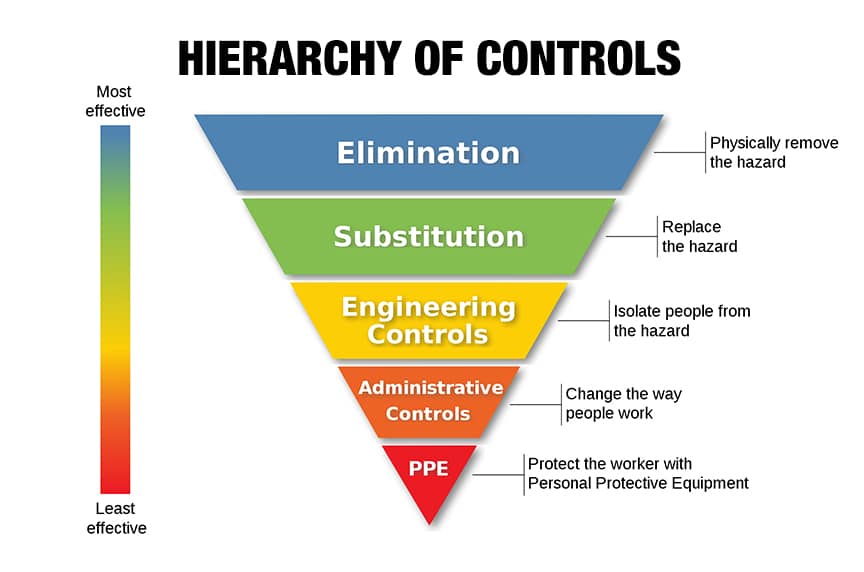
Two hazard hierarchies apply any time a worker interacts with both fall hazards and powered equipment.
The ANSI Z359.2 Fall Protection Code lays out five levels of control, from most effective to least:
- Elimination or substitution
- Passive fall protection (guardrails, covers)
- Active fall restraint
- Active fall arrest
- Administrative controls
OSHA’s hierarchy applies whenever a worker interacts with powered equipment, such as a bridge crane:
- Eliminate the situation
- Engineering controls
- Administrative controls
How Do You Plan Fall Protection for Crane Maintenance?
The crane industry has seen too many fatalities in these areas, and most of them trace back to a missing or inadequate fall protection plan.
A written plan should include:
- A written checklist covering every step before work begins
- A posted work schedule visible to every affected worker
- Workers must be trained to know all proper protocols
- Roped-off floor areas below the crane to keep people out of the drop zone
- Lockout and tagout on the runway and bridge being serviced
- Appropriate fall protection equipment for the work area
- A proper rescue plan in place
What Types of Fall Protection Systems Work Best for Crane Maintenance?
The type of fall protection you use depends on where the work is happening.
What Fall Protection Works Along a Crane Runway?
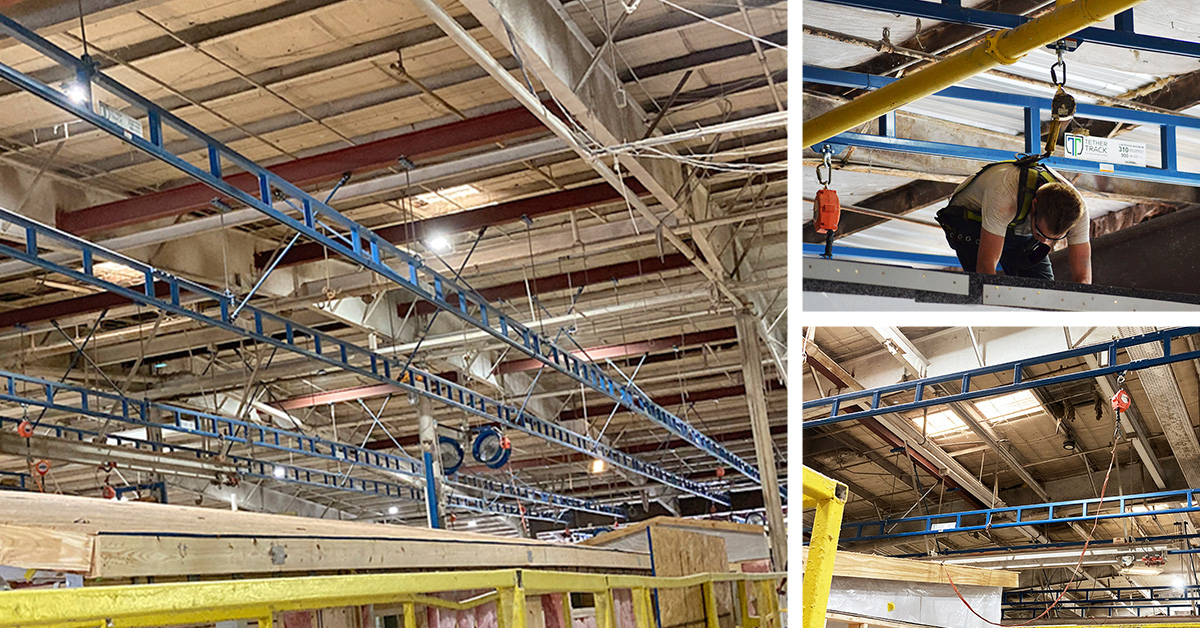
Along the runway, the two most common options are:
- Wire rope horizontal lifeline systems
- Enclosed track anchorage systems
Enclosed track systems generally offer shorter fall clearance distances and smoother trolley travel, which matters when runway clearance is tight.
What Fall Protection Works Along a Crane Bridge?
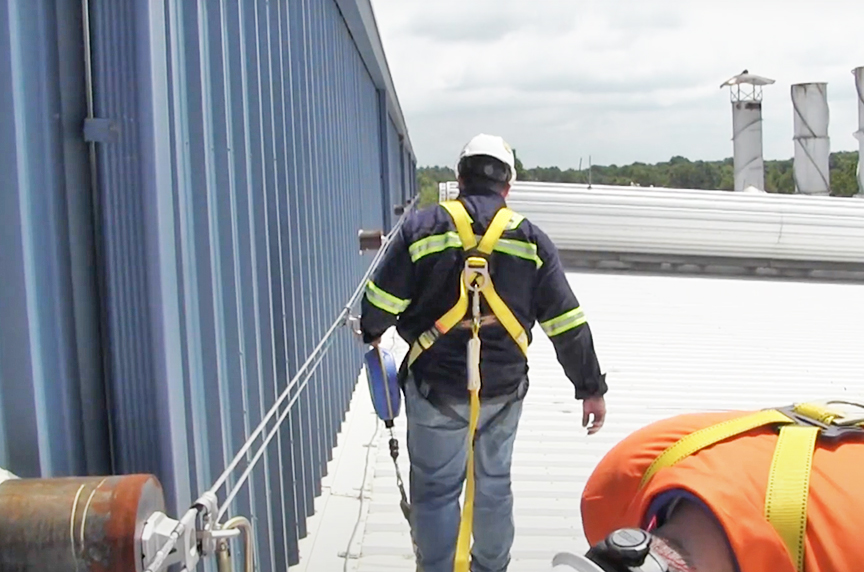
On the bridge itself, teams typically use:
- Guardrails and walkways where space allows
- Wire rope horizontal lifelines
- Rigid track systems
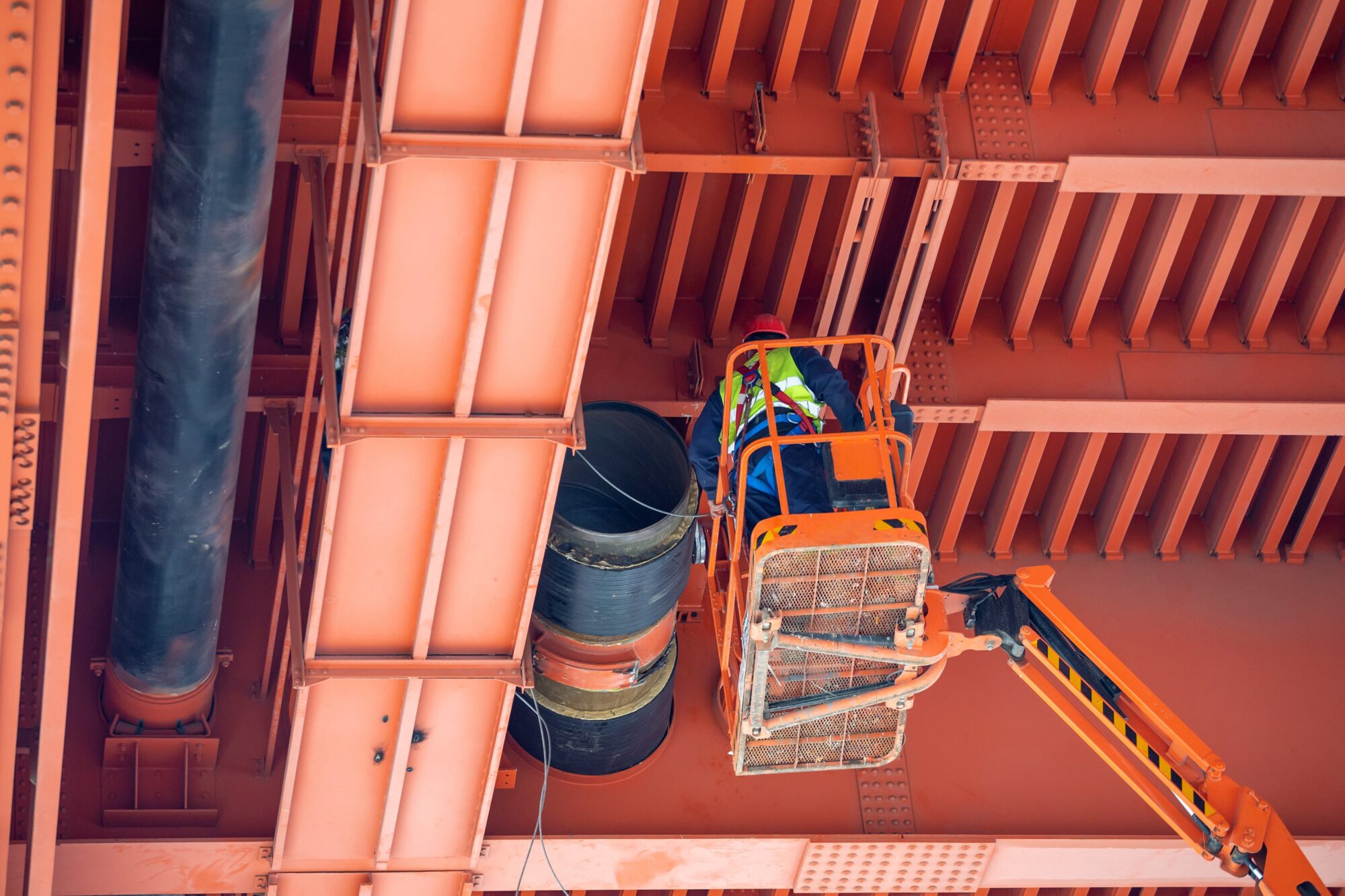
What Fall Protection Works for Hoists?
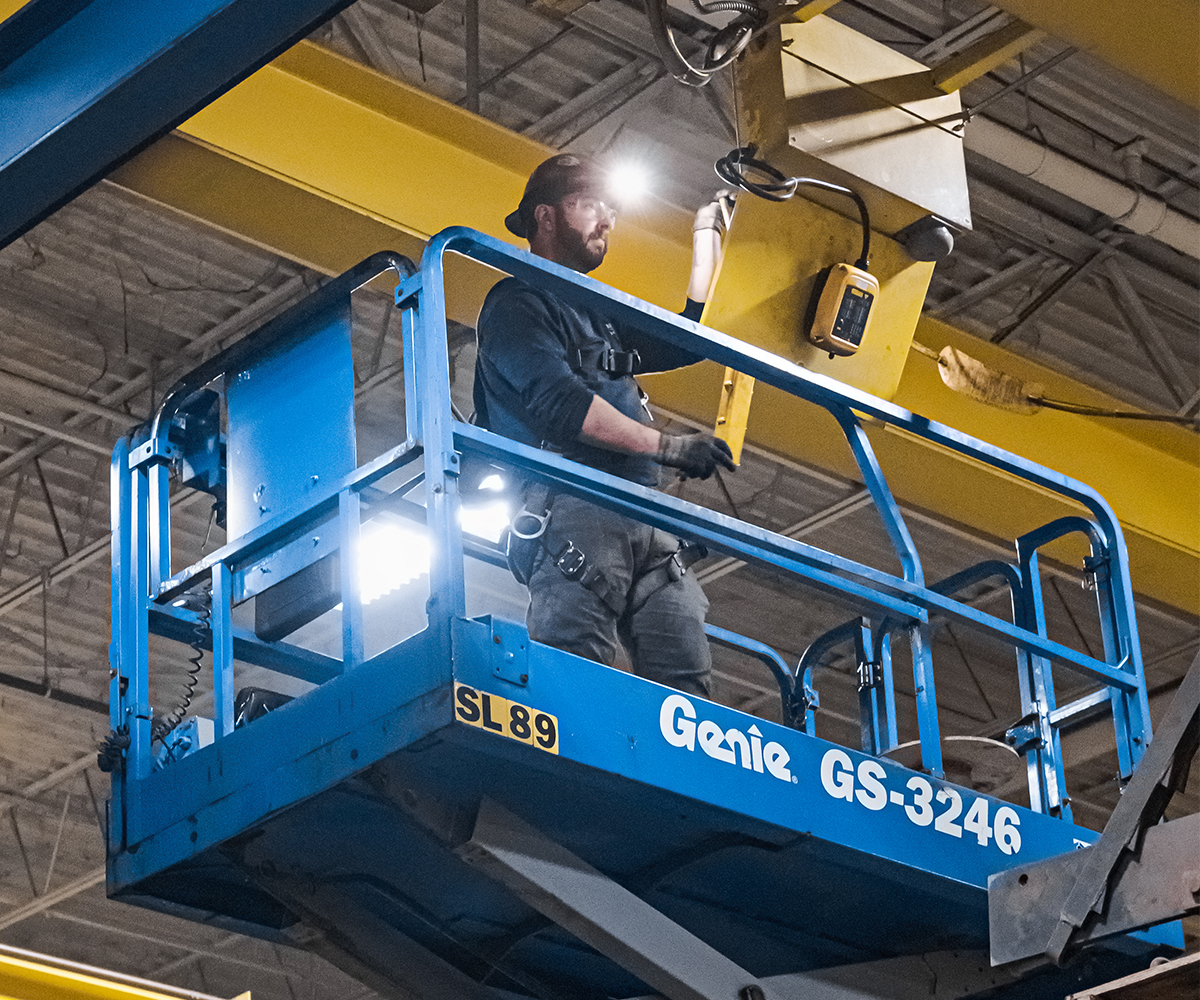
When possible, boom lifts and scissor lifts are the preferred way to access hard-to-reach inspection points. Passive platform rails, stable footing, and easier access make them safer than climbing the crane itself.
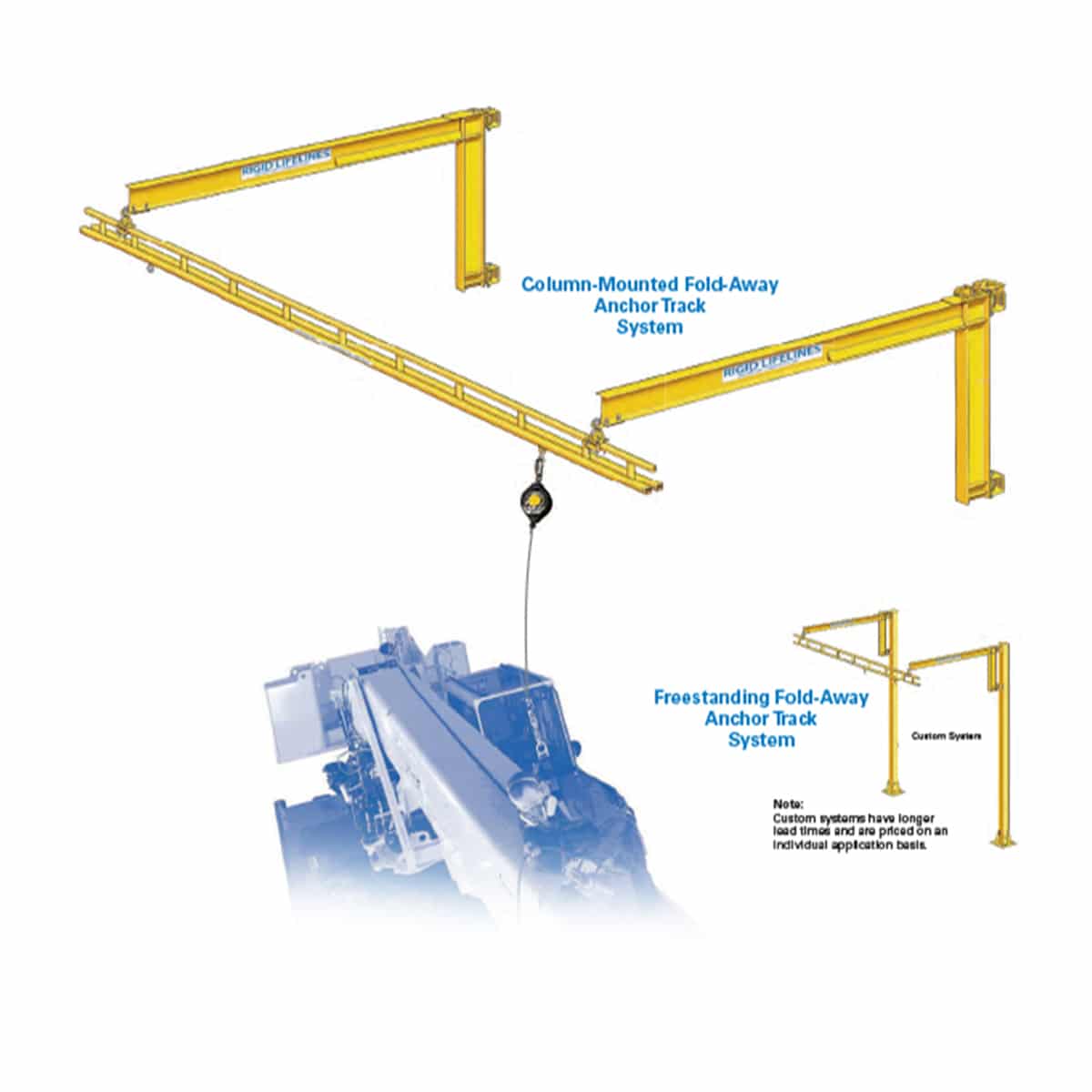
How Do You Protect Workers Who Work Underneath an Overhead Crane?
Workers who guide loads onto flatbed trucks, perform rigging, or work on equipment below a live crane need fall protection too. The challenge is that the anchor structure and the crane occupy the same envelope.
Several configurations can work:
- Foldaway monorails that move out of the crane’s path when not in use
- Rotating swing arms or wall-travelling jib arms
- Fixed monorails positioned below the crane
- Ceiling-mounted monorails or travelling bridges positioned above the crane
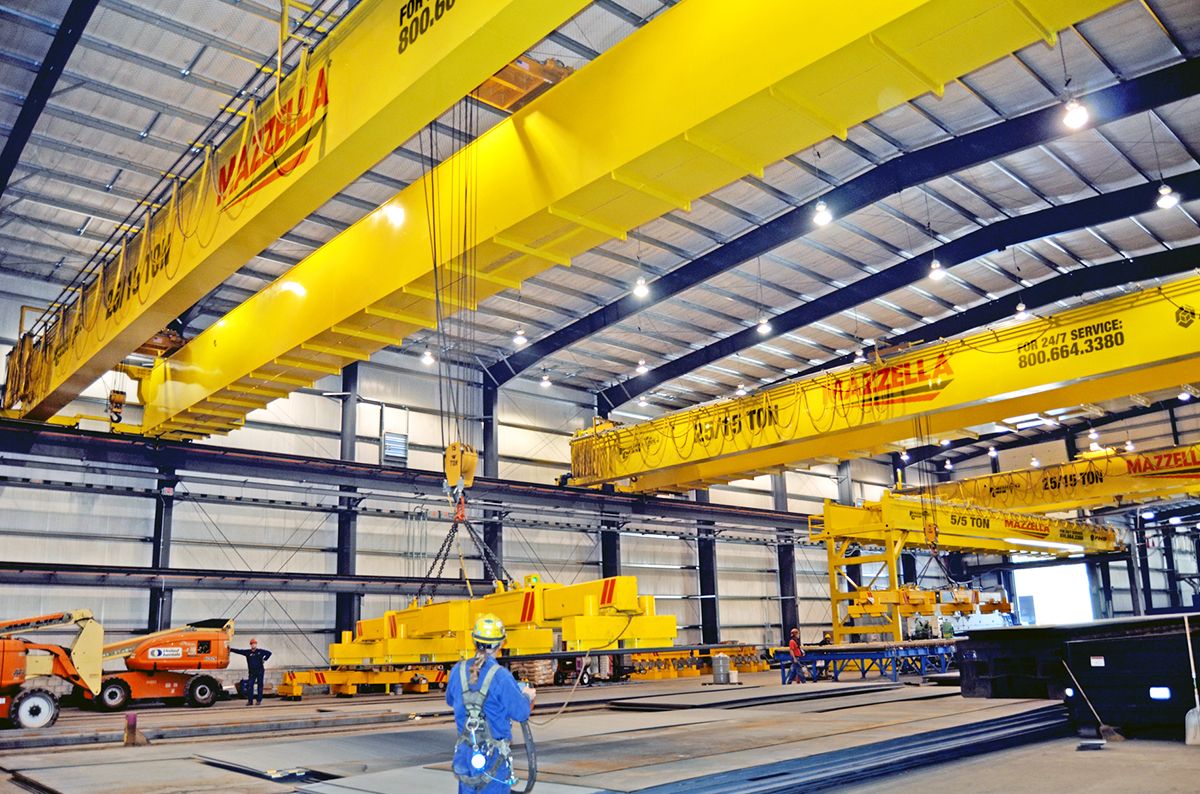
How Do You Prevent the Crane From Hitting the Fall Protection Structure?
Engineering controls are the first line of defense against impact:
- Trip wires, safety stop sensors, or light curtains that cut power to the crane on contact
- Automatic lockout that only a manager can reset
- A required near-miss report and refresher operator training after any event
Design features also help the operator see and avoid the structure:
- Paint the system a high-visibility color, such as safety yellow
- Add flashing or strobe lights rated on foldaway or temporary structures
- Program software limits into any computer-controlled crane motions
Can You Tie Off Directly to an Overhead Crane?
This is one of the most common questions safety professionals ask, and the answer is yes in specific situations, with conditions.
Under OSHA 1926.1423(j), a personal fall arrest system may be anchored to a crane or derrick’s hook or load line in construction when:
- A qualified person has determined the setup and rated capacity meet 1926.502(d)(15)
- The operator is at the site and informed of the purpose
- No load is suspended from the load line during tie-off
For general industry, OSHA may allow direct attachment to a crane, but only when the Hierarchy of Controls is followed and a qualified person has engineered or validated the anchor, the crane controls, and the administrative controls. In most cases, this means the crane must be locked out and tagged out before the structure is used as a fall arrest anchor.
OSHA does allow tie-off to a live, moving crane in two narrow cases, neither of which applies to general industry:
- Construction boatswain’s chair work under 1926.1431(s)(3)(iii)
- Longshoring container operations under 1918.85(k)(7), which requires slow-speed mode, a worker-controlled remote shut-off, and a visible or audible indicator
Can Multiple Workers Be Tied Off During Overhead Crane Maintenance?
OSHA doesn’t say how many people can be tied off to an approved hook at one time. However, most companies limit the number to two workers. There are several fall protection systems on the market specifically designed to allow for multiple workers by using multiple connection points.
What Are the Benefits of Adding Fall Protection to a New Crane Build?
Every overhead crane specification meeting is an opportunity to build in fall protection while the crane is being fabricated. Plant managers and EHS leaders who take advantage of that window save money, simplify compliance, and make their teams more productive.
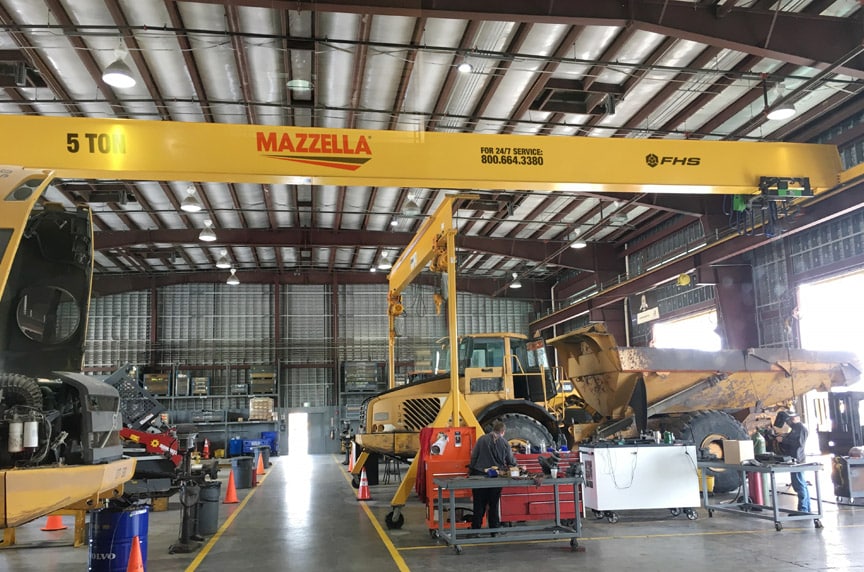
Cost Savings
The cost difference between adding fall protection during fabrication and adding it afterward is dramatic.
- During the crane build: Adding a D-ring, a horizontal lifeline, a rail system, or similar component typically adds somewhere in the range of $1,000 to $5,000, depending on the system.
- After the crane is installed: The same project often costs $10,000 to $15,000 or more on the low end, once you factor in a separate mobilization, rental equipment, and material costs.
When you are already investing six figures in an overhead crane, the incremental cost of building fall protection into the original scope is almost negligible.
Helps With OSHA Compliance
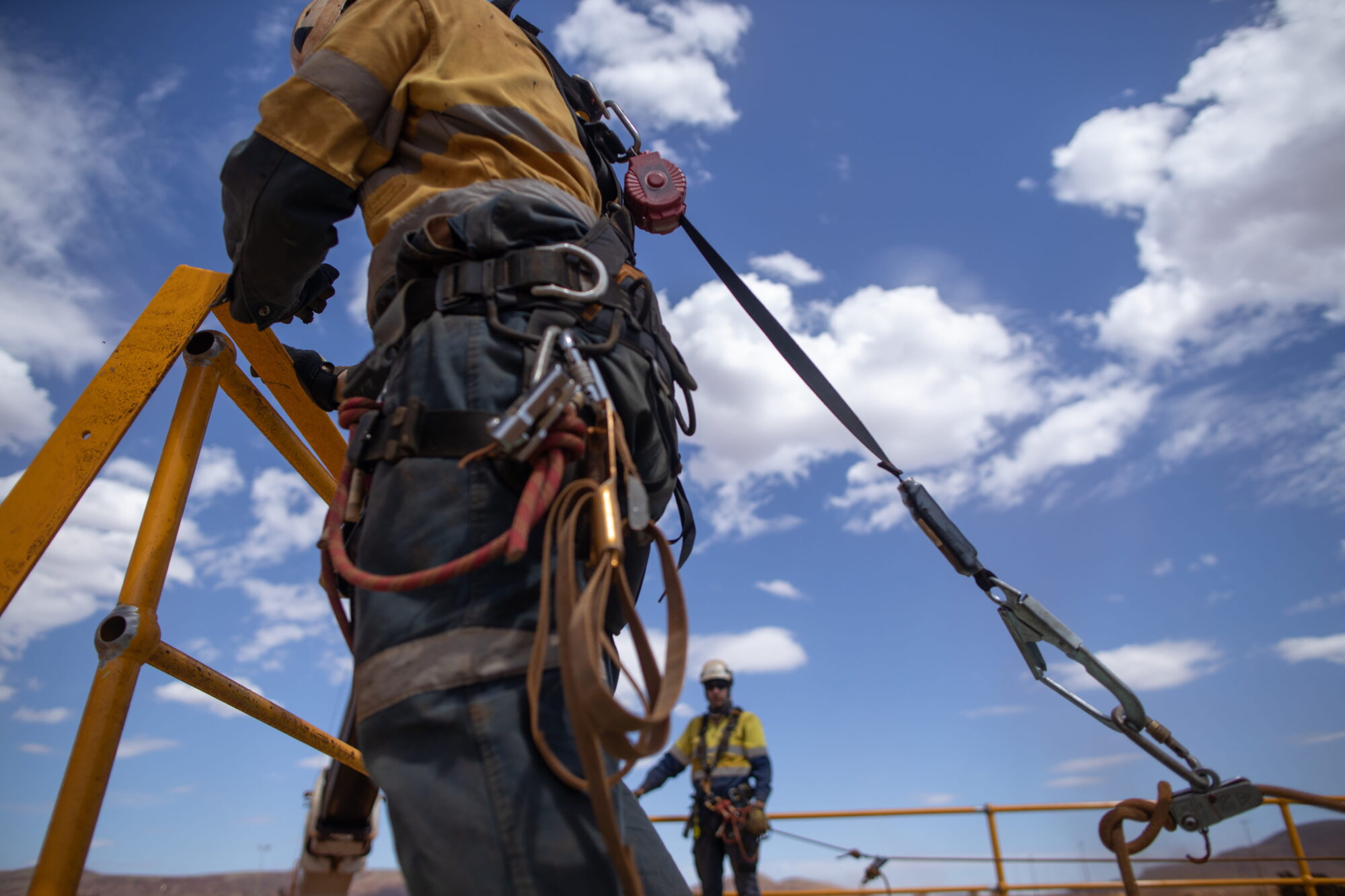
A fall protection system integrated into the crane automatically puts you in OSHA compliance from day one. General industry requires fall protection any time a worker is exposed to a fall of four feet or more, and crane maintenance almost always crosses that threshold.
With the system already in place, your maintenance team has a ready-made tie-off point whenever they need to service the crane or the equipment beneath it. You still need to lock out and tag out the crane when using the crane structure as an anchor, but the infrastructure is there.
Saves Time and Boosts Production
Most facilities with overhead cranes also have maintenance staff who handle routine fixes. When fall protection is built in, those technicians can work right away instead of waiting for help.
Built-in systems also remove common bottlenecks, like:
- Renting or scheduling a man lift for routine maintenance
- Bringing in additional fall protection crews for short jobs
- Needing to stage extra spotters or support personnel
What Should Safety and EHS Professionals Do Next?
Fall protection around cranes is never a one-size-fits-all problem. Every crane bay has its own geometry, traffic patterns, and production pressures. The path forward looks the same for most facilities:
- Review every fall protection installation for interactions with cranes and other equipment that share the envelope
- Apply both the ANSI Z359.2 Fall Hazard Hierarchy and the OSHA Hierarchy of Controls to each work task
- Document a written, site-specific fall protection plan for maintenance and for work under the crane
- Train operators, lead workers, and fall protection users on every protocol in the plan
- Specify fall protection during the crane build whenever a new crane is being fabricated
- Partner with a qualified engineered systems provider to validate anchors, lifelines, and administrative controls
At Mazzella, our fall protection and overhead cranes teams have collaborated on several projects, helping companies of all sizes achieve OSHA compliance and boost productivity ratings. Reach out to a Mazzella expert today to figure out next steps.

Copyright 2026. Mazzella.