
Pneumatic vs. Electric Hoists: What’s Right for You?
This article compares pneumatic and electric hoists across safety, performance, cost, lead time, maintenance, and application considerations.
Estimated reading time: 9 minutes
If your facility needs an overhead lifting solution, choosing between a pneumatic hoist and an electric hoist can be tough.
Outside of lifting capacity, you need to think about power source, speed control, operating environment, duty cycle, maintenance requirements, installation conditions, lead times, and long-term cost.
This article compares pneumatic and electric hoists, so you can better understand which option may be right for your lifting application.
Table of contents
- What Is the Main Difference Between Pneumatic and Electric Hoists?
- What Are the Strengths of Pneumatic Hoists?
- What Are the Strengths of Electric Hoists?
- How Do Pneumatic and Electric Hoists Compare in Different Environments?
- What Are the Cost and Lead Time Differences?
- When Does an Electric Hoist Make Sense?
- When Does a Pneumatic Hoist Make Sense?
- Pneumatic vs. Electric Hoist Comparison Chart
- Final Thoughts on Pneumatic vs. Electric Hoists
What Is the Main Difference Between Pneumatic and Electric Hoists?
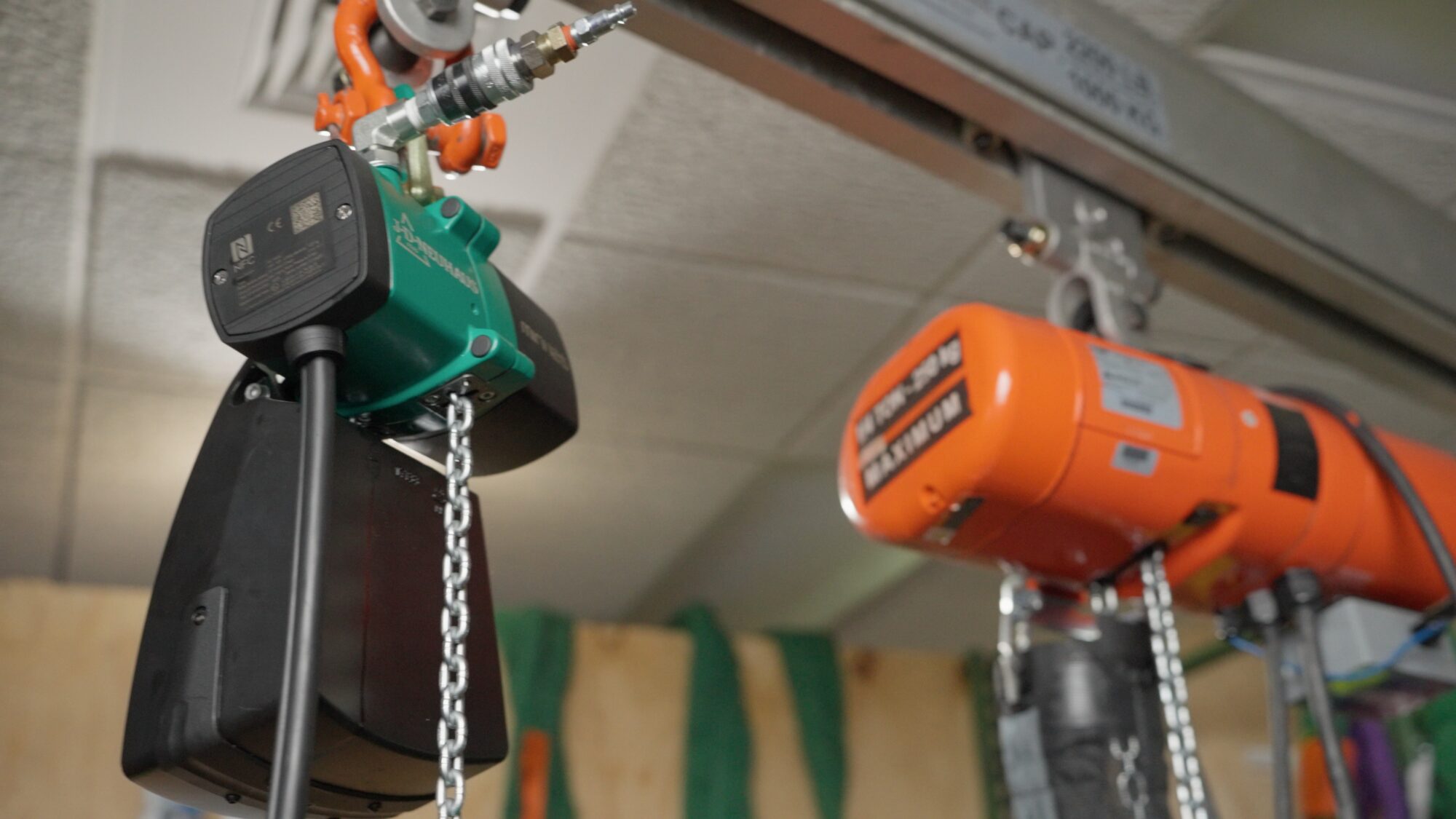
The biggest difference is the power source. A pneumatic hoist uses compressed air to lift and lower the load, while an electric hoist uses electricity to power the motor and controls.
Pneumatic hoists are often known for:
- Fast lifting and lowering speeds
- Smooth feathering control
- High-duty-cycle performance
- Tolerance for frequent starts and stops
- Good performance in harsh conditions
Electric hoists are often known for:
- Easy integration into existing electrical systems
- Familiar operation for many facilities
- Strong availability across many capacities
- Consistent control in standard industrial applications
- Simple use in clean, dry environments
Because the two systems rely on different utilities, the facility itself plays a major role in the decision. A plant with a strong compressed air system may find pneumatic hoists easy to support. A facility with no reliable air supply may find electric hoists more practical.
What Are the Strengths of Pneumatic Hoists?
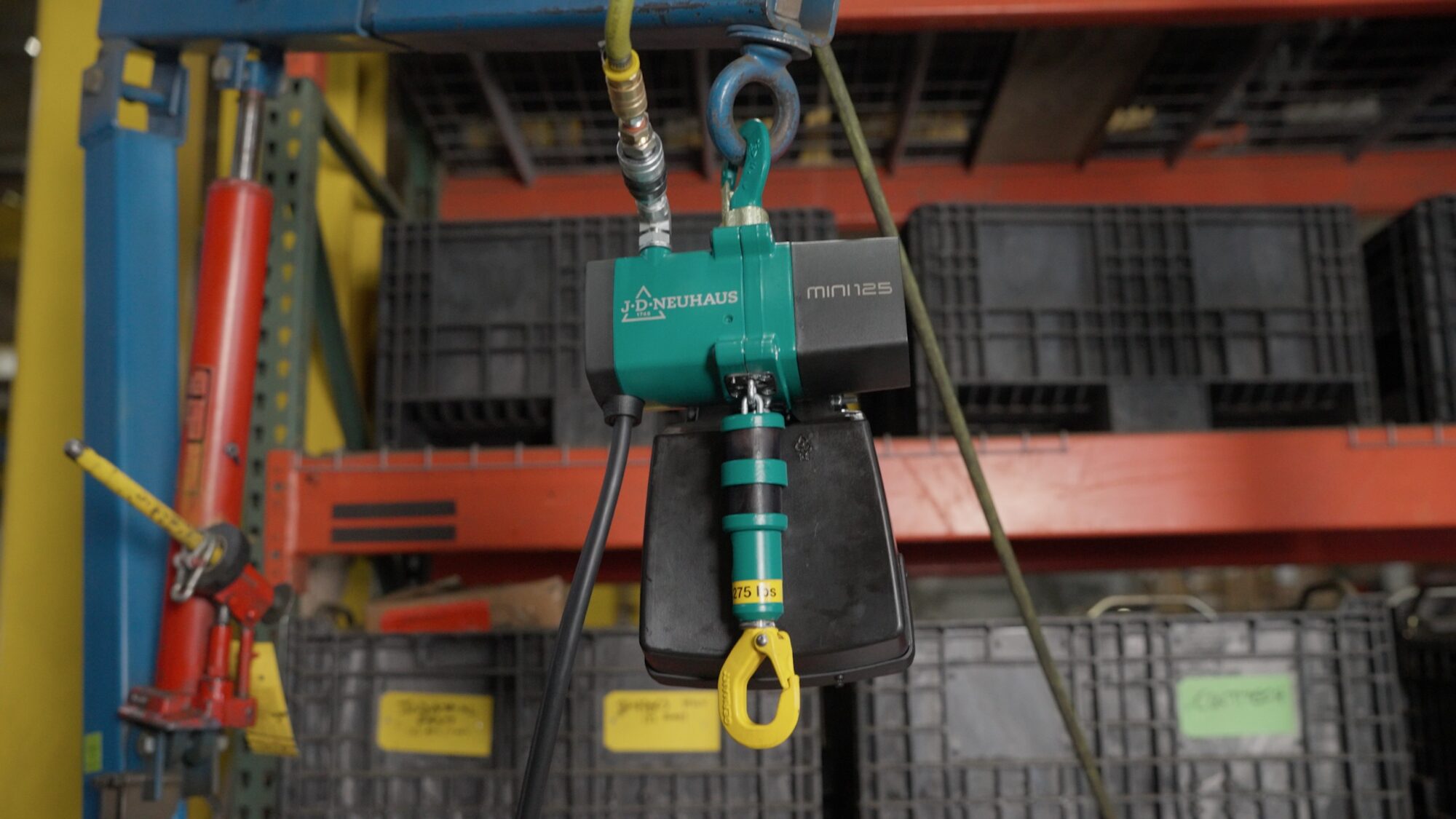
Pneumatic hoists are often chosen for performance and durability in demanding applications.
They offer several key benefits:
- No electric motor inside the hoist
- High lifting speeds
- Smooth variable-speed control
- Strong performance in frequent-use applications
- Good fit for wet, dirty, or abrasive environments
- Useful where compressed air is already available
In many operations, pneumatic hoists are valued for their quick response and the high degree of control they provide. That can be useful in assembly, positioning, maintenance, and production environments where loads need to be handled carefully but efficiently.
Pneumatic hoists are especially common in:
- Manufacturing plants
- Foundries
- Paper mills
- Food processing facilities
- Chemical plants
- Maintenance departments
- Mining operations
- Plastics manufacturing plants
- Washdown environments
- Heavy-duty production areas
Dust, moisture, heat, repetitive use, and rough operating conditions can shorten the life of equipment that is not designed for them. Pneumatic hoists are often well-suited for these conditions because they have a durable design and are less dependent on sensitive electrical systems, making them ideal for explosive and hazardous environments.
What Are the Strengths of Electric Hoists?
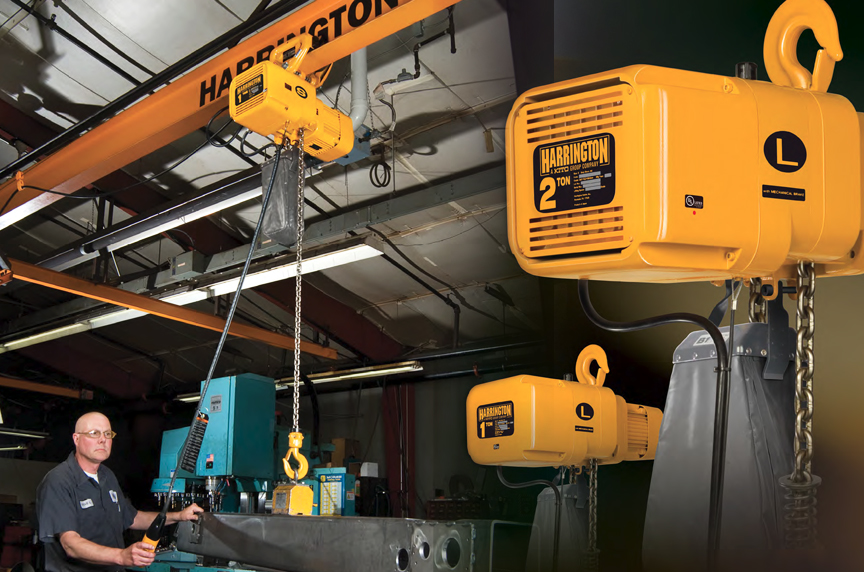
Electric hoists remain a strong choice for many lifting applications, and for good reason.
They’re efficient, easy to use, and often easy to install in facilities that already have the required electrical infrastructure.
Electric hoists offer several common advantages:
- Broad availability across many capacities and configurations
- Familiar controls and operating methods
- Good fit for clean, dry, controlled environments
- Easy integration into many standard crane systems
- Strong performance for general manufacturing and maintenance
- No need for a compressed air supply
You can find an electrical hoist in just about any type of work environment:
- Warehouses
- General manufacturing plants
- Maintenance shops
- Fabrication facilities
- Assembly operations
- Service bays
- Indoor production lines
- Standard material handling applications
However, if the environment is harsh, wet, highly dusty, or requires very frequent cycling, the limitations of electrical systems and components may become more important.
How Do Pneumatic and Electric Hoists Compare in Different Environments?
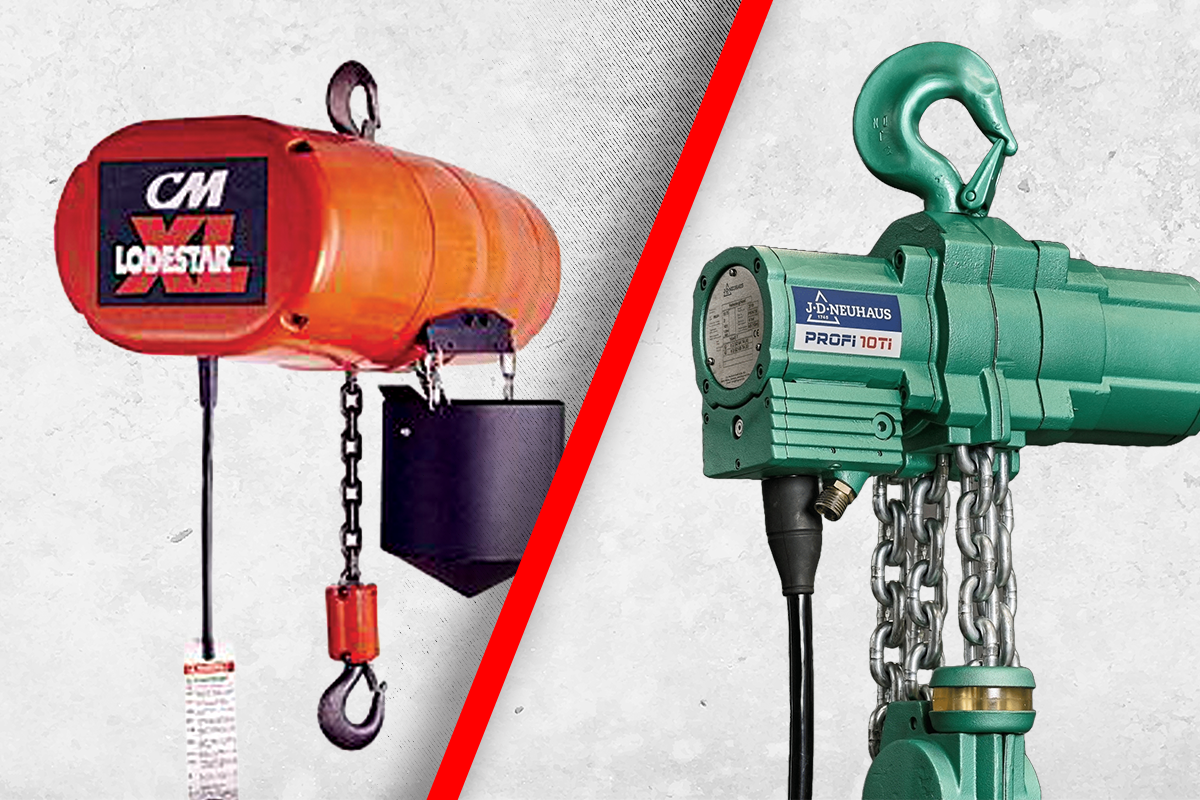
The operating environment often has a major influence on hoist selection.
Some applications are clean, dry, and climate-controlled. Others involve moisture, dust, heat, chemicals, washdowns, or continuous production demands.
These conditions can affect how each hoist performs.
For example, in a clean indoor facility, an electric hoist may be an excellent choice. It can be cost-effective, easy to power, and simple to integrate into the existing system.
In a wet or dirty environment, pneumatic hoists are often better suited. Water, dust, and contaminants can affect electrical controls, pendants, enclosures, and wiring if equipment is not properly protected or maintained. Air-powered hoists often avoid many of those concerns.
Pneumatic hoists are also often preferred in applications that involve:
- Frequent starts and stops
- High-duty-cycle use
- Fast lifting requirements
- Precise load spotting
- Dirty or abrasive conditions
- Harsh industrial environments
Electric hoists are often preferred in applications that involve:
- Standard indoor production
- Lower-duty-cycle use
- No compressed air availability
- Familiar plant-wide electrical infrastructure
- General-purpose lifting
- Clean, dry operating conditions
Both hoist types will need frequent inspection, lubrication, proper operation, and ongoing support. But the environment often changes which design is more practical over the long term.

What Are the Cost and Lead Time Differences?
A standard electric hoist is often cost-effective for general indoor manufacturing applications. Because electric hoists are common, many models are readily available through multiple manufacturers and distributors.
However, total cost depends on the full application.
Electric hoists may involve:
- Electrical installation
- Wiring and control setup
- Motor and control maintenance
- Sealed or protected components for harsher environments
- Additional engineering for specialized applications
Pneumatic hoists may involve:
- Air preparation equipment
- Airline installation
- Air consumption considerations
- Ongoing air system maintenance
- Utility costs tied to compressed air use
If a facility already has compressed air available in the right location, a pneumatic hoist can be a simple option. If compressed air isn’t available, the cost of adding or extending an air system can change the equation quickly.
Lead time can vary based on the hoist type, required capacity, mounting style, trolley configuration, and any special features.
In general:
- Standard electric hoists are often easy to source for common applications
- Pneumatic hoists can be a strong option when the facility is already air-equipped
- Specialized configurations may increase lead times for either type
- Custom materials, controls, or mounting arrangements can affect delivery schedules
The real cost comparison is not just the initial price tag, but the total installation and operating cost, too.
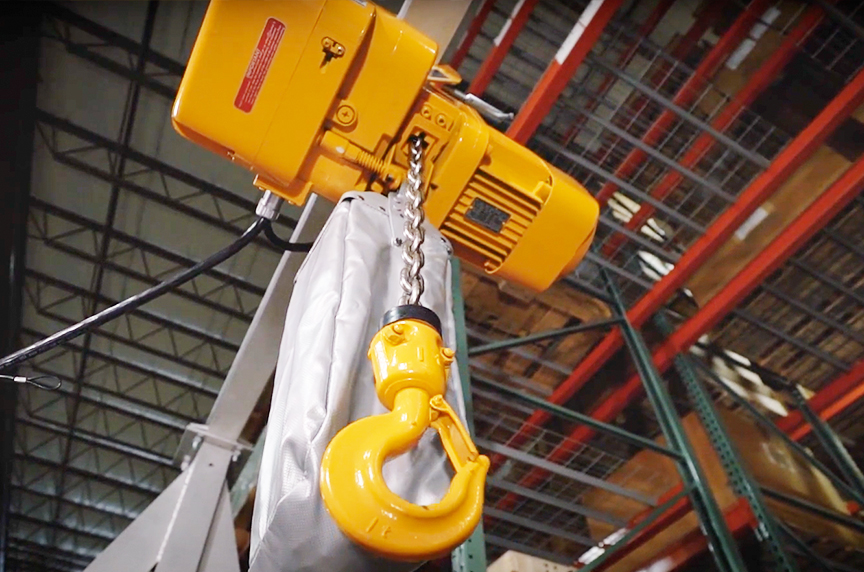
When Does an Electric Hoist Make Sense?
Electric hoists make sense in many applications.
An electric hoist may be the better choice when:
- The environment is clean, dry, and controlled
- Compressed air is not available
- The facility already has electrical infrastructure in place
- The hoist will be used for general-purpose lifting
- Standard configurations meet the application requirements
- Budget and availability favor a common electric model
- The duty cycle is moderate and does not require the advantages of air power
Electric hoists are going to be a great fit for any general manufacturing, warehousing, maintenance, and production applications.
If the hoist will be used in a standard indoor environment with predictable lifting needs, an electric hoist is often a practical and efficient solution.
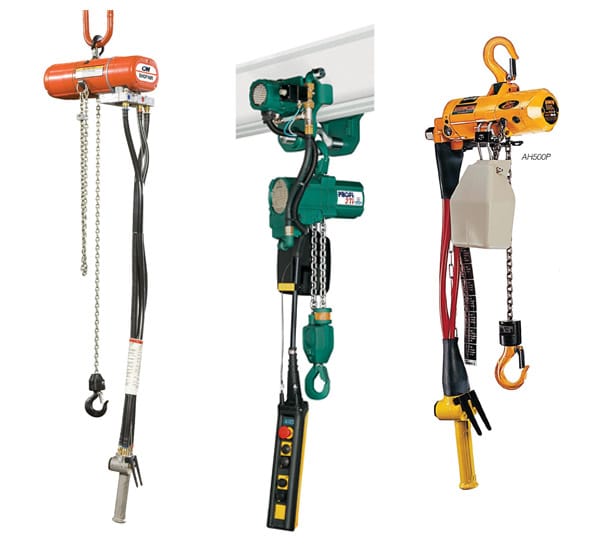
When Does a Pneumatic Hoist Make Sense?
A pneumatic hoist is often the better choice when the application is demanding, the environment is harsh, or the operation needs fast, responsive lifting.
A pneumatic hoist may be the right choice when:
- The facility has compressed air available
- High-duty-cycle use is expected
- Fast lifting and lowering speeds are important
- Precise feathering and load control are needed
- The environment is wet, dusty, dirty, or corrosive
- Washdowns are common
- Electrical components are a concern
- Long-term durability in tough conditions is a priority
Pneumatic hoists are not perfect for every facility. The biggest requirement is compressed air. If your facility doesn’t have a reliable air supply, you will need to account for the cost and logistics of adding one.
However, in many industrial applications, the speed, controllability, and environmental durability of pneumatic hoists outweigh the drawbacks.
Pneumatic vs. Electric Hoist Comparison Chart
| Factor | Pneumatic Hoist | Electric Hoist |
| Power source | Compressed air | Electricity |
| Utility requirement | Requires plant air supply | Requires electrical power |
| Operating speed | Often faster | Often moderate and controlled |
| Control feel | Smooth feathering and variable control | Consistent control depending on design |
| Duty cycle | Often well suited for frequent or continuous use | Varies by model and application |
| Environment fit | Good for wet, dirty, harsh, or demanding environments | Best for clean, dry, non-harsh environments |
| Installation needs | Air supply, filtration, lubrication considerations | Wiring, power supply, controls |
| Maintenance concerns | Air quality, lubrication, mechanical wear | Electrical components, motors, controls, wiring |
| Lead time | Depends on air setup and configuration | Often widely available in standard models |
| Cost considerations | Can be attractive if air is already available | Can be attractive if electrical setup already exists |
| Best fit | Heavy-duty, fast-paced, harsh-condition lifting | General-purpose lifting in standard environments |
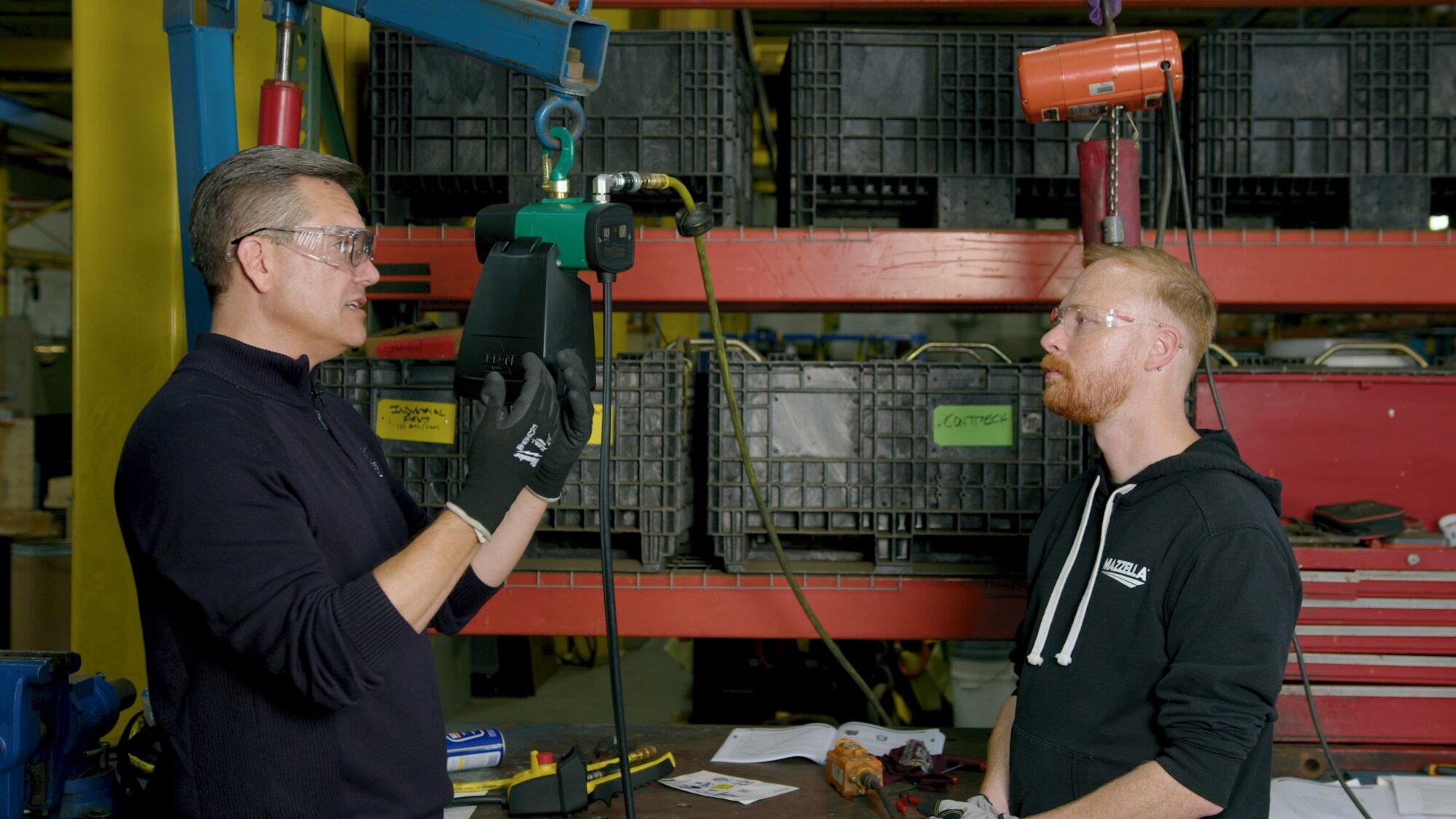
Final Thoughts on Pneumatic vs. Electric Hoists
Pneumatic and electric hoists can both be effective lifting solutions, but the best choice depends on how and where the hoist will be used.
Electric hoists are widely used and effective in many facilities. They’re often a practical solution for clean, dry, general-purpose lifting applications where electrical infrastructure is already in place.
Pneumatic hoists are often a stronger choice for demanding applications because they offer fast speeds, smooth control, and strong performance in wet, dirty, or harsh environments. They can also be a good fit for facilities that already rely on compressed air.
The best hoist depends on your application, your environment, and your facility requirements.
Before purchasing, make sure your team identifies the operating conditions, utility availability, performance expectations, mounting requirements, and maintenance needs. Working with a qualified lifting equipment provider can help ensure the hoist matches the real demands of the job.
Mazzella partners with the best hoist manufacturers in the industry, and our team can help you find the best choice for your application.
<!–[if lte IE 8]><![endif]–>
 hbspt.cta.load(3336966, ‘f83a9c72-f251-4274-8e0a-93e762cb0fd4’, {“useNewLoader”:”true”,”region”:”na1″});
Copyright 2026. Mazzella.