
What Does Proper Fall Protection Look Like for Women?
Women are returning to construction and other blue-collar trades at record rates. Find out why women-specific fall protection harnesses are key to creating safe work sites.
Estimated reading time: 8 minutes
Key Takeaways
- Many current fall protection harnesses for women are poorly designed, often scaled-down versions of men’s harnesses, leading to safety risks.
- Proper fall protection for women includes tailored designs, adjustable straps, and compliance with safety standards.
- The Contour Harness by Safewaze is highlighted as the best fall protection harness for women, specifically designed for their body shape.
- Addressing safety gaps in PPE for women fosters better working conditions and supports their increasing presence in blue-collar jobs.
In 2024, women represented 11.2% of workers in the construction industry, the highest percentage since 2006. Other professions like carpenters, electricians, plumbers, and iron workers have also seen a resurgence in women, returning to trends we were seeing before the 2008 Great Recession.
Between 2018 and 2023, 80,000 women entered the trades, a 28% increase. According to experts and industry leaders, this trend will continue for the foreseeable future.
However, the personal protective equipment (PPE) these women rely on to stay safe is usually not designed for them. This is especially true for fall protection harnesses, which tend to be designed for men but in smaller proportions. This is not only uncomfortable for women, but it also creates serious safety risks for those who work at height.
What does proper fall protection actually look like for women? Which fall protection harnesses for women can you buy? What other PPE is needed for women to be safe on a job site?
In honor of International Women’s Day and Women in Construction Week, we teamed up with our partners at Safewaze to answer these questions and to spotlight their Contour Women’s Harness, the leading fall protection harness for women on the market.
Table of Contents
- What Is Wrong with Current Women’s Harness Designs?
- What are the Key Features to Look for in a Women’s Harness?
- How Should a Fall Protection Harnesses Fit?
- What Is the Best Fall Protection Harness for Women?
- Are Women’s Fall Protection Harnesses More Expensive?
- Final Thoughts on Fall Protection for Women
What Is Wrong with Current Women’s Harness Designs?
Safety leaders are recognizing that PPE designed around just men is creating avoidable hazards.
A common industry practice is to take a standard harness, scale down the sizes, and label it as a “women’s” harness. Women struggle with harnesses that are too loose in the upper body. Usually, the shoulder straps that won’t stay put, or they can be pulled off because the harness isn’t shaped for narrower shoulders or different torso proportions.
Conversely, women workers are also forced to cinch and manage excessive webbing just to get close to a workable fit.
The result is a poor fit because their body proportions differ from men. Poor fitting harnesses are not just uncomfortable but create safety risks for those donning them. Some common examples safety experts see include:
- Shoulder straps that won’t stay positioned can shift during work and undermine correct D-ring placement
- Excess webbing makes it more likely the harness is adjusted incorrectly and increases snag potential
- Poor leg strap designs can cause safety issues, especially when workers are suspended from height
The Problem With “Unisex” and Pink Harnesses
Many companies will promote and sell “unisex” harnesses, which, many times, are based off the company’s men’s design and are still uncomfortable for women. Other companies will simply take the smaller-proportioned harnesses, apply pink, and market it as a women’s harnesses.
Both examples are simply marketing tactics that don’t address the underlying conditions of what makes these harnesses unsafe for women.
What are the Key Features to Look for in a Women’s Harness?
The best fall protection harnesses for women are designed specifically for the female form, offering adjustable shoulder, chest, and leg straps to ensure a snug fit, superior comfort, and improved safety over unisex alternatives.
When looking at harnesses, consider these features:
- Tailored Fit: Designed to fit female curves to prevent discomfort
- Adjustability: 5-point adjustment systems (legs, chest, torso) ensure a proper, safe fit
- Comfort Padding: Breathable, padded shoulder straps and back pads to reduce fatigue
- Compliance: All harnesses should meet ANSI Z359.11-2021 and OSHA standards
How Should a Fall Protection Harnesses Fit?
A strong fall protection program will always have proper fall protection equipment. And regardless of the worker’s gender, there are two non-negotiables with how a fall protection harness should fit…
1. D-ring placement
The dorsal D-ring should always sit in the middle of the shoulder blades. If it’s too high, it can strike the back of the head. If it’s too low, the worker faces a higher chance of injury in a fall event.
Correct D-ring placement matters because it changes how forces are distributed and how the body is held during and after arrest.
2. Chest Strap Placement
The chest strap should run straight across the chest. In the field, women are forced to place them too high, creating a choking risk if a fall occurs, or too low, which can lead to injury.
These checks sound simple, but they become difficult to achieve consistently if the harness wasn’t designed to accommodate the wearer’s shape.
What Is the Best Fall Protection Harness for Women?
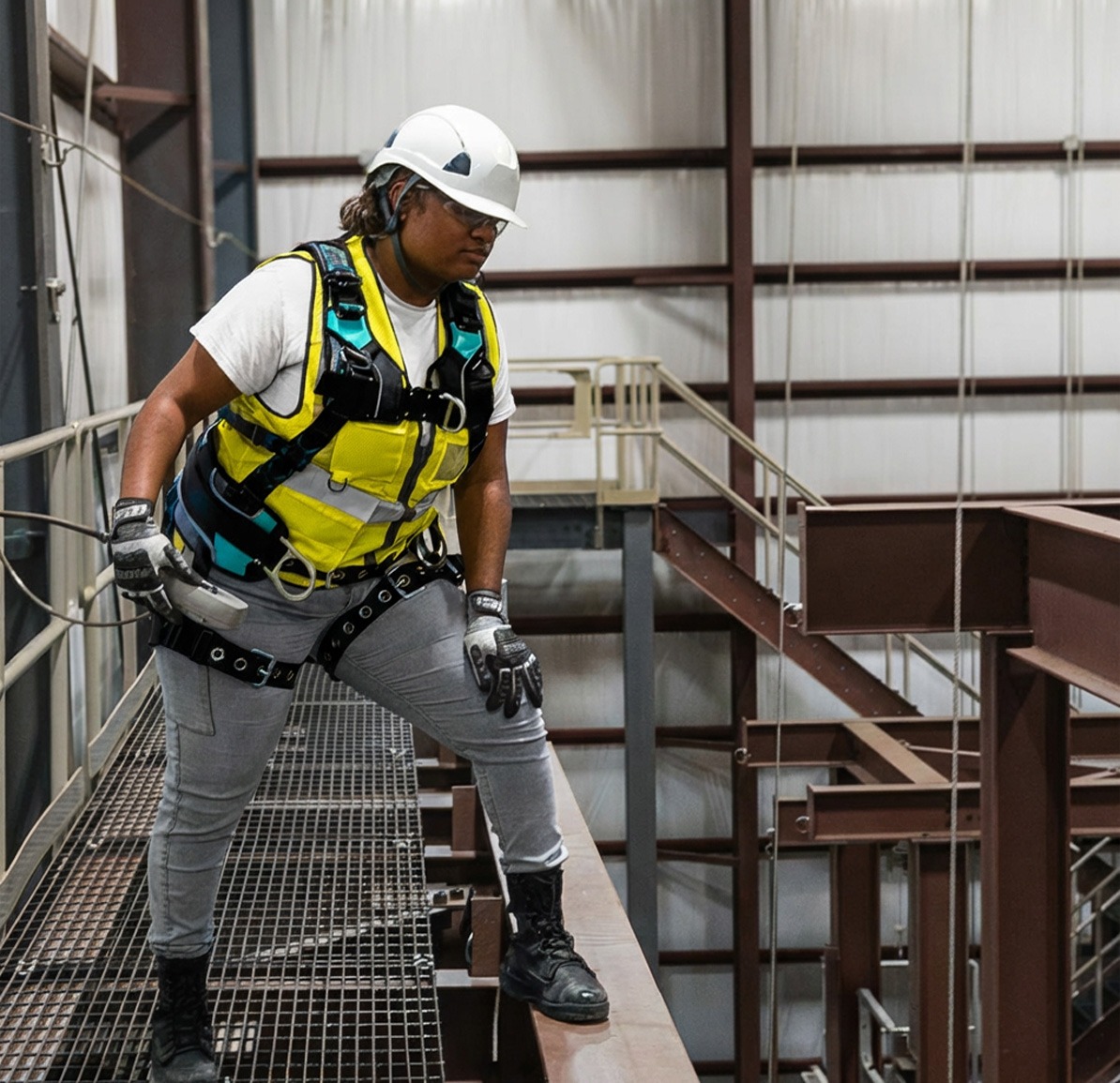
Right now, one of the leading fall protection harnesses for women is the Contour Harness from Safewaze. It’s the only harness out on the market that was designed by women, for women. As the name suggest, this harness was meant to contour to the natural curves of the female form, all while keeping a modern and compliant design.
Unlike other harnesses, the Contour is a new design and not based off existing men’s lines. The design phase also involved talking to dozens of women out in the field and getting their input on what they would like to see. One example of this design is the floating waist pad, which allows for better positioning for women. The Contour Harness is also equipped with:
- An ergonomic shoulder pad for better weight distribution
- Precise chest strap alignment for comfort and security
- Lightweight padding for comfort
- An integrated SRL channel
- Two mating buckle torso adjusters on each side
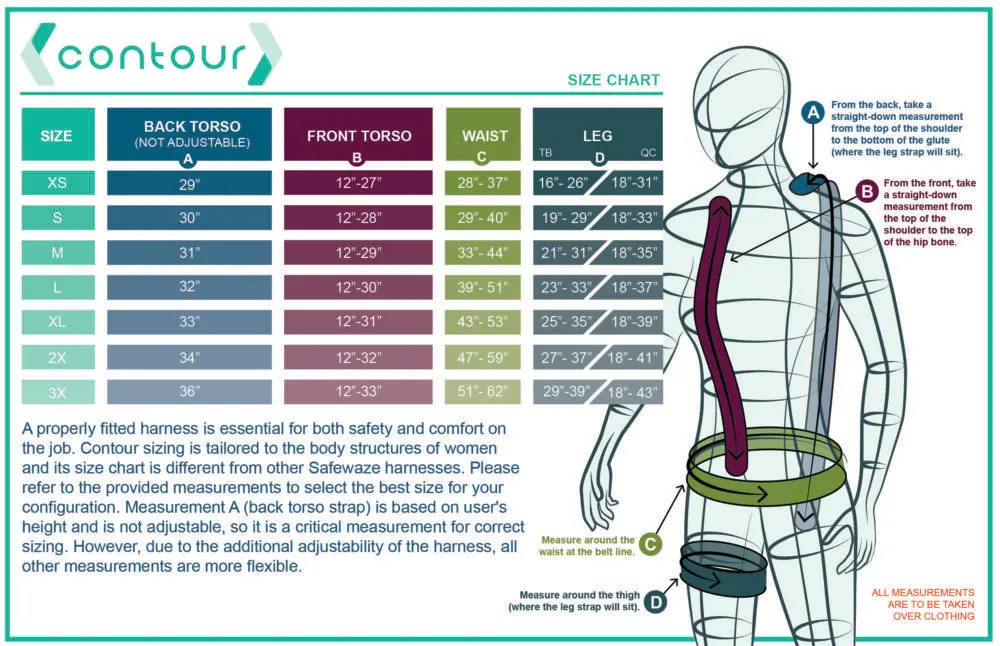
All these features make the Contour a flexible and comfortable tool for any worker on a job site. Even the Contour’s size chart is different to other Safewaze harnesses, with a focus on women.
Can Men Use Contour Harnesses?
Yes. Despite being designed for women, safety experts have seen men liking the Contour’s adjustability and comfort, with some men actually prefer using them over traditional harnesses during training sessions and out in the field.
Great safety products, when designed with effort and attention to detail, can help every employee stay safe, regardless of their size or gender.
Are Women’s Fall Protection Harnesses More Expensive?
Women’s harnesses are not inherently more expensive than other harnesses, but the price can go either way depending on the design and features.
Many women-specific harnesses are priced similarly to comparable “standard/unisex” harnesses at the same class/feature level. A women’s harness may be more expensive if it includes additional features that also raise the price in any harness, such as:
- More padding / comfort leg straps
- Extra adjustability or hardware
- Additional D-rings (positioning, climbing)
- Tool attachment points, trauma straps, specialty configurations
The Contour Harness, for example, is similarly priced to other Safewaze harnesses.
Final Thoughts on Fall Protection for Women
Women who enter these blue-collar industries face an uphill battle. Not only do they receive improper PPE, but they are also the victims of out-of-date, sexist stereotypes. They are less likely to be retained on core crews, promoted to field leadership positions, or to receive the same on-the-job technical training as men.
However, that’s not stopping women from making a difference, and some manufacturers are answering the call.
On top of harnesses, safety experts have seen momentum in the last 2–3 years for better-fitting PPE like hi-vis jackets, vests, and footwear. These decisions are now driven by safety and not just aesthetics. When designing harnesses for women (or any piece of PPE), it doesn’t need to be pink; it needs to fit and be safe.
American industry benefits greatly from the skilled work of tradeswomen, and giving them the proper PPE will benefit us all.
At Mazzella, we’re passionate about providing workers of all backgrounds with the equipment they need to get the job done safely and efficiently. Not only does our Fall Protection department stock harnesses and other personal fall protection equipment, but we also perform inspections, on-site training, and can install custom-engineered fall protection systems in just about every work environment. Contact our team to learn more.
Copyright 2026. Mazzella.