
How to Perform a Pre-Use Overhead Crane Inspection
This article walks through the purpose of a pre-use inspection, how it differs from other inspection types, and a clear, step-by-step process operators can follow.
Estimated reading time: 7 minutes
Download our free Overhead Crane Pre-Inspection Checklist
A pre-use overhead crane inspection is one of the simplest and most important steps an operator can take to prevent accidents, avoid equipment damage, and maintain compliance. These inspections confirm that basic safety mechanisms and controls are functioning before the crane is put into service for the shift.
This article walks through the purpose of a pre-use inspection, how it differs from other inspection types, and a clear, step-by-step process operators can follow.
Table of Contents
- What is a Pre-Use Overhead Crane Inspection?
- Step-by-Step: How to Perform a Pre-Use Overhead Crane Inspection
- Common Problems Found During Pre-Use Inspections
- Comparison: Pre-Use vs Frequent vs Periodic Overhead Crane Inspections
- Final Thoughts on Pre-Use Overhead Crane Inspections
What Is a Pre-Use Overhead Crane Inspection?
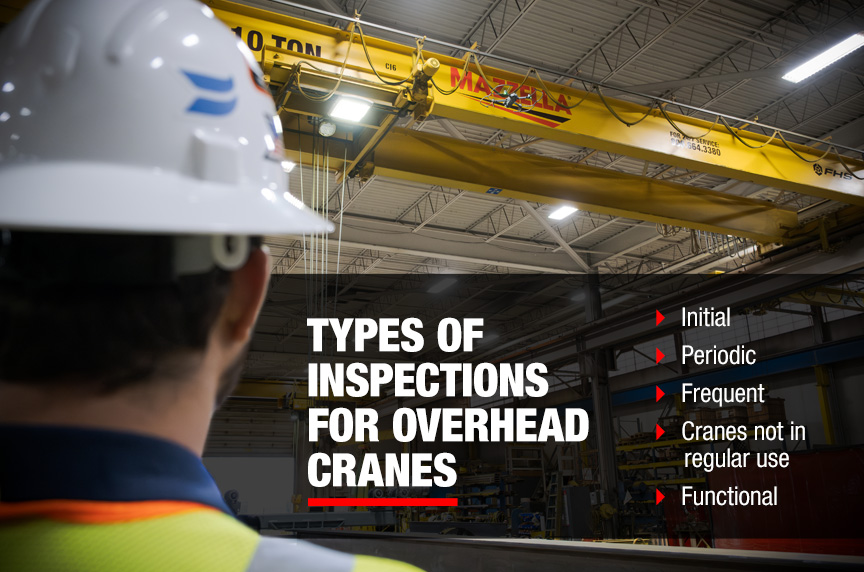
A pre-use inspection is a quick operational and visual check performed by the crane operator at the start of each shift. It is considered a form of frequent inspection, but unlike frequent or periodic inspections performed by qualified technicians, a pre-use inspection focuses only on the key safety-related functions needed to operate the crane safely that day.
A proper pre-use inspection helps operators verify that:
- Controls are working correctly
- Limit switches function as intended
- Hoist, trolley, and bridge motions operate smoothly
- Brakes hold the load as designed
- Hooks, chains, and wire ropes show no obvious defects
- Safety devices and warning indicators are active and in place
A pre-use inspection can take anywhere from two minutes to around thirty minutes depending on the crane size and configuration. Small workstation or jib cranes require very little time, while large or high-capacity cranes may require more thorough checks.
Step-by-Step: How to Perform a Pre-Use Overhead Crane Inspection
Below is the recommended sequence for a complete and effective pre-use inspection.
Step 1: Approach the Crane and Perform a General Visual Check
Before touching the controls, the operator should visually confirm that:
- Capacity markings are present and readable
- Warning labels are intact and legible
- No obvious damage, leaks, or abnormalities are present
- Below-the-hook devices (lifting slings, rigging hardware, lifting attachments) appear undamaged
This first pass helps identify issues before power is applied.
Step 2: Power On the Crane
Turn on the main power and check for:
- Required indicator lights
- Proper start-up behavior
- Any unusual sounds or delays
If the crane does not power up correctly, stop immediately and report the issue.
Step 3: Test the Hoist Down Function
Always start with the hoist down function.
- Lower the hook.
- If the crane has a lower limit switch, run the hoist down until it activates and stops movement.
- If no lower limit switch exists, lower the hook to the floor.
With the hook in its lowest position, perform a visual inspection of:
- Chain or wire rope
- Bottom block
- Hook body and hook latch
Look for corrosion, broken wires, twists, stretched links, or any condition that appears abnormal.
Step 4: Test the Hoist Up Function and Upper Limit
Raise the hook slowly and inch your way into the upper limit.
- Confirm the upper limit switch stops upward motion.
- Watch for brake slip, drift, or hesitation.
- Verify smooth, consistent operation.
If the hoist does not stop cleanly at the limit, the crane should not be used.
Step 5: Test Trolley Travel
Run the trolley in both directions.
- Move it to each end of travel.
- Inch into any trolley collision avoidance systems or limit switches.
- Verify braking and smooth start and stop motion.
A trolley that coasts, hesitates, or stops inconsistently may indicate brake or control issues.
Step 6: Test Bridge Travel
Repeat the same approach for bridge movement.
- Travel the bridge along the runway in both directions.
- Test any installed limit switches or collision avoidance devices.
- Confirm smooth acceleration and stopping.
Any irregular movement should be reported before the crane is used.
Step 7: Shut Down Power and Confirm Mainline Disconnect
Turn off the crane’s main power. Then test the pendant or radio controls again to confirm no movement occurs when power is off. This verifies that:
- The mainline disconnect works
- Control signals do not bypass the safety interruption
Step 8: Document the Inspection
Although OSHA does not require documentation of a pre-use inspection, it is required that the inspection be performed. Many facilities use a simple checklist to help operators follow a consistent process. Documentation also provides proof that the inspection occurred if OSHA or internal safety personnel request verification.
What To Do If Something Looks Wrong
Not every issue requires immediate shutdown, but all issues must be reported. The escalation process depends on your facility’s policies and the severity of the problem.
Continue Operation With Caution
Minor issues, such as a trolley limit that does not activate, may not require immediate shutdown. However, they must be reported and monitored until repairs are made.
Stop Operation Immediately
Critical issues should lead to immediate crane shutdown. These include:
- Hoist upper limit failure
- Brake drift or load holding problems
- Major chain or rope defects
- Hook deformation or latch failure
- Electrical problems that interrupt controls
Operators should notify supervisors or maintenance personnel. If in-house staff cannot make the repair, a service provider should be contacted.
Common Problems Found During Pre-Use Inspections
Based on OSHA citations and field experience, the most common issues include:
- Missing or incorrect capacity markings
- Damaged wire rope
- Damaged or worn chain
- Missing or illegible warning labels
- Hook or bottom block problems
- Faulty limit switches
- Electrical control or contactor issues
- Problems with below-the-hook devices
- Missing or incomplete inspection records
These issues are easy for OSHA to spot during a walk-through, even if the visit is not crane-related.
Why Pre-Use Inspections Fail
The most common issue is simple: they are not being done. Other frequent problems include:
- Operators rushing through the process
- Operators not understanding what to check
- Lack of training or inconsistent training
- No standardized checklist or written process
OSHA may assume the inspection is not being done if the operator cannot clearly explain their inspection process.
Comparison: Pre-Use vs Frequent vs Periodic Overhead Crane Inspections
| Inspection Type | Who Performs It | When It Occurs | Scope of Inspection | Purpose |
| Pre-Use Inspection | Crane operator | At the start of each shift or before equipment is used | Basic visual and functional checks of controls, motions, brakes, limits, hooks, and lifting components | Confirms the crane is safe to operate for the shift and identifies obvious issues before use |
| Frequent Inspection | Trained or qualified person | Weekly to monthly depending on crane service and duty cycle | Operational components checked for wear, damage, and developing issues | Detects problems that emerge between periodic inspections and ensures safe ongoing operation |
| Periodic Inspection | Qualified crane inspector | Monthly, quarterly, or annually depending on duty cycle | Comprehensive inspection of mechanical, structural, electrical systems, and documentation | Ensures long-term safety and reliability, verifies compliance, and identifies maintenance or repair needs |
The Importance of Proper Operator Training
Employers are responsible for ensuring their crane operators are competent and qualified. This includes classroom training, hands-on instruction, and documented testing.
A strong training program should cover:
- Safe operation of overhead cranes
- Understanding controls and limit switches
- How to identify hazards
- How to perform a complete pre-use inspection
- How to respond when a problem is found
Experienced operators often notice problems quickly because they use the equipment daily. New operators rely heavily on what they learn during training.
Final Thoughts on Pre-Use Overhead Crane Inspections
A pre-use overhead crane inspection is one of the fastest, easiest, and most cost-effective ways to prevent incidents and maintain compliance. It helps ensure that critical components function correctly before lifting begins and allows operators to catch problems early.
When performed consistently, pre-use inspections extend the life of your equipment, reduce downtime, and create a safer work environment for everyone in the facility.
Download our free daily inspection checklist, which gives an easy, convenient reference for your crane operators. Mazzella is also proud to offer a full overhead crane operator training course. Click here to learn more!
Copyright 2025. Mazzella Companies.