
What is the Cost of Lifting and Rigging Training? [2025]
One of the questions we're most frequently asked by customers is, "how much does your training cost?" While that answer depends on where you go and what your needs are, we can tell you more about our training program and some factors that affect training costs.
Transcript
OSHA’s Lifting and Rigging Training Requirements
– OSHA’s Training Standard 1926.761 requires that all personnel involved in lifting and rigging operations are properly trained. OSHA 1926.1427, Cranes and Derricks in Construction, requires that all operators are both trained, licensed or certified, and evaluated in accordance with the standard.
So we know that all employees involved in lifting and rigging operations need training. But how much does it cost? Today, Customer Trainer, J.T. Farley, is going to break down exactly how much you can expect to pay for lifting and rigging training.
Types of Training Mazzella Offers
J.T., let’s start with talking about what training offerings does Mazzella offer?
– Mazzella offers three flavors of training. We have basic rigging and inspection. We have overhead crane operations. And we have signalperson.
Do You Need a Third-Party Trainer or Is In-House Enough?
– And all of these trainings are required to be done by a third-party?
– Technically, someone could do them on their own. OSHA does not require that a third-party do this actual training. However, we kind side against it for the simple fact that there’s a lot of preparation, knowledge, and skill that goes into training this type of material, as well as being abreast to the changes in rules and regulations per OSHA and ASME.
– A lot of times if you’re training someone in-house, it’s just the guy who knows how to do the job, right?
– Well, like you said, Ben, it’s just the guy that knows how to do the job. Is this person actually going to take the time to follow the rules and regulations, which OSHA and ASME put out there?
Also, are they a trainer? It takes a lot of skill and preparation to disseminate information and transfer a skill set, so that your team can go out and perform and not get hurt. So that’s another reason why you want to get a third-party involved because they’ve gone through the preparation. They stay abreast to the proper training. And they’re prepared to disseminate that information and transfer those skill sets.
The Importance of Proper Training Documentation
– Let’s talk a little bit about documentation. Is the person who knows how to do the job, is he going to be documented as someone who is able to do that training?
– Probably not. Knowing the job and being able to train the job is totally two different skill sets. Because if there ever was an investigation or something like that from OSHA, you want to make sure you have the proper documentation showing that this skill set was transferred and was completed.
How Much Does Lifting and Rigging Training Cost?
– How much does Mazzella charge for classes or for trainings?
– We have a range. Right now, it’s from $125 to roughly $500 per learner. And that’s dependent on any of the trainings that I talked about earlier, whether it be signalperson, whether it be overhead crane operations, or basic rigging and inspections.
What Affects the Cost of Training?
– What are some of the things that affect the cost of a training class?
– Class size definitely affects the cost because it is per learner. Normally, if, for example, in an overhead crane operations course, you’re looking at up to 10 learners in an eight hour course. And that’s because it’s a practical involved.
However, in our four hour class, we can expand to roughly about 20 learners because we’re not doing the practical piece. However, the price may go up because there’s more learners.
What’s Included in Mazzella’s Training Fees?
– What’s included in some of these training fees?
– First of all, you’re going to get a full-fledged workbook, OSHA and ASME compliance. You’re going to get your laminated riggers reference cards, pocket guides. You’re also going to get a sling pocket guide. So pretty much everything that we go over in regards to safety and inspection, you now have it in your back pocket. So when you go out to the floor, whatever you may have forgot in class, it’s right there for you to be safe. You can pull it right out.
You are also going to to get a hard hat sticker, as well as a pen to write along with the training class.
– Most important, right?
– Got to have that.
Do Trainees Receive Documentation and Records?
– You’re also going to get documentation and training records. And we’re going to hold those records, right?
– We’re going to hold those records, as well as we’re going to send those records out to the EHS manager, so that they have it on hand, as well as we have it if there ever needed to be a reprint.
Are Hands-On Training or Exams Included in the Training?
– Are there any practical demonstrations, or exams, or in-field training that they’re also going to receive with these classes?
– In our overhead crane operations, yes. It’s a four-hour class. Written exam is after the four-hour class. Then we do a practical exam when we go out to the shop and actually use the crane, do a full-fledged inspection on the crane, and make sure each and every one is capable to operate the crane.
The biggest thing is that before you leave our class, the learner feels confident and competent in the job that they’re going to be doing.
Are There Any Hidden Fees in Mazzella’s Training?
– Are there any hidden costs that you might find you have to pay, like maybe if you want to get certified or something, exam fees, and things like that?
– Not at all. What we quote to the customer is what they’re going to pay.
Certification vs. Qualification & Competency Explained
– Often, our customers come to us and they say, we need to get our guys certified. Can you explain the difference between competent and qualified verse certified? And will students leave the classroom certified?
– About 98% of our clients and who we work with for using the overhead crane, the jib crane, gantry crane, and things like that, you do not need to be certified per OSHA. Now, OSHA does state that you do need to be trained. So there’s a difference in having an NCCCO certification versus being trained and being qualified.
Now, after a course with us, are you going to be a smooth operator? Not at all. We recommend that you still get seat time with a mentor. And then your company will certify you as competent after you’ve gone through our class, after you’ve proven to them that you can work and operate the crane. That’s going to be the difference in a qualified person and a certified person.
A certified person would actually go through an accredited college or something like that to be certified as a crane operator or rigger. We offer classes like that through our ITI partner. But as far as Mazzella’s offerings, we handle the OSHA and ASME training. And it meets the expectation of what a company and what OSHA would look for.
Can Mazzella Provide NCCCO Certification?
– If someone comes to us and they say, “I want my crane operators NCCCO certified,” Mazzella can help them get that through our partnership with Industrial Training International.
– Mazzella awhile ago has partnered with ITI, bring our customer the same robust training that ITI offer. In our partnership with ITI, If a customer or client decides that they need certification, we will partner with ITI and bring them on. And they’ll take it from there to make sure that they have that type of certification.
Price Difference: Mazzella vs. ITI Certification Training
– Is there a price difference if someone’s training with a Mazzella trainer, like yourself, or an ITI trainer?
– Yes, there is definitely a price difference. ITI has their own set scale for their training. We have, I would say, more of a range. We customize for our customers, as opposed to ITI might have a stringent, this is what you get. This is what you’re going to do. Their price range is a little bit higher than ours.
– That was actually my next question is to talk about customization and if a class can be customized for the customer’s needs. Yes, it can. And does that affect the price at all?
– We can surely customize. And like I said before, you’re looking at a range of $125 to $500 per learner. And it’s usually based on the hour as well. So, a one-hour session, you might be looking around in the $100 range. A six-hour session, you’ll be looking at around the $500 range.
So that would be the only difference. And once we have that conversation with the customer to figure out what pieces and parts need to be customized, then we come up with a timeline. And then they will fall into that price range.
How Often Should You Retrain Employees?
– How often do you need to train your employees?
– OSHA says three years. ITI says two years. And OSHA’s three years is a recommendation, okay? It’s not a requirement. Based on when retraining is necessary, it’s really up to the company.
– But before someone operates a crane, so let’s say you’re only going to a company every three years, but they get some new hires in there in between that time, they need to be trained before they operate a crane, correct?
– 100%, absolutely.
Does Mazzella Offer Refresher Courses and Discounts?
– So do we offer refresher courses? And is there any discount for returning customers like that?
– 100%, we offer refresher courses, as well as there is a discount. Because in a refresher course, if I had a eight hour training class with you last year and you’re now doing a refresher course with me, we’re looking at about only two hours. So it’s going to be a significant discount.
Why Free Training Often Isn’t Real Training
– Let’s talk about free training. A lot of companies out there offer free training. Why aren’t our classes free? And why should you be wary of maybe a free training class?
– It’s usually a sales pitch. And it’s usually about maybe a 30-minute, possibly 45-minute blurb about some equipment. But it’s not necessarily an actual training.
– Well, and that person might not have any documentation that they’re competent to be able to train.
– Definitely, I would be wary of that. I mean, it does sound good. Free always sounds good, right? But normally, what I found it’s usually a sales pitch for other things.
How Proper Training Protects Against OSHA Fines
– How does proper training help improve workplace safety and compliance?
– When it’s done improper, it can cost you more than you want. It can cost someone their life. So proper training is mandatory. And it’s very important that you have someone like myself or Mazzella able to come out and teach you the right way.
It can be very costly to a company. Hefty fines can be imposed if they don’t have the proper training in place. Online, I was looking. It was anywhere from $15,625 per incident, all the way up to $156,256 per incident. So that’s a wide range. It can become quite hefty for any company for not following those compliance rules.
– Well, thanks, J.T.
– Well, thank you, Ben. It’s truly a pleasure.
– I hope this video has given you the information that you need so you can properly plan and budget for your training requirements in lifting and rigging. If you need help with training, Mazzella is here to help. Not to mention, we can help with all of your lifting operations, from cranes, crane service, inspections, lifters, and rigging. Feel free to give us a call or contact us through the link below.
If you found this video useful, informative, entertaining, or you just feel like being friendly, then hit that like button so we can get this information out to everyone who needs it. Subscribe and hit the bell so you never miss a video. If you have a question, drop it in the comments so we can get you an answer. Remember, safe rigging is smart rigging. My name is Ben. Stay safe out there.
Editor’s Note: This article was originally written in 2020 and has been updated to reflect current pricing and offerings.
Injuries, lawsuits, extensive downtime, equipment damage, load damage, and fines can all stem from inadequate or non-existent lifting and rigging training.
As part of the Occupational Safety and Health Act of 1970, workplaces are responsible for providing workers a safe and healthy work environment, and OSHA believes training plays an essential role in that effort.
OSHA 1926.761 requires lifting and rigging personnel to be properly trained. OSHA 1926.1427 Cranes and Derrickson Construction requires that each operator is trained, certified, licensed and evaluated in accordance to the standard.
So, you know that you should provide training for your employees, but how much will it cost you?
We get this question from customers all the time. While that answer depends on where you go and what your needs are, we can tell you more about our training program and some elements that affect training costs.
Customer training needs and requirements vary widely, and many factors need to be considered when providing lifting and rigging training.
Mazzella, along with our partners at Industrial Training International (ITI), have been leaders in lifting and rigging training for years, and our article will cover the following topics:
What is Lifting and Rigging Training?
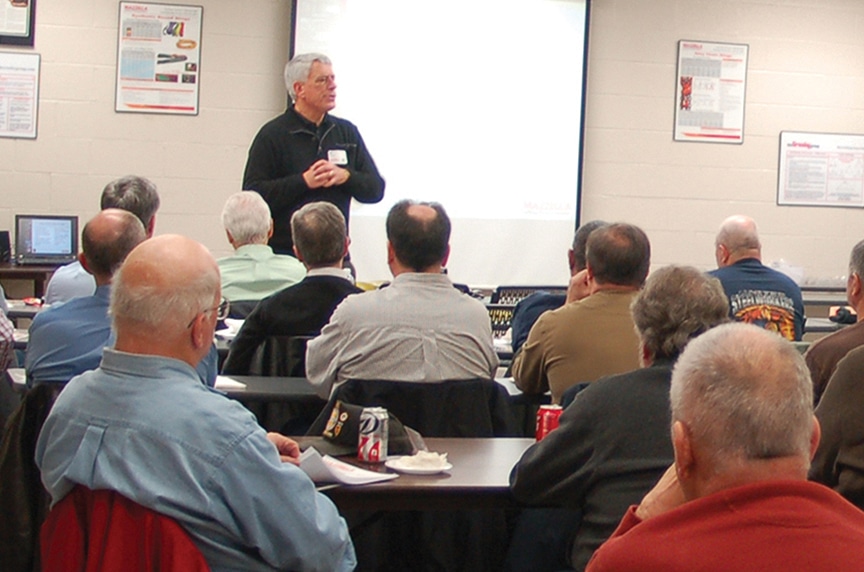
The purpose of lifting and rigging training is to educate a company’s personnel on rigging “best practices,” manufacturer’s recommendations, and industry standards (those related to the Occupational Safety and Health Administration (OSHA) and American Society of Mechanical Engineers (ASME). Better educated employees can take what they learn to promote a safer, more efficient work environment.
Lifting and rigging training is often necessary in situations when companies hire new employees, or want to provide continued education for their more tenured employees. Training usually consists of a classroom session and could include a practical (hands-on) element as well.
All lifting and rigging training should cover applicable OSHA and ASME industry standards and how they apply to:
- Planning a lift
- Product care, usage, and inspection
- Load control
- Job site safety
- And more
What Type of Training Does Mazzella Offer?
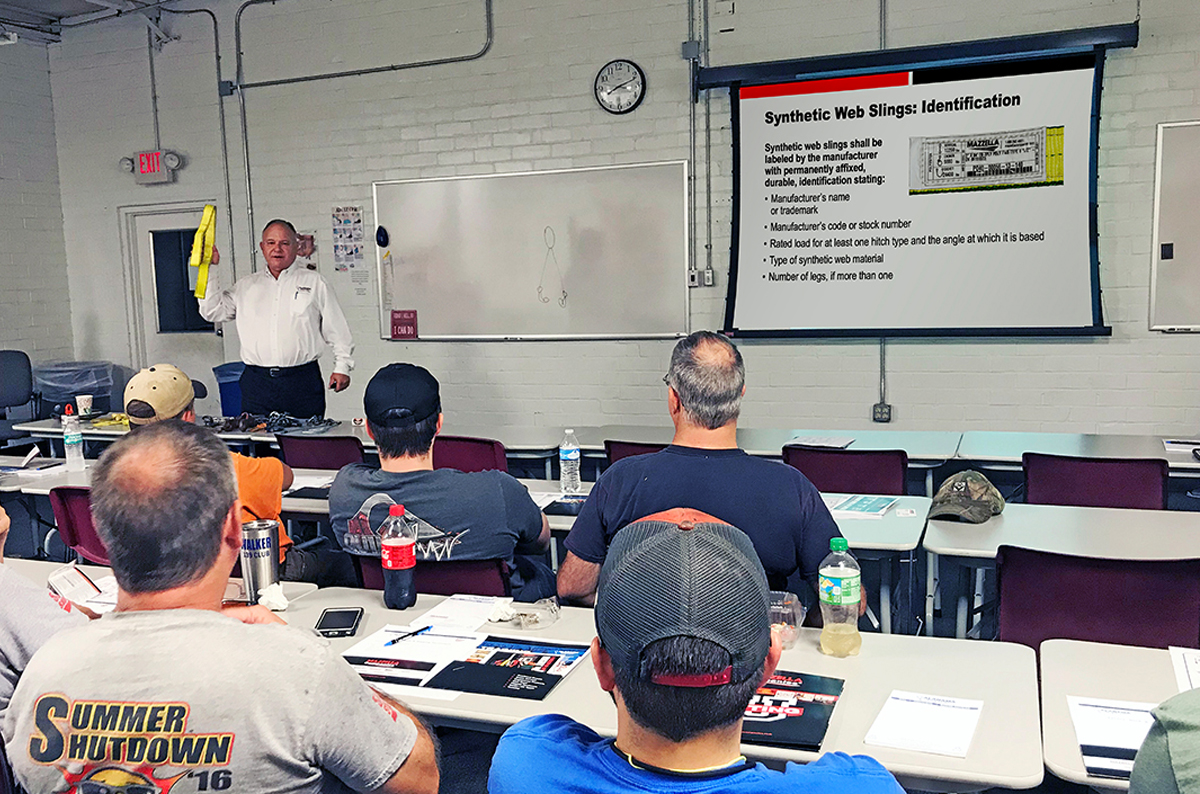
Mazzella employs an in-house training department which specializes in getting workers compliant in several important disciplines. Our training focuses on three areas:
- Basic lifting and rigging
- Signalperson training
Lifting and Rigging Training
The purpose of lifting and rigging training is to educate a company’s personnel on rigging “best practices,” manufacturer’s recommendations, and industry standards (those related to the Occupational Safety and Health Administration (OSHA) and American Society of Mechanical Engineers (ASME).
Throughout the course, attendees learn about:
- Proper rigging inspection and selection practices
- Load handling activities
- Equipment testing
- Rigging knots
Overhead Crane Operator Training
Mazzella’s overhead crane operator course offers students a detailed education on different overhead crane types, crane components, and the best overhead crane operations and techniques.
Our training can help you or your workers become National Commission for the Certification of Crane Operator (NCCCO) certified, with the help of our partners at ITI.
Signalperson Training
Participants will get a breakdown of federal regulations and safety considerations for signalpersons. They will also review general safety considerations for crane operations and how to identify verbal signals and safety considerations.
Do You Have to Do Your Rigging Training Through a Third-Party Company?
There is no OSHA or industry standard that requires you to get training through a third-party provider. Technically, someone from inside your company can conduct training with new workers.
However, partnering with a third party has several benefits. First, third-party trainers are experts at disseminating information and translating it to workers. Just because someone at your facility is an expert overhead crane operator doesn’t mean they’re going to be great at teaching an entry-level employee. It’s like how many legendary NBA or NFL players don’t work well in coaching or management positions. And because of how much the industry has changed, plenty of myths still circulate.
Most of these myths come from convenience and are even perpetuated by seasoned workers. So, in some cases, your most experienced workers may be passing outdated practices and myths to the new generation of workers.
Plus, creating a proper training course takes a lot of time and preparation, and you don’t want to have your most valuable workers off the shop floor for a day prepping for an upcoming training session.
Third-party trainers not only stay updated on the proper training, rules, regulations to ensure your workers stay compliant, but they also understand how to properly document training, which is an OSHA requirement.
How Much Does Mazzella Charge for Training?
Pricing a Mazzella training course requires communication, collaboration, and possible customization offerings. Every class is different, and every student will have different experience levels, so there’s no boiler plate price.
Mazzella’s price range for training depends on what discipline it covers and the number of students in a class.
Mazzella’s rigging and signalperson classes are priced at a 10-student minimum, and the usual price range is $125 to $500 per person. However, larger training programs (50-200 students) are eligible for corporate flexibility pricing.
Time is also an important factor in pricing. Training can range from an hour long course to up to eight hours. A one-hour course could cost around $100, while a six-hour course could be in the $500 range.
Unlike rigging and signalperson training, which has six time options, our crane operator training only comes in a four-hour and eight-hour course. These courses can range from $250 to $500 per person.
What Is Included in Mazzella’s Rigging Training Fees?
Number of Attendees
Most lifting and rigging training programs—including our own—will charge per student.
For pricing purposes, most programs will consider the number of attendees to take high volume session attendance into account. There is a difference when it comes to training ten people in one class vs. training 100 people over five separate classes.
Costs of Handout Material
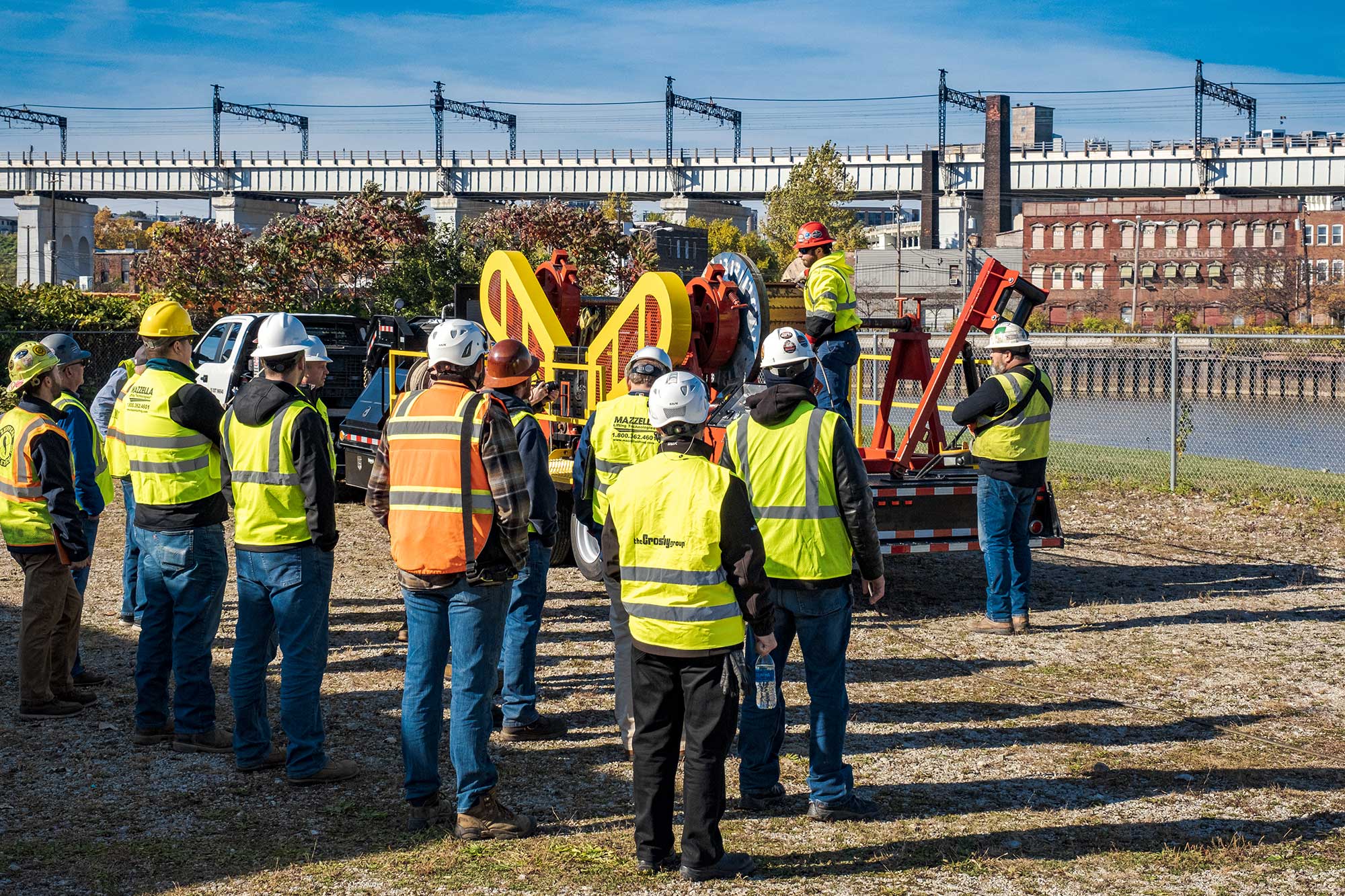
Students receive a workbook or packet, stickers, guides, pens, and laminated pocket rigging cards for reference.
Customized Classes
Once our trainers have the conversation with the customer to figure out what pieces and parts need to be customized, then they can come up with a training timeline and how it will affect the final cost.
Length of Training / Number of Sessions
Generally, the longer the training session, the higher the price.
The length of training you receive is up to you and mostly dependent on the level of training your employees require. This is something your Account Manager or Trainer will work through with you.
Sometimes, the training sessions need to be spread out over several shifts. Since more sessions means more time required from the trainer(s), this will usually result in a higher investment.
It’s common for customers to want a staggered training schedule—where they have a training session on Tuesday and Thursday. We can accommodate but know the expenses will increase for the extra day.
Travel Expenses
The company you purchase your training from will normally send their closest qualified trainer to work with your employees.
If a company does not typically service your region, their closest available trainer may need to travel a significant distance to service your facility. If this is the case, expenses like airfare, hotel, meal expenses, rental car, gas, etc. are typically calculated into the total cost of the training.
Are there Any Hidden Costs with Mazzella’s Training?
No, the price you see is the price you get, and Mazzella prides itself on our transparent pricing.
Is There a Price Difference Between Mazzella Training and ITI Training?
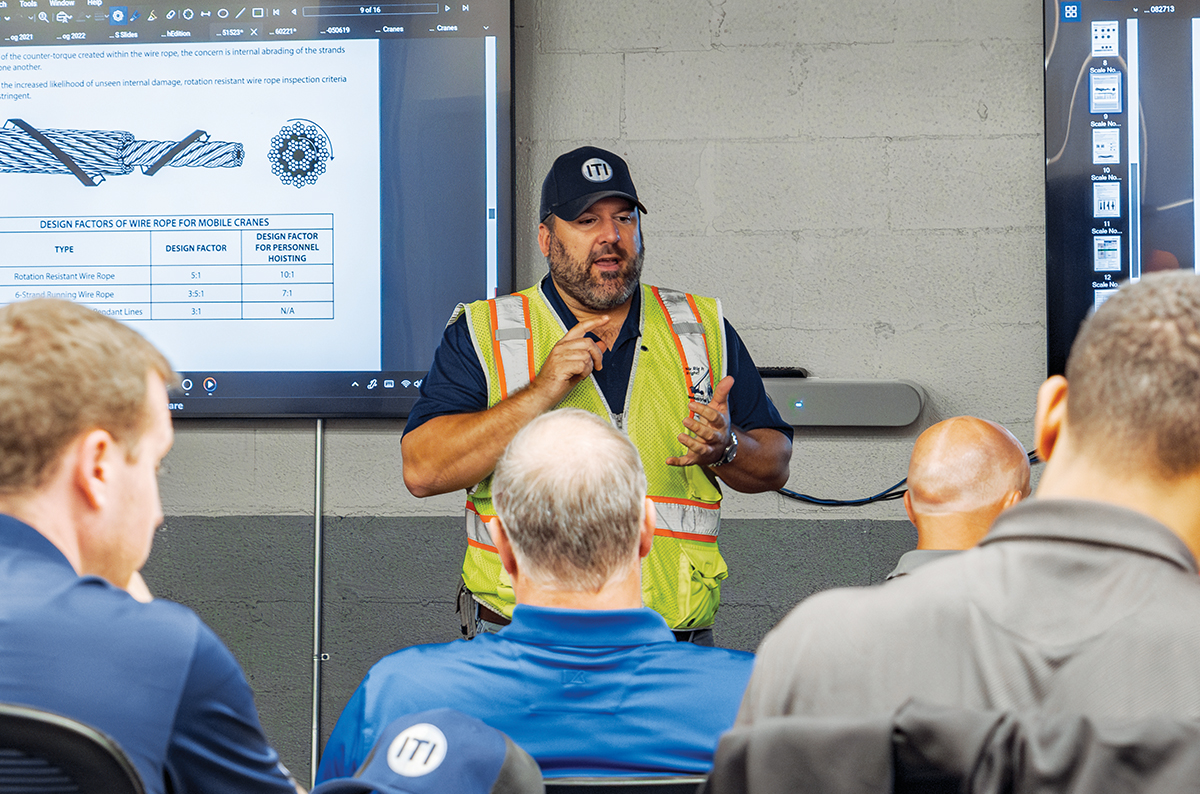
Yes, there is a significant price difference between Mazzella training and ITI training. This is the case for multiple reasons.
First, Mazzella’s training is geared more towards beginner-level courses, while ITI’s training is geared for intermediate and advanced skill levels, so ITI’s courses tend to be more expensive.
ITI has more stringent prices for their training, while Mazzella’s has a broad range that can be affected by a variety of factors. For example, ITI’s Master Rigging Course, which is a high-level, five-day in-person training program, will cost a lot more than a Mazzella-led toolbox talk, which only lasts about 30 minutes.
While there are significant differences between Mazzella’s and ITI’s pricing, Mazzella promotes and sells ITI training directly to customers through a deep partnership. This partnership also means that every Mazzella trainer is thoroughly trained on ITI’s curriculum and teaching style.
Does Mazzella Offer Discounts for Returning Customers?
Mazzella offers “refresher” courses to returning customers, and they are significantly less expensive than typical training courses, as they take a fraction of the time to complete.
So, if you signed up for an eight-hour training class, a refresher course a year later will only take around two hours to complete.
Why Shouldn’t You Choose Free Training?
It’s understandable why companies would be interested in a free training class. According to our training experts, free training usually devolves into sales pitches for certain products. These free training courses are usually short (30-45 minutes) and don’t go into detail about OSHA and ASME compliance.
Free offerings are always enticing, but when it comes to training your workers, you will be better off paying for in-depth courses that keep your workers safe and compliant.
Why Should You Choose Mazzella for Your Training Needs?
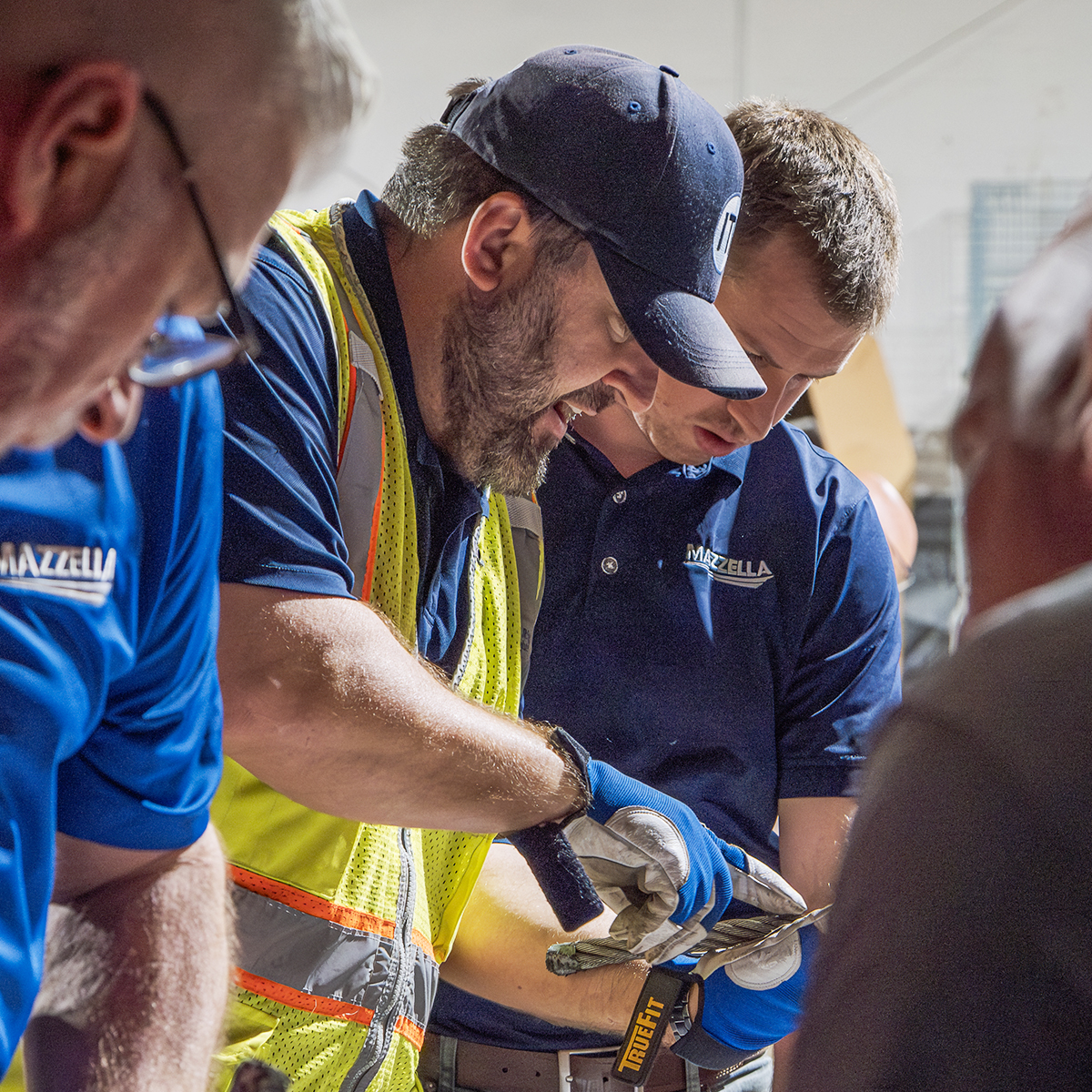
We hope this article has given you the information you need to properly plan and budget for your lifting and rigging training requirements.
Whether it’s online, on-site, or in a classroom, Mazzella offers an extensive lifting and rigging training program with our partners at Industrial Training International (ITI). We can also help you with additional training courses, ranging from cranes, rigging, lift planning, rigging engineering, and even NCCCO Certification.
Mazzella and ITI have also partnered to build a state-of-the-art training facility in our Cleveland Lifting Center.
Want to schedule a training session for your organization or still have questions? Contact one of our Training Specialists today.
Copyright 2025. Mazzella.