Should You Buy a Below-the-Hook Device With Your Overhead Crane?
Learn the long-term benefits of integrating a below-the-hook lifting device with your overhead crane.
Transcript
Why Pair a Lifting Device With Your Overhead Crane Build?
– Peanut butter and jelly, milk and cookies, knife and fork, some things just pair well together, and so does purchasing a custom below-the-hook lifting device with your upcoming overhead crane build. Why? Today, we’re going to find out. In this video, we’re going to look at the pros and cons of purchasing a lifting device with your overhead crane.
My name is Ben, and this is the Lifting & Rigging Channel. I’m joined today by Below-The-Hook Specialist, Dan Sherwood, and Overhead Crane Specialist, Chris Whitney, a dynamite duo the likes of Ben Affleck and Matt Damon, just with less hair. Woody and Buzz, Jordan and Pippen.
What Is a Below-the-Hook Lifting Device?
Before we get started on talking about why you should consider buying a below-the-hook device with your overhead crane build, Dan, do you just want to briefly explain what is a below-the-hook device?
– Below-the-hook device is any type of, like, engineered lifting apparatus, we’ll call it, that attaches to an overhead crane that is designed to pick up either a specific load or a variety of loads.
Why Buy Your Crane and Lifting Device Together?
– Sounds expensive, overhead crane’s expensive, what’s the argument for buying both of these very expensive objects together?
– If you’re investing that much money into an overhead crane to start making these lifts, you want to make sure, from top to bottom, you’re safe, you have the right way to do it, you’re not going to damage your load, I recommend you always review that application and see if it makes sense to go with a custom-engineered lifting device, always.
Considerations When Designing an Overhead Crane System
– When a company buys an overhead crane, what is one of the first things that they should consider with how they’re actually handling their loads?
– When they’re trying to design a system to lift a particular load, let’s say a five-ton load, you want to make sure that you also take into account what is being used to lift the load, be it chains or wire rope slings or a custom below-the-hook device, you need to consider the weight of that equipment as well as the dead load that you’re lifting when designing the crane itself as well as the support structure that’s supporting the entire lift.
Another consideration there too would be also the bail on the lifter. A lot of times, somebody will purchase a crane, it may not be from us, from somebody else, they’ll come to us for a lifter, and then, we find out that the hook can’t accommodate a bail.
When Do You Need a Custom Lifting Device Instead of Slings?
– So what are some of the issues that a customer might face when trying to decide if specialized lifting equipment is needed or if they can just stick with traditional rigging equipment like slings, shackles, hooks, things like that?
– Let’s just use a very basic example, if they’re picking up a scrap hopper and that scrap hopper has four lugs on it, that’s a very simple application for the crane. Now, if we need to pick up an engine, manipulate that engine a little bit to put it into the car, or just move it from a position to another position, and we’re grabbing something that doesn’t necessarily lend itself to be easily rigged up with slings, it doesn’t have dedicated lift points on it already, that’s really when you want to start looking into a custom device, or if it’s so big and your center of gravity is going to be off-balance if you can only pick it from a central point and you don’t have a good point to pick it, again, that’s where we want to start looking into, “All right, what can I do to make this lift safer?”
How to Future‑Proof Your Overhead Crane for Future Equipment
– And what about future-proofing your crane? Maybe they say, “We don’t need a below-the-hook device, we’ve always done it this way.”
– What you need to consider is, down the road, if you’re going to be putting in a device, is that device going to need air? Is it going to need electric? Similar to this hoist here, you… It has electric provisions for it because going back and doing that in the field is a lot more expensive than doing it in the shop when the crane’s being built on the floor.
– And I think you’ll always have that conversation with the customer, “Looking forward, do you think this is going to be the heaviest piece you guys could ever handle?” A lot of times, customers have that understanding, and they say, “No, we might go bigger,” it’s only going to cost X amount or more to go from a five-ton hoist to a seven-and-a-half-ton hoist, and then, you know you’re buffered in for any future weight, any future lifting device that may go on it, you… You’re building that in now as opposed to designing a full system for five ton, and then, five years later being like, “Oh, I need to upgrade this to seven-and-a-half-ton or a 10-ton.”
Real Examples of When Not Pairing Caused Costly Problems
– Any examples that you have of times when, you know, customers bought a new overhead crane, realized that they needed a custom below-the-hook device, and then kind of regretted not doing it all together?
– Oh, absolutely. Absolutely, I could think of one where we talked about an application, customer’s lifting plate, putting it onto a plasma cutter, their plan was to use chains with plate hooks, once they got going, they realized, “Okay, this is going to take two to three people to do this job, get everything hooked up, and make sure it’s done properly,” they got down the road and they’re, you know, thinking to themselves, “Man, I really wish we had done a BTH device,” then they decided, “Hey, we want to make this a one-man operation,” okay, you can do that, but you need an electric plate lifter for that.
They also didn’t take into account that that lifter’s going to weigh a lot more than chains were going to weigh, so now the crane wasn’t adequate, and again, they were looking more on the price side of things than they were about the feasibility of doing the application with one person, and they had to go back to the drawing board down the road.
– I’ve been part of ones… You know, for example, a new kind of mill edition, Chris and I were a part of a big one where they were putting in a big roll mill, and they didn’t take into account how they’re going to change any of the rolls, what they’re going to have to do for that, and we went in and we had to quote upgrading the hoists to account for the lifting devices, and trying to figure out how the lifting devices were going to get in there for that.
What Are the Downsides of Buying a BTH Device With Your Crane?
– So we talked about a lot of pros, what are the cons?
– The biggest hesitation is just the price, you know, if you’re making this big investment already into an overhead crane, additional funds for a custom device is… You know, it could put you over where your budget is.
Should You Reuse Your Existing Lifting Device With a New Crane?
– Well, let’s say you already have a device that you’ve been using, you’ve got decent life left in it, is it better to buy a new one at the time? Or do you say, “Hey, can we design this crane to work with this device that we already have?”
– The thing you need to look at is what’s the service been like with that piece? As it gets older, things start to break down. As a specialist, it’s our job to talk with the customer about that on the front end, and here’s our option for you to consider, and again, you may not want to or need it right now, but you at least have an idea of what the replacement cost is going to be.
– And a lot of times, if a customer has an existing device already, it’s kind of changing the whole dynamic of the crane approach to maybe being a brand new application they’re putting a crane in for, to they’re expanding their operation, or they’re maybe just adding a second crane onto an existing runway, you know, and they already have a lifting device to go with it, so that in conversation is going to get brought up, you know, on the crane side, “All right, we have a device already, we don’t need a new device,” or, “Hey, we have a device already, we want to just duplicate this device ’cause it works in this bay, and we just want to move the same application to that bay.”
Cost Advantages of Buying Crane and BTH Device Together
– If you’re buying an overhead crane and a below-the-hook device together, is there any discounts or cost savings that are available to you?
– So I’ll use a car analogy. Let’s say you’re ordering a brand new car and you’re putting your additions on. If you order it from the factory with a heated steering wheel, it might be $250, but if you get the car delivered and you decide, you know, five months down the road, you want that heated steering wheel and you take it back to the dealership, remove your old steering wheel, put the new steering wheel on, so you’re paying $400 when you could have paid $250 because you have additional labor and parts and everything to put into the car, just like, you know, pairing a below-the-hook device with a crane, if there’s modifications that need to be made to the crane side when you’re putting the below-the-hook device in, it’s always going to be cheaper to do that at the factory.
While you may not see a discount line, you know, on a quote, there’s kind of hidden costs, I think you could say, that you’re saving on as opposed to if you do it separately.
– I think the shop integration versus field integration is key. The only other thing I could think of would be some sort of bulk discounting, you know, if you’re getting five cranes on a runway, each one’s going to have a lifter, there is an advantage to bulk buy.
Why Work With Mazzella for Cranes and BTH Lifter Integration?
– So what’s the advantage of working with Mazzella on this one?
– We have everything under one roof, we’ve got the expertise and the engineering to look at the crane system and the BTH system, integrate it all in-house rather than try to piecemeal it.
– We can troubleshoot it all, we can make sure, you know, if we have electrical going that everything’s matching there, we can already integrate the lifting device into controls, we can make sure bail sizes match, double-check our lifter weight and hoist capacities and how we’re pulling it or how it’s going to be loaded is all well and fine and take care of that before any steel or anything gets delivered or put up in the facility so we’re not trying to backtrack, have to, you know, re-brace runways or anything for weird loadings or additional weight or anything like that.
– I think piggybacking off of that too, with the integration standpoint, we can test all that stuff before it ships. That way, when it gets out to the field, it’s already ready to go, and it’s less troubleshooting out there; we’ve already taken care of all that here in-house before it went out. We’ve got engineers on both sides of the crane and the BTH business; we’ve got specialists that are very well-versed in their fields.
– We can consult with each other as we’re designing the projects in tandem, making sure we have all the information as to what the crane’s going to be and our below-the-hook device, so the engineers can merge those two into the same file together, make sure everything’s matching up as far as, you know, if we know what the customer’s load is, we can add that into the CAD file and just make sure everything’s going to fit, everything’s going to work the way it’s designed to work.
– Other biggest thing is everything could be integrated into one proposal, you’re not having to go to one company for a crane, you’re not… And go to another company for the below-the-hook device.
– So do you guys say you have more of a Batman-Robin relationship, or Bert and Ernie?
– It’s Crane Man and BTH Boy, baby.
– It is. Powers unite! When you get the pair of us coming on-site, it’s ’cause it’s a very good application that we want to make sure is handled to the best of our ability.
Summary: Pairing Your Crane and Lifting Device
– Hopefully, this video helped you weigh the pros and cons of buying both your crane and lifting device together. Some things are just meant to go as a pair, like coffee and donuts, salt and pepper, or Mario and Luigi.
If you found this video useful, informative, entertaining, or you just feel like being friendly, then hit that like button so we can get this information out to everyone who needs it. Remember, safe rigging is smart rigging. My name is Ben, stay safe out there.
In many industries, companies will invest heavily in overhead cranes to improve safety, increase throughput, and reduce manual handling. But these companies often overlook how their loads will actually be handled.
It’s common for companies to purchase overhead cranes first, then realize they will need a below-the-hook lifting (BTH) device to improve their processes. While you can modify the existing crane, these modifications can cost you thousands of dollars and can lead to compatibility issues.
We understand the effort and resources it takes to install and maintain an overhead crane. We also want to ensure you get the most out of that investment.
That’s why in this article, with the help of our BTH and overhead crane experts, we’re going to explain why you should buy a BTH device and overhead crane together.
What Are Below-The-Hook Devices, and Are They Required for Every Lift?
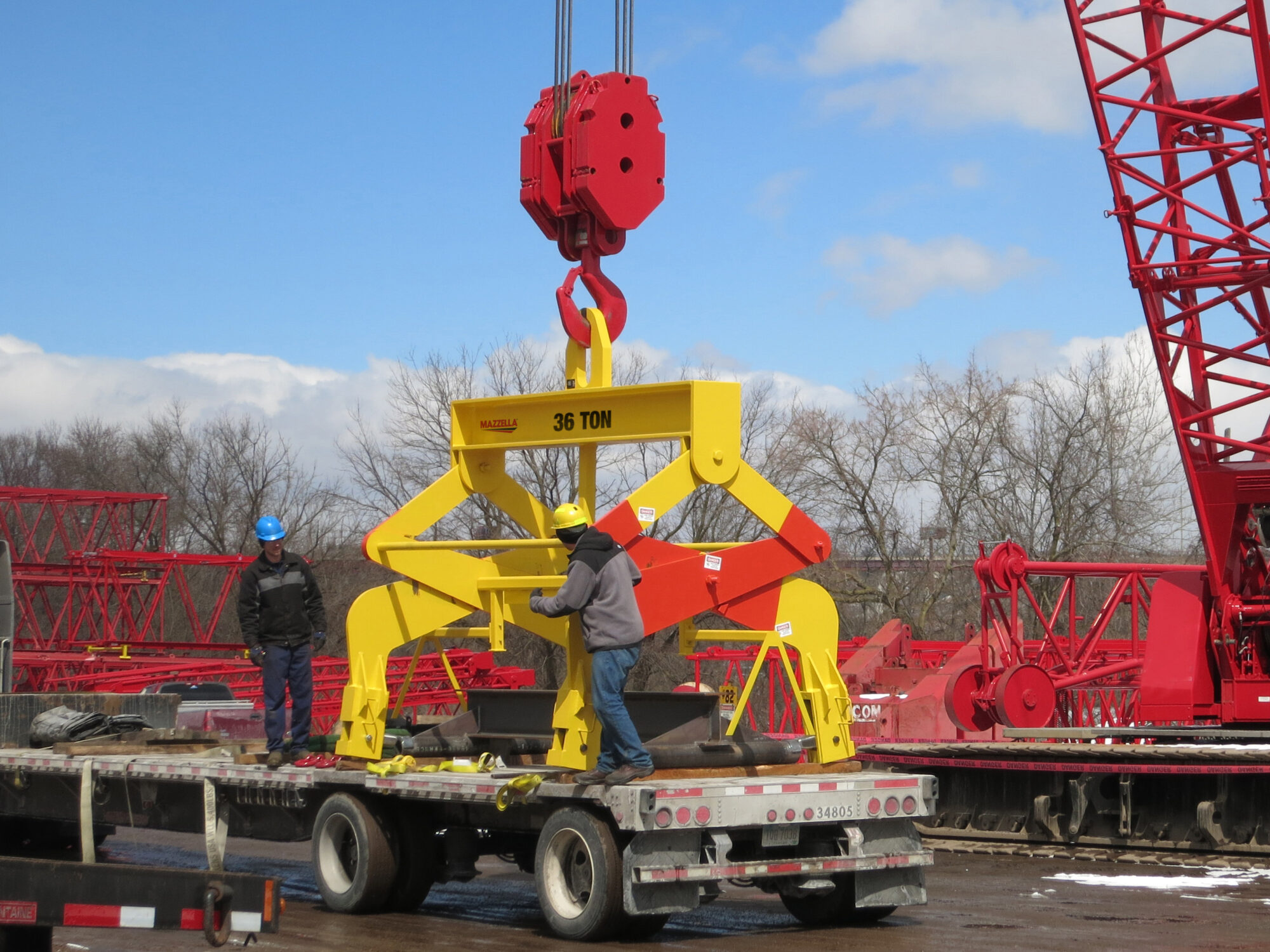
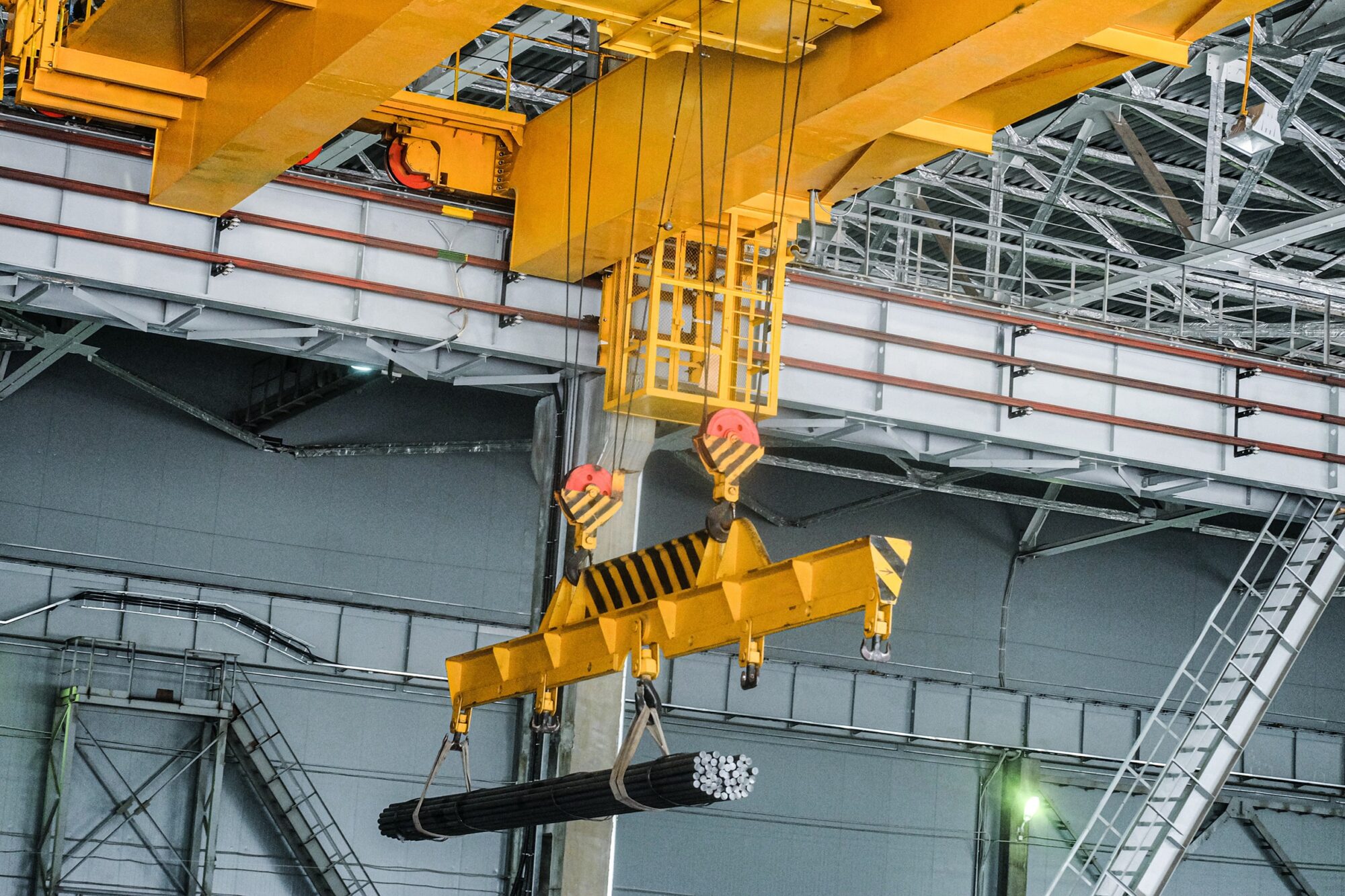
In practical terms, a below-the-hook lifting device is used when the load does not lend itself to conventional rigging, when the lift needs better control, or when the process demands repeatability.
But are they required for every lift? No. Traditional rigging can be appropriate for straightforward loads that were designed with lift lugs and clear vertical pick conditions.
The value comes from evaluating the application and selecting the lifting method that best matches safety, productivity, and long-term operational needs.
What are Common Crane Design Mistakes?
Beyond capacity, other practical design considerations are often overlooked, including:
- Hook and bail compatibility: can the hook accommodate the bail size used on the lifting device?
- Electrical provisions for motorized lifters
- Control integration
- The number of people required, and the time required per lift
- Future growth, including whether the crane is likely to be used for heavier loads or different processes later
These topics can easily fall through the cracks if not discussed at the beginning of the design process.
What If You Purchase Cranes and Lifting Devices Separately?
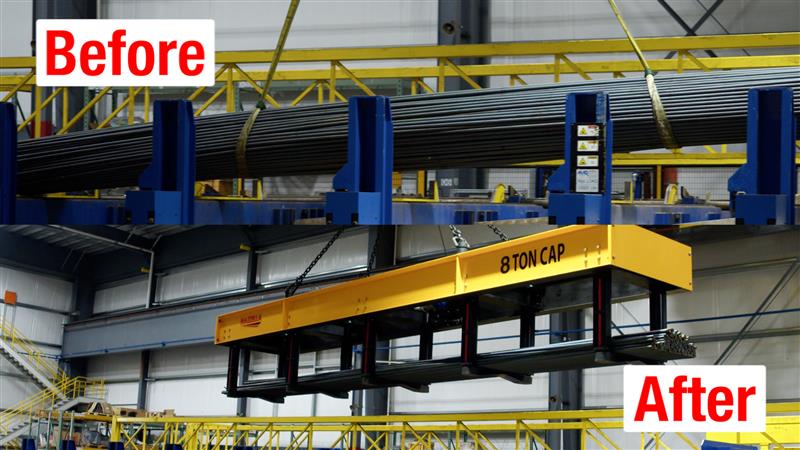
Buying the overhead crane first and addressing below-the-hook needs later often creates friction.
1. No Capacity for the Lifter Weight
A facility may plan to lift a 5-ton load and assumes standard rigging will be used. Later, the operation demands a more efficient method, such as a powered lifter. That device can weigh significantly more than chains or slings, and the crane may no longer have sufficient remaining capacity once the device weight is included.
If the crane is already installed, the facility may have limited options. They may be forced to keep an inefficient workflow, accept lower capacity handling than desired, or pursue an expensive rework.
2. Missing Electrical Provisions
If a future below-the-hook device will need electric power, the crane should be equipped for that possibility during the build. Adding power provisions after installation tends to be more expensive than integrating them in the shop during fabrication, and it can create unplanned downtime.
3. Hook and Bail Mismatch
A below-the-hook device must interface correctly with the crane hook. If the hook throat or geometry cannot accommodate the bail size required for the lifter, the team may be forced into modifications, redesign, or compromises that could have been avoided with early coordination.
4. The Process Remains Labor-Heavy
A team starts with traditional rigging and discovers that the process takes multiple people to hook up, stabilize, and operate safely. Later, the facility wants a one-person, hands-free workflow, but the crane was not designed to support the required equipment. The result is that the operation stays labor-heavy, slower than expected, and difficult to standardize.
5. Expensive Retrofitting
Even when modifications are possible, field changes typically carry a premium due to labor, travel, coordination, and service scheduling. The crane is already in the facility, so work may require special access and production disruption. When equipment is built as a system in the shop, integration is easier to plan, verify, and execute.
Why Should You Buy a Crane and BTH Device Together?
Pairing an overhead crane and below-the-hook lifting device in the same project creates a single engineered lifting system rather than two separate purchases. The advantages show up in multiple areas.
1. Improved Safety
When the crane, hoist, lifting device, and load are engineered as a complete system, safety decisions are based on actual use conditions rather than assumptions. The system can be designed around how loads will be lifted, moved, and positioned, including the operating constraints that matter in the real world.
An integrated design also reduces compatibility gaps that can lead to risky workarounds on the floor. Instead of asking operators to adapt to equipment limitations, the equipment is built to support the intended process.
2. Better Crane Capacity Planning
Capacity planning improves when the below-the-hook device is included early. Engineers can account for:
- Load weight plus lifter weight
- Hoist capacity requirements
- Support structure loading requirements
This avoids the scenario where a crane technically exists, but the safest lifting method is no longer feasible because the device weight consumes too much of the capacity.
3. Better Electrical and Control Integration
If the lifting device requires electric power or needs control integration, the crane can be built with the correct provisions from the start. This supports a cleaner installation, simplifies commissioning, and reduces the likelihood of later modifications.
Even if the facility is not ready to purchase the below-the-hook device immediately, designing the crane with accommodations for future powered devices can protect the investment and reduce future barriers.
4. Hook and Bail Compatibility
When systems are planned together, hook and bail interface requirements are known early. That means the crane hook selection and the lifter bail sizing can be aligned from the beginning, preventing late-stage surprises that delay projects.
5. Pre-Delivery Testing
A major advantage of integration is the ability to test the complete system before it ships. Shop testing allows problems to be identified and resolved in a controlled environment. That reduces on-site troubleshooting and helps the field installation go more smoothly.
6. Unified Engineering Process
When crane and below-the-hook specialists collaborate during the design phase, the project benefits from cross-verification. A single proposal and coordinated engineering approach reduce the back-and-forth that happens when one vendor is responsible for the crane and another is responsible for the lifting device.
How Can You Future Proof Your Overhead Crane?
When designing overhead cranes, the installers should ask you if the application and max capacity of the crane will change over time. If you discuss it with them ahead of time, they can help you future proof the crane if a BTH device is needed down the road.
Futureproofing does not always mean buying everything immediately. In most cases, it means designing the crane to accommodate a below-the-hook device that may be added later. It can also mean giving your crane the ability to add extra weight.
This approach helps prevent the difficult situation where a facility needs to change the lifting method but cannot do so without major modification or replacement.
How Expensive is Retrofitting an Overhead Crane?
The biggest hesitation for many buyers is the upfront price. Adding a custom below-the-hook device to an already significant crane investment can push a project beyond budget.
However, it is important to compare the initial price to the total cost of ownership. Separate purchasing often introduces hidden costs that do not appear on the initial crane quote:
- Field modifications that would have been cheaper in the shop
- Downtime and productivity loss during rework
- Engineering time spent solving compatibility problems
- Reduced operational efficiency if the facility stays with a labor-intensive process
A useful way to think about this is the difference between factory integration and field retrofit. When you integrate during the build, the work is done under controlled conditions, with fewer unknowns. When you retrofit later, you pay for additional labor, scheduling, and disruption.
There can also be cost benefits when multiple systems are purchased as part of a larger project. If a facility is building multiple bays or multiple cranes and needs similar lifting devices, repeating a design and purchasing volume can reduce the per-unit cost.
Also, delaying the purchase can expose the project to pricing volatility in materials and components. While markets move up and down, postponement adds uncertainty that can make budgeting harder.
When Do You Need a Below-the-Hook Device?
There is no universal rule that applies to every operation. The right approach is to review the application and determine whether traditional rigging is sufficient or whether a below-the-hook device would provide meaningful safety and performance improvements.
Traditional rigging can be a good fit when:
- The load has dedicated lift points designed for chains or slings
- The lift is a straightforward vertical pick with minimal need for manipulation
- The process does not require hands-free handling or one-person operation
- The lift is occasional rather than high-cycle
A below-the-hook lifting device is good when:
- The load does not have dedicated lift points
- The load requires manipulation during placement
- The center of gravity is off-center or difficult to control with standard rigging
- The lift is repetitive and would benefit from faster, more consistent handling
- The current method requires multiple people and could be reduced safely
- The operation wants hands-free handling to reduce exposure and improve consistency
Final Thoughts on Pairing Overhead Cranes and BTH Devices
When companies buy a crane without fully evaluating how loads will be handled, they increase the risk of capacity shortfalls, missing power provisions, compatibility problems, and expensive retrofits.
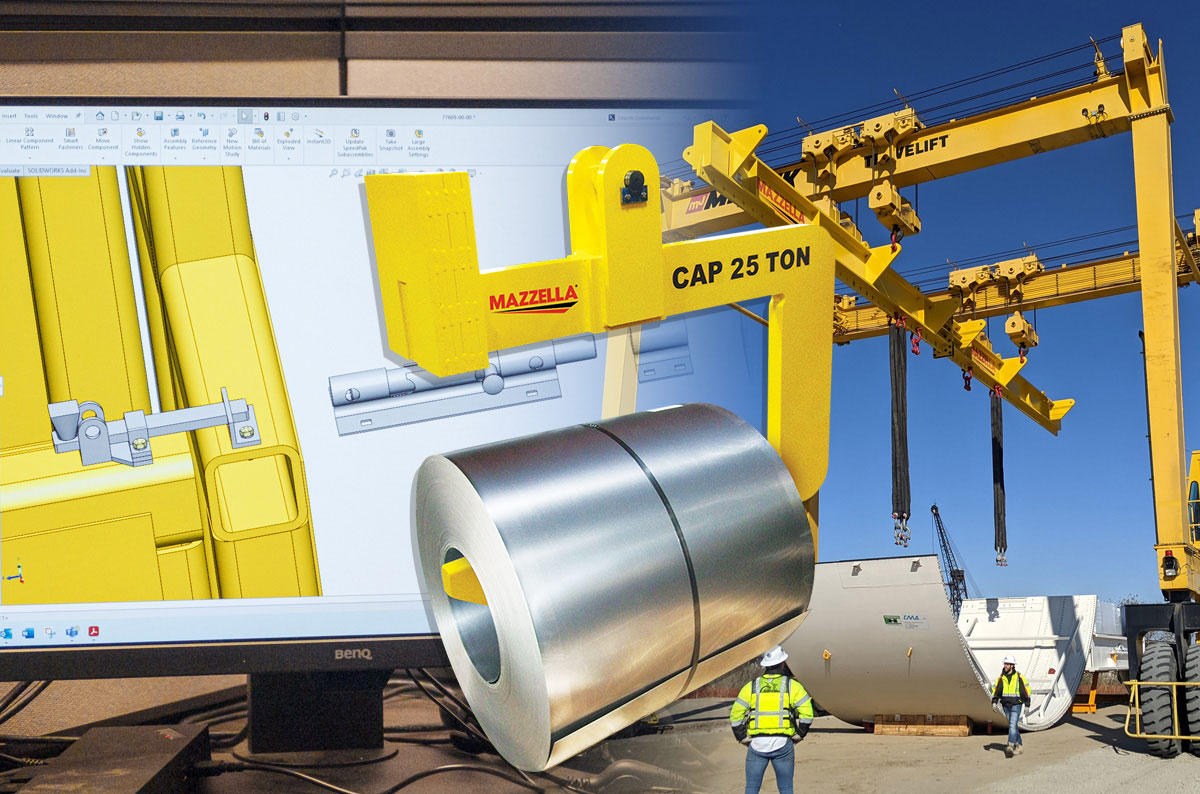
Purchasing below-the-hook lifting devices together with an overhead crane build helps close that gap. It allows the crane and the lifting device to be designed as one system, with the load and real operating requirements driving decisions. It also makes it easier to plan for future needs, reduce field modifications, and avoid costly compromises.
At Mazzella, our in-house crane and BTH experts can help you get the right lifting device for your facility. Reach out to them to learn more.
Learn More About BTH Devices and Overhead Cranes