How Much Does an OSHA/ASME Compliant Rigging Inspection Cost?
Get a transparent look at how much a rigging inspections cost, the factors that affect the pricing, and why compliance with OSHA and ASME standards matter.
Estimated reading time: 1 minute
Editor’s Note: This article was originally published in 2022 and has been updated to reflect current rigging inspection prices.
Transcript
How Much Does a Rigging Inspection Cost?
– How much does a rigging inspection really cost? And how can you estimate what you’ll pay for your specific facility? Today, we’ll break down exactly what you can expect to pay, what’s included, what can increase or decrease the price, and how to estimate your budget based on your facility and your equipment.
My name is Ben, and this is the Lifting & Rigging Channel. I’m here with Corporate Rigging Inspection Manager, Tom Horner, and we’re going to find out exactly what you can expect to pay for a rigging inspection.
So, Tom, right off the bat, how much can someone expect to pay for a rigging inspection?
– We offer this as a port-to-port service, Ben, with a half day at four hours, the range is going to be $480 to $600. And for an eight-hour port-to-port service, you’re going to be looking at $960 to $1,200.
What Does “Port-to-Port” Mean in Rigging Inspections?
– So what does that mean? Port-to-port?
– What it takes for us to leave our nearest office to get to your facility, do the inspection, and then get back to our office to close out the day.
– So that’s including travel time basically within that price, or?
– Yes.
What Factors Increase the Cost of a Rigging Inspection?
– Yeah. Obviously, not every customer is going to be exactly the same. So what are some of the things that might cause the price to drive up?
– A lot of industries are different, but the inspections are still the same. It’s going to be the volume of material we need to look at, but also the types of material we’re looking at. So a customer that’s heavy in alloy chain slings and larger alloy chain slings with a large mix of different items is going to be a different price than a customer who has, let’s just say, a high volume of nylon web slings and virtually no alloy chain slings and other types of rigging.
– So basically you can kind of look at it like, is your rigging fast to inspect or slow to inspect?
– Correct.
How Can You Reduce Your Rigging Inspection Cost?
– So what can drive the price down?
– In the beginning, through the discovery process, if you’re a new customer, something that really helps us out is very accurate information as to what you have. How much of the different pieces of product do you have? The more accurate you can be, the better we can gauge our port-to-port service.
Also, if you’re a longstanding customer, and you know, something has changed at your facility.
And also just making sure you’re getting rid of all the extra rigging you don’t need. What we do find is in a lot of larger inspections, we do a lot of house cleaning.
Why Do Rigging Inspection Prices Vary Between Providers?
– If a customer’s shopping around, maybe they’re new and this is their first rigging inspection, or maybe they’re just looking for a new provider, they’re going to be getting different quotes from different people. Why are some companies more expensive than others? Why are companies cheaper than others? And then, kind of, where does Mazzella fall into that tier?
– It’s really going to be the business model that they’re going after. I can speak on behalf of Mazzella. We’re very focused on rigging inspections, and we built a business around it. So it’s something that we’re very knowledgeable about in terms of what needs to be done in a proper rigging inspection.
Many competitors out there will also use rigging inspections as kind of a throw-in service. The way we like to look at it is that we’re there for your compliance. What you do with us before or after is separate from this business that we’re there to perform right now.
How Can You Tell If a Rigging Quote Is Accurate?
– Things that they need to be checking. Is your quote accurate? Did someone take a guess at what you have? And maybe someone asked some more questions, and they’ve got an accurate quote. And then, is this a toss-in freebie service to get you to spend some money somewhere else?
– When you’re looking at the different prices you’re getting, who are you getting coming in your door? With what we offer to the customer, we make sure that our inspectors are competent and qualified. We have the training and the paper trails in place to prove that. The processes we follow, making sure that we’re meeting or exceeding all of the standards to make sure OSHA would be satisfied on what we’re doing. If you select us as your vendor, you’re in the same best defensible position. You can prove all of this out.
Are There Different Types of Rigging Inspections?
– When someone’s shopping around, are there variations of types of rigging inspections that they might encounter throughout the industry?
– There really shouldn’t be. As the experts, we’re here to tell them what they actually need and then to make sure that aligns with the goals of compliance, right? So when we get into that discovery, we’ll explain what a proper, robust periodic rigging inspection is.
– And as part of that hourly rate, you’re going to be inspecting all of those items. You’re not adding on being like, “Oh, well, you have below-the-hook devices, so it costs you more money,” right?
– Correct, and that’s what’s in the discovery of our front load page is, can you give us a really good estimate of what you have? And then we give you that price that says, “Hey, we’re going to do it in this timeframe.”
Do All Companies Inspect Below-the-Hook Devices and Fall Protection?
– Do all inspection companies offer that? Like, might they just be sticking to shackles and slings?
– They really should be. What I’ve seen, what I’m privy to, which is great when in the discovery phase, we’ll see prior reports from prior providers, and that’s an indication to us of, “Hey, was this a proper inspection? Did they cover everything?”
‘Cause we might see some things that are not there, and then we can ask the question to the customer, “Hey, do you have these things, ’cause I am not seeing them on the report?”
“Yes, we do.”
“Oh, well, they’re also required to have some level of inspection and documentation. We’re going to do that for you.”
“Oh, that’s great. I didn’t know I needed that.”
We can work with the customer to inform them so that they become the experts that they’re required to be.
– And what about personal fall protection, stuff like that?
– It’s an interesting topic these days. My group can do and still does personal fall protection soft goods. And we consider that your harness, your lanyard, your SRL, might even have a tripod retrieval system, something like that. And yes, we can do that. We’re competent to do so.
Anytime it gets into something engineered, an engineered anchor point that’s installed at height or an engineered system made by a manufacturer or even designed by our fall protection group here at Mazzella, we’ll hand it off to them because it’s just a, it’s out of our realm.
– It’s a different type of inspection.
– It’s a different type. So there’s a little crossover there. And again, we work all that out through the discovery.
What’s Included in the Cost of a Mazzella Rigging Inspection?
– So what’s included in the price of a Mazzella rigging inspection?
– Number one thing, you’re receiving compliance. And then after that, what you’re going to get is you’re going to get a trained and experienced technician or technicians. You’re going to get a report that satisfies or exceeds the standards or the requirements within each individual standard. When we do the inspection, we’re only there for your compliance. We’re not there to sell you anything. We are there for your compliance.
Do You Pay Per Inspector or Per Hour for Rigging Inspections?
– Do they pay per inspector, or is it just time-based?
– That’s all going to be based on the front load. We see that there’s 500 pieces of product, and they’re two hours away from our nearest facility. Based on the spread of items within the front load, we’ll look at it and say, “Listen, if we put two guys on it, we can get there. We can do it in one day, and we can get out in one day, and that’s how we’re going to quote it.”
So that would affect the prices I discussed at the very beginning of the video.
– So basically they can look at it as if we’re putting two techs on it, it’s usually because it’s going to speed up the process.
How Can You Estimate the Size and Scope of Your Inspection?
So that’s how we get them an accurate quote. Let’s say that they’re just trying to get a ballpark figure for themselves and they’re estimating. How might they know if their facility is going to be one tech, two techs, half day, full day, multiple day, things like that? How could they get a guess feeling?
– If they’ve never had to go through the process, it’s really going to be a guess. That’s where they really need to engage with us is get us an accurate front load.
Are There Hidden Fees in Rigging Inspection Quotes?
– So are there any hidden costs that the customer might not expect? Like cancellation policy, delays, different types of rigging, things like that?
– It’s not that there’s going to be hidden costs, but in our quotes we do have, I call them indemnity phrases. Try to list out all the things that could affect the job, and we want to avoid those. Number one is cancellation. We really work hard to work with the customer on that.
Can Your Rigging Quote Change After the Inspection Starts?
– Does the quote ever change once the inspection begins?
– Very rarely. It’s only when we find something that’s really outside of the norm that throws everyone for a loop that we have to reevaluate something.
– So if you quoted 200 pieces of rigging and there’s 500 and you say, “We can’t do 500 on the time we’ve quoted you. We’re going to do the 200, and then we’re going to have to talk about a reschedule for the rest of this.”
– Yes, yes.
How Does Billing Work for Rigging Inspections?
– So let’s talk about payment. Do they pay at the end of the service, or are they billed as part of their account? How does pay work?
– It’s all billing, and it’s all done through a formal quote process. Nothing is done over the phone or through an email with just a generic price. Once we get the front load and we have all the information we need, we’re going to send you a formal quote, again with all the information in it as to the specifics of the service, the number of services we’re providing, all that.
Once we get a purchase order, then we work with you on locking in the date for the first inspection and what type of program you want.
Are There Special Circumstances That Affect Inspection Pricing?
– Are there any special circumstances where this pricing is not going to apply, like environment or anything like that?
– Generally, no. The things that might throw it off, and it doesn’t happen very often, do you need us there on a second shift, or a third shift, or a weekend, or during a holiday shutdown?
Will Rigging Inspection Prices Stay the Same Every Year?
– And then how often do Mazzella prices change? Like, if they’re on an annual schedule, can they expect to pay the same next year as they did this year?
– If nothing changes and everything stays equal, there’s probably going to be some level of price increase. Just because there’s inflation, we gotta pay more insurance, we gotta pay more trucks, we gotta pay more fuel. Everything changes, right?
How Often Do You Need a Rigging Inspection?
– Rigging inspections are required.
– One periodic inspection a year is the minimum. When you look at the standards, there’s going to be reasons why you have to escalate that to more than just one.
Can You Save Money by Scheduling Frequent Rigging Inspections?
When customers make that decision, hey, they want to go from one periodic to a biannual or to a quarterly or even monthly. Many customers are on monthly right now. Yeah, we’ll work with you on the totality of that price if you’re going to commit to, you know, a year’s worth of business and you’re going to give us four opportunities to get in the door. We’re going to look at that, and we’re going to find a way to make it economical so that obviously everyone is satisfied on both ends, but we want to show appreciation for you, the customer, giving us that opportunity to take care of you that many times.
What Is the ROI of a Rigging Inspection?
– How can someone track their ROI on a rigging inspection?
– This is an interesting question. Is, number one, they are required, right? So you have to do it.
What you really want to think about is, your return on investment is, what are you going to get out of it after you have your document? Your document that we send you, there’s your compliance.
Now this is where we really enjoy working with the customer because it’s really an eye-opener. How can we explain, or how do we get you to understand, the information in that report so that you can make decisions at your business to improve the safety and efficiency of your company?
What Happens If You Skip Rigging Inspections?
– How does the price compare of a rigging inspection to not performing a rigging inspection, and the possible consequences that could come from that?
– Hard to quantify a number, but I would say this, if there was an incident around your rigging and there’s an investigation into that incident and it was provable that you haven’t been doing them and, even worse, that you know you were supposed to be doing them, I think that’s going to be a significant red flag to whomever is doing the investigation. And that could be OSHA, that could be your insurance, it could be those types of entities.
I firmly believe you’re going to get superior technicians and inspectors looking at this. That’s what we do here.
What to Do Next About Your Rigging Inspection
– Now hopefully you have an idea of about how much a rigging inspection costs, and you can estimate approximately how much you can expect to pay for your specific facility.
If you’re ready to schedule your inspection or if you want more details, click the link in the description below. Mazzella can help with all your inspections, whether that’s rigging, overhead cranes, lifelines, or warehouse racking.
If you found this video useful, informative, entertaining, or you just feel like being friendly, then hit that Like button so we can get this information out to everyone who needs it. Subscribe and hit the bell so you never miss a video. If you have a question, drop it in the comments so we can get you an answer. Remember, safe rigging is smart rigging. My name is Ben. Stay safe out there.
If you’re in charge of maintaining your company’s manufacturing equipment and machinery, take a second to think about how much responsibility actually falls on your shoulders. On a day-to-day basis, you may be responsible for the upkeep and maintenance of any of the following:
- Bridge cranes, workstation cranes, gantry cranes, or jib cranes
- Hydraulic presses
- Tool and die equipment
- Tow motors, man lifts, or scissor lifts
- CNC machines, lathes, or mill machinery
You’re probably also responsible for rigging inspections and the maintenance of any lifting slings, hardware, below-the-hook devices, and personal fall protection that your employees use.
Rigging inspections are not optional. They are required by OSHA and ASME standards and are critical to ensuring workplace safety. Still, when safety managers and plant leaders first approach the subject, one of the first questions they ask is: How much does a rigging inspection cost?
At Mazzella, we’ve built one of the most comprehensive rigging inspection programs in the country. This article explains what you can expect to pay, what drives inspection costs up or down, and why investing in proper inspections often saves far more than it costs.
What is the Standard Price Range for Rigging Inspections?
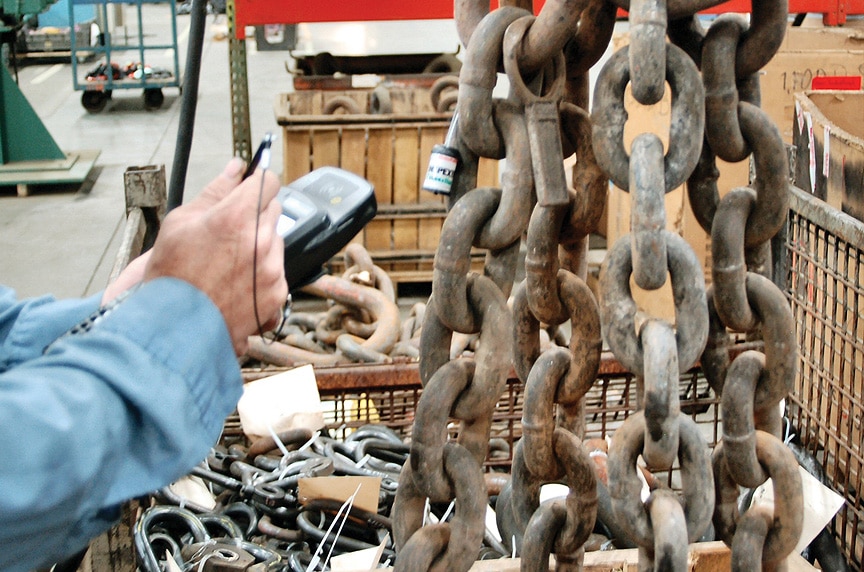
Mazzella offers inspections on a port-to-port basis—meaning pricing includes the time it takes for our inspectors to leave the nearest office, travel to your facility, complete the inspection, and return.
- Half-Day (four hours): $480 – $600
- Full-Day (eight hours): $960 – $1,200
This ensures all travel and inspection time is bundled into one transparent rate.
What Factors Affect Rigging Inspection Cost?
Not every facility or rigging environment is the same. Several factors can influence the cost of an inspection:
1. Equipment Volume
A facility with 200 pieces of rigging will take significantly less time to inspect than a site with 1,000 items.
2. Type of Rigging
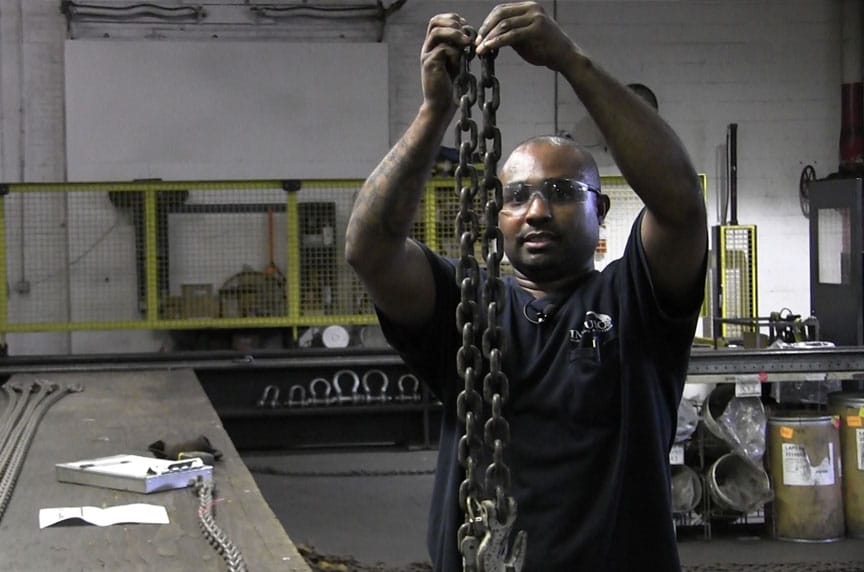
- Fast to Inspect: Nylon web slings, shackles, eye bolts.
- More Time-Intensive: Multi-leg chain slings, lever tools, chain falls, below-the-hook lifting devices.
The more complex the equipment, the more time—and cost—it requires.
3. Complexity and Custom Equipment
Custom-engineered lifting devices, larger chain falls, or spreader beams often require extra care and expertise.
4. Travel and Logistics
Distance from the nearest Mazzella branch and whether multiple inspectors are needed can impact the final price.
How Can You Reduce Rigging Inspection Costs?
Proactive preparation on your part can help keep inspection time and cost down.
Provide an Inspector with an Accurate Equipment List
During the “front-load” discovery phase, detail every type and quantity of rigging. When inspectors have a better idea of what rigging equipment you have, this will speed up their process.
Remove Obsolete Rigging
Clearing out old, unused equipment before inspection saves time and money.
Communicate Operational Changes
If a building closes, operations shift, or equipment moves, let the inspection team know in advance.
Rigging Inspection Cost Table
| Service Type | Duration | Price Range | What’s Included |
| Standard Rigging Inspection | Half-Day (four hours) | $480 – $600 | Travel time (port-to-port), comprehensive inspection of all rigging equipment, full compliance documentation |
| Standard Rigging Inspection | Full-Day (eight hours) | $960 – $1,200 | Travel time (port-to-port), comprehensive inspection of all rigging equipment, full compliance documentation |
| Multi-Inspector Jobs | Varies | Quote-Based | Two or more inspectors for larger facilities; reduces overnight/per diem costs |
| Additional Inspections | Biannual, Quarterly, or Monthly | Discounted Packages | Lower per-inspection cost when committing to recurring schedules |
| Fall Protection (Soft Goods) | Add-On | Included in Hourly Rate | Harnesses, lanyards, SRLs, beam straps (when applicable) |
What Can You Expect During a Rigging Inspection?
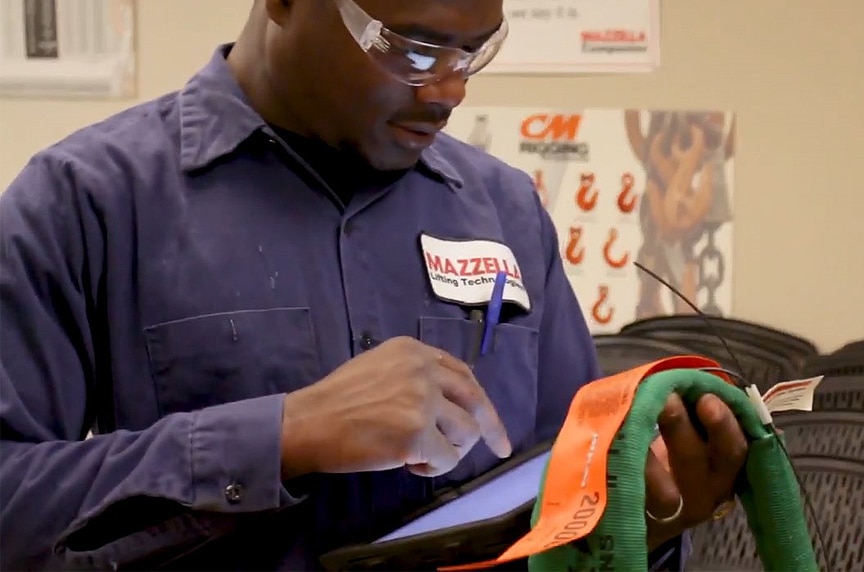
To get the process rolling, a customer reaches out to a company who performs rigging inspections because they know they need some sort of documented third-party inspection of their rigging equipment. Oftentimes, we hear, “I know I need my slings inspected…tell me what I need to do and where I need to start.”
Typically, all you need is a phone call to give the inspection provider an idea of what type of inspection you’re looking for. Are you looking for an inspection that satisfies OSHA 1910.184?
Do you have lifting slings, below-the-hook devices, rigging hardware, or personal fall protection and need an inspection that covers all of the applicable ASME standards? Or, do you have a more stringent internal compliance program in place and you need an inspection to cover your stricter internal standards?
The brief consultation will give the service provider with an understanding of the types of rigging gear you have in your facility, how much of it needs to be inspected, and what your timeframe is to fulfill the mandated periodic inspection requirements.
Once the inspection is scheduled, the company will determine approximately how long the inspection should take place and how many inspectors will be required. For a smaller manufacturing or production facility, one inspector can typically handle a full inspection over the course of a 4-8 hour period.
For larger mills or high-production facilities, it may require a larger team of 5-6 inspectors to tackle the entire facility over the course of a couple of days. It really just depends on the number and types of rigging products on-site.
How Can You Prepare for Your Third-Party Rigging Inspection?
There are several ways your company can prepare for a rigging inspection.
Provide Previous Inspection Reports
It is helpful to share previous inspection reports with your inspector ahead of time. Past records provide insight into the type, quantity, and condition of your rigging gear. They can also highlight items that were flagged in earlier evaluations.
Provide an Inventory of Rigging Gear
Even if you don’t have prior documentation, it’s helpful to provide an approximate count of the items that need to be inspected. This allows the inspector to estimate the required labor, the number of inspectors needed, and the total time required.
Ensure Clear Access to Rigging Equipment
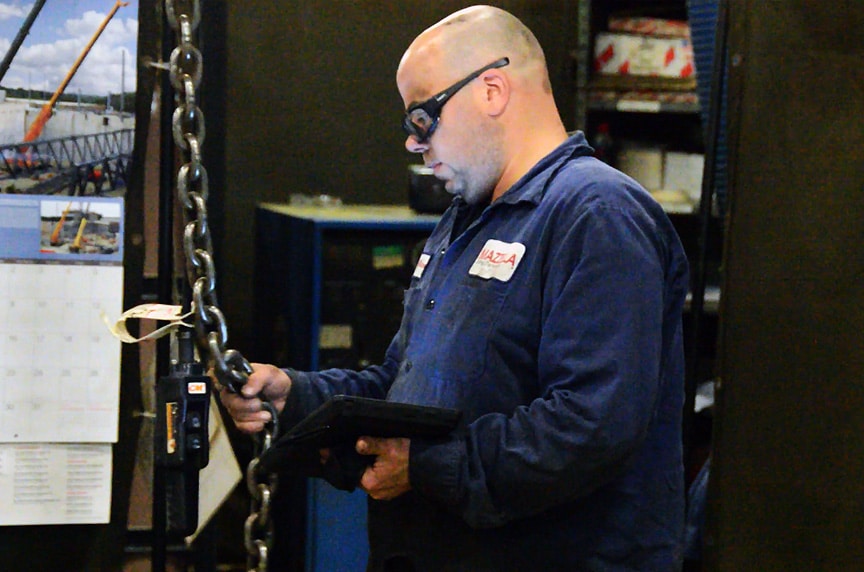
Accessibility is one of the leading factors that influence how long a rigging inspection takes. Before the inspectors arrive, make sure your rigging equipment is not buried in storage or scattered across multiple areas.
The goal is to create a clear, organized staging area where slings, hardware, and below-the-hook devices can be reviewed quickly and efficiently. When inspectors spend significant time searching for gear, moving equipment, or clearing space, the overall cost and total inspection time increase.
Ideally, all equipment that requires review should be placed in a designated area that is easy to access and free from obstruction. If your rigging gear is normally stored throughout the facility, assign someone ahead of time to gather and consolidate the items before the inspection begins.
Consider Your Work Environment and Site Requirements
Every facility has unique safety and access requirements that even inspectors must follow.
Some job sites require additional training before a contractor is allowed on-site. Others require specific protective equipment because of chemical baths, high temperatures, outdoor exposure, or work at extreme heights. If any of these situations apply to your facility, make sure the inspector knows beforehand so they can schedule the appropriate personnel and account for additional time.
Some facilities also require background checks or drug testing for outside service providers. These processes often take time to schedule and complete. Sharing these requirements early prevents delays and ensures inspectors can begin the job as planned.
If any of your lifting equipment requires special testing, such as magnetic particle testing or on-site proof testing, notify the inspection provider before they arrive. These services require additional planning and may involve special equipment or technicians.
What Type of Rigging Equipment Gets Inspected?
The type of gear being inspected comes down to the customer’s needs and wants. It may make the most economical sense to have the inspector or inspectors systematically go through all of your equipment at once to take advantage of their time and travel while they’re already on-site.
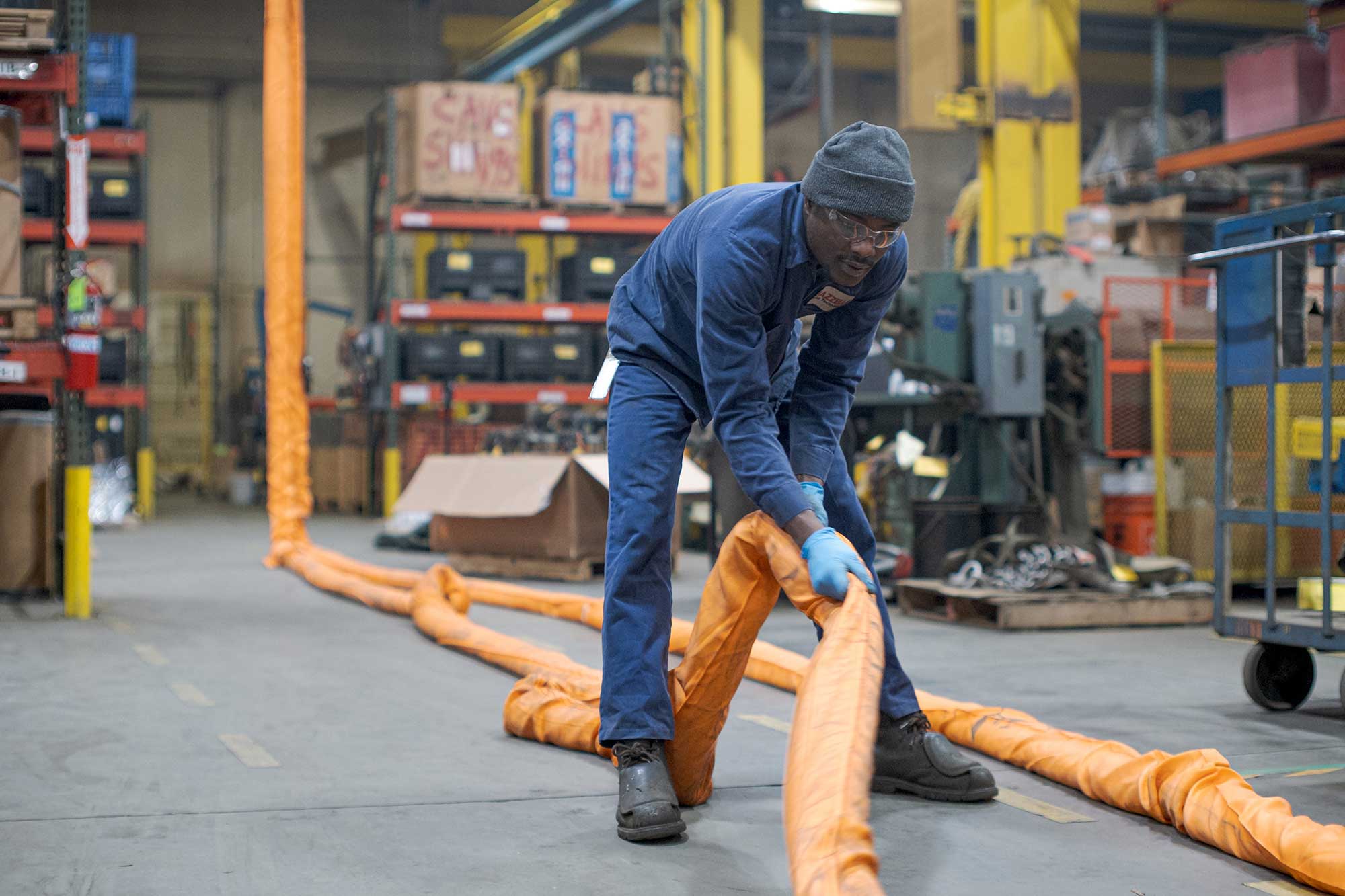
Over the course of an inspection, a rigging inspector can inspect any of the following product types:
- Lifting Slings: alloy chain slings, wire rope slings, synthetic roundslings, synthetic web slings, metal mesh chain slings, synthetic rope slings
- Rigging Gear: lever tools or chain falls (not permanently mounted), hoist rings, eye bolts, shackles, turnbuckles, hooks, etc.
- Below-the-Hook Devices: Lifting beams, spreader beams, c-hooks, die-handlers, etc.
- Personal Fall Protection: Harnesses, lanyards, and retractable devices
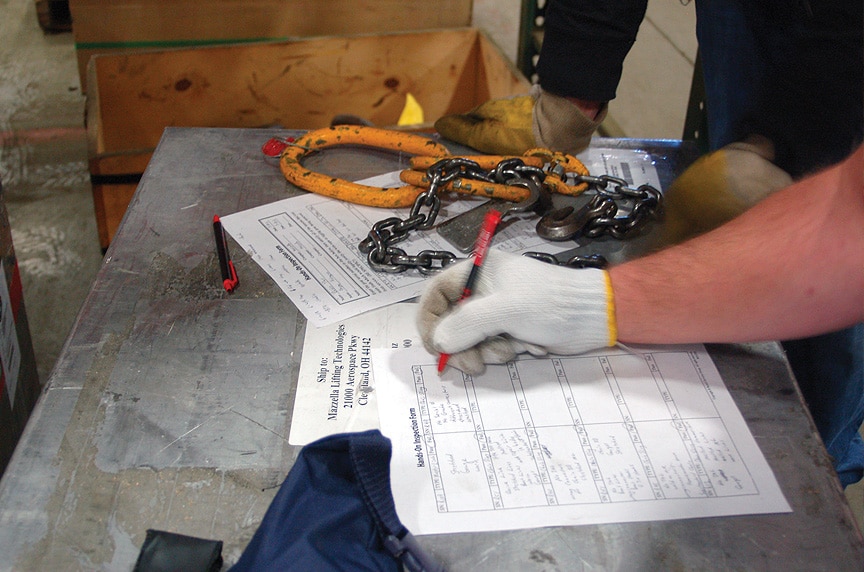
At the end of the inspection, you should receive a comprehensive inspection report that will give you insight into the effectiveness of your internal compliance programs and the training of your riggers and crane operators.
Remember, OSHA won’t penalize you for having gear that failed inspection and was removed from service. If anything, you can look at the numbers from your inspection reports and determine if there should be a larger investment in training for your riggers and operators. These types of reports can help you understand:
- Are your employees inspecting their gear before each shift? Inspecting their gear before each lift?
- Do they know how to properly inspect their gear?
- Can they identify damage or irregularities that require the product to be removed from service?
Should You Consolidate Multiple Rigging Inspections?
Many facilities choose to have multiple categories of equipment inspected during the same visit. Lifting slings, rigging hardware, lever tools, below-the-hook devices, and personal fall protection can often be evaluated during a single trip.
Combining inspection categories is usually more economical than having inspectors return multiple times throughout the year. It also consolidates your compliance documentation, making it easier to track and review items during future audits.
Why You Should Be Skeptical of “Free” Rigging Inspections
It’s understandable why companies would be interested in a “free” inspection, especially if they have tight budgets and want to save money. However, these free inspections tend to be shorter and less in-depth, and they may cost you more money in the long run. Outside of checking the inspection off your to-do list, these types of inspections offer little to know insights or value.
If OSHA investigates and finds incomplete inspections or missing records, the liability is on you—not the vendor. You will be better off paying for in-depth inspections that keep your workers safe and compliant.
What’s Included in a Mazzella Rigging Inspection?
Every Mazzella rigging inspection provides you with:
- A qualified, trained inspector (or multiple inspectors for larger facilities).
- OSHA and ASME compliant inspection of slings, hardware, below-the-hook devices, lever tools, chain falls, and more.
- Written documentation of every item inspected—even when standards don’t require it.
- Actionable insights to improve safety, training, and efficiency.
- Support beyond the inspection with access to educational resources, guides, and training content.
- Access to repair and/or replacement of damaged items.
- Operator training on the safe use, care, and inspection of lifting and rigging equipment.
Mazzella can also inspect personal fall protection soft goods (harnesses, SRLs, lanyards, non-engineered items) as part of the same service, helping facilities cover multiple compliance requirements in a single visit.
Do Mazzella Rigging Inspections Have Hidden Costs?
Mazzella’s quotes are transparent and formalized, but a few variables can affect pricing in certain cases:
Underestimated Equipment Counts: If a facility lists 200 items but actually has 500, pricing will need to be reevaluated.
Cancellation Policies: Large jobs requiring travel may incur cancellation charges if canceled at the last-minute.
After-Hours Requests: Weekend, holiday, or third-shift inspections may require adjustments.
Once quoted, Mazzella commits to the price. Adjustments are rare.
HWhy Should You Choose Mazzella for Your Rigging Inspections?
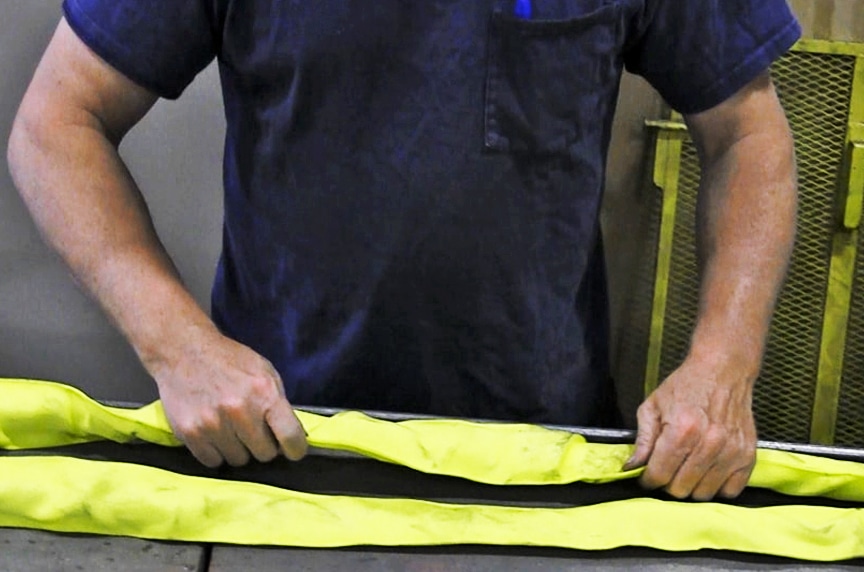
Remember, bringing a third-party rigging inspector into your facility shouldn’t be considered an added expense, but instead, an investment in the safety of your employees. If you have the proper compliance processes in place, and your employees are properly trained, then a rigging inspection should really just be a validation of how well those programs are working.
Mazzella’s inspection program is transparent and designed to keep your facility operating safely and within OSHA and ASME standards. On top of rigging inspections, Mazzella also provides:
- Warehouse pallet rack inspections
- Engineered fall protection inspections
- Overhead crane inspections
Instead of contacting (and paying) four companies to do your inspections, you can have all of them done through Mazzella. All of these inspections are on top of our wide range of service offerings. Contact Mazzella today to request a quote for your next rigging inspection.
Copyright 2026. Mazzella.