How to Manage Your Rigging Inspection & Compliance Program Across Multiple Locations
Transcript
Rigging Inspections Across Multiple Locations
— OSHA requires rigging equipment to be inspected, but if you have dozens or even hundreds of locations or service trucks, how do you make sure each one is compliant? In this video, you’ll learn how companies with a large footprint can tackle inspections across their entire enterprise and be able to decide if this is the right move for your business. My name is Ben. This is the Lifting & Rigging channel, and today I am joined by Tom Horner, corporate rigging inspection manager at Mazzella. And we’re going to talk about rigging inspections. Specifically, about how you can scale your rigging inspection program across multiple locations. So Tom, when we say multiple locations, are we talking two, five?
What Counts as Multiple Locations
— The heart of this conversation is going to revolve around the type of customers that might have 50 locations, 90 locations. — Can you walk me through this program a little bit and how it works?
How the Rigging Inspection Program Works
— We’re not just doing inspections for a customer. We’re, we’re in the business of project management at this point. Our position on this is, “Hey, we can do these compliance services for you. We can do these inspections and we take it over from you.” So we have the responsibility, “Hey, there’s 10 locations. We know the 10 contacts. We know where they’re at in the country. We will reach out. We will schedule the inspections. We will do the inspections. We will get you the paperwork. We’ll put it wherever you want it. We’ll give it to the branch. At the end of 10 locations, you know you are compliant as an organization.” Just put notice out that you’ve partnered with us and that this is coming down and we can help you draft up what that looks like. And it could be a very clear explanation of, “Hey, Mazzella is our partner. Here’s exactly what they’re going to do. Here’s everything they’re going to look at.” After that, we’re going to do everything.
So at the beginning of the year, we start year over year, “Hey, January, these locations are due.” We reach out to them all, we make the communication, we schedule it, we show up, we do it, they’re compliant. And then we do it for February all the way through. Once that pattern is placed, that’s the pattern that’s executed for 2028. It’s not starting over again. The feedback we have received has been very, very positive. Once we get the buy-in and once we get the opportunity to build that confidence and comfort, it usually sticks around and they come back to us for year two, year three, on and on.
Why Branch-Level Inspection Sourcing Fails
— So what are most companies currently doing? What is their process right now and why is that maybe not the most efficient process?
— Corporate is saying, “You know you need to do this.” And then they put it on the branch and the branch knows they need to source a provider to come in and take care of it. And then they just kind of make the assumption through a calendar year that, “Hey, my 10 locations are, are good or my 50 locations good.” Yes, no, maybe. They don’t really know. There’s no consistency that can be proven across level of inspection, quality of technician who’s coming in to do it, quality of the paperwork. Does it meet the standards? Does it exceed if possible? What was really done at every location? What were the prices paid? We have a relationship with a very large customer right now that just couldn’t prove many of those things.
— So what are the risks that come with doing it that way, with just having the branch level source all of the inspections? — Are you compliant? In order to be compliant, you have to have those inspections done. So the inspection itself is just a physical aspect of what it takes. The paperwork that we generate from it proves the compliance. If you don’t have that documentation, how can you enhance and move your safety program forward in terms of, “Hey, are we using the right product? Are we rigging properly? Do we need more training?” If you’re not doing all that, all the risks just kind of compound down the line.
Inspecting Service Vehicles, Job Sites & Offshore Rigging
— Is this only for brick and mortar locations?
— No. Our longest standing customer under this type of project management agreement, they are a brick and mortar manufacturing location. We also have another customer that has very few to small brick and mortars and they have almost all service vehicles. So when we show up to these locations, and we have 81 right now across the country, we’re working, coordinating with them to make sure that the rigging on those service vehicles is going to be available at the branch when we show up.
— What about things like job sites that don’t actually have a physical address?
— They give us a longitude and a latitude and we just punch it in and that’s where we drive our vehicle to. But we’ll show up to that area and they’ll either be service vehicles or even a huge container box just filled with all the rigging. In addition to that, we’re now starting to work with companies who are doing offshore work and when their work boats come into a port we’re able to schedule time to get onto that boat to inspect the rigging that’s on it, oftentimes in containers on the boat. — Are there any types of businesses or companies out there that maybe are not a great fit for this program?
Which Companies Aren’t a Fit
— We’re not going to be very interested in dealing with a company who’s not interested in safety. I mean, this is really what we’re talking about. Yes, I keep mentioning compliance and paperwork, but you have to be able to understand that the paperwork we provide tells a story and you need to partner with us or you need to partner with your own environmental health and safety to say, “Hey man, look at our report. What can we, what can we get from this to further our safety program?” The type of customer doesn’t necessarily matter because rigging is rigging. It still has the requirements, it’s still the same process to inspect. It’s how do we work with your type of business to reach the compliance that you’re required to have?
Keeping Inspection Quality Consistent Across States
— How does Mazzella make sure that, you know, one, one inspection in one state matches another inspection in another state so they can make sure that they’re getting the same quality inspection across the board? — It starts with our training. Before a technician is allowed to do something, they go through all of our training and all those boxes are checked off. Second to that is our software’s the same. So you’re getting at least the same report. And then after that, we develop work instructions for that customer. Not all brick and mortars are the same. You know, some locations it might be easy just to knock on the door and you walk on in and everyone’s like, “Hey, welcome. You’re set up out in the shop.” Some places are, no, there’s a 30-minute safety video and then we have to designate you to this area of the plant for safety.
But we work with the leadership before any of this even takes place to say, “Hey, these are our work instructions. Do you agree with them?” When they understand what we’re talking about and they give us the check off, that is also distributed to all the plant contacts before we even get there. And then leadership and the branches know, yes, they’re getting the most consistent product across all locations as possible. — So how do customers get their inspection results?
How Customers Get Inspection Results
— When we do an inspection, we’re going to send a copy to the branch manager at the local level. They have to have it on site. As far as how corporate wants us to save them, there’s many different ways to do it. We can develop a portal. You can simply give us somebody at corporate and we’ll email a copy of that report or we’ll be CCing them. We’ll do that. We obviously already have copies saved in our own system.
Enterprise Rigging Inspection Pricing
— Is there a difference in pricing if you’re inspecting across your entire enterprise versus doing individual inspections?
— If we can negotiate one purchase order from the corporate level, it’s going to make my administrative costs so much better. So yes, there’s definitely going to be a significant break there. And then I don’t price per location. I price it as a project management offering. You want compliance at 50 locations, I’ve got it covered. Here’s what it’s going to cost. I’m going to monthly bill against that progress billing against what I complete each month. By the end of it, you’re going to be compliant. — What is the first step that they should take before contacting you?
First Step Toward an Inspection Program
— Share this video with the others in your leadership at your company, see if it makes sense. High level purchase orders for projects like this are challenging to get, but they’re certainly doable. If you just think about how companies engage with uniform services or trash removal services or fire extinguisher servicers, it’s the same thing. Some of these conversations don’t happen over months. It’s actually years before they get to being able to pull the string on making all these different things work.
— Scheduling your rigging inspections, and proving compliance across all of your locations can be a challenge. Let Mazzella take that challenge on for you. If you want to learn more about what to expect from a Mazzella rigging inspection or how you can properly inspect your rigging gear yourself, check out the links in the description below. If you found this video useful, informative, entertaining, or you just feel like being friendly, hit that like button so we can get this information out to everyone who needs it. Remember, safe rigging is smart rigging. My name is Ben. Stay safe out there.
Key Takeaways
- Rigging inspections are legally required under OSHA 1910.184 and ASME B30, but managing that requirement gets exponentially harder once your organization spans multiple locations.
- Leaving compliance decisions up to individual branches usually creates three costly inconsistencies: pricing, inspection quality, and documentation.
- A centrally managed multi-location program gives your organization one point of accountability, standardized technician training, and uniform reporting across every site.
- The right partner will adapt to however your locations actually operate—brick-and-mortar plants, service vehicle fleets, or job sites identified only by coordinates.
- Consolidating dozens of individual purchase orders into a single project-managed program can significantly cut the administrative burden on your purchasing team.
- Rolling out the program takes strategic sequencing, not an overnight fix—but the payoff is full, provable compliance across your entire portfolio of locations.
Estimated reading time: 17 minutes
Introduction
No matter the industry or application, under OSHA 1910.184 and ASME B30, rigging inspections are required by law. That means that every 12 months at a minimum, depending on service conditions, you’re responsible for sourcing an inspector, scheduling downtime, documenting compliance, and filing it away.
Rigging inspections generally break down into three categories that occur at different points in the equipment’s life cycle:
- Initial inspection: Before equipment ever goes into service.
- Frequent inspection: Before use during each shift.
- Periodic inspection: Required at least annually under normal service conditions.
OSHA 1910.184 states that slings shall be inspected by a Competent Person and ASME B30.9 states that slings shall be inspected by a Designated Person, with final determination made by a Qualified Person as to whether the equipment constitutes a hazard. Pretty straightforward, right?
Now, imagine that you’re responsible for compliance across 10, 50, or even 150 locations. At this point, a Safety/EHS professional will usually task the individual branch managers with that process—each choosing different inspectors with different quality standards, all under unique purchase orders at variable costs.
With all the ambiguity, how do you ensure consistency and trust in your equipment? In the inspection quality? The documentation? The price tag?
This article walks you through centrally managed, multi-location rigging inspection programs based on Mazzella’s industry expertise and proven success. Whether you have a handful of job sites or 150+ locations across the United States, there’s a solution.
Table of Contents
- Why Does Compliance Get Harder as You Scale Up?
- What Does a Well-Managed Multi-Location Program Look Like?
- What are the Location Limitations?
- How Does Documentation and Reporting Work?
- What are the Purchasing Benefits?
- What Does the Program Rollout Look Like?
- Is a Multi-Location Rigging Inspection Program the Right Fit for You?
- Wrapping It Up
Why Does Compliance Get Harder as You Scale Up?
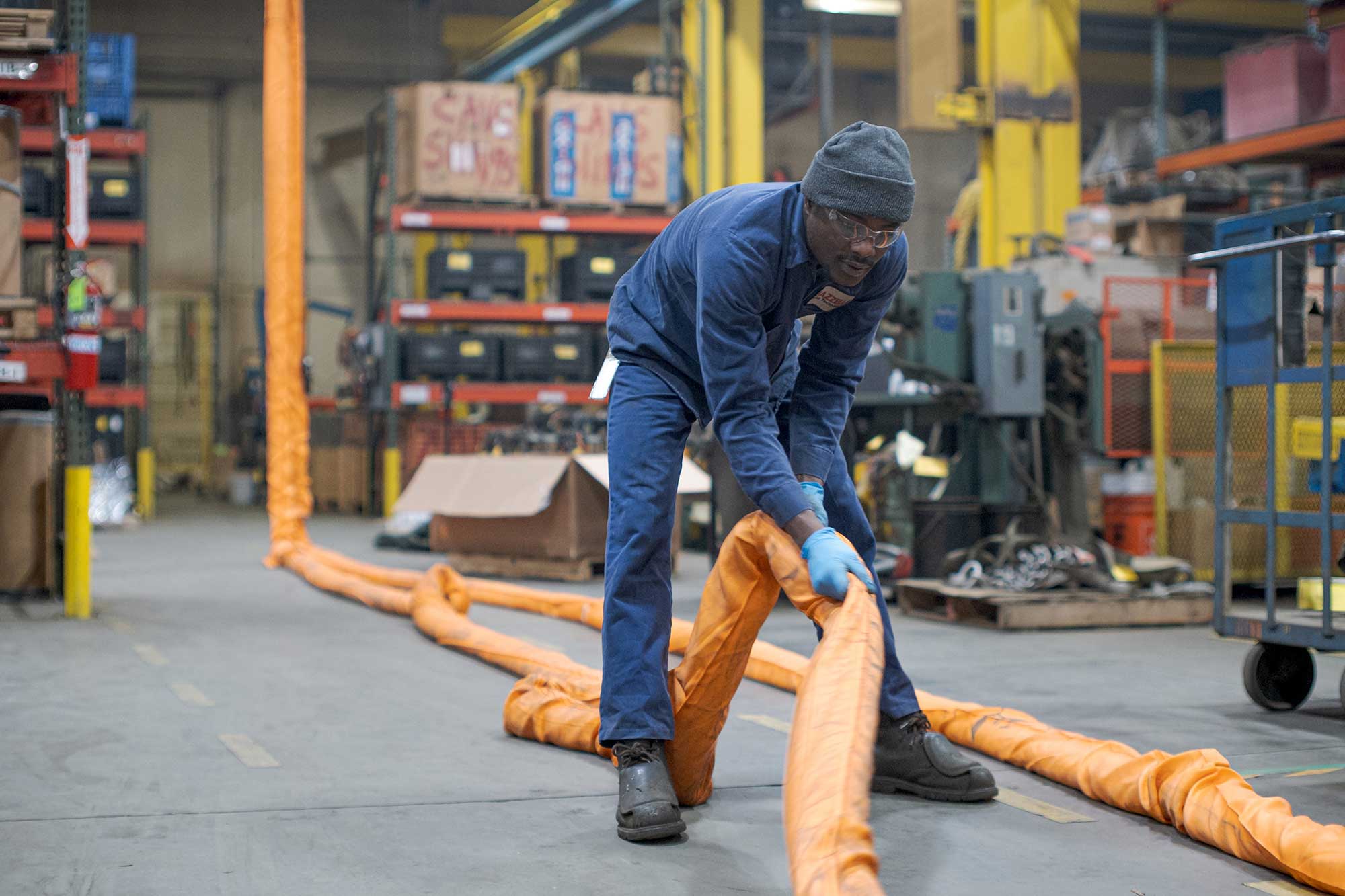
Most companies that operate out of multiple locations are in the default state of leaving compliance decisions up to those individual branches. This route leads to three primary inconsistencies:
- Pricing: Your quote can fluctuate depending on the inspector’s business model.
- Inspection quality: Some inspections are more robust than others.
- Documentation: You can’t be compliant if you can’t prove it effectively.
Without a rock-solid guarantee that each of these three factors will be consistent, it’ll be difficult to both drive your safety program forward and maximize productivity.
What Does a Well-Managed Multi-Location Program Look Like?
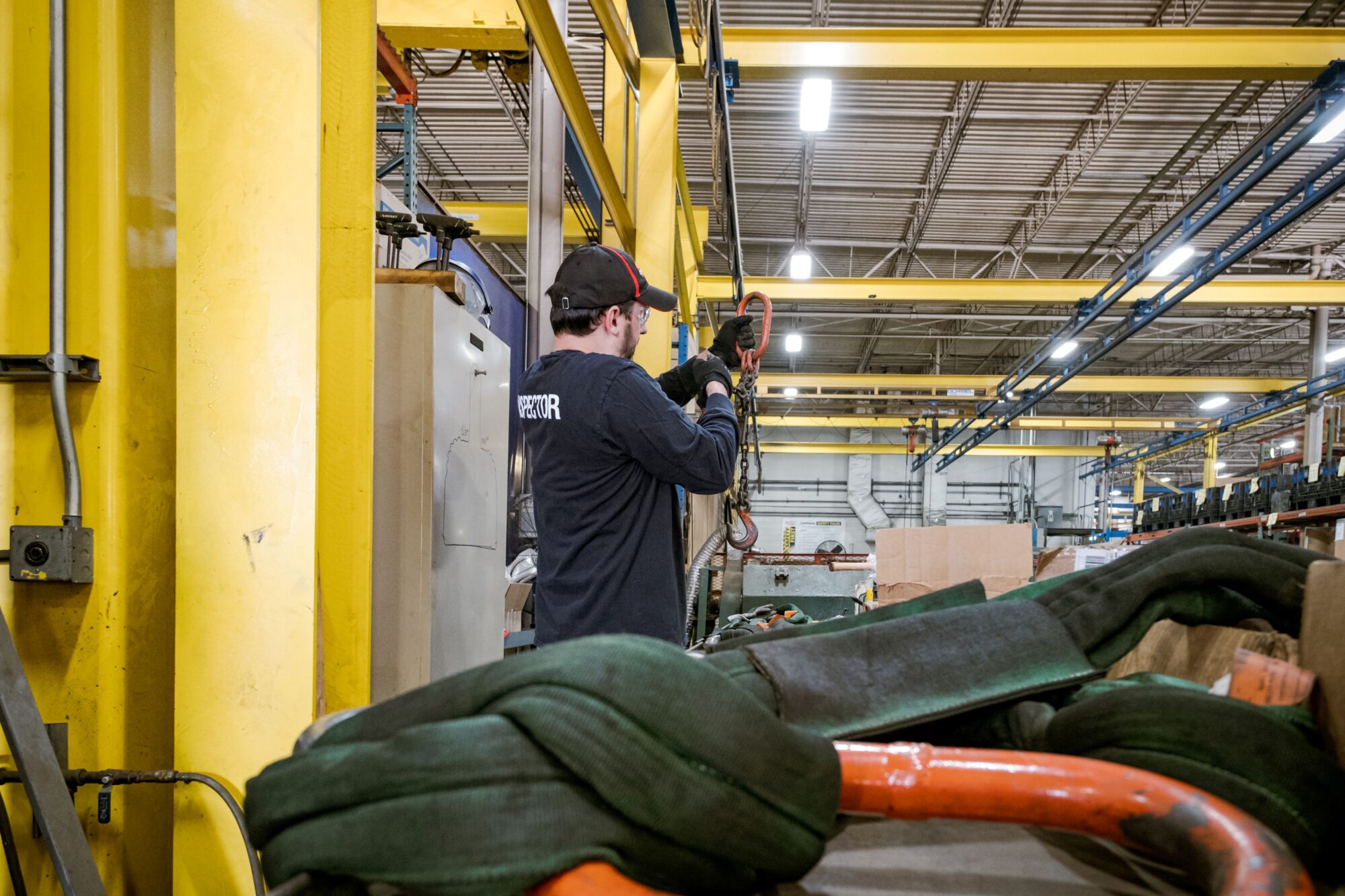
Multi-location inspection programs offer a single point of accountability, where the provider becomes an extension of your team, not just a third-party inspector. At Mazzella, we take a project management approach. As such, we take on all responsibilities pertaining to the inspection, including scheduling, the inspections themselves, reporting, and any other logistical needs your company might have. All you’re responsible for is helping us strategize our sequencing based on facilities’ needs and approving the schedule.
This immersion offers a sense of comfort and sustainability, providing assurance that compliance and consistency is held to the high standards that OSHA and ASME demand.
Training
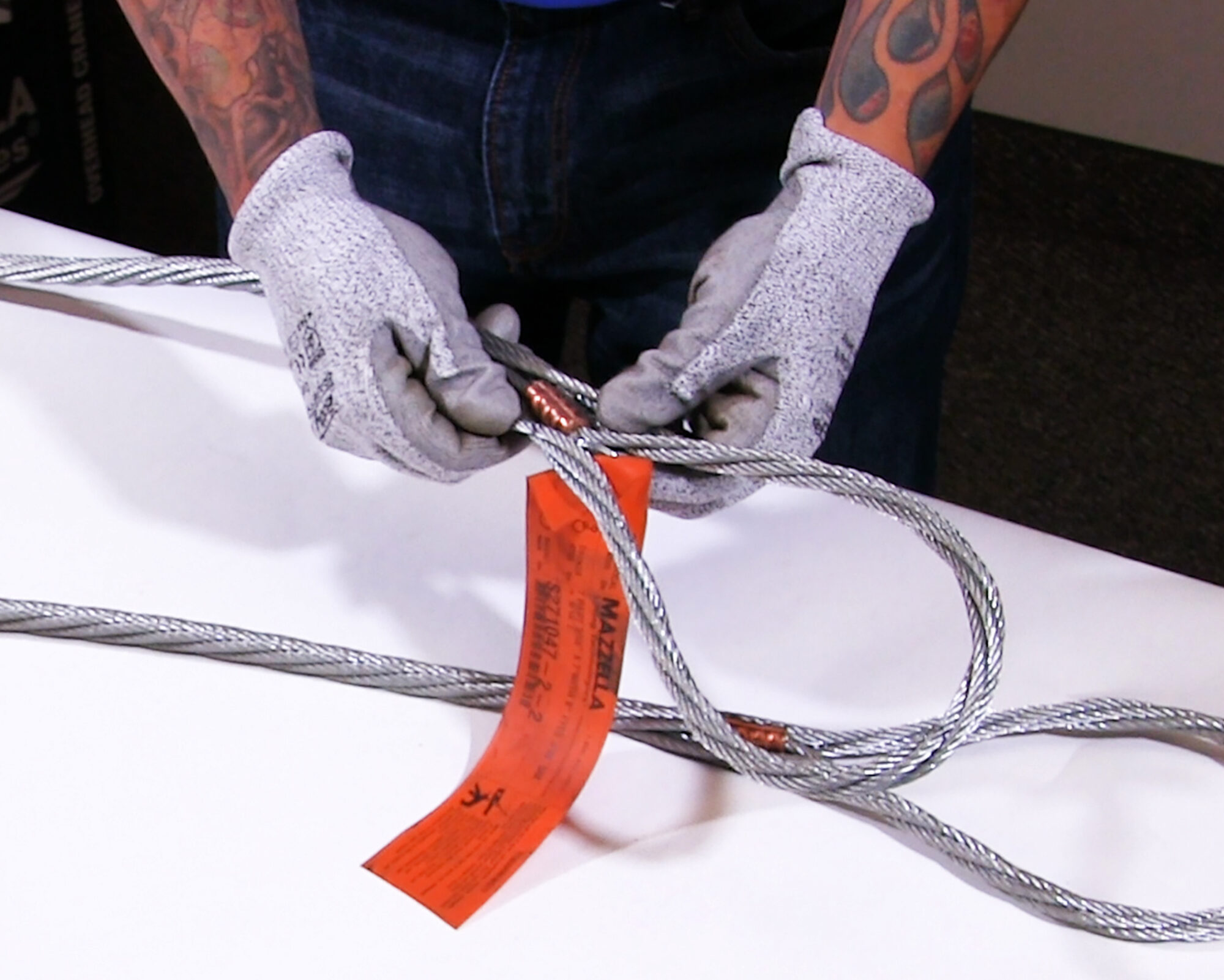
As your provider learns all about your lifting and rigging needs, they guarantee standardized technician training and certification across every location. Your inspector knows how to do the job, and they make sure every box is checked.
Reporting
Every location utilizes a standardized, uniform software or reporting format to view your inspection documentation. Essentially, a report from your Texas facility reads exactly like one from your Ohio location.
Custom Work Instructions Per Location
The right multi-location program develops written work instructions unique to each account. This will cover exactly how technicians check in, where they stage, and how paperwork is processed, all completely customized to the customer’s workflow and environment. Both corporate and the various branches rest easy knowing that they’re getting the same consistent product across the business.
What are the Location Limitations?
A strong multi-location program will be able to provide the service to a variety of settings in both industrial and geographical contexts. For example, Mazzella’s program offers service to:
- Traditional plants and manufacturing facilities
- Job sites with or without an address
- Service vehicle fleets
- Offshore-adjacent work (i.e. rigging on wind-farm vessels when they come into port)
- All 50 states, as well as Puerto Rico and Guam (travel cost may vary)
As that extension of your organization, we work to learn the ins and outs of the industry and adapt to your processes. If your locations are traditional plants, we’re inspecting on-site, just like any rigging inspector would. Say you’ve got service trucks rolling in and out of a brick-and-mortar location, we’ll work to efficiently move your fleet in and out of the facility and complete the inspections on each service truck. If you’re in an industry like oil and gas where a location might not always come with a street address, we’ll work off longitude and latitude—we’ll punch in the coordinates, get to your site, and inspect whatever’s there, whether that’s a service vehicle or a storage box full of rigging gear.
How Does Documentation and Reporting Work?
While OSHA and ASME require companies to maintain and retain current inspection records so that they’re ready at a moment’s notice, they don’t dictate exactly where those records must live.
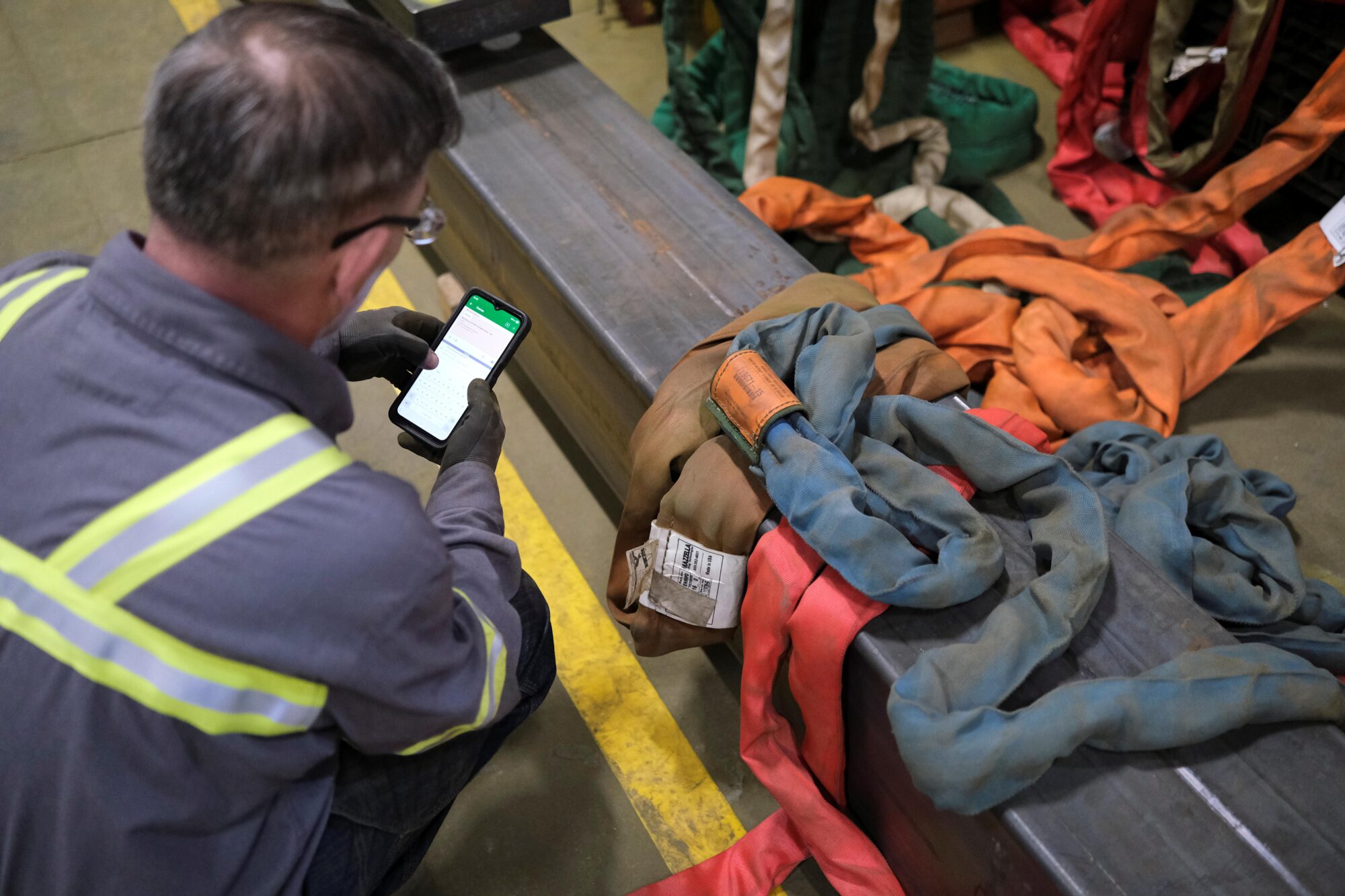
At Mazzella, we ensure that the local facility manager always receives an on-site copy for audit readiness, and at the corporate level, we work with you to determine an effective reporting method and build a hub where all locations can store their documentation. Whether you’re managing steel mills, construction sites, automotive plants, or any other rigging-intensive facilities, we ensure you have customized, shareable access to your inspection documentation.
What are the Purchasing Benefits of a Multi-Location Program?
If you’re involved in the purchasing side of your business, you know that 50 individual purchase orders is an absolute accounting nightmare. The administrative cost alone might as well render them individual customers.
Instead of per-location pricing, Mazzella adopts a project-management pricing model, where multi-location inspection is priced as a program. You’re billed monthly against our progress, and by the end of the cycle, your entire business is fully compliant—all through one purchase order, one quote, and one monthly progress invoice.

What Does the Program Rollout Look Like?
When mapping out the timeline of your multi-location rigging inspection program, it’s important to understand that 50 locations won’t be inspected and compliant by the end of the first month. We’ll work with you to build a strategic sequence based on urgency and accessibility.
There are a few things that leadership and corporate should keep in mind as the program is implemented:
- Leadership must be fully bought-in and in support of the program if barriers present themselves
- Leadership must have a thorough understanding of our cancellation policy.
- Location managers must receive notice prior to the inspector’s arrival to properly prepare for inspections.
Depending on the number of locations to be inspected, we’ll schedule around any specific location needs, busy seasons, or any other circumstances that might cause ebbs and flows in the year-over-year cadence. Once those hurdles are identified and that first year is set, it’s rinse and repeat until all your locations are compliant.
Is a Multi-Location Rigging Inspection Program the Right Fit for You?
Whether you have 10 locations or 100, consistency in your company’s rigging inspection is absolutely essential to a genuine safety-first culture. Regardless of the industry, compliance cannot take a backseat, and the only real challenge at the branch level is to trade a bit of independence for consistency across the board.
We’ve seen the program in action. We know it works, saving companies time, money, and headaches. Between customers who have been trusting us with their inspections for over 12 years and those who can prove compliance across all locations for the first time, we’ve received strong praise detailing how much the program has taken the weight off their shoulders. Check out our case study showcasing our multi-location rigging inspection program in action.
Brick and mortar, service fleets, job sites without an address, you name it—if your organization values documentation, predictability, and long-term risk reduction, a multi-location program like Mazzella’s will do the work for you.
Wrapping It Up
Managing your rigging inspection compliance across multiple locations doesn’t have to mean chasing down dozens of different inspectors, invoices, and quality standards. A centrally managed multi-location rigging inspection program gives your Safety/EHS team one point of accountability, one reporting standard, and one purchase order to track.
The bottom line is that rigging is rigging, and it all needs to be inspected, no matter what kind of facility or site it’s housed at. Our job is to figure out how to get to it, inspect it to the same standard every time, get to the next one on schedule, and take the whole process off your plate.
If you’d like to explore what a program like this could look like across your own locations, reach out to a Mazzella rigging inspection specialist to talk through your location count, timeline, and compliance goals.
Call us at 800.362.4601 or click here for more information on inspections for rigging equipment, training, or any of your lifting, rigging, or material handling needs.
Copyright 2026. Mazzella.