
10 Years until 2036: Planning for OSHA’s Fixed Ladder Deadline
Believe it or not, it’s already been a decade since the original rule was published, and those ten years went by a lot faster than we thought.
Key Takeaways
- As of November 18, 2026, facilities have ten years to upgrade their fixed ladders over 24′ in length to meet OSHA’s fall-protection requirements.
- Under the current rule, cages or wells alone won’t be compliant as of the November 18, 2036 deadline.
- Ladders and replaced sections installed on November 19, 2018 or later automatically need a personal fall arrest system or ladder safety system — don’t wait to review them.
- OSHA is hearing a proposal to remove the 2036 deadline for existing ladders, but the proposal isn’t final. The current rule remains in effect unless OSHA changes it.
- Start with an inventory, prioritize frequently used or higher-risk ladders, and build a phased upgrade plan.
Estimated reading time: 11 minutes
Introduction
If your facility has fixed ladders with cages, you probably know about OSHA’s fixed ladder rule — if not, we wrote an article on it back when it was first introduced. Either way, now is probably a good time to start thinking about where your upgrade plan stands. Under OSHA’s current rule, fixed ladders extending more than 24′ must transition from cage- or well-only protection to a personal fall arrest system or ladder safety system by November 18, 2036 — ten years from today.
As you may have heard, a change has been proposed to OSHA asking that they remove that deadline, but that doesn’t mean the rule is officially changing. Unless OSHA finalizes the proposal, the existing requirement remains in place, and facilities still need to understand which ladders are covered, what systems may fit, and how to prioritize the upgrade process.
Table of Contents
- What Does OSHA’s Current Fixed-Ladder Rule Require?
- Why Are Cages Not Considered Fall Protection Anymore?
- What Does the Tentative Proposal to OSHA Mean?
- What Should My Facility Do While the Proposal is Pending?
- What are the Most Common Fall Protection Systems on Fixed Ladders?
- What Are the Risks of Waiting for OSHA’s Final Decision?
- Wrapping it Up
What Does OSHA’s Current Fixed-Ladder Rule Require?

To refresh: Under the updated OSHA 1910.140 Personal Fall Protection Systems standards, OSHA has deemed ladder cages unacceptable as fall protection on fixed ladders over 24′ in height. This decision impacts general manufacturing facilities nationwide, introducing a few stipulations:
- Installed before November 19, 2018: The current rule allows a cage or well, a personal fall arrest system, or a ladder safety system until the 2036 deadline.
- Installed on or after November 19, 2018: Must have a personal fall arrest system or ladder safety system.
- Replacements in the meantime: Replacing a ladder, cage, well, or part of a section triggers a personal fall arrest system or ladder safety system requirement for at least the replaced section.
- By November 18, 2036: Fixed ladders with or without cages and installed before or after November 19, 2018 must have a personal fall arrest system or ladder safety system.
With all this in mind, it’s important to make a key distinction: OSHA’s rule does not require every cage to be physically removed. Instead, it emphasizes that a cage or well alone will not meet the requirement after the deadline — it must be accompanied by a personal fall arrest system or ladder safety system.
Why Are Cages Not Considered Fall Protection Anymore?
When cages were first introduced to fixed ladders, they weren’t made with fall protection in mind. Instead, they were meant to prevent theft and limit passerby access to dangerously high surfaces. Eventually, as the cages became more common, they were formally classified as fall protection in the 1970s. At the time, users and safety professionals believed they made it more difficult to fall off the ladder.
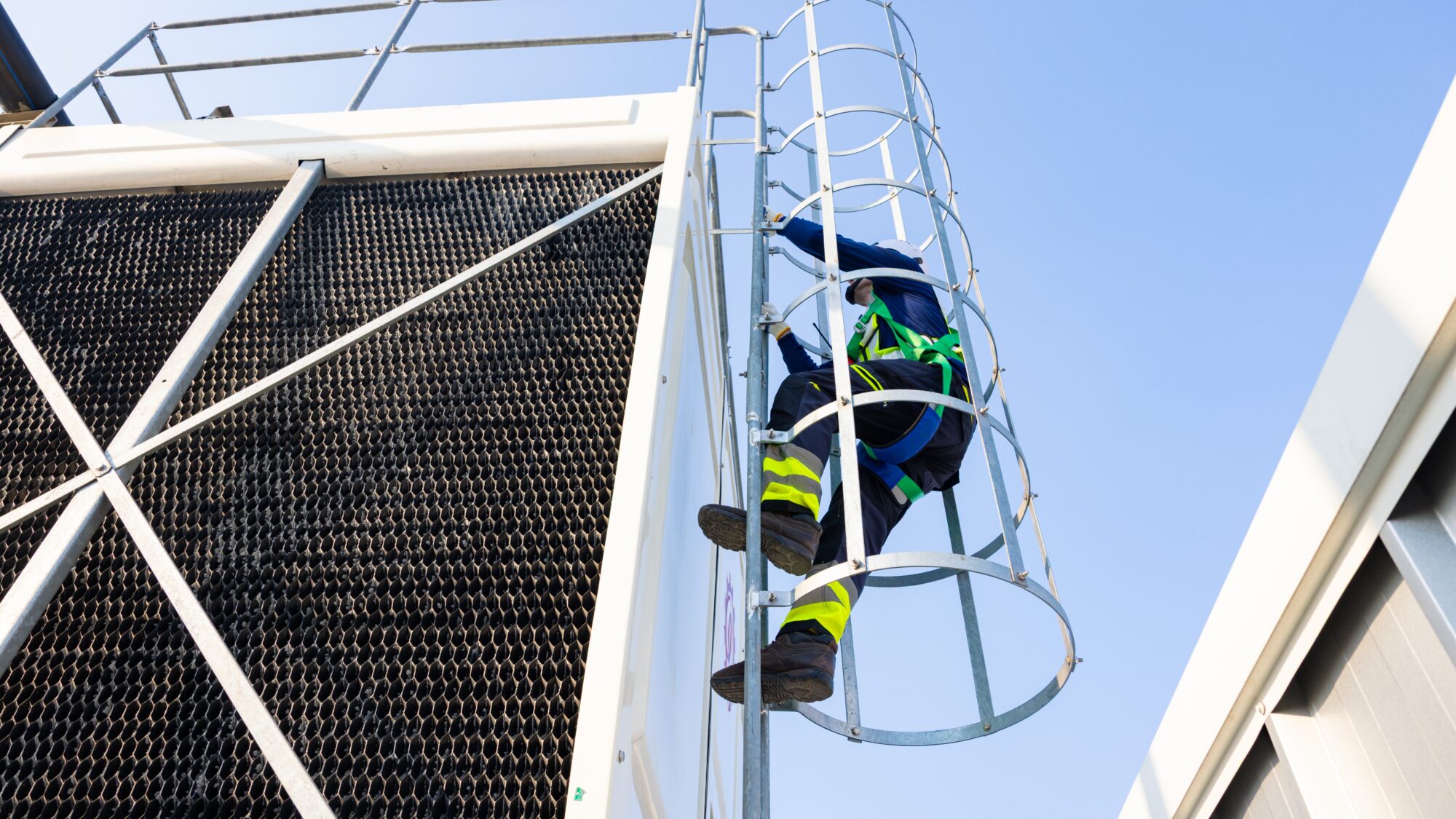
In the years since, cages have proven to be less effective than we thought. While they might limit a user’s space to fall backward, they don’t actually prevent any falls — they only contain a worker after a fall has started. This introduces a whole new set of hazards:
- The “Pinball Effect”: If a worker slips or falls backward, the cage hoops and vertical bars often do not catch them. Instead, the worker’s body strikes the cage repeatedly on the way down.
- Limb entanglement: A falling worker’s arms, legs, or torso can become wedged or tangled within the hoops and bars of the cage.
- Complicated rescues: If a worker is unconscious, injured, or suspended inside a cage, confined emergency rescue and extraction are extremely difficult.
- Equipment interference: Cage hoops and bars can physically interfere with safety harnesses, lanyards, or other personal fall arrest gear that a worker may be using inside the cage.
- False sense of security: Cages create the illusion of total protection, causing workers or employers to overlook the need for proper safety gear, three points of contact, or any real fall-arrest system needs.
What Does the Tentative Proposal to OSHA Mean?
The new proposal comes from a flurry of concerns raised over the cost and feasibility of installing new systems on every qualifying ladder. At about $1,000 per ladder, with many facilities having over 300 ladders in use, companies can quickly find themselves spending anywhere from $15,000–$15 million.
That’s why, as of April of 2026, OSHA is reviewing requests to remove the November 18, 2036, deadline to retrofit qualifying existing fixed ladders with personal fall arrest systems or ladder safety systems. That would mean that existing fixed ladders equipped with cages or wells would be compliant until they reach the end of their service lives.
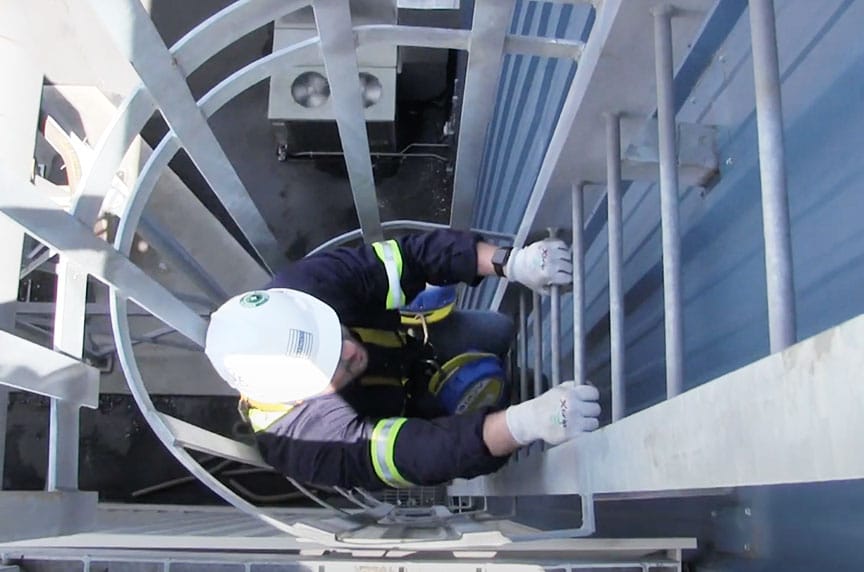
Note that it just says existing fixed ladders — any new fixed ladders installed, or any section of an existing ladder, cage, or well that is replaced, would need to be fitted with a personal fall arrest system or ladder safety system, regardless of whether it has a cage or not. This compromise would be consistent with OSHA’s original intent for the rule while granting employers greater flexibility and significantly reducing upgrade costs.
Keep in mind that a proposed rule is not a final rule. The current standard still contains the 2036 deadline unless, and until, OSHA finalizes and makes a change effective, leaving ten years from November 18, 2026 to equip your fixed ladders with personal fall arrest systems of ladder safety systems.
What Should My Facility Do While the Proposal is Pending?
As OSHA reviews feedback and moves toward a decision, it’s important that you be prepared for any outcome. We recommend taking the following steps as you build your upgrade plan:
- Audit inventory: Document qualifying ladders’ locations, heights, installation dates or best available age documentation, condition, use frequency, and existing fall protection.
- Check current compliance: Identify ladders installed or replaced after November 19, 2018, and review whether they meet current requirements or need updated fall protection systems.
- Plan and track records: Come up with a phased plan to upgrade all ladders. Keep strict documentation of equipment purchases to legally verify the age and compliance of your ladders.
- Maintain the deadline: Avoid treating the potential rule change as a reason to do nothing now. It’s a big expense and quite a bit of work to retrofit these ladders with compliant fall protection systems, but the fact of the matter is this: your crew’s safety is worth the investment.
- Prioritize by risk: Do not wait for a decision, especially if a legacy caged ladder is in a high-use or hazardous area. Upgrade high-risk ladders to modern ANSI/ASSP Z359 standards immediately.

What are the Most Common Fall Protection Systems on Fixed Ladders?
There isn’t a single personal fall arrest system or ladder safety system that’s right for every installation. The system that’s best for your ladders depends on ladder design, exit configuration, frequency of use, environment, compatibility, and manufacturer requirements. Once you’ve assessed your ladders, you can find the best fixed ladder fall protection system for you:
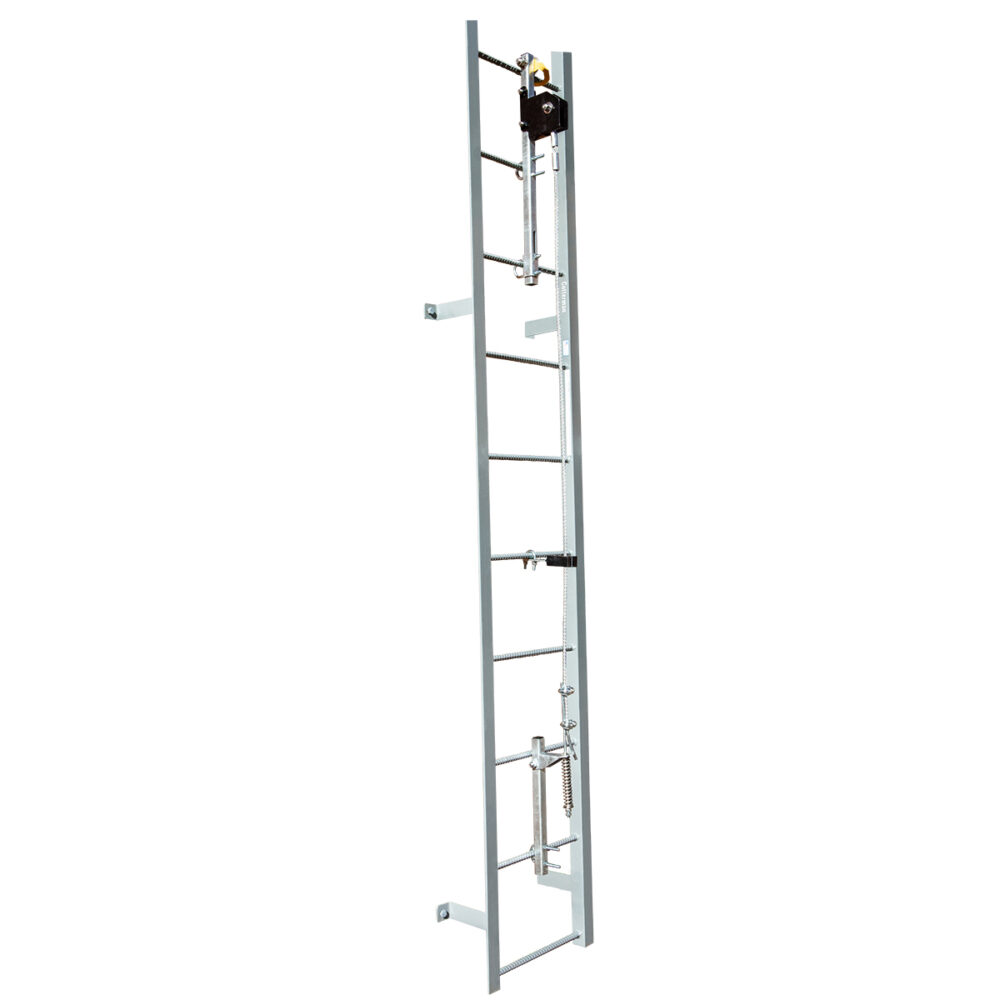
- Cable Vertical Lifeline Systems: The most widely used solution for retrofitting existing fixed ladders. They feature a galvanized or stainless-steel cable that runs the full length of the ladder and attaches a climbing sleeve to a D-ring on the worker’s harness. During a fall, the sleeve locks onto the cable, arresting the worker’s descent. These systems are cost effective, easy to install, and adaptable to different ladder types.
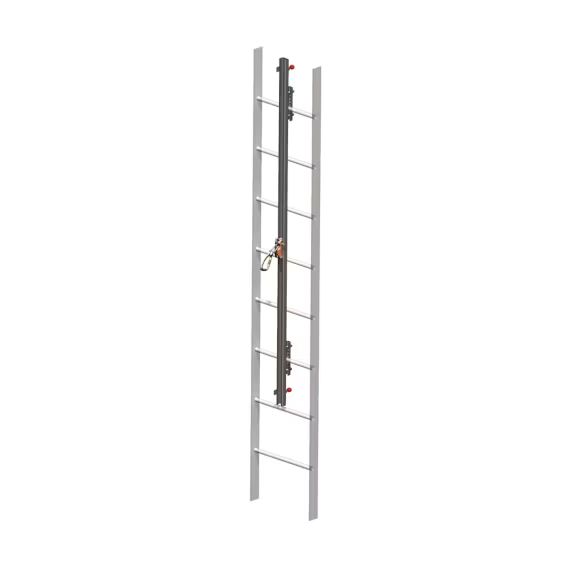
- Rigid Rail Ladder Safety Systems: Function similarly to cable systems but replace the steel cable with an aluminum or steel track mounted to the ladder. A guided shuttle attaches to a harness and runs along the track as a worker climbs. If a fall occurs, the shuttle locks in place on the rail. These systems require less maintenance than cable systems, shorter fall distances, and corrosive environment resistance, but they do yield a higher upfront cost.
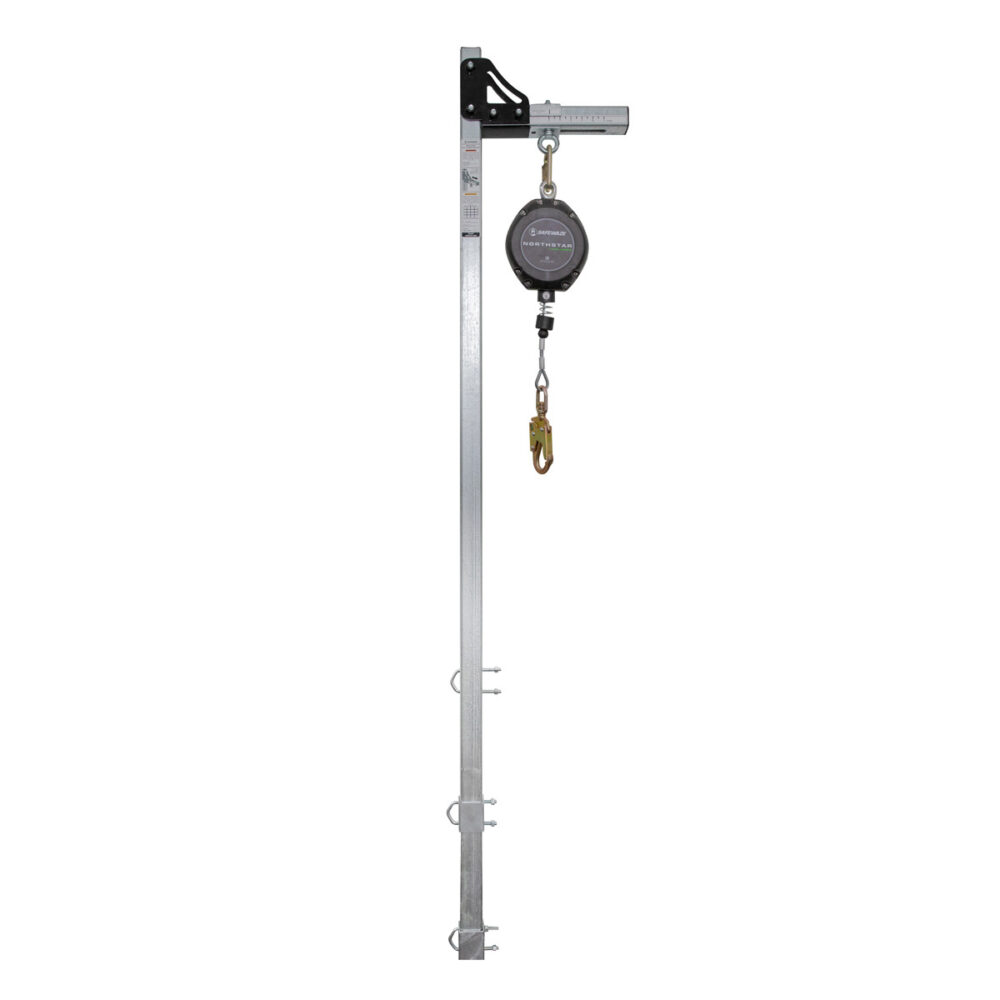
- Self-Retracting Lifeline (SRL) Anchor Posts: Personal fall arrest system that attaches the worker to an overhead anchor post that extends above the top of the ladder with an SRL. The cable retracts and protracts automatically as the worker ascends or descends, and if they fall, the SRL locks. These systems are effective for ladder-to-platform transitions as the worker never has a gap in coverage. Their costs are typically in line with the pricing of a cable vertical system depending on whether the customer already has an SRL to mount to it.
Mazzella’s Fall Protection team brings years of experience with these systems, offering products from the most reputable manufacturers in the industry and expertise that assures you of the speedy, high-quality service you need. Contact us today to discuss your fall protection needs.
What Are the Risks of Waiting for OSHA’s Final Decision?
One of the biggest misconceptions about the deadline is that facilities have until 2036 to take any action at all — all of your ladders must be completed and compliant by then. With that in mind, your plan may take significant time, coordination, and investment depending on the scope of your fixed ladder upgrades. Things like inventory limitations, contractor backlogging, and work stoppage implications can back your efforts up against the deadline in the event that it’s not removed.
OSHA’s General Duty Clause is another factor to consider. Every company was notified as of 2018 that cages alone on fixed ladders present a hazard, and that still applies under the current rule. Under the clause, employers are mandated to mitigate a hazard as soon as it’s identified, and if you’re not taking steps towards compliance right now, you may be opening yourself up to a violation.
Lastly, if any fixed ladder in your facility is non-compliant, your workers’ well-being and livelihood are at risk. The single most valuable asset your facility has is its people, and an upfront investment in safer, compliant work environments can help save life and limb.

Wrapping it Up
As we mark ten years until OSHA’s updated Walking-Working Surfaces fixed ladders section takes effect, your facility should be focusing on three key near-term actions: inventory and classify fixed ladders, assess most critical/frequently used ladders first, and create a phased plan that can be adjusted in the event of a rule change.
Though ten years may seem like a long time, the deadline is coming fast, especially if you have numerous ladders in need of upgrades. Believe it or not, it’s already been a decade since the original rule was published, and those ten years went by a lot faster than we thought.
There’s no reason not to pay attention to the proposed deadline removal. However, your facility needs to make decisions both using the rule currently in effect and with the hazards present at the facility.
If you’re unsure of the OSHA requirements for ladder safety or the compliance status of your working-at-height efforts, contact us to schedule a working at height risk assessment today.