Rigging Inspections: Mazzella’s Inspectors, Reports, and Scheduling
Rigging inspections require more than a yearly appointment. An inspection program needs qualified inspectors, clear reporting, and a schedule that addresses applicable requirements. In this video, Mazzella explains how its rigging inspection division brings those elements together for operations ranging from small machine shops to large steel mills.
In this video, Tom Horner, corporate rigging inspection manager with Mazzella Lifting Technologies, introduces the division’s history and growth. The team discusses formal inspector training through ITI, the qualities Mazzella looks for when hiring inspectors, and its inspectors’ dedicated focus on below-the-hook rigging inspections.
You’ll also learn why “annual” and “periodic” inspections aren’t interchangeable, what happens after an inspection is complete, and how Mazzella tracks inspection frequencies and coordinates upcoming visits. The video closes with what to expect during a first visit to your facility and what to look for in a rigging inspection provider.
What You’ll Learn:
- How formal training and candidate qualifications support inspector selection
- Why periodic inspections may need to occur more often than once a year
- How inspection findings are reviewed and reports are delivered
- How Mazzella tracks inspection frequencies and schedules upcoming visits
- What to expect when inspectors visit your facility for the first time
Who This Is For:
- Safety and EHS professionals responsible for rigging inspection programs
- Maintenance managers coordinating inspections of slings and rigging hardware
- Plant and operations managers evaluating a rigging inspection provider
- Facility teams reviewing inspection schedules and documentation
- Businesses arranging their first professional rigging inspection
Need Rigging Inspections for Your Facility?
Contact Mazzella’s Rigging Division to discuss your equipment, inspection needs, and scheduling. Whether you manage a small shop or a large industrial operation, start a conversation about a rigging inspection program for your facility.
Transcript
0:00 – Intro
My name is Tom Horner. I am the corporate rigging inspection manager with Mazzella Lifting Technologies.
0:08 – How Tom Horner was tasked with building the division
Around 1998, I was given the opportunity to start the inspections group as a formal group. Back then, inspections consisted of basically just looking at alloy chain slings. ASME standards weren’t written at that time. Over the years, we’ve evolved into the unit we are today with inspectors across about half the country.
0:30 – Our rigging inspectors are certified by ITI’s rigging inspectors course
I think today what makes our inspectors a little bit more relevant to the requirements is that we put them through formal training, one we go through ITI for the certified inspector course. Our group this is all that they do each and everyday.
0:45 – From big steel and automotive plants to small operations, we can handle it
Last year alone, we did over 1,700 inspections, working from anywhere in the automotive world, to the steel mill world, all the way down to the mom and pop machine shop.
0:53 – The difference between annual and periodic inspections
Customers come to us for inspections and the first thing they’ll ask for is, “I need my annual inspection.” If I were to say that doing an inspection once a year was okay, I wouldn’t be fully educating the customer. That’s where I try to break it down and say, “A periodic inspection could be multiple things.” It could be quarterly, semi-annual, bi-annual. Law and standard is what it is. It’s law and standard; there is no deviation from that.
1:26 – Our vetting process to ensure your inspectors are qualified and competent
What makes our inspectors different, when we are looking for candidates, we are looking for professional, timely, detail-oriented, self-driven individuals in order to satisfy these roles.
1:40 – How our inspectors are singularly focused
Well, our inspectors go through a course, and they get certified. And that’s all they do. All they do is below-the-hook rigging inspections.
1:45 – What happens after the rigging inspection is complete
Once the inspection is completed, the inspector will usually reach out to me. We’ll have a conversation on what he found, the results. We’ll go over the report, and then we’ll send the report over one to two business days after the inspection. And then we can continue on with the customer to see what they would like to do.
2:00 – Our inspection group runs a tight ship
We run a very tight ship. I have three inspectors I’m always pulling from, you know, from the Cleveland area for inspectors as needed. We do the best we can to accommodate everybody. And if they have to work an extra long day, our guys are willing to do it. Our reports are very easy to read. Um, any questions, again, you know, the customer can reach out to me, the lifting specialist.
2:26 – We track your inspection frequency so you don’t have to
We set our inspection frequencies in our system so the customer doesn’t have to worry about when their next periodic inspection is due, whether that inspection is done once a year, twice a year, quarterly, or monthly. I reach out to them at least four weeks in advance to get that scheduled.
2:51 – Our first time at your shop will be to understand your business
We’re there to, for one, make sure they’re using the right slings, hardware, and to give them a little bit of knowledge. First thing we do is, we’ll find where the contact is, might have to ask around, and then we meet face-to-face, explain to them what’s going to happen. Especially if it’s new, we might go in there and knock out their whole entire slings, hardware, because they’ve never had one done. Mazzella has a nice header on the report that they give the customers, and explains it all to them, so I’ll pull that out of my folder and I’ll show it to them, and then go from there. It doesn’t matter if we’re in a large steel mill, looking at 3,000 pieces of rigging in a week, or if we’re at our smallest inspection looking at 10 items. We’re going to treat it all very seriously. So if you’re looking for an inspection company, you’re going to want one that knows the laws and standards, has your documented training for your inspectors, and has a proactive program in place to ensure that all your periodic inspections are being satisfied moving forward. Mazzella is that company.
FREE Downloads!
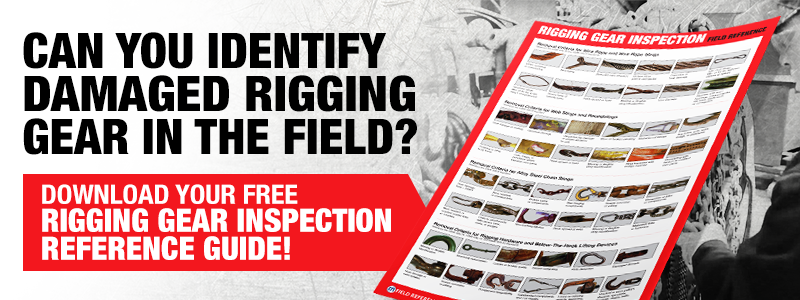
- Rigging Gear Inspection Field Reference [Guide]
- Lifting & Rigging Inspection Frequencies & Records [Guide]
- How to Dispose of Damaged Rigging Gear [Guide]
- Lifting and Rigging Site Assessment [Guide]
<!–[if lte IE 8]><![endif]–>
 hbspt.cta.load(3336966, ’72b9168f-0e22-4ba5-8342-b180f9e3d7fc’, {“useNewLoader”:”true”,”region”:”na1″});
Learn More! Articles & Videos
- How to Manage Your Rigging Inspection & Compliance Program Across Multiple Locations
- How to Inspect Synthetic Fall Protection Lanyards and Self-Retracting Lifelines (SRLs)
- How to Inspect a Fall Protection Harness
- Do You Know What Damaged and Unsafe Rigging Equipment Looks Like?
- How to Solve Rigging Equipment Challenges in the Construction Industry
- Wire Rope Sling Inspection Criteria
Contact Mazzella
- Schedule Remote or In-Person Training
- Contact Mazzella’s Rigging Division
In this video
- 0:08 – How Tom Horner was tasked with building the division
- 0:30 – Our rigging inspectors are certified by ITI’s rigging inspectors course
- 0:45 – From big steel and automotive plants to small operations, we can handle it
- 0:53 – The difference between annual and periodic inspections
- 1:26 – Our vetting process to ensure your inspectors are qualified and competent
- 1:40 – How our inspectors are singularly focused
- 1:45 – What happens after the rigging inspection is complete
- 2:00 – Our inspection group runs a tight ship
- 2:26 – We track your inspection frequency so you don’t have to
- 2:51 – Our first time at your shop will be to understand your business
Disclaimer:
Any advice, graphics, images, and/or information contained herein are presented for general educational and information purposes and to increase overall safety awareness. It is not intended to be legal, medical, or other expert advice or services, and should not be used in place of consultation with appropriate industry professionals. The information herein should not be considered exhaustive and the user should seek the advice of appropriate professionals.