
Seven Common Mistakes When Using Crane Rope, and How to Fix Them
Crane ropes are often mishandled on jobsites. Find out how to extend their life and avoid common mistakes in this article.
Estimated reading time: 10 minutes
Key Takeaways
- Crane rope is critical for lifting operations but often mishandled, leading to serious issues.
- This article identifies seven common mistakes in crane rope usage and provides practical solutions for each.
- Key mistakes include welding old rope to new, incorrect U-bolt clip installation, and cutting seized ends off rotation-resistant ropes.
- Proper rope selection, timely inspections, and adherence to discard criteria can significantly enhance safety and performance.
- Consulting wire rope specialists can improve crane rope programs and ensure compliance with safety standards.
- Need crane rope? Contact our team today!
Crane rope is one of the most critical components in lifting operations, yet it remains one of the most frequently mishandled. The consequences of these mistakes range from premature rope replacement and unexpected downtime to catastrophic equipment failure and serious workplace injuries.
When you purchase crane rope, you inherit the responsibilities that come with maintain them. Understanding these common mistakes will help you maximize rope performance, ensure compliance with OSHA and ASME standards, and keep your worksite safe.
With the help of Mazzella’s internal experts, and citing OSHA and ASME standards, this article looks at seven of the most common mistakes made when using crane rope, along with practical solutions on how to fix them.
Table of contents
What are the Most Common Mistakes When Using Crane Rope?
1. Welding Old Rope to New Rope During Installation
Welding the end of an old rope directly to a new rope to pull it through the crane system creates serious problems. The welded portion becomes stiff and brittle, damaging seizings on rotation-resistant ropes. More critically, welding transfers accumulated torque from the old rope to the new rope, causing extreme structural damage before the first lift.
Use swivel-equipped cable snakes with a swivel between the old and new ropes. The swivel prevents torque transfer. During installation, maintain continuous back tension (2.5% to 5% of the rope’s minimum breaking tension). After installation, conduct a break-in period by operating at low speed with light loads (5% to 10% of the working load limit) for several cycles.
2. Incorrect U-Bolt Clip Installation
Improper wire rope clip installation can reduce your rope’s working load limit by up to 40%.
You should never apply the saddle of a U-bolt clip to the dead end of a rope. Instead, the wire rope clip’s saddles should always face the live end of the rope.
The saddle end of the clip holds the wire in its form, maintaining the weight capacity. The other side will kink the rope and decrease the rope’s capacity.
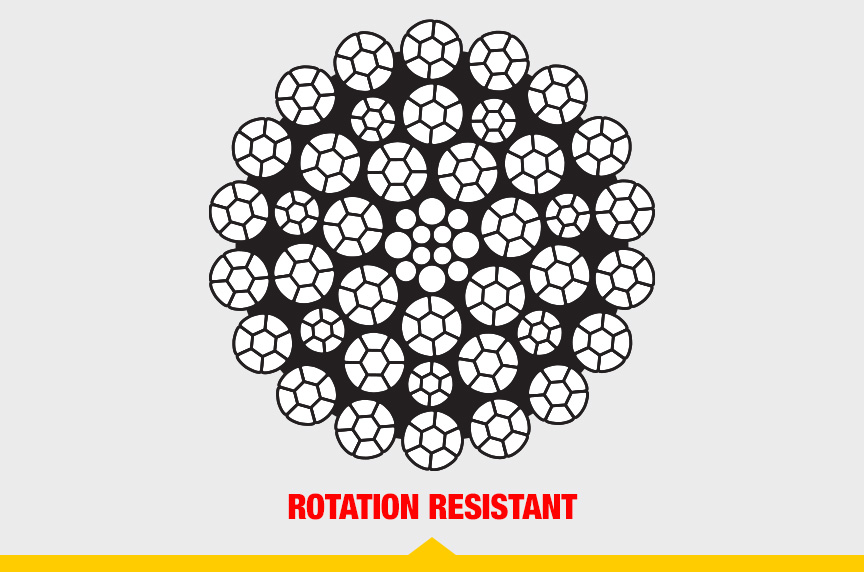
3. Cutting Seized Ends Off Rotation-Resistant Ropes
Rotation-resistant wire ropes have inner and outer strand layers laid in opposite directions to counteract torque. The ends are seized with wire, strand, tape, or welded. These seizings prevent opposing strand layers from separating, the core from slipping, and the rope from distorting.
Cutting off these seizings causes core protrusion, strand loosening, and loss of rotational balance. The opposing lay directions cause the rope to come apart at the ends.
All rotation-resistant ropes must be tightly seized before cutting. For preformed ropes, apply one seizing on each side of the cut. For non-preformed ropes, use no less than two seizings spaced about six rope diameters apart. Each seizing should be at least one rope diameter in length.
Never cut off factory-applied seizings without immediately applying new ones.
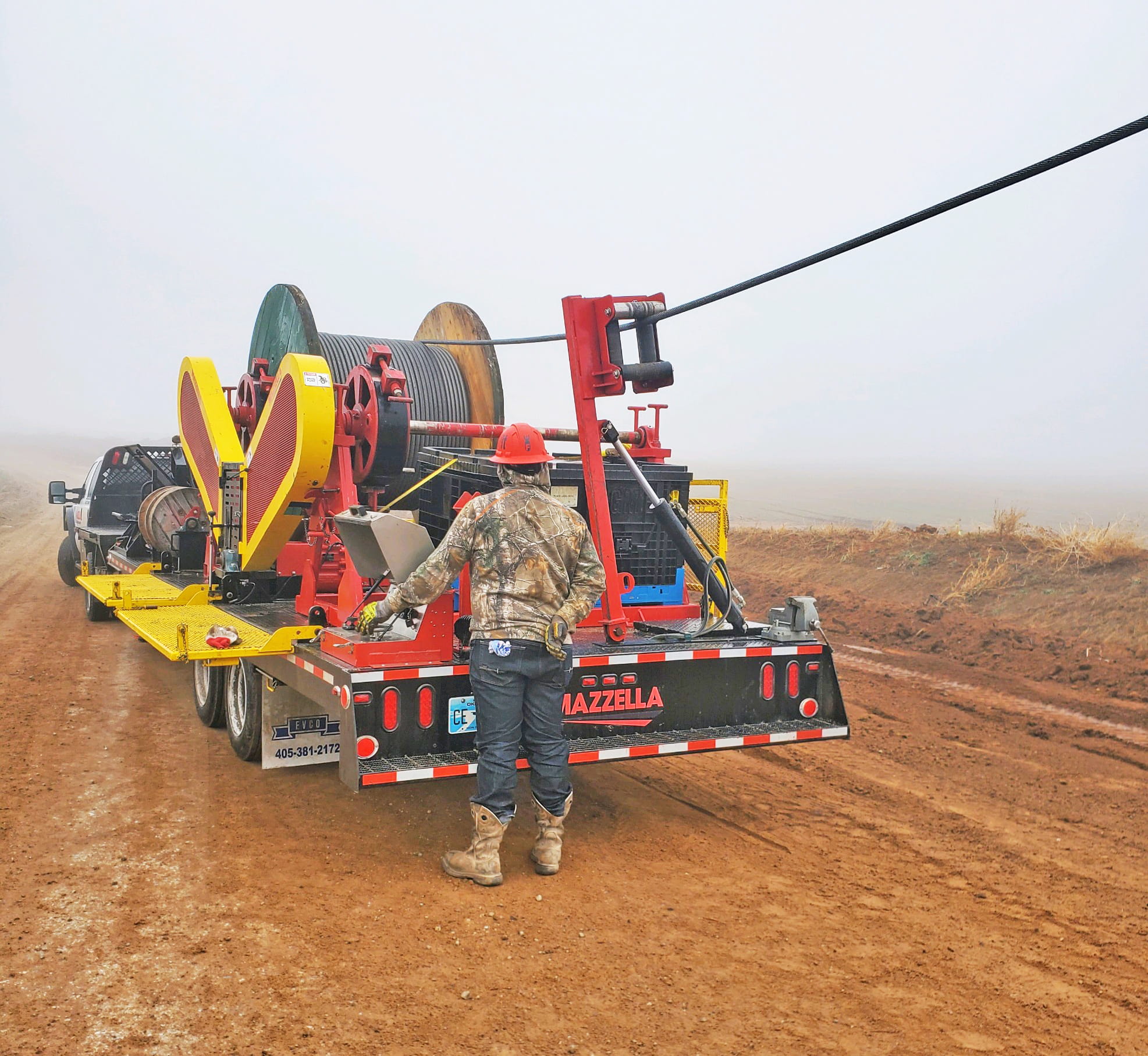
4. Selecting the Wrong Rope for Your Application
Crane rope selection is not a one-size-fits-all approach. Conventional Ropes (6-strand or 8-strand) offer good flexibility and wear resistance for general-purpose lifting.
Compacted Strand Ropes provide increased strength and excellent crushing resistance, ideal for heavy-duty use and multi-layer drum winding.
Rotation-Resistant Ropes prevent twisting under heavy loads, vital for unguided loads or high lifts, divided into:
- Type I (at least 15 outer strands, highest performance, design factor of at least five)
- Type II (at least 10 outer strands, medium performance, no swivel)
- Type III (no more than 9 outer strands, lowest rotation resistance, no swivel)
Critical selection factors include:
- Minimum safety factor of 5:1
- Environmental conditions requiring galvanized or coated ropes
- Flexibility versus wear resistance needs, and application type
- Always follow recommendations from the wire rope manufacturer, equipment manufacturer, or qualified person
If you experience shorter-than-expected rope life, excessive block twisting, or premature wear, consult a wire rope specialist.
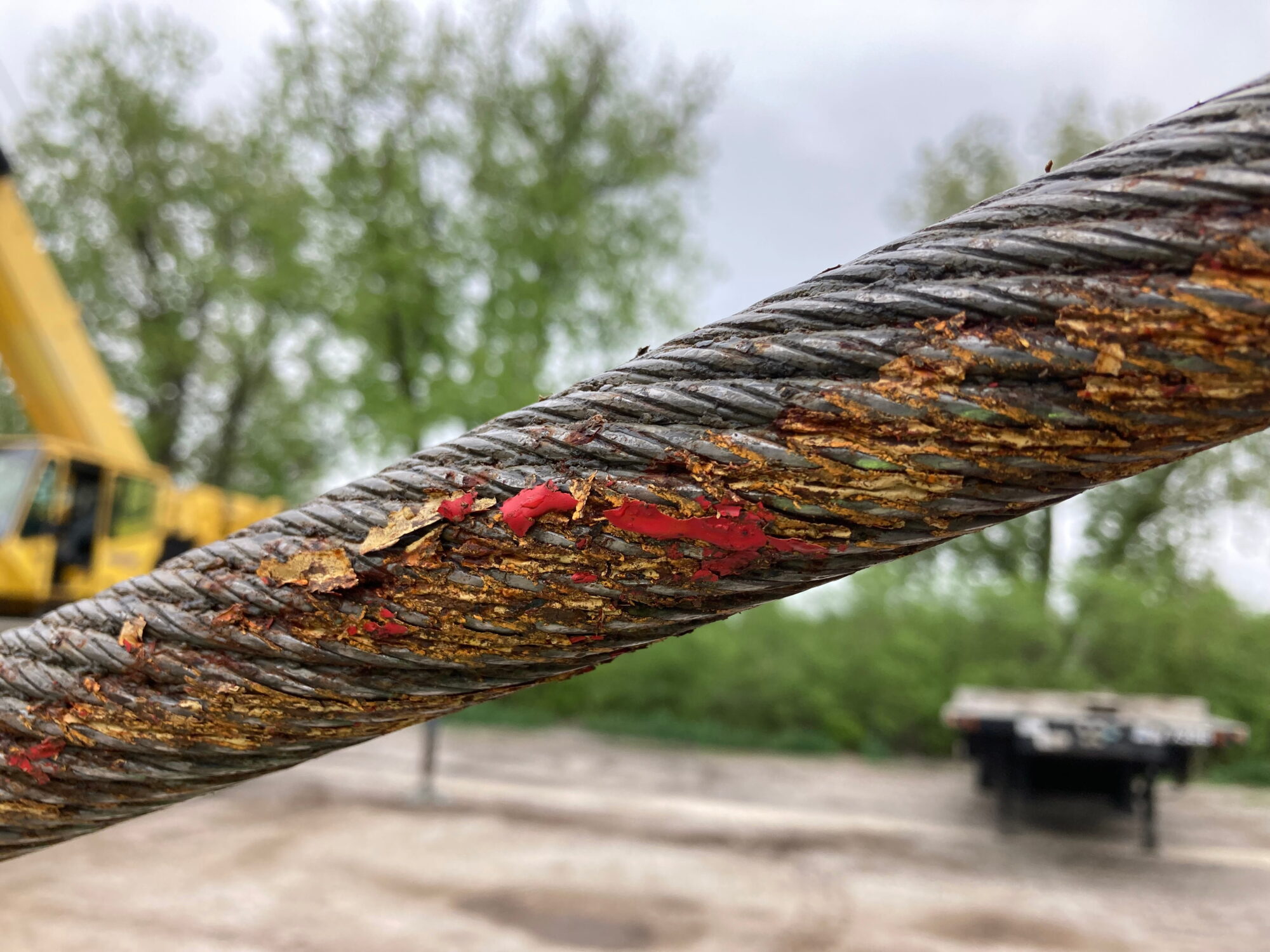
5. Operating with Rope Past Its Discard Criteria
Wire rope strength decreases with each cycle and operational stress. Operating with rope past its discard criteria exponentially increases the risk of catastrophic failure. Industry standards from OSHA, ASME, and ISO establish specific discard criteria:
Broken Wires: For mobile cranes, remove rope at six randomly distributed broken wires in one lay or 3 in one strand in one lay.
For overhead cranes, the criteria are 12 randomly distributed or four in one strand in one lay. Rotation-resistant ropes: two randomly distributed broken wires in six rope diameters or four in 30 rope diameters.
Diameter Changes: More than 5% reduction or increases of 5% (steel core) or 10% (fiber core) indicate damage.
Corrosion, Deformation, Heat Damage: Severe corrosion, kinking, crushing, birdcaging, core protrusion, heat discoloration, or electric arc damage require immediate removal.
End Connection Deterioration: Severely corroded, cracked, bent, or worn end connections compromise the assembly.
Conduct visual inspections before each shift, detailed monthly inspections, and comprehensive annual inspections by a qualified person. Remove ropes from service immediately when they meet any removal threshold.
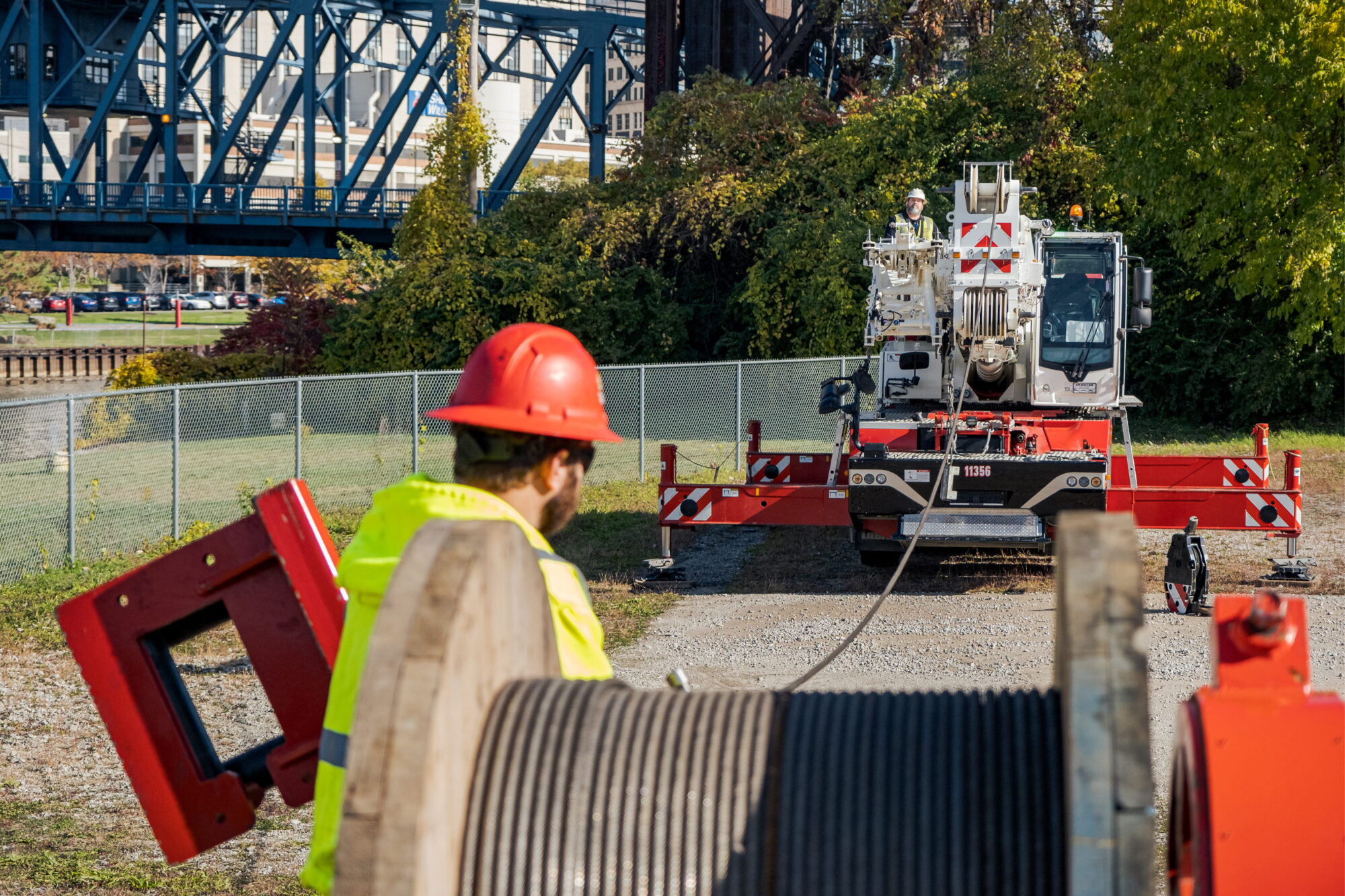

6. Neglecting High-Point Areas in Rope Inspection
Wire rope does not wear evenly. Stress concentrates in specific high-point areas where failure is most likely:
Sections in Contact with Sheaves and Drums experience constant bending, friction, and compressive forces. Prime locations for broken wires, wear, crushing, and strand distortion.
End Attachments experience the highest stress concentrations. Inspect for broken wires near termination, corrosion around fittings, worn eyes, damaged thimbles, bent hooks, and worn clevis pins.
Fleet Angle Zones and Drum Crossover Areas experience bending stress and abrasion from rope-on-rope contact. Look for localized wear patterns and flat spots.
Reverse Bends dramatically accelerate wire fatigue where rope bends around one sheave and immediately bends in the opposite direction.
Repetitive Pickup Points on Drums experience repeated initial loading stresses causing localized fatigue.
During daily inspections, slowly jog the crane to move different rope sections through inspection points. Visually scan for protruding wire ends, diameter changes, rust, and deformation.
You can also use calipers during monthly inspections to measure rope diameter. All inspections must be documented, and remove the rope immediately if any discard criterion is met.
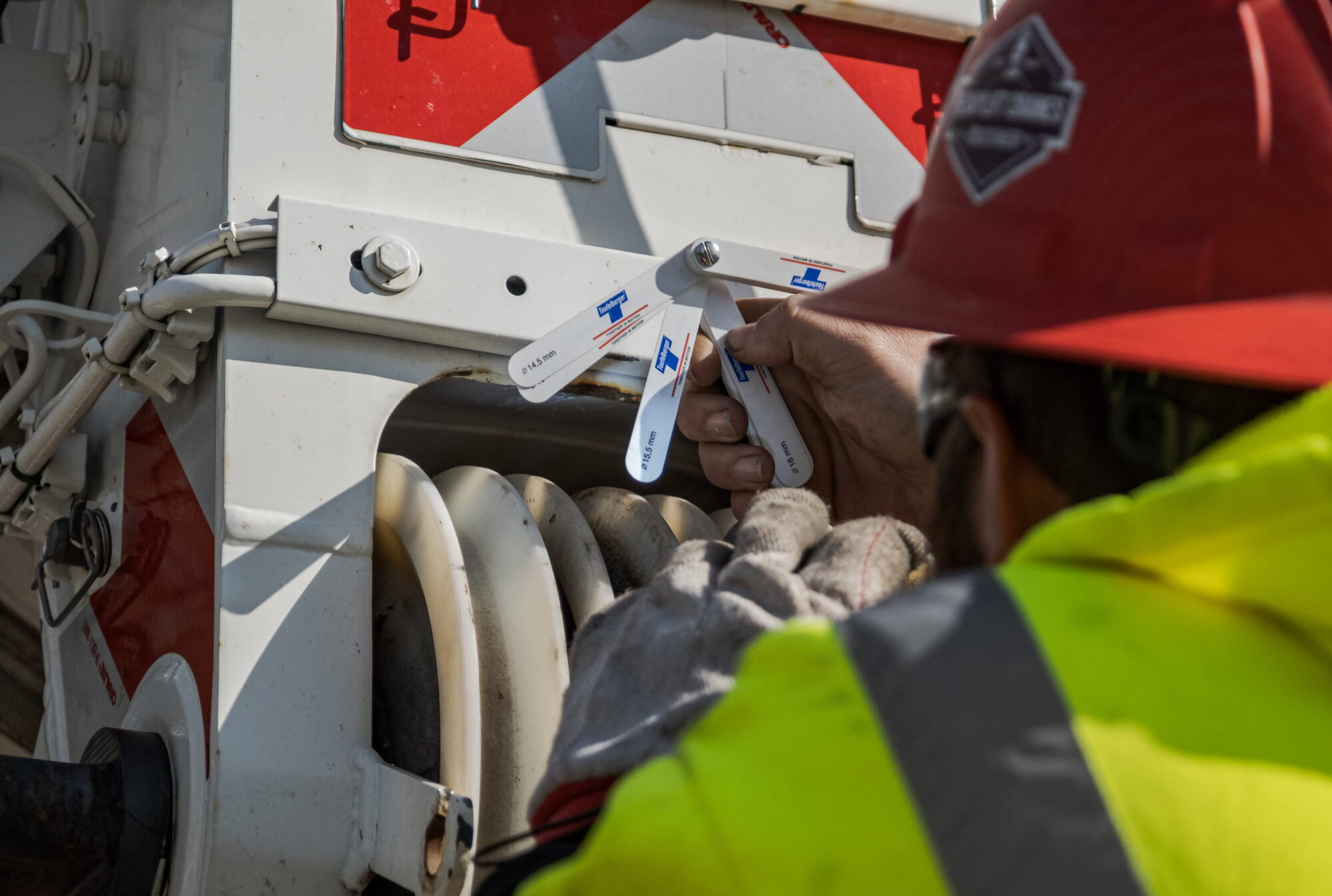
7. Using Undersized Sheaves
Operating with sheaves that are too small for your rope diameter creates excessive bending stress that can reduce rope life by 75% or more.
The critical measurement is the D/d ratio: sheave pitch diameter (D) divided by nominal rope diameter (d). When wire rope bends around a sheave, wires on the outside stretch while wires on the inside compress. Smaller sheave diameters create more severe bending stress, causing metal fatigue.
The industry prefers a D/d ratio of 24:1 for load hoisting cranes. ASME B30.5 allows minimum ratios of 18:1 for hoist ropes and 15:1 for boom hoist ropes, though these are minimums. Different rope constructions have different requirements: a 6×7 rope requires a minimum 42:1 ratio, while a 6×36 rope can operate with 18:1. A sheave with a 30:1 ratio can provide nearly five times greater fatigue life compared to a 16:1 ratio.
Proper sheave design requires: groove diameter 5% to 10% larger than nominal rope diameter, groove depth at least 1.5 times the rope diameter, and groove angle between 30 and 60 degrees.
If operating with undersized sheaves, replace sheaves with larger units meeting recommended D/d ratios or use a smaller diameter rope. Use a sheave gauge to measure groove diameter and replace sheaves when wear exceeds manufacturer specifications.
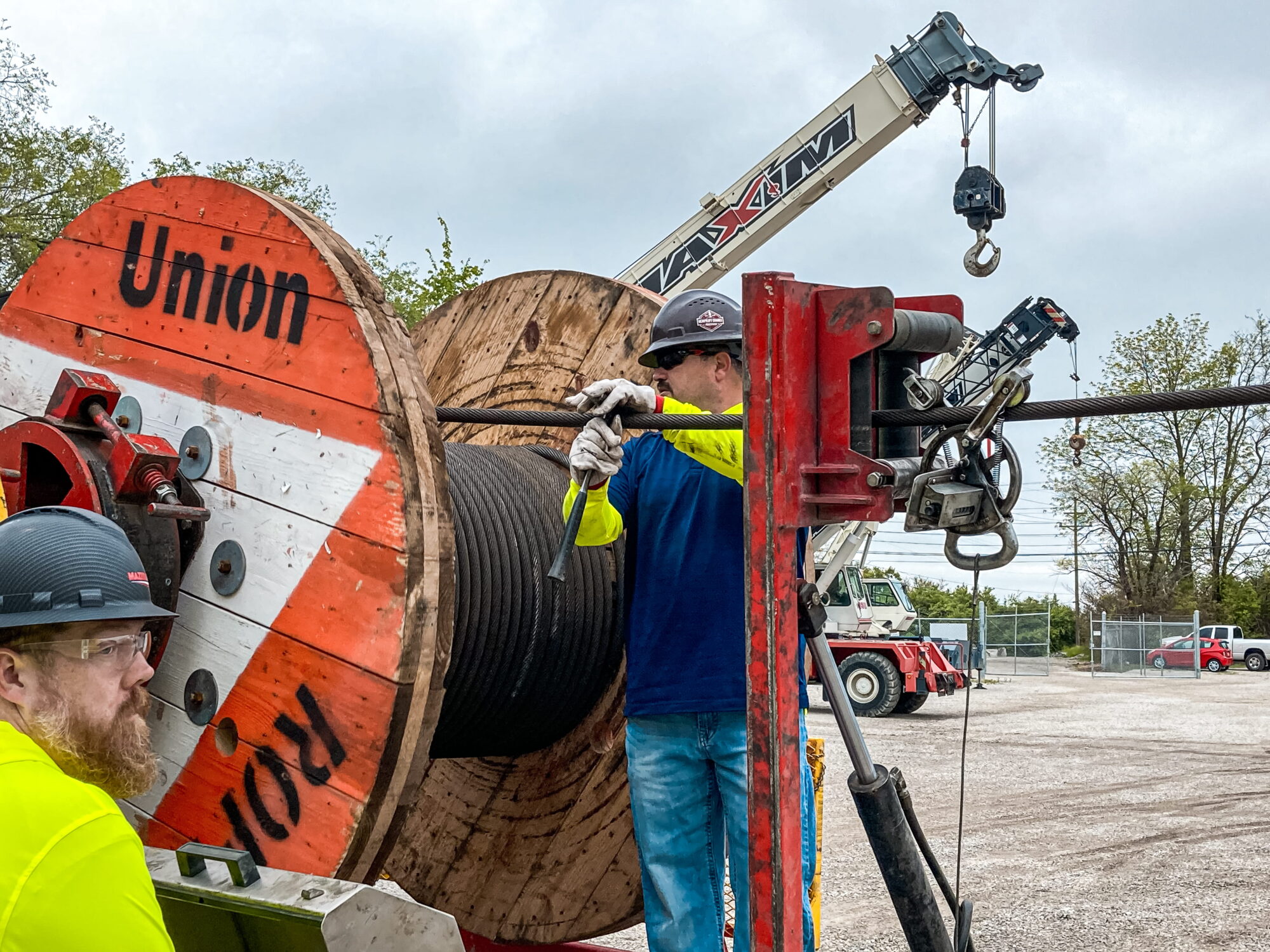
Final Thoughts on Avoiding Crane Rope Mistakes
Wire rope requires proper selection, correct installation, regular inspection, and timely replacement. All seven mistakes covered in this article are preventable. By understanding proper installation procedures, following the “never saddle a dead horse” rule, respecting seized ends on rotation-resistant ropes, selecting the right rope for your application, adhering to discard criteria, focusing inspections on high-point areas, and ensuring adequate sheave sizing, you can maximize rope performance and safety.
Proper crane rope management is fundamentally about safety. Rope failures can result in dropped loads, equipment damage, serious injuries, and fatalities. However, there are several steps you can take.
Maintain detailed inspection records and track rope performance over time. If you are uncertain about any aspect of your crane rope program, consult with qualified wire rope specialists.
Mazzella’s specialists have extensive experience helping companies improve their crane rope programs. Contact Mazzella to learn more.
Frequently Asked Questions About Crane Rope Mistakes
<!–[if lte IE 8]><![endif]–>
 hbspt.cta.load(3336966, ‘f83a9c72-f251-4274-8e0a-93e762cb0fd4’, {“useNewLoader”:”true”,”region”:”na1″});
Copyright 2026. Mazzella.