
Which Slingmax® Sling Is Right for You?
SlingMax offers several lifting sling models—learn which one best fits your application.
Transcript
Intro: Which Slingmax® Sling is Right for You?
– Twin-Path®, Single-Path®, Helix™, Sparkeater®, are all synthetic slings made by Slingmax® with unique features, functions, benefits and applications. But which sling is right for you? Today, we are walking through the pros and cons of each so you can determine which Slingmax® Sling is right for your application. Hey Dan, nice to meet you.
– Nice to meet you, Ben.
– Can you tell me a little bit about yourself and your experience in the rigging industry?
– So my name is Dan Ross. I’m the Senior Marketing Manager for Slingmax® Rigging Solutions, and I’ve been in the lifting and rigging industry for just over 10 years.
Twin-Path® Sling: High Capacity & Versatility Explained
– We’ve got a bunch of slings here on the table. We’ve got a Twin-Path®, a Sparkeater®, a Single-Path®, a Helix™. So let’s kind of dive into each of these one by one. When should you use a Twin-Path®?
– Twin-Path® Sling is a very versatile sling. It comes in capacities ranging from 10,000 pounds to 800,000 pounds, catalog capacity.
This sling is manufactured by our dealer network. Mazzella is a manufacturing dealer. And it can be used in any industry that requires a heavy lift and a sling that you can rely on. So a good fit application is anything extremely heavy. So you can use this sling to lift turbines and precast concrete, that sort of thing.
A negative though is the width. Sometimes the width can be a little wide, especially as the capacity goes up. That’s when you would use something like the Helix™ Sling that has a very narrow diameter.
The Twin-Path® Sling is very light and it’s repairable. It’s 90% lighter than steel of equal capacity.
Single-Path® Sling: A Cost-Effective Alternative?
– So let’s talk about the Single-Path® Sling.
– Single-Path® Sling when compared to Twin-Path®, relatively similar, right? I mean, you have the same core fiber, you get the Check-Fast® Inspection System, same jacket material. It’s a little bit less expensive than a Twin-Path® Sling.
– Why is that?
– Less manufacturing effort to put it together.
A customer would want to choose this sling if they’re lifting an object up to 200,000 pounds, they value a high-quality sling that’s going to perform for them for years, and they’re looking for a sling that’s a little bit less in diameter than a Twin-Path® Sling. The Single-Path® Sling is about an inch smaller in diameter than equal capacity Twin-Path® Slings.
Helix™ Sling: Best for Narrow Pick Points & Heavy Lifting
– So let’s talk a little bit about the Helix™, the newest sling.
– The Helix™ Sling, it really excels in heavy lift with narrow diameter requirements.
A negative though, is that it does not come with the Check-Fast® Inspection System that a Twin-Path® Sling or a Single-Path® Sling would have. Additionally, is not repairable. You can’t repair this jacket with a patch.
Helix™ Slings have a max capacity of 200,000 pounds currently.
– So what are some of those applications that that might be useful for?
– Smaller hardware, shackles, it fits a lot more snug. A 50,000 pound Helix™ Sling is one and a half inches in diameter. It’s significantly smaller than both the Twin-Path® and the Single-Path®.
– Got one more sling here.
– Yeah, this is our Sparkeater® Sling. So this sling is a twin-path design as well. This would be the sling that you would use in a high temperature application, up to 300 degrees Fahrenheit. So that could be sparks from welding, certain manufacturing facilities that are high temperature.
The Sparkeater® does have a low capacity. It’s only available up to 100,000 pounds. So though you do get that high temperature benefit, it is relatively low capacity in terms of heavy lift.
– So maybe in some shops where they would normally use like, chain sling or something like that, –
– Exactly. Yeah.
– they could use a Sparkeater® instead.
Sling Protection Options: CornerMax® & Abrasion Pads Explained
– So we’ve got some other things sitting on the table here. We’ve got some sling protection.
– Does all this sling protection work equally with each of these slings?
– That’s correct. Yeah. You just can’t use on the Sparkeater® ’cause it’s not going to be the same temperature as the Sparkeater® material.
You can make some pads out of this Spark material, the Sparkeater® material. You can add some abrasion pads. But for the Cornermax® Sleeve, that would be for Twin-Path®, Single-Path® and the Helix™.
The Cornermax® Pad is our cut protection option for 90-degree lifts. So, this is a 90-degree angle, the sling goes around the pad. The load rests on here so the corner of the load does not come in contact with the sling at all.
When to Use Wire Rope or Chain Slings Instead of Slingmax® Synthetic Slings
– Are there any situations where maybe none of these are the right option, and you probably want to use something more traditional like a wire rope sling or a chain sling or something like that?
– If you’re lifting application exceeds 300 degrees Fahrenheit, you would not be able to use these slings. A Sparkeater® is only rated for up to 300 degrees Fahrenheit.
These slings are made of synthetic material, so if your application is exceptionally abrasion-heavy, it might not be the best solution.
Sling Cost Breakdown: Pricing Differences Explained
– Let’s talk about the cost a little bit. How do these different slings differ in price?
– The Twin-Path® Sling is our flagship product. It comes with many different features, but with that it does come with added cost.
The Sparkeater® Sling, another twin-path design product, so that does increase the cost.
For something that’s a little bit more inexpensive, the Single-Path® Sling. You get the same jacket as Twin-Path®, but it is missing some of those added features.
And the Helix™ Sling falls right in the middle of the other products I just mentioned.
Choosing the Right Sling: Key Takeaways & Expert Advice
– So what advice would you give to somebody who’s trying to decide which of these slings is best for them? How do they know which one’s best for their, maybe just their application?
And then also, which one is best for maybe just general use to have around in their shop?
– When you’re looking for a new sling, it’s important to make sure you do your research. There’s a lot of available material online about all of our products. Reaching out to your local Mazzella product advisor is a great resource to make sure you can get the correct sling for the application.
Every sling here, every Slingmax® Sling, is made with high-quality materials. Whatever sling you choose from Slingmax®, you can rely on and you can trust that it’s going to perform.
– Mazzella is a Slingmax®-certified manufacturer who can help you determine the right sling for your application. Contact us below.
Whatever your lifting needs, we’re here to help. From slings, rigging hardware, wire rope, overhead cranes, lifting devices, inspections, service and training, we are your one-stop lifting shop.
If you found this video useful, then hit that like button so we can get this information out to everyone who needs it. Subscribe and hit the bell so you never miss a video. If you have a question, drop it in the comments so we can get you an answer. Remember, safe rigging is smart rigging. My name is Ben. Stay safe out there.
Having the right equipment for the job is the best way to ensure a safe working environment, including your lifting slings. And finding the appropriate lifting sling for your application is not always easy, especially with so many different ones on the market.
Lifting slings can be found in just about every job site or environment: steel mills, mechanical garages, automotive assembly lines, manufacturing plants, construction and excavation sites, mining, and much more. As technology advances in the lifting industry, new lifting slings have been created to meet the unique environments each rigger works in.
Our partners at Slingmax Rigging Solutions understand this and have developed four high-performance synthetic roundsling models: the Twin-Path® sling, the Helix™ Sling, the Single-Path sling, and the Sparkeater® sling. While all of these are backed by engineered data and manufactured with high-quality material, each one was designed with a specific application in mind.
Whether you’ve been using Slingmax products for years or just heard about them last week, you may be asking yourself, “How do I decide which sling is appropriate for my application while being light weight and strong?”
To help your decision-making process, our article will review each Slingmax synthetic lifting sling, reviewing their lifting capacities, unique features, and their ideal work applications.
Why Would You Use High-Performance Synthetic Roundslings?
High-performance roundslings offer riggers a versatile and light weight alternative to wire rope lifting slings and alloy chain slings. Not only can they be used in a vertical, basket, or choker hitch, but they can also be used to handle more delicate and irregularly-shaped loads.
High-performance roundslings are noticeably lighter than wire ropes or chain slings, making them easier for workers to move around a job site and easier to store.
What are Slingmax’s Different Lifting Sling Models?
The Twin-Path® Sling

Slingmax is best known for their innovative Twin-Path product offering. Their most popular design and flagship model, the Twin-Path® roundsling is a versatile sling which has two individual paths of internal load-bearing fibers –providing extra redundancy, if damage were to occur to one of the paths during a lift.
The two paths are made from K-Spec® core yarn, a blended load bearing core fiber that is five times stronger than equivalent nylon and polyester fibers. Compared to traditional synthetic slings, K-Spec® core yarn has less than 1% stretch— similar to a steel sling. Its unique design makes the Twin-Path® just as strong as steel lifting slings while being a fraction of the weight.
Twin-Path® slings have the highest lifting capacity of Slingmax’s product offerings, with a standard capacity of up to 800,000 lbs. (400-ton). Consequently, they’re popular in a variety of industries where heavy lifting projects are common, including:
- Construction and excavation
- Oil and gas
- Power generation
- Aerospace and military
- Port yards and ship building
- Manufacturing and general industry
If your application is in an environment that has high heat (above 180F), you may want to consider the Sparkeater® sling. The Twin-Path® sling can sometimes be too wide for some lift points. If you need a narrower profile, Helix slings may be the better option.
The Helix™ Sling
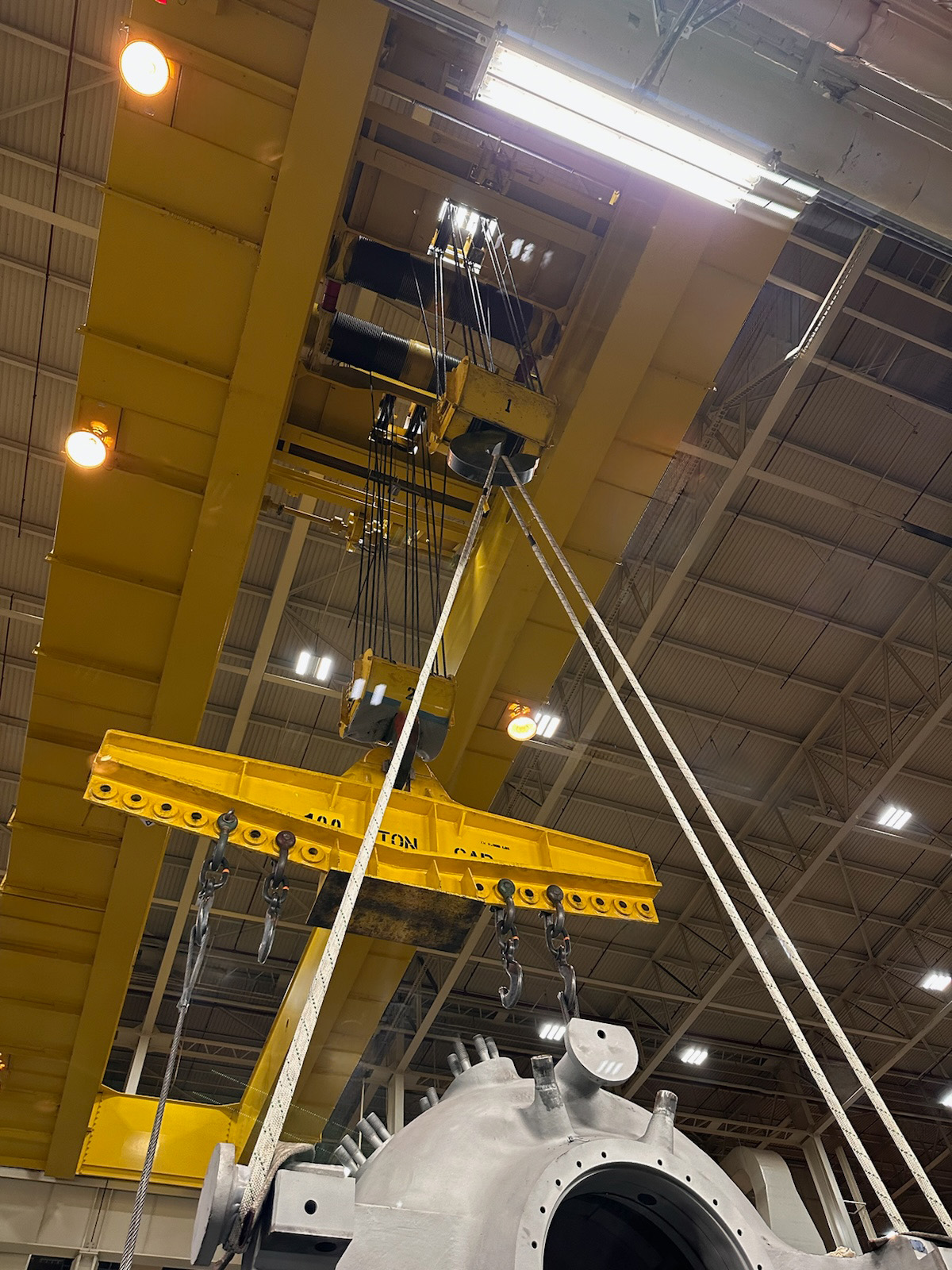
Slingmax’s newest product offering, the Helix™ sling, is a synthetic fiber, high-performance roundsling designed for more constricted lift points.
Its smaller profile and narrow diameter now allow high-performance roundslings to be used in areas and applications that were previously dominated by wire rope lifting slings.
While the Helix™ has a smaller profile, you don’t have to sacrifice strength and durability. They have a vertical rated capacity of up to 200,000 lbs., and Slingmax is working on increasing their catalog capacities. All Helix™ slings feature rifled cover® technology, a patented technology that increases the sling’s strength-to-weight ratio and allows for repeatability in the manufacturing process. This technology also strengthens the load bearing core fibers by 17%.
Helix™ slings are ideal for any application where you have a constricted area to do your lifting. This, with multiple customization offerings, quick turnaround on production time, and high lifting capacity make them a great fit for a variety of industries. Helix’s can be used in:
- Power generation plants and clean energy projects to lift heavy turbines
- General manufacturing and assembly lines
- Construction and excavation sites
- Die lifting
Like all Slingmax slings, they are also neutrally buoyant and unaffected by seawater, which makes them great for marine applications.
A negative is that Helix™ slings do not come with the Check-Fast® inspection system that a Twin-Path sling, a single path sling, and Sparkeater® have. Additionally, they are not repairable.
The Sparkeater® Sling
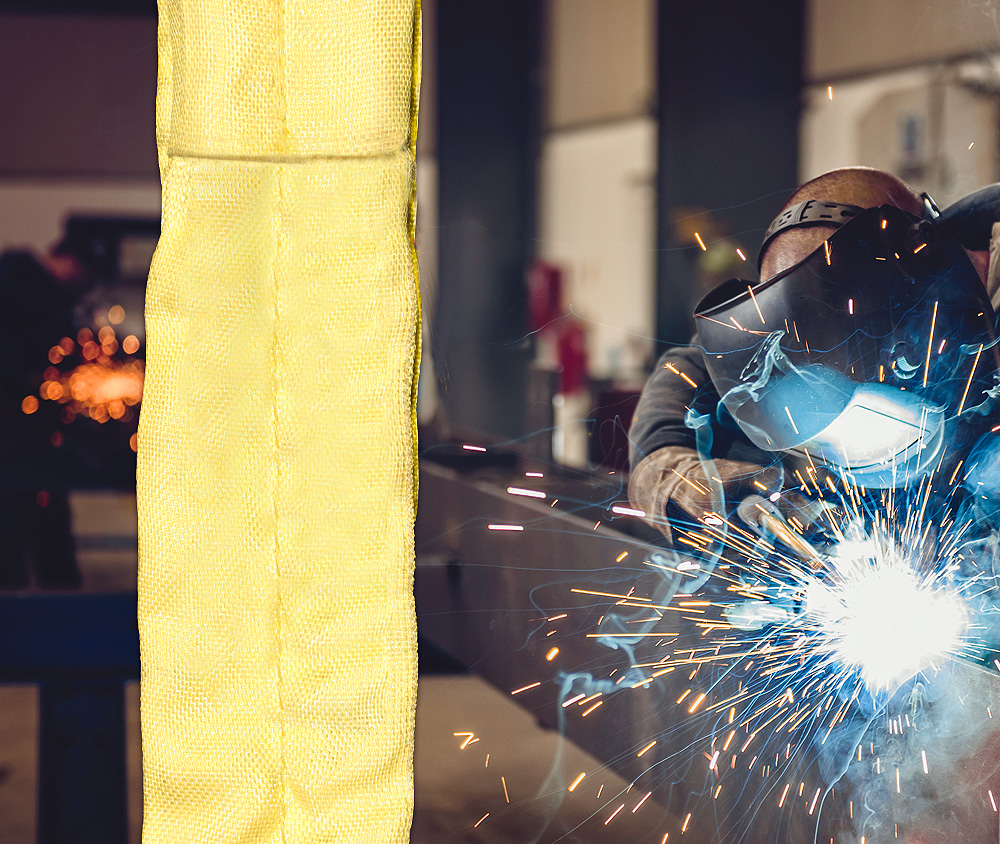
When rigging in a hot environment, the Sparkeater® sling is the best choice. Designed to lift in and around environments up to 300F, Sparkeaters have a Twin-Path® design but are made with different core fibers and cover material that give it added heat durability—much higher than the Twin-Path’s maximum temperature of 180F.
A Sparkeater® can be used in any shop or application where there’s welding or any type of exposure to high heat. This includes:
- Welding shops
- Power generation plants
- Furnaces
- Steel mills
Historically, alloy chain slings are used in these environments. Now, riggers in these spaces can use a significantly lighter sling in the Sparkeater® and avoid hauling heavy chain slings around a facility, saving them time and reducing the chance of back or joint injuries.
The Sparkeater® does have a lower capacity—only available up to 100,000 lbs. So, while you get that high temperature durability, its capacity is relatively low compared to other Slingmax products. But you can use the Sparkeater® in any application where a Twin-Path® is used, as long as it’s within that capacity limit. Although Sparkeaters have extra heat resistance, sustained high-heat application over 300F will not be a good fit. In this case, use an alloy chain sling.
Currently, the Sparkeater® is only available in a Twin-Path® design. It’s also important to note the Sparkeater® is the most expensive sling model because of the specialized material it’s made with.
The Single-Path Sling
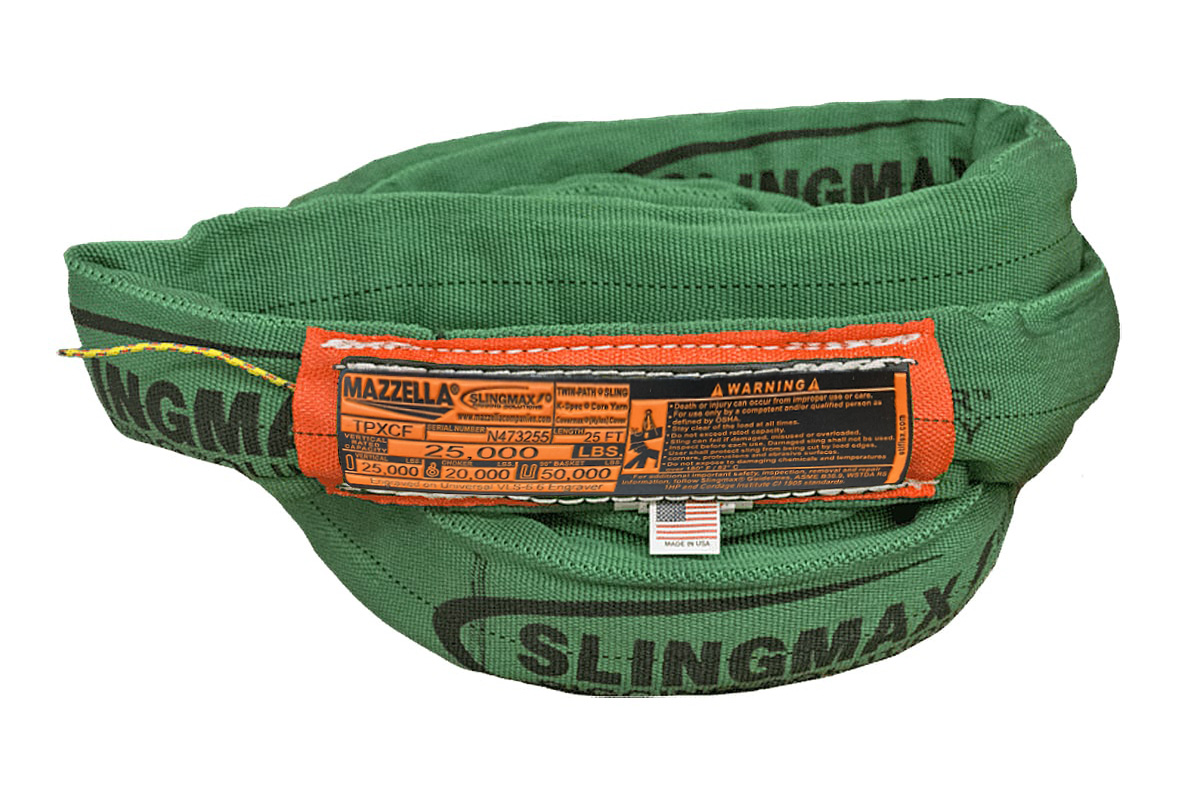
The Single-Path sling is one of Slingmax’s more affordable options. When compared to a Twin Path®, it’s pretty similar in terms of material, including the same K-Spec® core fiber, Check-Fast® overload indicator, and the same dual Covermax® jacket material.
Single-Path slings are less expensive than a Twin-Path® sling because it requires less material and time to manufacture, but this also means they do not offer the extra redundancy in case of damage that a Twin-Path offers.
They’re easy to manufacture and can be produced quickly with short lead times. The overall lifting capacity goes up to 200,000 lbs., which is comparable to the Helix™ sling.
If you’re lifting a heavy load, but not as heavy as 800,000 lbs., not concerned with added redundancy, and working with a tighter budget, then a Single-Path sling could be the best option for you.
Which Slingmax Lifting Sling Should You Choose?
When you’re looking for a new sling, it’s important to make sure you do your research.
To summarize:
- Sparkeater® slings are the best choice for any hot environment but cost more due to specialized material
- Single-path slings are great if you’re working on a tighter budget and lifting loads around 200,000 lbs. or below
- Helix™ slings are ideal for any application where you need a sling with a smaller diameter to fit into more narrow hardware
- Twin-Path® Slings are the best choice for critical and heavy-duty lifts requiring light weight rigging. They can be used in almost any application where you would use a wire rope lifting sling or an alloy chain sling.
No matter which Slingmax sling you select, you should always pair it with an engineered sling protection solution. Thankfully, Slingmax offers several options that pair perfectly with their slings, including:
- CornerMax® Pads
- CornerMax® Sleeves
- The Spider Sleeve
- Synthetic Armor Pads
Choosing Other Lifting Slings
Any environment where temperatures could exceed 300F will call for you to use a more traditional chain lifting sling. Additionally, Slingmax lifting slings are made of synthetic material, so if your application is exceptionally abrasion heavy, they might not be the best solution.
How Can You Purchase a Slingmax Lifting Sling?
We hope this article helped you better understand the different lifting slings Slingmax offers and which one best fits your application.
Every Slingmax lifting sling, regardless of its model, will perform very well. All of them are manufactured using high quality materials and are backed by engineering data, several rounds of load testing, numerous break tests, repairability options, and a stellar reputation.
We understand you still may have some questions, and we’re here to help. Mazzella is one of the largest accredited Slingmax distributors in the country, so contact your local Mazzella representative to help decide which lifting sling is best for you.
Also, watch our video with Slingmax showcasing the new Helix™ lifting sling, or learn more about the flagship Twin-Path High-Performance Roundsling.

Copyright 2025. Mazzella.