How to Prepare for a Third-Party Rigging Inspection
If you’re not confident in your knowledge of the applicable OSHA and ASME standards, or just don’t have the resources to safely and effectively inspect your rigging equipment, you should consider a third-party inspection provider.
Estimated reading time: 21 minutes
Transcript
Intro: What to Expect from a Rigging Inspection
— If you’ve never had a rigging inspection before, what happens when the inspector shows up? What do you need to do ahead of time to make sure that the inspection goes as smoothly, quickly, and as safely as possible? Today we’re going on a rigging inspection to show you exactly what you can expect. Morning Tom.
— [Tom] Morning.
— Thanks for letting us ride along with you today. Basically what we wanted to do is if someone’s new to rigging inspections, maybe they’re either new to their company, new to their role, or maybe they want to change providers. We wanna show them what they can expect from a rigging inspection.
How to prepare for an inspection
— Once a customer schedules an inspection, what can they do to make it go more smoothly? What are their next steps?
— So we work with them on the front end to kinda lay that out. We need to know if we show up, is there a 15-minute safety video, a 30-minute safety video? Is there something we have to do online? So when we get there, we’re gonna know, hey, we need hard hats and safety vests, special gloves, special glasses. They might give us an escort to walk through the facility. Once we get to the customer’s facility, we’re gonna check in. We’re gonna have a briefing meeting about what’s gonna take place. But really when we get there, we wanna make sure that the customer knows we know what we are doing. At the back end of it, all they have to do is check off on some paperwork, understand if there’s any deficiencies and things in they might have to repair or replace.
— [Ben] Do they need to provide equipment lists, or equipment records, or past inspection records, anything like that?
— That is always a positive if they have a prior report, but we work with them to complete what we call our front load, which helps us get an estimate of what they have in the different quantities.
Does Production Need to Shut Down for Inspection?
— I assume that the inspector’s gonna need access to the entire facility. Does any part of the facility need to shut down for an inspection?
— We want the facility up and running, ’cause we want everyone there to be able to put their rigging out for us on display. So when we get there, we want lights on, we want cranes running, we need access to everything, and we need access to the people, because the people, let’s say if you have individual work cells, they might have rigging locked up in a cabinet that we might not see. We work with them on the front end to say, “Hey, make sure you put out notice. We’re gonna get there.” And then when we get there, the facility knows, “Hey, these strangers walking around are doing this.” And then we’re like, “Hey, I got my stuff over here.” And we can interact with them on that level.
— So Tom, what happens when the inspector arrives on site? Does anyone need to be available to check them in? Do they need to sign in?
— We do our best to have that prearranged, knowing where to go, front door, side doors, the name of the person we’re meeting with.
How Long Does a Rigging Inspection Take?
— [Ben] How long does the inspection usually take?
— There’s gonna be a lot of variables that play into that. Any inspection could be as short as 30 minutes, ’cause we have customers who’ve only got a little bit of rigging. We have inspections that are as long as five days. That can take up to four or five inspectors. It’s probably a few thousand pieces of rigging in that one time period. Hey Chris, I’d like to introduce you to Ben.
— [Ben] Hey, Chris.
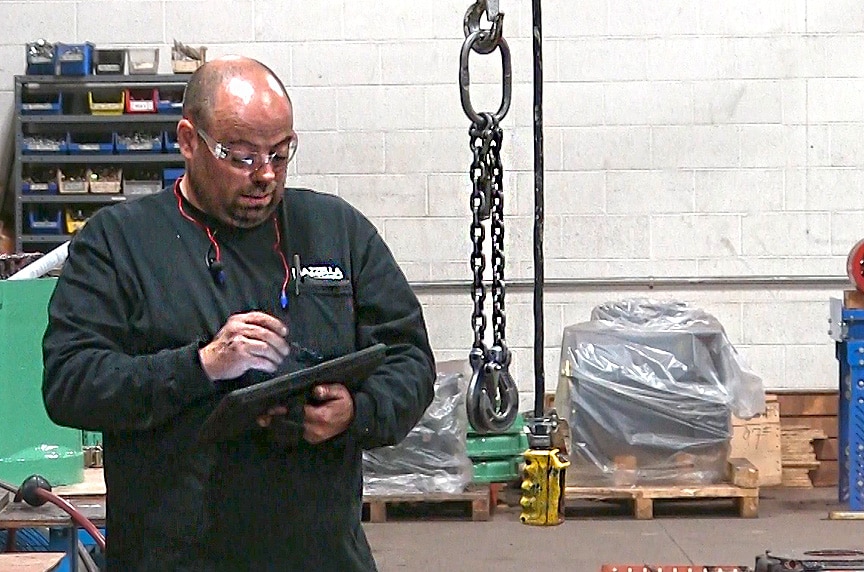
— [Tom] Chris is our inspector on site today. Chris has been with Mazzella over 15 years, performed thousands of inspections. Just has a wealth of knowledge.
What Equipment is Included in a Rigging Inspection?
— So, during the inspection, what’s going to be inspected?
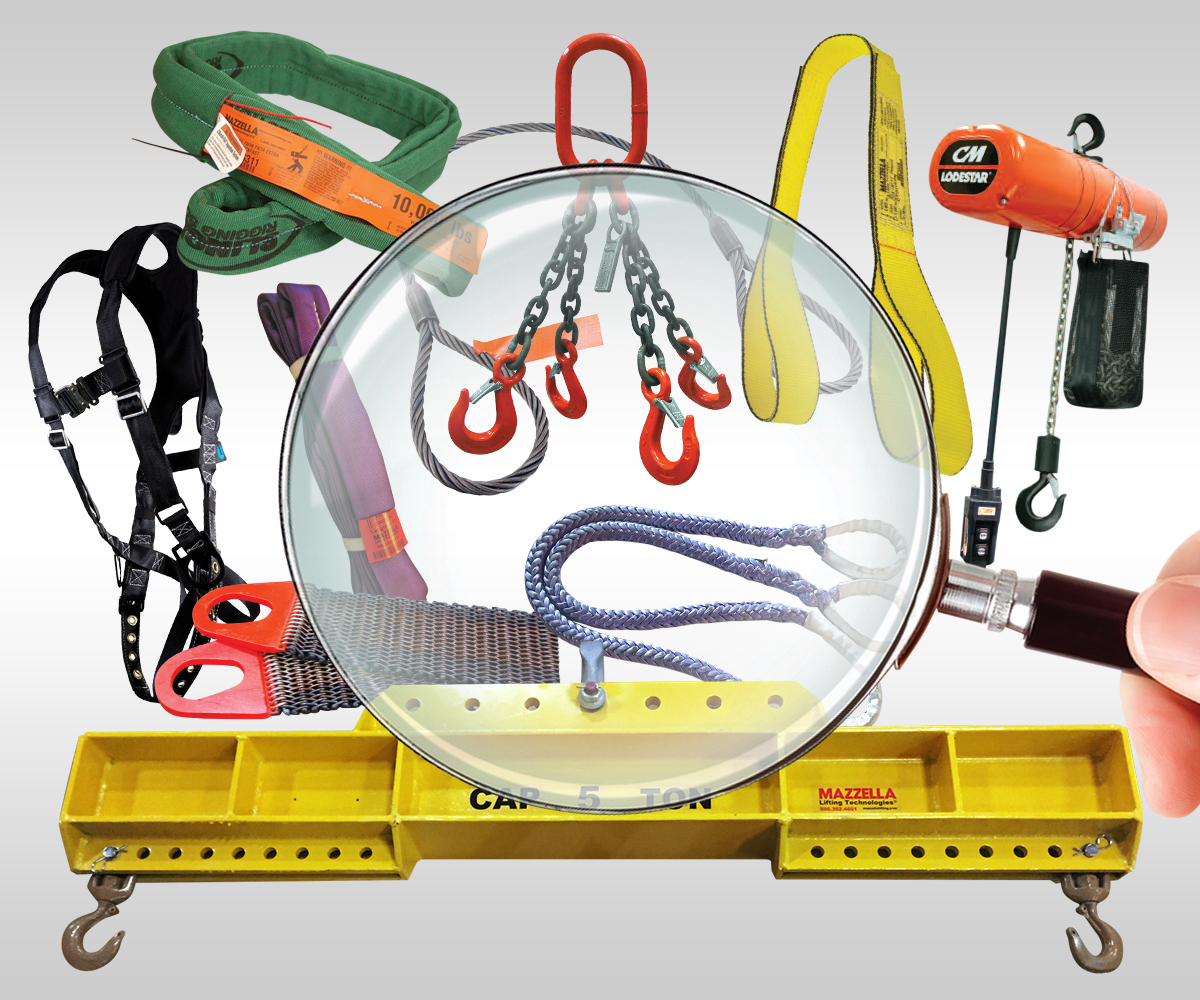
— Mazzella wants to make sure, based on the standards, that we’re gonna inspect, all your types of slings. It’s your alloy chain slings. We got synthetic web slings. We can have wire rope slings, high performance round slings. We’re gonna look at hooks. We’re gonna look at your manual hoist, which are your lever tools and chain falls that are not installed at height. And we’re gonna look at your below the hook devices. Do you have a spreader beam, a C-hook, a plate clamp. And then we’re also gonna include all your rigging hardware, which are your shackles, your hoist rings, your eye bolts, turnbuckles, that kind of thing.
All of those items require some level of periodic inspection. All of them require some level of documentation. Our process at Mazzella is that we get our hands on everything we can and we document it so it’s at least traceable to say, “Hey, this company was here on this date during this time. We are compliant and we can prove that.”
What Will Not Be Inspected?
— Is there anything that you will not inspect?
— Customers home make items, homemade below-the-hook devices are still very much in existence. We’ll inspect them only to get it on the report to tell the customer, “Hey, you need to address this. You can’t make your own stuff.”
— So you mentioned hoist that are not installed at height. So if it is installed at height, we’re not inspecting it right now.
— Correct. That’s gonna fall under a crane and hoist inspection. When you take that manual hoist off and you put it in the job box for maintenance to use another time, that’s what we consider loose rigging gear.
— So what about rigging that’s actually in use at the time? When we came in here earlier today, there was a chain sling with a hoist on it. Are you gonna inspect that chain sling? Are you gonna ask them to take that hoist down?
— Yes, we’ll ask them, “Hey, is there a good time when we can inspect that chain sling?” At that moment, they might be able to take it off so we can get a quick look at it. Sometimes they’ll say, “Hey, you need to come back in a couple hours,” and not a problem, we’ll make note of it and we’ll come back and visit that person at that area after.
Common Reasons for Rigging Inspection Delays?
— What are some of the most common things that slow down an inspection? How can customers avoid that?
— When we do find product that has failed inspection and we tag things out, that really throws some people for a loop. So there could be a lot of slowdowns in terms of, hey, getting their manager over. Everyone’s having a conversation about what’s happening, when all that should have really happened prior. Other things that can slow us down is heavy production. They might be doing so much work that the rigging is just unavailable and they can’t remove it.
Another example of a slowdown would be getting into a large facility like this and not having an escort or a walkthrough the first time. Give us an idea where everything’s at or give us an escort who has the relationships with all the employees, making them feel comfortable about giving up their rigging for us to do the inspection.
How to Handle Failed Rigging and Spares
— Anything else that they should be doing ahead of time to make sure that everything goes as smoothly as possible?
— Understand that every inspection causes pain. During the inspection, we’re gonna fail items. If we failed a item that you only have one of, it’s gonna cause a big problem for the production. Are you prepared with a purchase order to immediately buy some replacements or repairs? Or do you have spares for the most critical pieces of lifting equipment in your facility prior to us getting there?
— What would you say to a company that’s never had a rigging inspection before and they have no idea what to expect?
— Just let us get in the door and do it. We’ll tell you exactly what we need to do, how it’s gonna go, how you’re gonna reach compliance. Then we can evaluate post inspection, we can evaluate the report, explain what the findings mean, and then we can address everything after that.
OSHA Requirements for Periodic Rigging Inspections
— Why is it a good idea for the customer to keep a consistent schedule of rigging inspections? How can that help speed up their process in the future?
— Number one it’s required. A periodic inspection of your rigging has to take place every 12 months. If you did it in January of 2025, you need to have it done by the end of January, 2026. That’s the requirement. After you do your first inspection, then you gotta determine based on your failure rate, what’s my next step? It’s almost always if there’s a high failure rate, you need more inspections, ’cause the inspection is proving “I’m in a high use atmosphere.” If you set up more than one periodic, which could be up to 12 periodics, one every month, you need to stay in that timeframe just to keep everything consistent and then that proves you’re attending to all the requirements within the standard.
Examples of Failed Rigging
All right, Ben, here’s a few items that Chris has identified as failed during the inspection. We got a very simple nylon web sling here. Danger tagged it with the Mazzella custom tag on it. Something like this would just be a replacement. So we’ll danger tag it, throw it off to the side. It’s their property, they have to dispose of it as they see fit. You got a wire rope bridle here, failed inspection due to some broken wires and crushing here in the eye. And then down here we found an alloy chain sling with a lot of weld splatter and damage, heat damage, that kind of thing. And these are the conversations that take place during the inspection, but especially after the inspection is completed where we work with the customer to say, “Hey, here’s the failed items. What do you wanna do?”
This might be their one and only chain sling, and they’re like, “Oh my God, I’ll shut down my operation if I don’t have that. Can I continue to use it?” What we explain to the customer is, this is your property. That’s your business decision. On our inspection report, it’s gonna be identified as failed. It’s gonna be clearly written on our end. What you choose to do with it thereafter is your business. We’re never gonna tell a customer they can or cannot do something. It’s your property. While we’re on your property, we’re just here for the inspection and the compliance.
Danger Tags vs Passed Tags
— So I see you’re putting danger tags on failed inspection tags, but you’re not putting passed tags on.
— The inspection report is what proves compliance. There’s no requirement to prove that this particular piece of rigging was inspected. That always goes back to the user every day at the beginning of their shift to inspect their rigging before they use it.
— And that’s something that’s probably gonna speed up the process also is if your users are trained, then they’re gonna be pulling things out of service themselves when they notice things are wrong. It’s gonna be a lot less to inspect, a lot less to mark as failed.
Is NDT Testing Required for Rigging Inspections?
Sometimes a customer will require specialized inspections. NDT testing. How does that work?
— It’s not required anywhere, but sometimes you wanna look at the bale of a below-the-hook device and you can apply NDT to the critical welds right there. Oftentimes, NDT is performed by a specific company who lives in the world of non-destructive testing. Are there times when we can apply it? Absolutely. But I’m not just gonna tell you yes or no. We’re gonna have a very in depth conversation about it. Our stance is we’ll do it, if you want us to be a testing house. But that’s an entirely different process outside of this compliance inspection.
— And not a requirement for your periodic inspection.
— Not a requirement. Hey, Chris, looks like you’re getting everything done. Everything in the computer pretty good. We’re gonna meet up with you in a little bit, but good job.
The Post-Inspection Debrief and Electronic Reports
— So the inspection’s all finished, what happens next?
— So right now, Chris is having what we call the post inspection conversation. It’s really just a debrief. He’s gonna review with the contact, what he found, especially the items that were danger tagged. They’ll probably walk around the facility to look at those items and decide a game plan. Hey, is this worth sending back? Do you just need a quote on replacement? And then they’ll also discuss the inspection report when it’s gonna arrive.
Inspection reports are usually sent out within one to three days, and that inspection report is obviously available for review. It’s an electronic format via email. If a customer ever loses it, we always have them at our disposal back at the office. So just contact us and we’ll be able to resend the report. We save everything. So we have a ton of history.
Can Your Inspector Order Replacement Equipment
— Can the inspector get them any replacements?
— That’s not his role, but his role is to transfer that information to the next group, which is gonna be our sales department, and then they’ll go through the process of writing them up for repairs or replacements. We wanna make sure our customers understand that Chris is there for compliance. He’s there to inspect the items, to determine pass or fail, and that’s where we want his expertise to be.
— And then we’re here just for their compliance. They don’t have to source their rigging through us. They can get it from whoever they want.
— We love that they give us business on the back end, but the only reason we’re here today is compliance. That’s his only responsibility. That’s what the report is gonna prove. That’s the only business we’re interested in that day. We have to remove that conflict of interest, ’cause just the appearance of, “I did this and then you need to buy that,” there’s gonna be some questions raised around that. So we just wanna represent, “Hey, we can help you.” But at the end of the day, this document and that compliance, that was what Chris was here for.
— So I guess we just let Chris finish up and we can head on back to the office, right?
— Absolutely. He’s done.
— Thanks, Tom.
— [Tom] All right, have a good day. Be safe.
How to Schedule an Inspection
— So hopefully now you have a better idea of what to expect from your rigging inspection, so you can make this process as smooth and efficient as possible for your facility. If you’re ready to schedule a rigging inspection, click the link below to get started. If you wanna find out exactly how much it costs and what factors affect the price, watch the video where Tom and I break down the cost of a rigging inspection. You can find that linked below in the description as well.
Mazzella can help with all your inspection needs, whether that’s rigging, overhead cranes, engineered lifelines, or warehouse racking. If you found this video useful, informative, entertaining, or you just feel like being friendly, hit that like button so we can get this information out to everyone who needs it. Remember, safe rigging is smart rigging. My name is Ben. Stay safe out there.
Inspecting your rigging gear is one of the most important steps you can take to improve safety, reduce downtime, and stay compliant with OSHA and ASME standards.
However, lifting slings, rigging hardware, hooks, below-the-hook devices, and fall protection soft goods all have their own inspection frequencies, removal from service criteria, and documentation requirements. Compliance gaps often occur not because companies are negligent, but because managing large inventories of lifting gear can be overwhelming.
If you work at a large automotive plant or manufacturing facility, your workers are using hundreds of pieces of rigging equipment. You probably understand how much of a herculean effort it takes to keep rigging equipment compliant. That’s why companies rely on third-party rigging inspectors, like Mazzella, to enter their facility and give them an unbiased and thorough review of their equipment.
The more organized and informed you are before the inspectors arrive, the smoother the process will be. This article provides an overview of what you should know and how to prepare, based on the practices of Mazzella’s full-time, in-house rigging inspectors.
Table of contents
- What Standards Do Rigging Inspectors Reference?
- How Can You Prepare for Your Third-Party Rigging Inspection?
- Should You Consolidate Multiple Rigging Inspections?
- How Good Preparation on Inspection Day Saves You Money
- How Much Does a Rigging Inspection Cost?
- Why Mazzella Is a Trusted Rigging Inspection Partner
- Frequently Asked Questions about Rigging Inspections
What Standards Do Rigging Inspectors Reference?
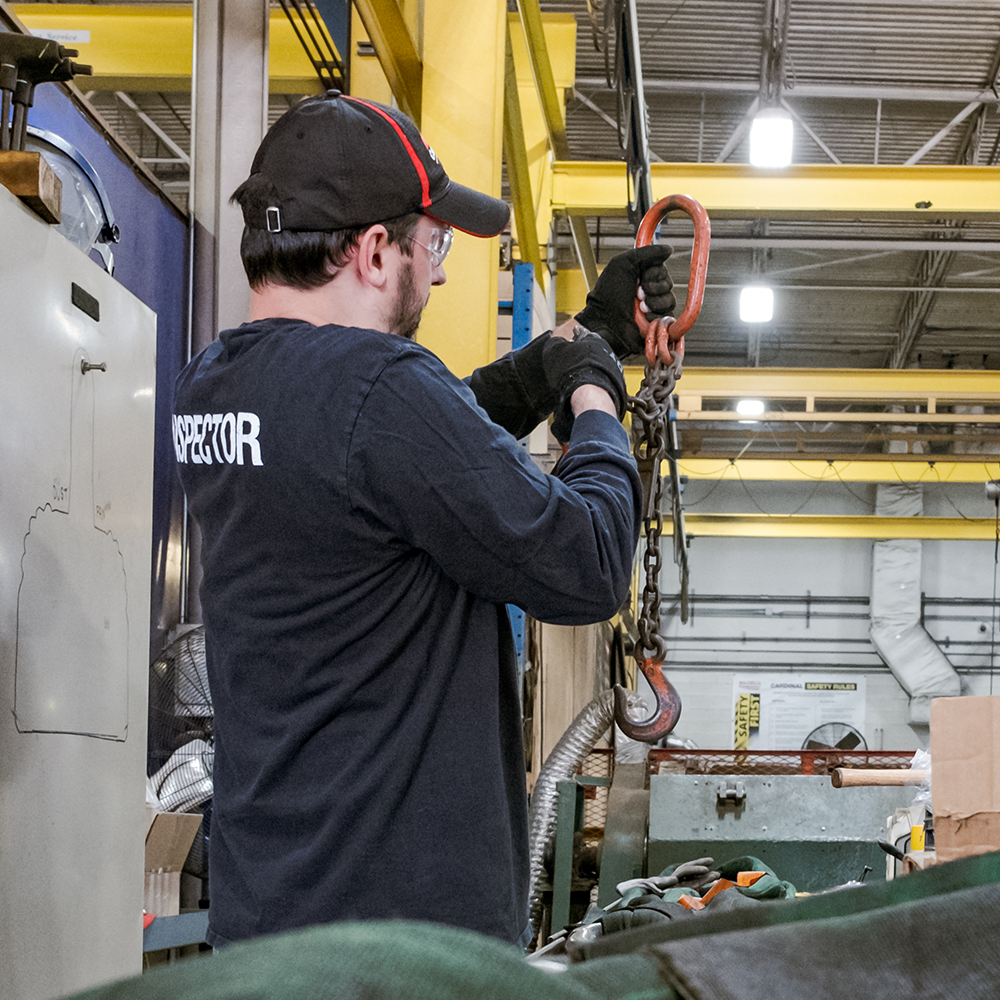
The standards for lifting sling inspection are OSHA 1910.184 and ASME B30.9. Both of these standards offer inspection guidelines and they also provide criteria for removal from service. The employer has a responsibility to see that the slings in their facility are inspected according to these standards.
OSHA states that the employer has the responsibility to inspect and document lifting slings at a minimum of 12-month intervals. The employer is also required to maintain a record of the most recent thorough inspection, and failing to do so is one of the most common issues we see that can prevent a company from reaching full OSHA compliance.
The following standards are what our inspectors commonly reference during an inspection:
| OSHA 1910.184 | Slings |
| ASME B30.9 | Slings |
| ASME B30.10 | Hooks |
| ASME B30.16 | Overhead Hoists (Underhung) |
| ASME B30.20 | Below-the-Hook Lifting Devices |
| ASME B30.21 | Lever Hoists |
| ASME B30.26 | Rigging Hardware |
Additional Standards to Consider
Most facilities only need to comply with these federal and industry standards. However, some companies operate under additional internal guidelines, state-specific programs like MIOSHA or Cal/OSHA, or industry-specific rules such as those found in mining, maritime, or heavy manufacturing.
If your company uses standards beyond OSHA and ASME B30, the inspectors will need that information before the inspection begins so the scope can be clearly defined.
How Can You Prepare for Your Third-Party Rigging Inspection?
There are several ways your company can prepare for a rigging inspection.
Provide Previous Inspection Reports
It is helpful to share previous inspection reports with your inspector ahead of time. Past records provide insight into the type, quantity, and condition of your rigging gear. They can also highlight items that were flagged in earlier evaluations.
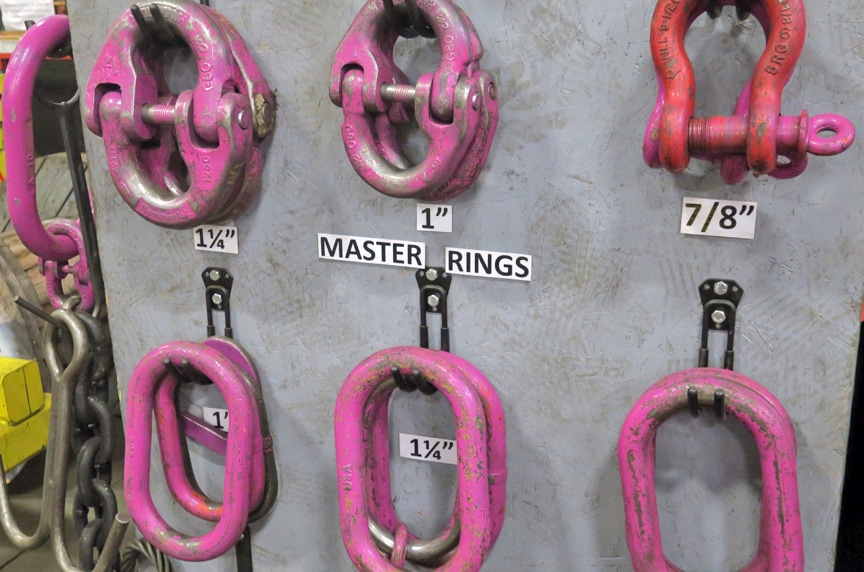
Provide an Inventory of Rigging Gear
Even if you don’t have prior documentation, it’s helpful to provide an approximate count of the items that need to be inspected. This allows the inspector to estimate the required labor, the number of inspectors needed, and the total time required.
For example, if you have a facility that has 100 synthetic roundslings, 50 chain slings, 10 wire rope slings, and three spreader beams, that inspection may take significantly longer than another facility who has 15 chain slings they need to have inspected. This will help them provide you with an accurate quote, and help them schedule and prepare for the rigging inspection.
Ensure Clear Access to Rigging Equipment
Accessibility is one of the leading factors that influence how long a rigging inspection takes. Before the inspectors arrive, make sure your rigging equipment is not buried in storage or scattered across multiple areas.
The goal is to create a clear, organized staging area where slings, hardware, and below-the-hook devices can be reviewed quickly and efficiently. When inspectors spend significant time searching for gear, moving equipment, or clearing space, the overall cost and total inspection time increase.
Ideally, all equipment that requires review should be placed in a designated area that is easy to access and free from obstruction. If your rigging gear is normally stored throughout the facility, assign someone ahead of time to gather and consolidate the items before the inspection begins.
Consider Your Work Environment and Site Requirements
Every facility has unique safety and access requirements that even inspectors must follow.
Some job sites require additional training before a contractor is allowed on-site. Others require specific protective equipment because of chemical baths, high temperatures, outdoor exposure, or work at extreme heights. If any of these situations apply to your facility, make sure the inspector knows beforehand so they can schedule the appropriate personnel and account for additional time.
Some facilities also require background checks or drug testing for outside service providers. These processes often take time to schedule and complete. Sharing these requirements early prevents delays and ensures inspectors can begin the job as planned.
If any of your lifting equipment requires special testing, such as magnetic particle testing or on-site proof testing, notify the inspection provider before they arrive. These services require additional planning and may involve special equipment or technicians.
Should You Consolidate Multiple Rigging Inspections?
Many facilities choose to have multiple categories of equipment inspected during the same visit. Keep in mind that over the course of an inspection, a rigging inspector can inspect any of the following product types:
- Lifting Slings: alloy chain slings, wire rope slings, synthetic roundslings, synthetic web slings, metal mesh chain slings, synthetic rope slings
- Rigging Gear: lever tools or chain falls (not permanently mounted), hoist rings, eye bolts, shackles, turnbuckles, hooks, etc.
- Below-the-Hook Devices: lifting beams, spreader beams, c-hooks, die-handlers, etc.
- Personal Fall Protection: harnesses, lanyards, and retractable devices
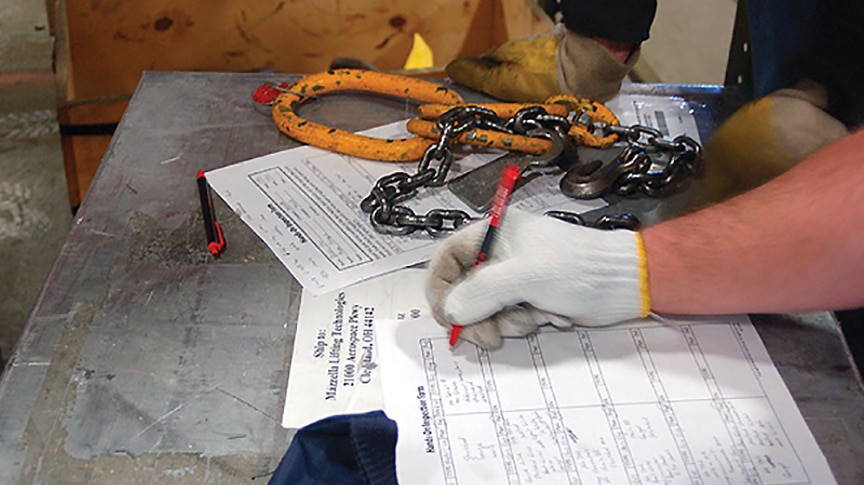
Combining inspection categories is usually more economical than having inspectors return multiple times throughout the year. It also consolidates your compliance documentation, making it easier to track and review items during future audits.
How Good Preparation on Inspection Day Saves You Money
As we explained in previous articles, good preparation makes the inspection not only more productive, but it can also save you money.
Inspection cost and scheduling depend heavily on the size and diversity of your rigging inventory. A facility with hundreds of slings, multiple below-the-hook devices, and a full assortment of hardware will require more time and personnel than a facility with fewer items. To keep inspection time and cost down:
- Provide inspectors with an accurate equipment list during the “front-load” discovery phase
- Clear out old, unused equipment to speed up inspection process
- If a building closes, operations shift, or equipment moves, let the inspection team know in advance.
How Much Does a Rigging Inspection Cost?
As mentioned, the cost of a rigging inspection depends on several factors, including proper preparation from your end.
Mazzella offers inspections on a port-to-port basis. This means pricing includes the time it takes for our inspectors to leave the nearest office, travel to your facility, complete the inspection, and return.
- Half-Day (four hours): $480 – $600
- Full-Day (eight hours): $960 – $1,200
This ensures all travel and inspection time is bundled into one transparent rate.
Why Mazzella Is a Trusted Rigging Inspection Partner
Over the years, Mazzella has built one of the most comprehensive rigging inspection programs in the country.
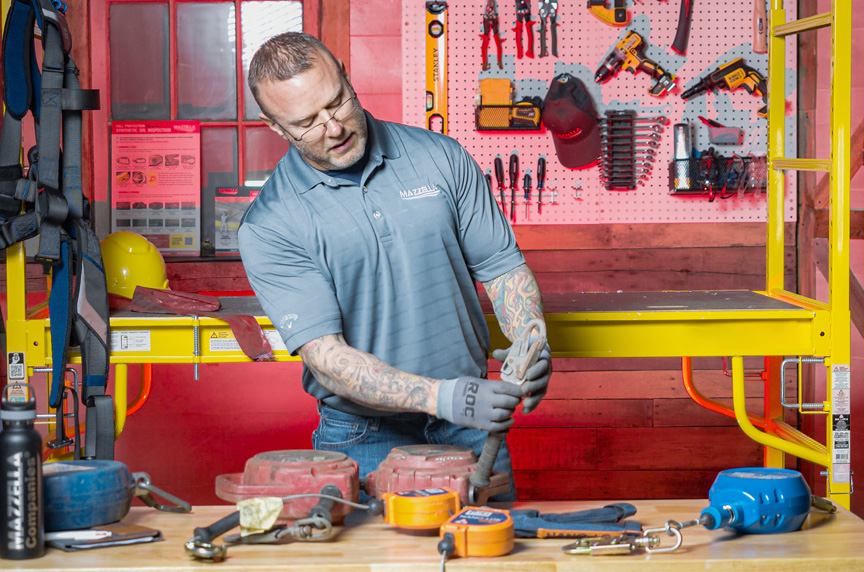
We employ a team of full-time, qualified inspectors who focus exclusively on lifting and rigging equipment, below-the-hook devices, and fall protection. Their experience spans decades in manufacturing, steelmaking, construction, energy, ports, and other demanding applications.
Furthermore, our inspectors are certified by our partners at Industrial Training International (ITI), which means they meet all requirements to perform inspections in accordance with OSHA and ASME standards. As a distributor and manufacturer of all of the equipment that we inspect, we have unique insight into the proper usage, standards, and application of rigging gear.
Depending on your needs, Mazzella can also set up a proactive inspection program to reach out to you monthly, quarterly, or annually depending on the agreement you have in place. This helps to take a lot of the guesswork out of when the inspections will occur, and also helps take some of the responsibility off of your shoulders to remember to schedule your inspections.
Our team also provide digital reporting of all inspection records that you can show to an OSHA inspector.
All of these inspections are on top of our wide range of service offerings. Contact Mazzella today to request a quote for your next
Frequently Asked Questions about Rigging Inspections


Rigging Inspection Services
OSHA 1910.184, ASME B30.9, B30.20, B30.26, & ANSI Z359 require periodic, documented inspections on slings, rigging hardware, lifting devices, and fall protection every 12 months, at minimum, and monthly to quarterly in more severe service conditions.
Call us at 800.362.4601 or click here if you need inspections for slings, rigging hardware, lifting devices, or fall protection!
Copyright 2025. Mazzella.